
To tame your desktop, start by clearing out unnecessary files and uninstalling unused apps to free space. Create a logical folder structure by grouping files by function and naming them descriptively for quick access. Use shortcuts for your most-used items and customize icons and themes for visual clarity. Regularly organize and update your setup to keep it tidy and efficient. Keep exploring these tips further to master a clutter-free home screen.
Key Takeaways
- Create clearly labeled folders for different categories like work, personal, and projects to streamline your desktop.
- Remove unused icons, files, and outdated applications to reduce clutter and improve system performance.
- Use desktop shortcuts for frequently accessed items, organizing them with descriptive names and icons for quick recognition.
- Apply visual themes and consistent icon styles to enhance aesthetic appeal and ease of navigation.
- Regularly review and update your desktop layout to maintain an organized, efficient workspace.
Assessing and Clearing Out Unnecessary Files

Before organizing your home screen, it is vital to evaluate the files stored on your computer. Start by identifying redundant files that take up unnecessary space and clutter your desktop. These duplicates often accumulate from multiple downloads or saved versions of the same document. Removing them frees up storage and makes your workspace more efficient. Additionally, check for outdated applications that no longer serve a purpose. Old programs can slow down your system and create confusion. Uninstall any software you no longer need to streamline your computer’s performance. By clearing out these unnecessary files and applications, you set a solid foundation for a more organized and manageable home screen. Incorporating file management best practices can further optimize your digital workspace. Regularly updating your software helps prevent security vulnerabilities and keeps your system running smoothly. Practicing consistent digital organization ensures your desktop remains clutter-free and easily accessible.
Creating a Logical Folder Structure

Start by organizing your files based on their functionality, like work, personal, or projects, so everything has a clear place. Prioritize the folders and files you access most often to keep your workflow smooth. Use clear, descriptive names for your folders to make finding and sorting files effortless. Recognize patterns such as angel number sequences that can signal meaningful opportunities or changes in your life, helping you stay aligned with your goals. Incorporate logical folder structures to streamline navigation and reduce clutter on your desktop. Additionally, consider how cookies are used to enhance your browsing experience and how managing these settings can improve your workflow. Regularly reviewing and adjusting your folder organization can further maximize space and organization, ensuring your desktop remains efficient and clutter-free.
Categorize by Functionality
Organizing your computer’s home screen becomes much easier when you categorize apps and files by their primary functions. This approach streamlines digital decluttering by grouping similar items together, making it faster to find what you need. Start by creating folders for broad categories like work, entertainment, or utilities. Within each folder, further organize files based on specific tasks or projects. Effective file categorization reduces visual clutter and minimizes the time spent searching for files or applications. Keep your most-used apps outside folders for quick access, while less frequently used items go inside. By focusing on functionality, your desktop becomes more intuitive, saving time and reducing stress. Additionally, understanding the importance of digital organization can lead to more consistent and efficient desktop management. Implementing a clear folder structure helps you quickly locate items and maintain your workspace. Consistently reviewing and updating your folder system ensures it remains aligned with your evolving needs, maintaining an organized and productive workspace. This logical structure helps maintain a clean, efficient workspace that adapts to your daily needs.
Prioritize Frequent Files
Creating a logical folder structure for your most frequently accessed files guarantees you can find what you need quickly and efficiently. By analyzing your file frequency and usage patterns, you can identify which files you access daily or weekly. Place these high-priority files in easily accessible folders, such as on your desktop or in a dedicated “Quick Access” folder. This setup minimizes searching time and keeps your workspace organized. Regularly review your usage patterns to adjust your folder structure as your needs evolve. The goal is to streamline your workflow by ensuring that your most important files are always within reach, saving you time and reducing frustration. A well-prioritized folder system keeps your desktop clutter-free and aligned with your actual file usage habits. Incorporating organized storage principles from a well-designed space can help you maintain clarity and efficiency in your digital environment, especially when considering file management best practices.
Use Clear Naming Conventions
Using clear and consistent naming conventions for your folders is essential to maintaining an organized and easily navigable home screen. When you follow logical label standards, you make it simple to find files quickly. Use descriptive, straightforward names that reflect the folder’s contents, avoiding vague titles like “Misc” or “Stuff.” Incorporate a consistent format, such as dates or project names, to help sort items chronologically or by category. Stick to a standard style for abbreviations and capitalization to keep your folder names uniform. This consistency reduces confusion and saves time when searching. Consistent naming helps establish a predictable system that enhances overall organization. Clear naming conventions create a structured system that’s easy to understand and maintain. By establishing and following label standards, you’ll keep your home screen neat, efficient, and stress-free. Additionally, applying proper storage practices ensures your files remain safe and accessible over time.
Using Descriptive Names for Easy Identification
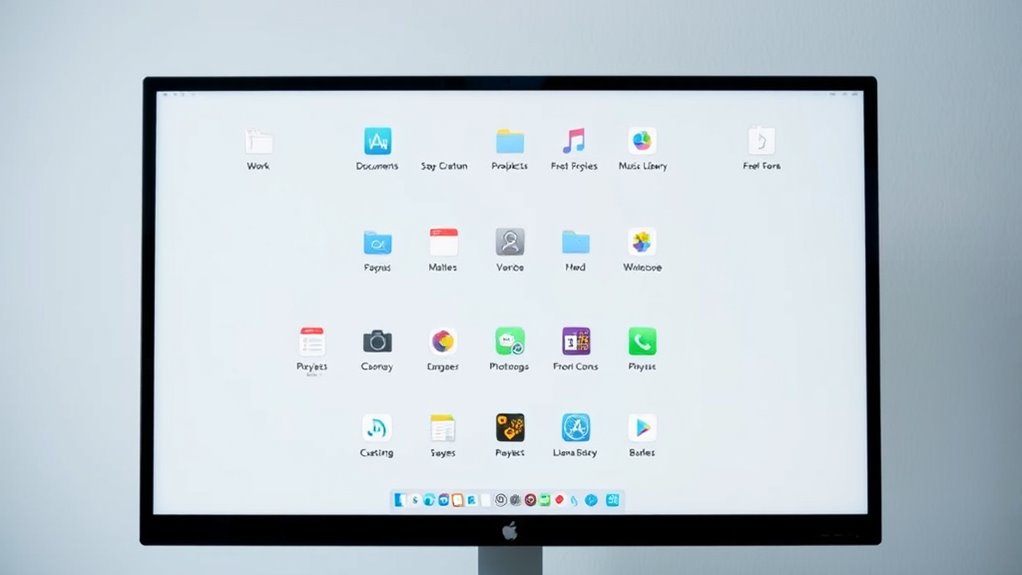
When you give your files and folders clear, descriptive names, finding what you need becomes much quicker. Using meaningful names helps you identify items at a glance. To maximize effectiveness, follow these tips:
- Stick to consistent naming conventions to ensure labels stay uniform across your desktop.
- Use specific keywords that clearly describe the content, like “Invoices_2024” instead of vague titles.
- Keep naming concise but informative, avoiding unnecessary words that clutter your view.
- Incorporate content-specific terminology to make it easier to locate files related to particular subjects or projects. Additionally, utilizing standardized naming systems can further improve your organization and retrieval processes. Adopting a naming hierarchy also helps maintain clarity as your collection grows, and applying descriptive tags can enhance searchability. Incorporating search-friendly identifiers into your file names can streamline the process of locating files through search functions.
Utilizing Desktop Shortcuts Effectively
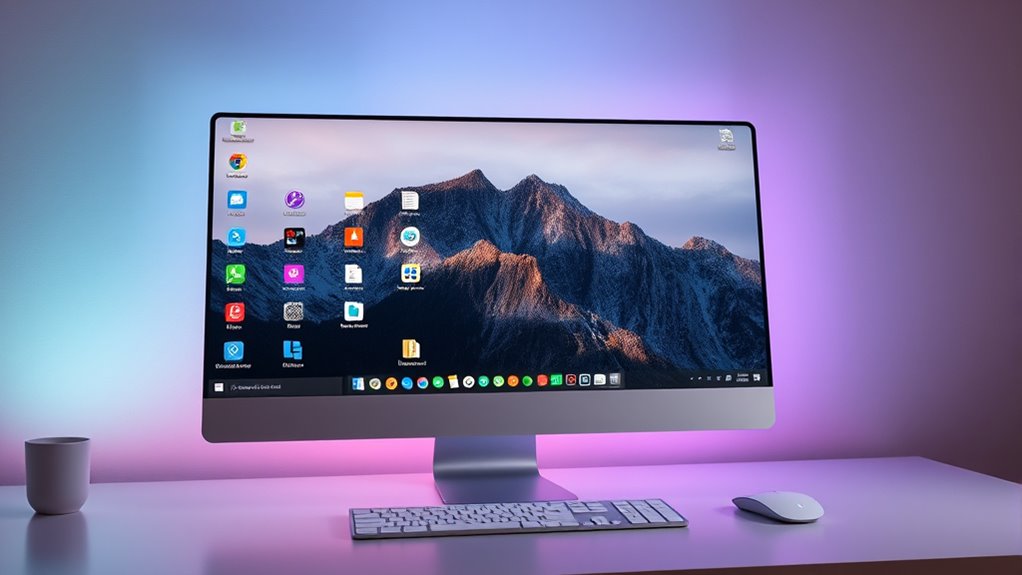
Using desktop shortcuts wisely can keep your workspace organized and efficient. You should group related shortcuts into folders, choose clear icons that stand out, and place your most-used items within easy reach. This approach helps you find what you need quickly and keeps your screen clutter-free. Additionally, organizing shortcuts can enhance security by reducing the risk of accidental deletions or misclicks, ensuring your workflow remains smooth and protected. Incorporating themes and visual cues can also improve overall visual organization, making it easier to locate and access important files at a glance. Proper arrangement can also aid in risk management by minimizing the chances of selecting incorrect files or shortcuts during your work. Furthermore, using consistent icon styles and labels can improve your interface clarity, allowing for faster recognition and smoother navigation. Maintaining an organized desktop can also reduce visual stress, helping you stay focused and calm during your tasks.
Organize With Folders
Organizing your desktop with folders helps keep your shortcuts tidy and easy to navigate. To do this effectively, focus on consistent file naming so you can quickly identify contents without opening each folder. Establish a clear folder hierarchy by grouping related shortcuts, like work, personal, and projects, into separate folders. Here are some steps to optimize your setup:
- Use descriptive names that reflect the folder’s content.
- Arrange folders in a logical hierarchy, placing broader categories at the top.
- Regularly review and declutter to maintain organization.
- Incorporate file management best practices to streamline your digital workspace.
Use Descriptive Icons
Descriptive icons make your desktop shortcuts instantly recognizable, saving you time and reducing frustration. Use clear, familiar images that represent each app or document. Incorporate color coded icons to categorize tasks visually, making it easier to locate what you need quickly. Adjust icon size to suit your workspace; larger icons improve visibility, while smaller ones maximize space. Consistent icon design helps maintain a tidy look. Consider the table below to understand how icon choices impact efficiency:
| Icon Type | Benefits |
|---|---|
| Color Coded Icons | Quick identification, task categorization |
| Icon Size Adjustment | Better visibility, space management |
| Descriptive Images | Clear, instant recognition |
| Consistent Style | Visual harmony, easier navigation |
Using descriptive icons enhances your desktop’s organization and usability.
Prioritize Frequently Used
To work efficiently, you should prioritize your most frequently used applications and files by placing their shortcuts prominently on your desktop. This quick access saves time and reduces clutter. Position these shortcuts where they’re easy to reach and visible against your desktop background. Proper widget placement can also help you stay organized, displaying calendars, reminders, or weather updates nearby. To optimize your setup, consider:
- Keep your top apps in the top-left corner for easy access.
- Use clear, descriptive icons to identify shortcuts quickly.
- Adjust widget placement to complement your workflow, avoiding overcrowding your screen.
Implementing Visual Organization With Icons and Themes

Using icons and themes effectively can dramatically enhance the visual appeal and functionality of your home screen. To achieve this, focus on maintaining visual consistency by choosing icons that match in style and color scheme. Consistent icon shapes and sizes create a cohesive look, making your screen easier to navigate. Theme coordination is equally important; select a theme that reflects your personality or work style while ensuring all visual elements complement each other. Avoid mixing incompatible colors or styles, as this can clutter your workspace visually. By aligning your icons and themes thoughtfully, you create a harmonious environment that’s not only pleasing to look at but also improves your efficiency. Clear visual organization helps you find what you need quickly and keeps your desktop tidy.
Automating Routine Tasks to Keep Your Desktop Tuzzy-Free
Automating routine tasks can substantially reduce clutter on your desktop by handling repetitive actions automatically. By setting up automated processes, you prevent unnecessary files from piling up and ensure your system stays tidy. Consider these steps:
Automate routine tasks to keep your desktop clutter-free and your system running smoothly effortlessly.
- Automate backups so your important files are regularly saved without manual effort, freeing up space and safeguarding data.
- Schedule cleanups to delete temporary files and clear cache folders at regular intervals, keeping your desktop clutter-free.
- Use automation tools or built-in system features to streamline these tasks, reducing the need for manual intervention and maintaining an organized environment effortlessly.
Implementing these strategies keeps your desktop clean, improves performance, and saves you time, making organization a seamless part of your routine.
Maintaining Your Organized Desktop Over Time

Once you’ve set up automated routines to keep your desktop tidy, the next challenge is maintaining that organization over time. Regularly perform file backups to prevent data loss and keep your desktop clutter-free. Also, stay current with software updates, which often include security patches and performance improvements that help your system run smoothly. To stay organized, create a schedule for routine checks:
| Task | Frequency | Notes |
|---|---|---|
| File Backup | Weekly | Use reliable cloud services |
| Software Updates | Monthly | Ensure all apps are current |
| Desktop Review | Bi-weekly | Delete or reorganize files |
Sticking to these routines helps sustain your organized desktop and boosts productivity.
Tips for Personalizing Your Workspace for Better Productivity
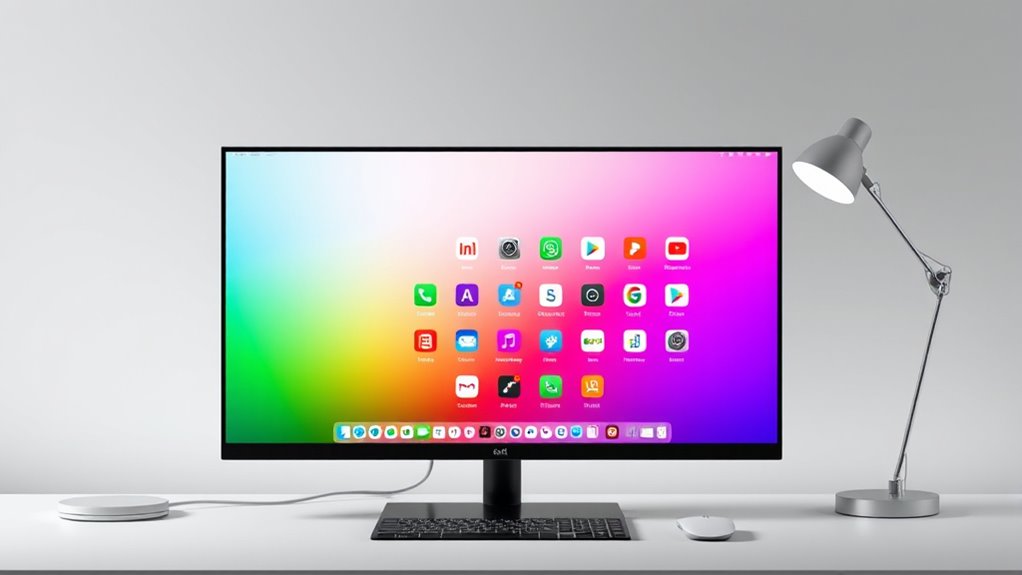
Personalizing your workspace can markedly boost your productivity by making your environment more comfortable and inspiring. To start, choose decorative wallpapers that reflect your style or motivate you daily. This small change can make your desktop feel more inviting and less monotonous. Next, add motivational widgets to your home screen—these quick-access tools can display positive quotes, task progress, or reminders, keeping you focused. Lastly, organize your icons around your most-used apps, but customize their appearance with labels or colors to make navigation intuitive. These simple steps help create a workspace tailored to your preferences, fostering better concentration and efficiency. Personal touches like decorative wallpapers and motivational widgets turn your computer into a space that energizes your workday.
Frequently Asked Questions
How Often Should I Review and Reorganize My Desktop?
You should review and reorganize your desktop at least once a month to maintain a clutter-free workspace. Establish a regular organizational review schedule to make certain files and icons stay tidy, making it easier to find what you need. Incorporate a consistent desktop cleaning frequency, like weekly or biweekly, if you handle many files daily. Staying proactive prevents clutter buildup, keeping your digital environment efficient and stress-free.
What Are the Best Tools for Managing Desktop Icons?
Imagine uncovering the ultimate tools for icon management that transform chaos into order. You’ll want to explore desktop customization apps like Fences, which organize icons into neat, clickable zones, or Launchy for quick access to files. These tools streamline your workflow, making icon management effortless and stylish. With the right desktop customization, you gain control, clarity, and efficiency—turning your cluttered screen into a sleek, productive workspace.
How Can I Prevent Clutter From Accumulating Again?
To prevent clutter from building up again, commit to regular digital decluttering sessions. Keep your icons organized through icon categorization, grouping similar files and shortcuts together. Delete unnecessary items promptly and reassess your desktop layout periodically. Use tools or folders to maintain organization, and develop a routine to keep your home screen tidy. Staying proactive with these habits guarantees your desktop remains clean and efficient over time.
Are There Any Productivity Apps That Integrate With Desktop Organization?
They say, “A place for everything, and everything in its place.” Many productivity apps, like Alfred or Launchy, integrate seamlessly with desktop organization, allowing you to create app shortcuts and streamline workflows. These tools often feature file tagging, so you can quickly find documents and apps without clutter. By using these apps, you keep your desktop tidy and boost efficiency, ensuring everything has its rightful spot.
How Do I Back up My Organized Desktop Setup?
You should back up your organized desktop setup using cloud backup services that support automated snapshots. Set up the cloud backup to regularly save your desktop layout and files, ensuring your organization stays safe even if something goes wrong. Automating snapshots means your setup gets saved automatically at scheduled intervals, so you don’t have to do it manually. This way, you can restore your desktop to its organized state anytime.
Conclusion
Think of your desktop as a garden—tend it regularly, remove weeds, and plant only what’s needed. With a little effort, your digital space can flourish, becoming a calm oasis amid chaos. When you organize thoughtfully, you create a landscape that nurtures productivity and peace. Keep nurturing your desktop garden, and watch it thrive—transforming your workday into a smoother, more enjoyable journey. Your perfect workspace is just a few mindful steps away.