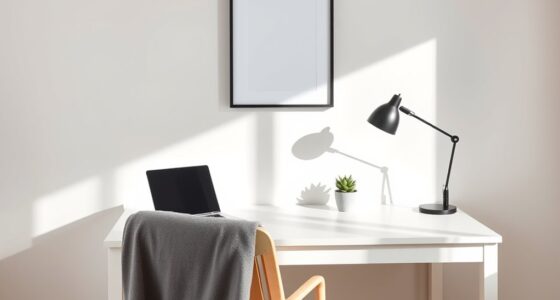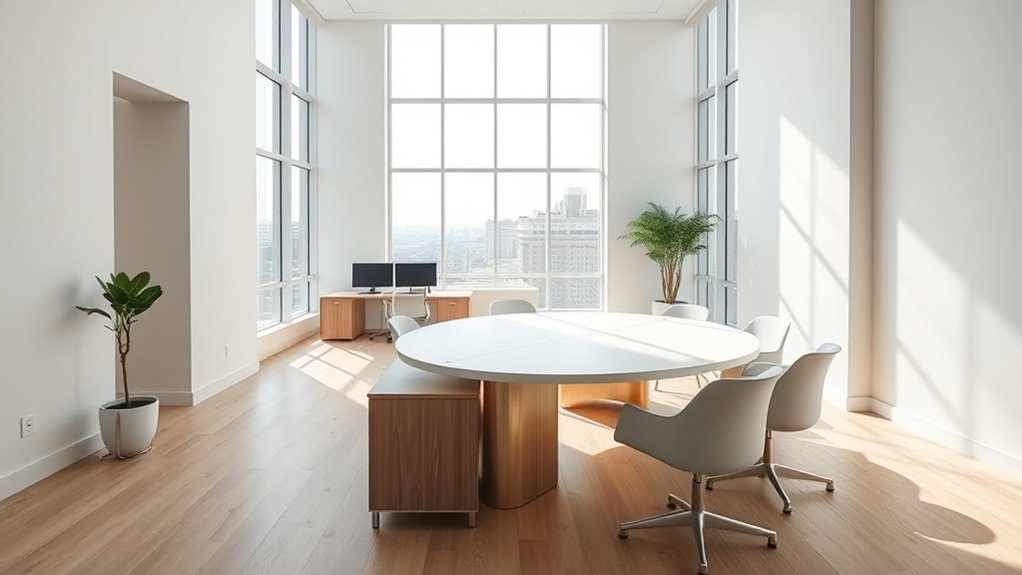

Designing a minimalist coworking space challenges you to balance simplicity with comfort, ensuring the environment isn’t cold or sterile. Focus on maximizing natural light and using sleek, functional furniture to reduce clutter. Incorporate warm textures like plants or rugs to foster a welcoming vibe and utilize hidden storage to keep the space organized. Achieving harmony between style and practicality takes careful planning, but exploring these ideas further can help you create an inspiring, efficient workspace.
Key Takeaways
- Balancing minimalism with comfort by incorporating warm textures and purposeful decor to prevent a sterile environment.
- Ensuring flexible lighting solutions that combine natural light with adjustable fixtures for various tasks.
- Integrating ergonomic furniture that supports long work sessions while maintaining sleek, clutter-free aesthetics.
- Incorporating hidden storage and organization systems to keep shared spaces tidy and promote mental clarity.
- Addressing potential noise and privacy concerns through thoughtful layout and sound-absorbing materials.
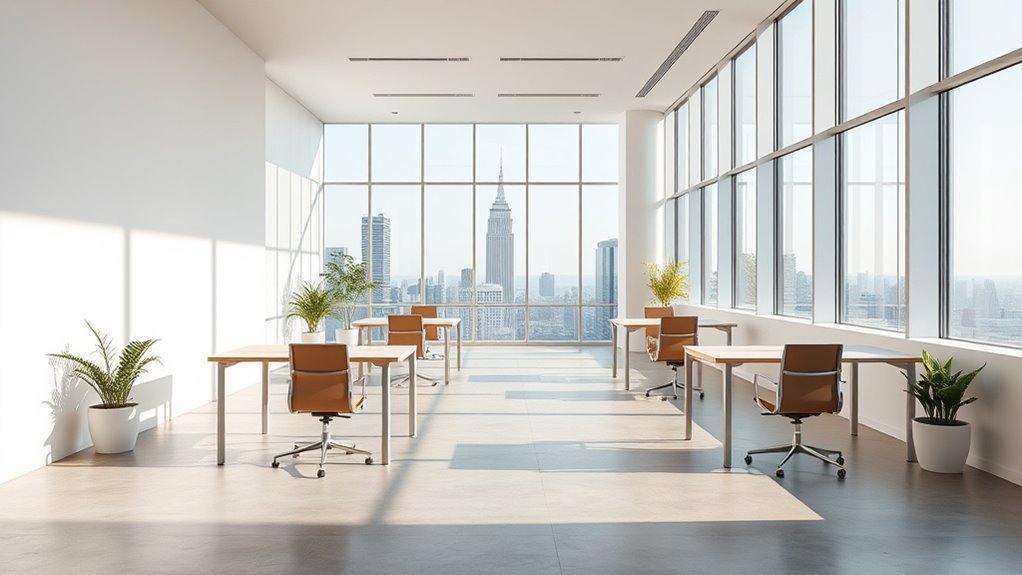
Creating a minimalist coworking space begins with understanding that simplicity can boost productivity and focus. When you strip away clutter and unnecessary decor, you create an environment where concentration naturally flourishes. To achieve this, start with the fundamentals: choosing ergonomic furniture that supports comfort without sacrificing style. Ergonomic chairs and desks should be adjustable and designed to promote good posture, helping users stay comfortable during long work sessions. This not only enhances productivity but also shows a commitment to wellbeing, which is essential in a shared workspace. Keep the furniture sleek and functional, avoiding bulky or ornate pieces that can distract or create visual chaos.
Choose sleek, adjustable ergonomic furniture to enhance comfort and focus in minimalist coworking spaces.
Ambient lighting plays a pivotal role in a minimalist coworking space. Natural light should be prioritized, so position desks near windows whenever possible. For artificial lighting, opt for subtle, diffused sources that provide even illumination without glare. Warm, soft tones encourage a calm atmosphere, reducing eye strain and fatigue. Installing minimalist fixtures like recessed lights or simple pendant lamps can add to the space’s clean aesthetic while ensuring adequate light coverage. Remember, lighting should be adjustable, allowing users to customize their environment based on their tasks and preferences. Additionally, incorporating appropriate lighting technology can further enhance energy efficiency and user comfort.
The challenge lies in maintaining a balance between minimalism and comfort. You want to avoid a sterile, impersonal environment that feels cold or uninviting. Incorporate warm textures through small accents like a cozy rug, a few potted plants, or textured wall panels. These elements add visual interest and a sense of warmth without cluttering the space. Keep decorations to a minimum, emphasizing quality over quantity. Each piece should serve a purpose, whether functional or aesthetic, reinforcing the minimalist ethos.
Organization is key to sustaining a clutter-free environment. Use storage solutions that blend seamlessly into the design—under-desk drawers, sleek shelving, or hidden compartments. This way, personal items or work materials are out of sight, keeping the workspace tidy and focused. Clear pathways and open layouts also help maintain a sense of order and ease of movement.
Frequently Asked Questions
How Do I Ensure Privacy in a Minimalist Coworking Space?
To guarantee privacy in your minimalist coworking space, you should incorporate privacy screens and soundproof partitions. These elements create designated zones, reducing noise and visual distractions, so users feel more comfortable. Opt for sleek, simple designs that blend seamlessly with your minimalist aesthetic. By strategically placing these features, you’ll enhance privacy without cluttering the space, making it functional and inviting for everyone.
What Are Cost-Effective Materials for Minimalist Design?
Think of your space as a garden; you want it lush without overspending. Reclaimed wood offers natural warmth, like sunlight, at a low cost. Recycled metal provides sleek durability, like sturdy trellises, without the hefty price tag. These materials are eco-friendly and budget-friendly, making your minimalist coworking space both stylish and sustainable. Using them smartly helps you create a functional, inviting environment without breaking the bank.
How Can I Incorporate Natural Light Effectively?
You can incorporate natural light effectively by strategically placing windows to maximize daylight and reduce solar glare. Opt for larger, well-positioned windows or glass walls that face the sun during the day. Use shading devices or sheer curtains to control glare without sacrificing brightness. Additionally, consider the room’s layout so work areas avoid direct sunlight, creating a comfortable, well-lit environment that fosters productivity and maintains a minimalist aesthetic.
What Are Best Practices for Acoustic Management?
Did you know poor acoustics can reduce productivity by up to 66%? To manage sound effectively, use soundproofing techniques like acoustic panels strategically placed to absorb noise. Focus on placing panels near loud sources and shared spaces, ensuring they don’t clutter the minimalist design. Regularly assess noise levels and adjust panel placement accordingly. This approach creates a quiet, focused environment that boosts collaboration and concentration.
How Do I Balance Aesthetics With Functionality?
To balance aesthetics with functionality, focus on smart space division that maintains a clean look while providing privacy. Choose furniture that’s both stylish and practical, like sleek desks and comfortable chairs, which blend seamlessly into the design. Keep clutter minimal and opt for multi-purpose pieces. This approach guarantees your coworking space remains visually appealing without sacrificing comfort or usability, creating an inviting environment that encourages productivity.
Conclusion
As you design your minimalist coworking space, remember that simplicity often boosts productivity and creativity. Some believe that less clutter equals less stress, fostering focus and collaboration. While minimalist environments can be inspiring, they also require thoughtful planning to avoid feeling cold or uninviting. Trust the idea that a well-balanced space, with just enough essentials, truly supports your community’s growth. Embrace minimalism—your space’s clarity might just be its greatest strength.