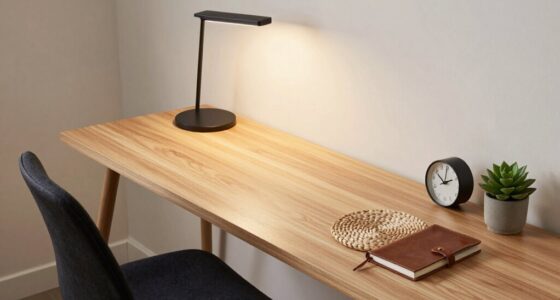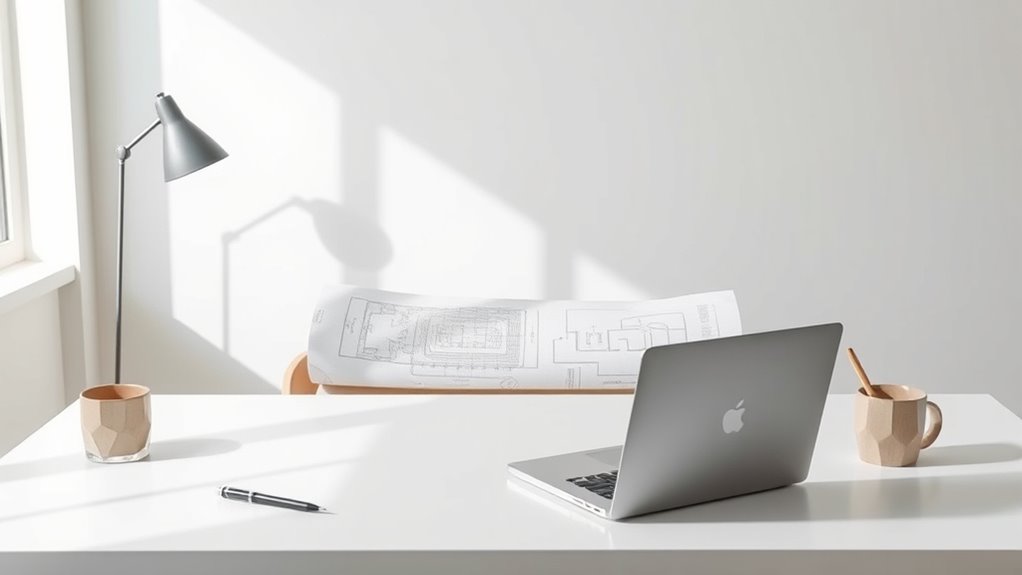

Creating a minimalist workspace for architects means organizing your area with purpose, using clean lines and sustainable materials. Prioritize ergonomic furniture, natural light, and essential tools to boost focus and creativity. Keep clutter at bay with sleek storage and incorporate calming elements like plants. This design approach supports eco-conscious values and helps you stay efficient. For a studio that fosters innovative thinking and harmony, explore more tips to craft your perfect minimalist environment.

Get your wardrobe favorites delivered free with Prime
- Fast, free delivery on millions of items
- Prime Video, Amazon Music and more included
- Member-only deals all year
Key Takeaways
- Prioritize ergonomic, sustainable furniture with clean lines to promote comfort and eco-conscious design principles.
- Maximize natural light and use warm LED fixtures to create a bright, focused environment.
- Keep only essential tools and materials within reach, utilizing sleek storage solutions for organization.
- Incorporate natural textures and minimal decor like plants to enhance calm and creativity.
- Maintain a clutter-free space by eliminating unnecessary objects, ensuring intentional and purposeful design.
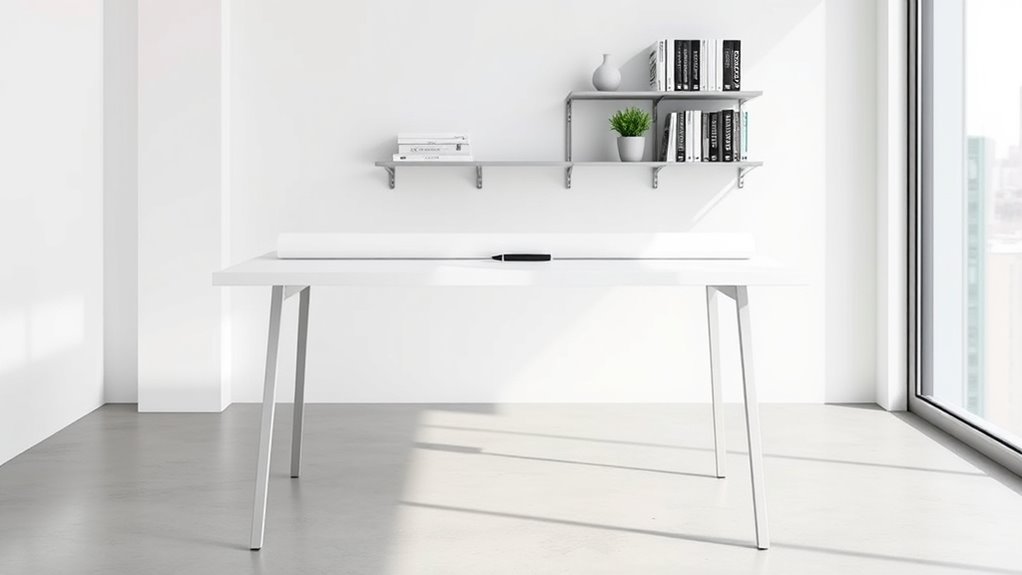
Ever wondered how a minimalist workspace can boost your creativity and focus? Creating a clean, uncluttered environment isn’t just about aesthetics; it’s about optimizing your mental space to generate innovative ideas and work efficiently. When designing your studio, start by choosing ergonomic furniture that supports your body during long hours of drafting and planning. An ergonomic chair, adjustable desk, and thoughtfully placed accessories reduce fatigue and physical discomfort, allowing you to stay concentrated on your projects without distraction. Opt for furniture made from sustainable materials to align your workspace with eco-conscious values. Sustainable woods, recycled metals, and biodegradable composites not only lessen your environmental impact but also add a natural, calming element to your studio. These choices foster a sense of harmony and purpose, making your workspace more inspiring. Incorporating Free Floating elements can also help create a sense of openness and flexibility, enhancing your ability to adapt your workspace as needed.
Creating a sustainable, minimalist workspace enhances focus, inspires creativity, and supports your eco-conscious values.
To truly embrace minimalism, keep only the essentials within reach. Use sleek storage solutions that hide clutter and maintain a tidy surface, which helps your mind stay clear and focused. Incorporate a few well-chosen decorative pieces, perhaps some plants or simple artwork, to add personality without overwhelming the space. Plants, in particular, improve air quality and bring a touch of nature inside, reinforcing a sustainable ethos while creating a soothing atmosphere conducive to creative thinking. When selecting materials, prioritize durability and simplicity—clean lines, neutral tones, and natural textures—so your workspace remains timeless and functional. This approach prevents visual chaos and encourages a calm, organized environment.
Lighting is another critical element in your minimalist studio. Maximize natural light by positioning your desk near windows, then supplement with warm, energy-efficient LED fixtures. Good lighting reduces eye strain and energizes your work sessions, making your studio a pleasant space to spend hours. Keep cables and tech accessories neatly managed, using cable organizers or wireless devices, so your workspace stays pristine. Every item should serve a purpose, and extraneous objects should be eliminated, leaving you free to focus on your architectural visions. Remember, a minimalist workspace isn’t about deprivation but about intentionality—surrounding yourself only with what helps you excel.
Ultimately, designing a minimalist workspace for yourself hinges on thoughtful choices that blend functionality with sustainability. By selecting ergonomic furniture made from sustainable materials, organizing efficiently, and maintaining a serene atmosphere, you set the stage for enhanced creativity and productivity. When your environment is free of unnecessary clutter and aligned with your values, your mind is free to innovate, sketch, and build with clarity and purpose. Your studio becomes not just a workspace, but a reflection of your commitment to thoughtful design—both in your projects and in your environment.
Frequently Asked Questions
How Do I Incorporate Personal Style Into a Minimalist Studio?
To incorporate your personal style into a minimalist studio, focus on subtle decorative accents that reflect your personality. Use unique art pieces, textured textiles, or meaningful objects sparingly to add character without clutter. Prioritize clean lines and functional furniture, then let these accents stand out. Your personal expression should complement the minimalist aesthetic, creating a space that feels authentic yet uncluttered and inspiring.
What Are the Best Storage Solutions for Small Minimalist Workspaces?
Imagine a secret garden hiding treasures—your small space can do the same. Use hidden compartments to stow away clutter and keep surfaces clear. Modular shelving adapts to your needs, like building blocks for your creative flow. These solutions maximize storage without sacrificing style, helping you maintain a sleek, minimalist studio. Stay organized, focused, and inspired by seamlessly blending hidden storage with flexible, space-saving furniture.
How Can I Maintain Minimalism With Frequent Client Visits?
To maintain minimalism with frequent client visits, you should focus on effective client management and space optimization. Keep your workspace tidy by designating specific areas for meetings and storage, ensuring clutter stays out of sight. Use multi-functional furniture to maximize space, and schedule regular decluttering sessions. This approach helps you create a welcoming, organized environment that remains minimal while accommodating client interactions seamlessly.
What Lighting Options Enhance a Minimalist Architect’s Workspace?
You should focus on using ambient lighting to create a soft, even glow that maintains your workspace’s clean look. Add task illumination, like adjustable LED desk lamps, for detailed work without clutter. Choose fixtures with simple, sleek designs in neutral colors to keep your studio minimalist. Combining these lighting options enhances functionality while preserving a tidy, unobtrusive environment ideal for your creative process.
How Do I Balance Technology Use Without Cluttering the Space?
You need to keep your workspace from turning into a digital junk drawer, so prioritize digital decluttering by organizing files and using cloud storage. Opt for ergonomic design with sleek, multi-functional devices to streamline your setup. Limit the number of gadgets on your desk, and hide cords whenever possible. Remember, a tidy space is a happy place, helping you stay focused and creative without clutter taking over.
Conclusion
Think of your minimalist workspace as a pristine canvas, waiting patiently for your creative strokes. With clutter cleared and simplicity embraced, you create a fertile ground where ideas flow freely like a gentle river. Every element has a purpose, like carefully chosen brushstrokes in a masterpiece. As you step into this clean studio, you’re invited to craft designs with clarity and focus, turning your workspace into a sanctuary where innovation and inspiration flourish effortlessly.
Halloween Picks
halloween
As an affiliate, we earn on qualifying purchases.