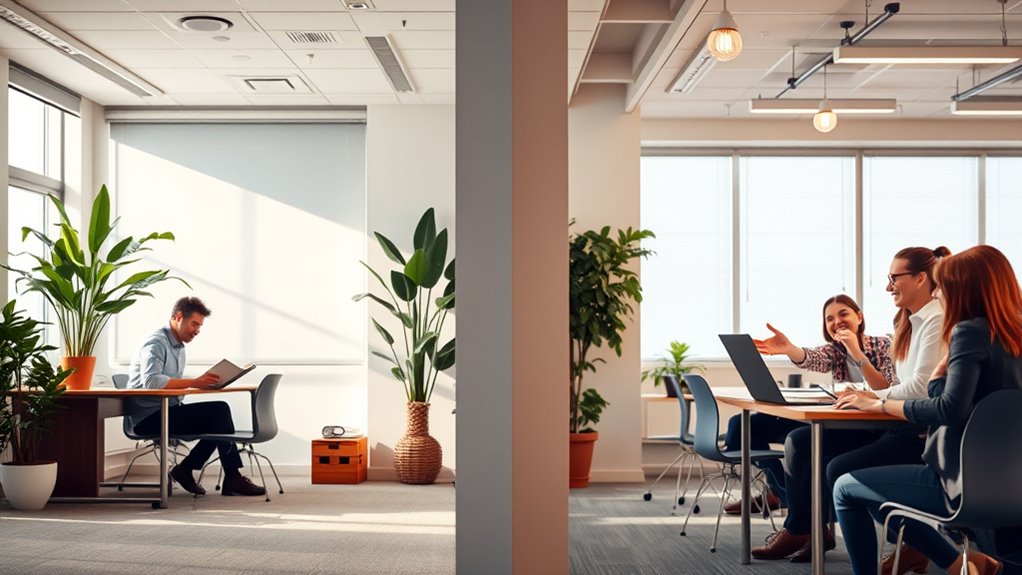

If you work in a quiet office, you’ll notice that introverts benefit the most because they thrive on solitude and low stimulation for deep focus and reflection. Extroverts, however, often perform better in lively settings that energize their social side. While quiet spaces support some personalities well, creating a flexible environment that accommodates both can boost overall productivity and harmony. Explore further to discover how specific workspace strategies can help everyone flourish.
Key Takeaways
- Introverts thrive in quiet, low-stimulation environments that support deep focus and reflection.
- Extroverts may find quiet offices isolating, reducing their energy and engagement.
- Quiet spaces benefit introverts by minimizing distractions and enabling detailed, thoughtful work.
- Extroverts prefer lively settings, which can hinder their productivity and creativity in overly quiet offices.
- A balanced workspace with designated quiet zones and active areas supports both personality types effectively.
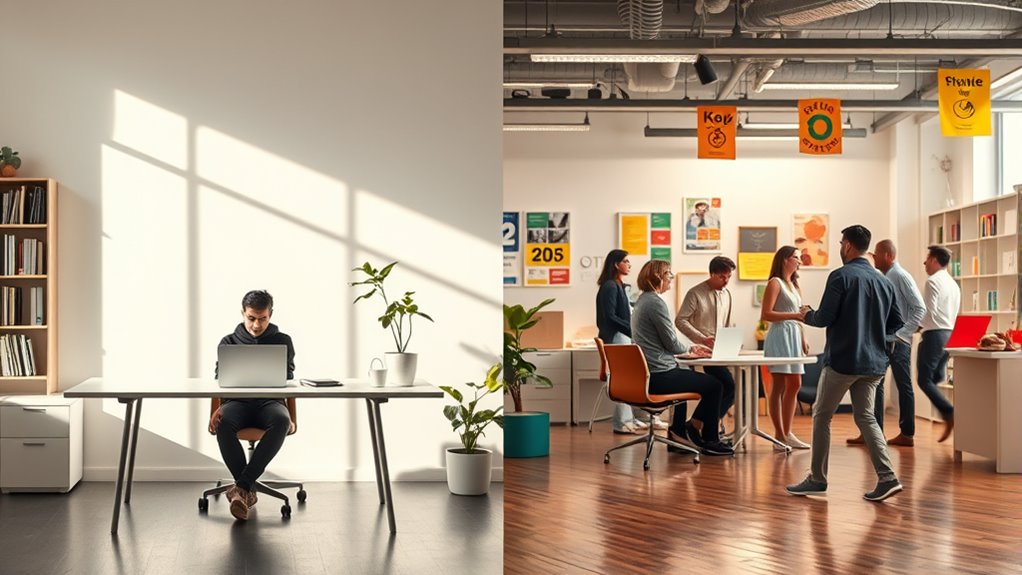
Have you ever wondered what truly sets introverts apart from extroverts? It often comes down to how each personality type responds to their environment, especially in the workplace. For instance, office noise levels can profoundly impact your productivity and overall well-being. If you’re an introvert, a noisy open-plan office might feel overwhelming, making it harder to concentrate and process information. Conversely, extroverts often thrive in lively settings, drawing energy from the buzz of activity and conversation. This difference plays an essential role in determining who benefits more from a quiet office environment.
In a quiet office, introverts tend to flourish because their work environment aligns with their natural preferences for solitude and reflection. They often find it easier to focus deeply on tasks without constant interruptions or background chatter. This setting allows them to engage in thoughtful, detail-oriented work without feeling drained by external stimuli. On the other hand, extroverts might find a quiet office somewhat isolating, as they usually draw motivation from social interactions and dynamic environments. For them, a lack of noise and chatter can hinder creativity and reduce their overall energy levels.
When it comes to team collaboration strategies, the differences between introverts and extroverts become even more apparent. Introverts often prefer one-on-one or small group interactions, and they might need more time to process ideas before sharing them. They tend to excel in written communication, where they can articulate their thoughts clearly without the pressure of immediate responses. Extroverts, meanwhile, thrive in discussions, brainstorming sessions, and spontaneous exchanges. They often come up with ideas quickly and enjoy lively debates, which can energize team dynamics.
Furthermore, understanding the influence of environmental factors like office noise levels can help optimize productivity and well-being for both personality types. In a quieter office environment, you might find that introverts benefit from spaces that provide privacy and minimal distractions, allowing them to contribute thoughtfully during meetings or collaborative tasks. If your team employs hybrid collaboration strategies, balancing quiet zones with open areas, it can help both personalities perform at their best. For example, providing quiet rooms for focused work and open spaces for brainstorming ensures that everyone, regardless of their personality, feels comfortable and productive.
Ultimately, understanding how office noise levels influence each personality type can help you design a workspace that supports all employees. It’s about recognizing that introverts often need quieter environments to excel, while extroverts gain energy from social interactions. By tailoring your team collaboration strategies accordingly, you create a more inclusive, efficient, and harmonious work environment where everyone benefits.
Frequently Asked Questions
How Do Introverts and Extroverts Handle Office Conflicts Differently?
You handle office conflicts differently based on your communication style. Introverts tend to prefer thoughtful, private conflict resolution, often reflecting before speaking and avoiding confrontation. Extroverts typically address issues directly, engaging in open discussions to resolve conflicts quickly. Understanding these differences helps you navigate workplace disagreements better, enabling you to adapt your approach and foster more effective communication and resolution strategies suited to your personality.
Can Introverts Thrive in Team Leadership Roles?
Yes, you can thrive in team leadership roles as an introvert. Your leadership qualities, such as active listening, empathy, and thoughtful decision-making, strengthen team collaboration. While you may prefer quieter environments, focusing on clear communication and building trust allows you to lead effectively. Your ability to analyze situations calmly and support team members fosters a positive, productive workplace, proving that introverts excel in leadership when leveraging their natural strengths.
Do Extroverts Experience More Burnout in Busy Offices?
Extroverts often experience more burnout in busy offices due to the constant chaos of office noise and social interactions. Your energetic environment can drain your stamina, making it harder to stay focused and motivated. The nonstop noise and social demands overwhelm your senses, leading to stress and exhaustion. To stay sharp, you might need quieter spaces or scheduled social breaks, helping you balance your bubbly personality with well-being.
How Does Workplace Environment Influence Personality Benefits?
Workplace environment greatly influences your personality benefits. If you thrive in quiet spaces, you’ll find more focus and less stress, helping you excel in tasks that require deep concentration. Meanwhile, collaborative zones boost creativity and social interaction, benefiting those who gain energy from teamwork. By balancing quiet areas and collaborative zones, you create an environment that supports diverse personalities, maximizing productivity and well-being for everyone in the office.
Are There Specific Careers Better Suited for Introverts or Extroverts?
Think of careers as a dance, where your personality compatibility guides your moves. If you’re introverted, roles like writer or analyst suit a quiet work environment, letting you focus and thrive. Extroverts excel in sales or leadership, where interaction fuels performance. Your personality shapes your ideal work environment, making certain careers more natural and satisfying. Choosing roles aligned with your traits boosts success and fulfillment.
Conclusion
Whether you’re an introvert or extrovert, thriving in a quiet office depends on understanding your needs. Embrace the space as a gentle river that flows to your strengths, nourishing your focus or energizing your interactions. When you honor what fuels you, you turn the environment into a supportive garden where productivity blooms. Remember, success isn’t about fitting into a mold but about cultivating your unique rhythm in the quiet symphony of work.