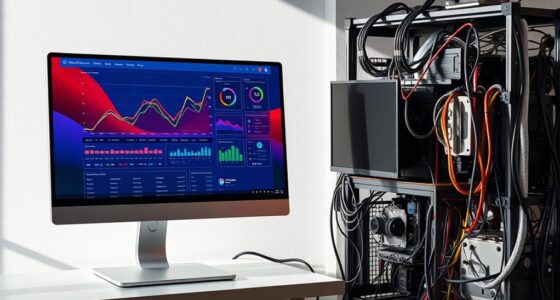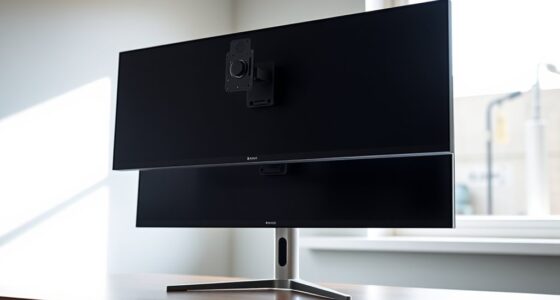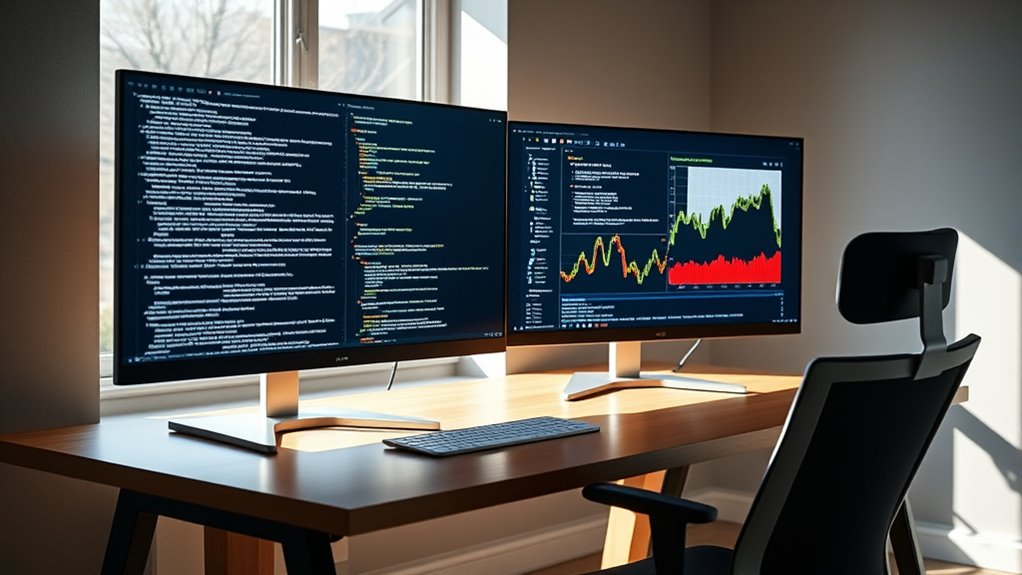

Vertical monitors are more than just a niche trend; they’re a proven productivity hack embraced by many professionals. By reducing neck and eye strain, promoting better posture, and enabling you to view more content at once, they enhance your workflow and comfort. Their sleek design also adds a modern look to your workspace. If you want to discover how they can transform your efficiency and workspace style, keep exploring the benefits they offer.

Get your wardrobe favorites delivered free — and shop member deals
- Fast, free delivery on millions of items
- Access to Prime Big Deal Days deals on October 6–7
- Prime Video, Amazon Music and more included
Key Takeaways
- Vertical monitors improve productivity by enabling easier reading and navigation of lengthy documents, code, and social media feeds.
- They are increasingly adopted by professionals, reflecting mainstream recognition beyond niche developer use.
- Ergonomic benefits, such as reduced strain and better posture, support long-term health, making vertical monitors a practical workspace upgrade.
- Industry trends show manufacturers expanding vertical monitor options, indicating a shift toward mainstream acceptance.
- Their aesthetic appeal and workspace organization advantages position vertical monitors as a versatile, long-term productivity tool rather than a niche trend.
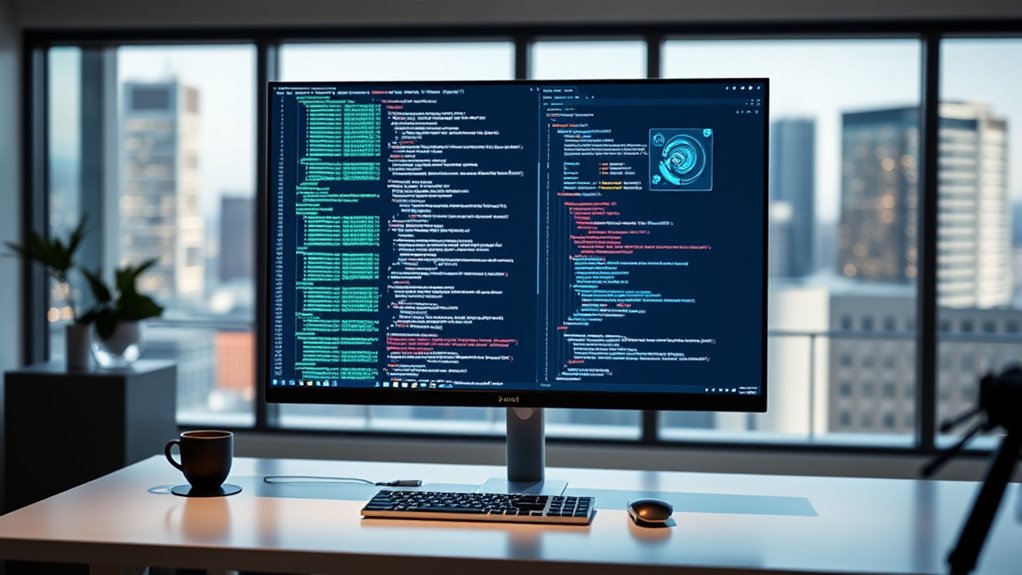
Vertical monitors have become an increasingly popular choice for professionals and enthusiasts alike, offering a versatile way to enhance productivity and streamline workflows. If you’re considering a vertical setup, you’ll quickly notice the ergonomic benefits that come with this orientation. Holding your monitor vertically can reduce neck and eye strain, especially when working with documents, code, or lengthy articles. Instead of constantly scrolling through pages, you see more content at once, which minimizes repetitive head movements. This setup encourages better posture, helping you stay comfortable during long work sessions. Plus, adjusting the monitor’s height and tilt ensures that your eyes stay aligned with the top third of the display, further reducing fatigue.
Beyond ergonomic advantages, vertical monitors also bring a distinct aesthetic appeal that can elevate your workspace. They lend a modern, sleek look that’s different from traditional horizontal screens, making your desk appear more organized and innovative. Their slim profile and clean lines often complement minimalist decor styles, giving your environment a professional yet contemporary vibe. If you’re working in a creative field or managing multiple screens, a vertical monitor can serve as a striking focal point, drawing attention to your workspace’s design. The aesthetic appeal isn’t just superficial; it can boost your motivation and help you feel more engaged with your work environment. Additionally, monitor ergonomics are increasingly considered essential for long-term health and comfort, making vertical monitors a smart choice for sustained use.
Vertical monitors add a sleek, modern look that enhances workspace organization and inspires motivation.
From a practical perspective, a vertical monitor can markedly improve your workflow when dealing with specific tasks. Developers, for example, find that coding benefits from the tall, narrow view because it mimics the natural scroll of code lines, making navigation more intuitive. Writers and editors also appreciate the ability to view full pages or documents without constant toggling. For content creators, especially those handling social media or blog posts, the vertical orientation allows for a more accurate preview of how content appears on mobile devices. This versatility positions vertical monitors as more than just a stylistic choice; they’re a functional upgrade that adapts to various professional needs.
While some might see vertical monitors as a niche or specialized tool, their ergonomic benefits and aesthetic appeal suggest otherwise. They’re an adaptable solution that can enhance your productivity, comfort, and workspace aesthetics. Whether you’re a developer, writer, designer, or casual user, incorporating a vertical monitor into your setup can make your work more efficient and enjoyable. As technology evolves, more manufacturers recognize the value of this orientation, making it easier to integrate into different environments. Ultimately, a vertical monitor isn’t just a trend—it’s a practical addition that can redefine how you work and interact with digital content.
vertical monitor for productivity
As an affiliate, we earn on qualifying purchases.
As an affiliate, we earn on qualifying purchases.
Frequently Asked Questions
Are Vertical Monitors Suitable for Gaming?
Vertical monitors aren’t ideal for gaming, as they can disrupt your gaming experience by limiting screen orientation options. Most games are designed for horizontal screens, providing a broader view. Using a vertical monitor might feel awkward and reduce immersion during gameplay. If you mainly want a monitor for gaming, stick with a horizontal setup to guarantee the best visual experience and full immersion in your favorite titles.
How Do Vertical Monitors Affect Eye Strain?
You may notice less eye fatigue when using vertical monitors, especially if you adjust the height and angle properly. For example, a software developer reported improved visual comfort, reducing strain during long coding sessions. Vertical monitors promote natural head and eye positioning, which helps minimize eye strain. However, if the monitor’s brightness or contrast isn’t optimized, it could increase eye fatigue. Adjust settings to balance brightness and reduce glare for the best effects.
Can Vertical Monitors Improve Coding Efficiency?
Yes, vertical monitors can improve your coding efficiency. They enhance coding ergonomics by allowing you to view more lines of code without scrolling, reducing eye strain and boosting focus. The monitor’s versatility lets you seamlessly switch between tasks like reading documentation or debugging. By optimizing your workspace, vertical monitors help you work more comfortably and efficiently, making them a smart addition for developers seeking better productivity and comfort.
What Are the Cost Differences Compared to Traditional Monitors?
You’ll find that vertical monitors usually have a comparable price range to traditional monitors, but the cost comparison depends on size, resolution, and brand. Generally, price differences are minimal, especially for mid-range options, making them an affordable upgrade. Higher-end models with advanced features might cost a bit more, but overall, vertical monitors don’t substantially increase your expenses. You get a cost-effective way to boost productivity without breaking the bank.
Are Vertical Monitors Compatible With All Computer Setups?
Vertical monitors are generally compatible with most computer setups, especially if your device has standard HDMI, DisplayPort, or USB-C connections. They offer ergonomic benefits like reducing neck strain and help optimize your workspace by providing more screen real estate vertically. However, you should check your system’s ports and graphics card capabilities to guarantee full compatibility, making vertical monitors a practical addition to enhance your productivity and comfort.
ergonomic vertical computer monitor
As an affiliate, we earn on qualifying purchases.
As an affiliate, we earn on qualifying purchases.
Conclusion
So, don’t dismiss vertical monitors as just a niche trend. They can genuinely boost your productivity, especially if you work with code, articles, or social media. Sure, they might take some getting used to, but the benefits often outweigh the initial adjustment. If you’re willing to experiment a little, you might find this setup becomes your new favorite workspace hack, making your workflow smoother and more efficient than ever before.
adjustable vertical monitor stand
As an affiliate, we earn on qualifying purchases.
As an affiliate, we earn on qualifying purchases.
large vertical monitor for coding
As an affiliate, we earn on qualifying purchases.
As an affiliate, we earn on qualifying purchases.
Fall Picks
fall essentials
As an affiliate, we earn on qualifying purchases.