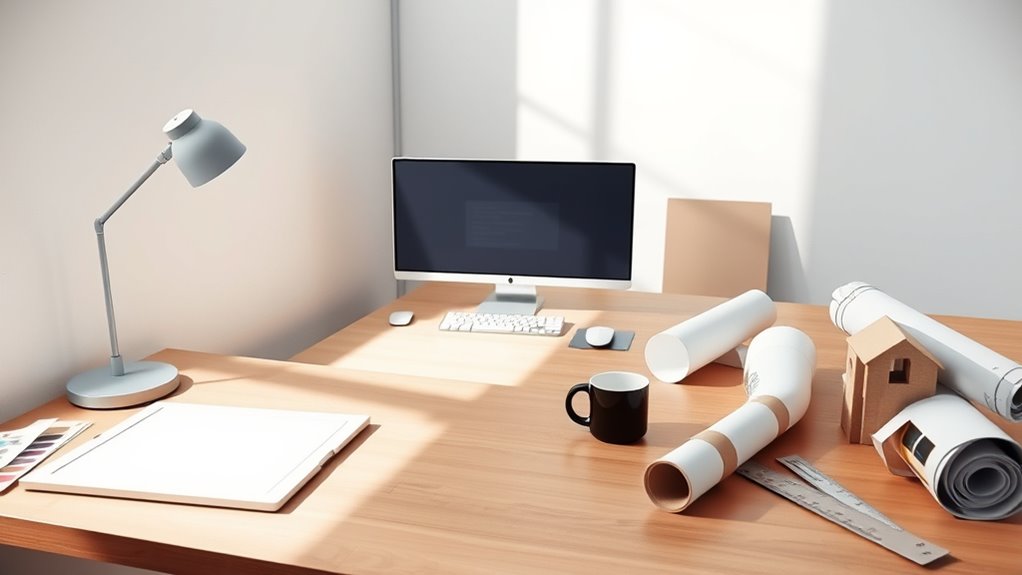

A minimalist workspace for designers, developers, and architects focuses on simplicity, function, and inspiration. Designers may favor balanced aesthetics with creative accents, while developers need calm, focused areas with neutral tones to boost productivity. Architects often combine practicality with inspiring colors and open space for ideas to flow. In all cases, clutter-free environments and ergonomic accessories support comfort and efficiency. Keep exploring to discover how tailored minimalist setups can elevate your work environment and boost your performance.
Open a free Amazon Business account
Business pricing, bulk buying and tax-exempt orders.
As an affiliate, we earn on qualifying purchases.
Key Takeaways
- Designers favor aesthetic elements with creative accents, balancing inspiration and visual harmony in their minimalist setups.
- Developers prioritize uncluttered, distraction-free spaces with calming colors and ergonomic accessories to enhance focus.
- Architects combine practical tools with inspiring color schemes and open layouts to foster both functionality and creativity.
- All three professions benefit from organized, clutter-free environments that support efficiency, mental clarity, and comfort.
- Minimalist principles universally improve productivity and well-being across designers, developers, and architects.

In today’s fast-paced world, a clutter-free workspace can boost your focus and productivity. When designing your environment, paying attention to details like ergonomic accessories and color palette choices can make a significant difference. These elements aren’t just about aesthetics—they enhance your comfort and mental clarity, helping you stay efficient throughout your workday.
A clutter-free workspace with ergonomic accessories and thoughtful colors boosts focus and productivity.
If you’re a designer, you probably understand the importance of visual harmony. Your workspace should reflect your creative sensibilities while remaining functional. Incorporate ergonomic accessories, like adjustable chairs and keyboard stands, to guarantee comfort during long hours. These tools help prevent fatigue and strain, enabling you to work more precisely. When it comes to color palette choices, opt for neutral tones with pops of muted color. This balance minimizes visual clutter and stimulates focus, letting your ideas flow without distraction. Minimalist design principles, such as clean lines and open space, are essential here, creating an environment that fosters inspiration while reducing sensory overload.
As a developer, your priority is often efficiency and concentration. Your workspace should facilitate deep focus, so choosing ergonomic accessories is imperative. Think ergonomic mice, wrist supports, and height-adjustable desks. These help you maintain proper posture, reducing discomfort that can break your concentration. When selecting colors, lean toward soothing shades like soft blues or grays. These hues promote calmness and mental clarity, making it easier to troubleshoot complex code or brainstorm solutions. Minimalist setups work best here; clear surfaces free of unnecessary peripherals or decorative items help keep your mind on the task at hand. The simplicity of your environment minimizes distractions, allowing you to immerse yourself in projects without feeling overwhelmed.
Architects, on the other hand, need a workspace that balances creativity with practicality. Ergonomic accessories, such as drafting stools and adjustable work tables, support the physical demands of sketching and model-building. Your color palette choices should inspire innovation; subtle earth tones or monochromatic schemes with strategic accents can stimulate architectural thinking without overpowering the senses. Keeping your space minimalist doesn’t mean sacrificing functionality—it’s about choosing only what you need and guaranteeing everything has a purpose. Open, organized areas enable quick access to tools and materials, which is essential during tight project deadlines. A clutter-free environment helps you visualize ideas more clearly and work more efficiently. Additionally, understanding how celestial influences can subtly affect personal traits may inspire a more intuitive approach to space planning and design.
No matter your profession, embracing minimalist principles with thoughtful ergonomic accessories and deliberate color palette choices can transform your workspace. By creating an environment that promotes comfort, reduces distractions, and inspires productivity, you set the foundation for success. It’s not about stripping away everything but about curating a space that supports your work style and enhances your focus. When your workspace aligns with your needs and preferences, you’ll find it easier to stay motivated and achieve your goals.

Marsail Ergonomic Office Chair: Office Desk Chair with High Back Mesh and Adjustable Lumbar Support Rolling Work Swivel Task Chairs with Wheel 3D Armrests and Headrest
- Fully Adjustable Headrest: 2D adjustable for personalized comfort
- Reclining Backrest: Adjusts from 90° to 120°
- 3D Adjustable Armrests: Customizable for various postures
As an affiliate, we earn on qualifying purchases.
As an affiliate, we earn on qualifying purchases.
Frequently Asked Questions
How Do Cultural Differences Influence Workspace Minimalist Designs?
Cultural differences considerably influence your minimalist workspace designs by shaping your understanding of aesthetics and design philosophies. For instance, you might incorporate clean lines and neutral tones inspired by Japanese minimalism or blend natural materials favored in Scandinavian cultures. These cultural influences guide your choices, ensuring the space feels authentic and functional while respecting local traditions. By embracing diverse aesthetics, you create a workspace that’s both minimal and culturally resonant.
What Are the Environmental Impacts of Minimalist Workspaces?
Think of a minimalist workspace like a breath of fresh air; it markedly reduces environmental impact. By incorporating biophilic design, you connect workers with nature, boosting well-being, while sustainable materials lessen resource depletion. These choices lower energy consumption and waste, making the space eco-friendly. By embracing minimalism, you’re not just creating a sleek environment—you’re actively helping the planet stay healthier and more balanced.
How Do Budgets Affect Minimalist Workspace Choices?
Your budget constraints directly influence your minimalist workspace choices. Limited funds mean you’ll prioritize cost-effective material selection, opting for affordable, durable options that still deliver clean, simple aesthetics. You might also focus on essential furniture and declutter regularly to keep costs down. By carefully balancing budget constraints with your design goals, you create a functional, stylish space without overspending, ensuring your minimalist workspace remains practical and inspiring.
Can Minimalist Workspaces Improve Team Collaboration?
Yes, minimalist workspaces can boost team collaboration. Think of it like a well-organized toolbox—ergonomic furniture reduces discomfort, while strategic color psychology fosters focus and positivity. For example, a clean, clutter-free environment helped a team I know improve communication and efficiency. When distractions are minimized, team members can connect more easily, share ideas freely, and work together seamlessly, ultimately enhancing overall productivity and creativity.
What Technology Trends Are Shaping Minimalist Workspace Designs?
You see that technology trends like furniture customization and innovative lighting solutions are shaping minimalist workspace designs. Customizable furniture allows you to adapt your space to your needs, promoting flexibility and comfort. Meanwhile, advanced lighting solutions, such as smart lighting systems, enhance ambiance and energy efficiency. These trends help you create a sleek, functional environment that boosts productivity while maintaining a clean, uncluttered aesthetic.

OAKOA Aesthetic Desk Organizer – Modern Desk Accessories – Boho Pen Holder
- Stylish Modern Design: Minimalist aesthetic complements any decor
- Durable Premium Materials: Built for lasting performance and elegance
- Stable Tipping-Resistant Base: Prevents tipping when fully loaded
As an affiliate, we earn on qualifying purchases.
As an affiliate, we earn on qualifying purchases.
Conclusion
In the end, embracing minimalism boosts productivity across all roles—designers, developers, and architects alike. Did you know that 78% of professionals report increased focus and efficiency with a clutter-free workspace? This shows that simplicity truly enhances your ability to concentrate and innovate. Whether you’re sketching ideas, coding, or planning structures, a minimalist environment helps you stay centered and creative. So, consider stripping down your space—you might just uncover your full potential.

ErGear 48 X 24 Inch Height Adjustable Electric Standing Desk, Black
- Electric Height Adjustable Standing Desk for Comfortable Work…
- Powerful Motor with Memory Presets – Equipped with…
- Exceptional Stability Steel Frame – Built with a…
As an affiliate, we earn on qualifying purchases.
As an affiliate, we earn on qualifying purchases.

MROCO Ergonomic Mouse Pad with Gel Wrist Rest, 9.4 x 8.1 in, Black
- Gel Cushioning for Comfort: Soft gel wrist rest reduces strain
- Smooth Lycra Surface: Provides silky feel and precise control
- Non-Slip Base: Ensures stable placement on desk
As an affiliate, we earn on qualifying purchases.
As an affiliate, we earn on qualifying purchases.
Summer Picks
summer essentials
As an affiliate, we earn on qualifying purchases.