

Clutter steals your time by making you search longer for essentials and slows down your daily routines. It drains your energy as maneuvering disorganized spaces leaves you physically fatigued. Plus, clutter can cost you extra money on duplicate items, repairs, and cleaning supplies. Over time, the stress and mental clutter also take a toll on your well-being. Keep going, and you’ll discover simple ways to reclaim your space and boost your efficiency.
Open a free Amazon Business account
Business pricing, bulk buying and tax-exempt orders.
As an affiliate, we earn on qualifying purchases.
Key Takeaways
- Disorganization causes time-consuming searches, leading to delays in daily tasks and reduced productivity.
- Clutter increases physical effort required to navigate spaces, causing fatigue and physical strain.
- Maintaining cluttered environments raises cleaning and maintenance costs due to dust, allergens, and damage.
- Disarray heightens stress and mental clutter, impairing focus, decision-making, and emotional well-being.
- Constant clutter prompts unnecessary purchases and replacements, escalating expenses and waste.

Lifewit 6 Pack Clothes Storage Bins with Lids, Foldable Blanket Storage Bags with Zippers, Clear Window and Reinforced Handles, Closet and Organization for Clothing, Sweater, Comforter, Bedding
- Reinforced Handles for Durability: Double-layer sewn handles for heavy loads
- High-Quality Breathable Material: Odorless, soft, and ventilated non-woven fabric
- Clear Windows for Easy Identification: Transparent panels to view stored items
As an affiliate, we earn on qualifying purchases.
As an affiliate, we earn on qualifying purchases.
The Physical Toll of Clutter on Daily Tasks

Clutter can substantially hinder your ability to complete daily tasks efficiently. When your space is overwhelmed with unnecessary items, finding what you need becomes time-consuming and frustrating. Using effective storage solutions can help clear surfaces and organize belongings, making tasks quicker to accomplish. Developing good organizational habits ensures that everything has a designated place, reducing the physical effort needed to locate items. Without these habits, you may find yourself constantly digging through piles or shelves, wasting precious energy. Over time, this ongoing disorganization can lead to physical fatigue, as your body works harder to navigate cluttered spaces. Incorporating intentional decor and furniture placement can also contribute to better organization and easier access. Implementing storage solutions that maximize space can further streamline your environment and reduce clutter. Recognizing the patterns in angel numbers may help you stay motivated to maintain a tidy space and foster positive energy. Additionally, utilizing appropriate cookie settings can improve your overall experience when managing digital clutter and maintaining productivity. Simplifying your environment through smart storage and consistent habits not only streamlines your routines but also lessens the physical strain caused by clutter. Establishing routines that promote space organization can make maintaining order more manageable and less overwhelming over time.

AWTATOS Closet Organizers and Storage, 6 Cube Storage Organizer, White
- Large Storage Capacity: Six 11.8-inch cubes for versatile storage
- Sturdy and Stable: Made with durable panels and metal frame
- Customizable Layout: DIY design for personalized configurations
As an affiliate, we earn on qualifying purchases.
As an affiliate, we earn on qualifying purchases.
How Disorganization Affects Mental Well-being

When your environment is disorganized, it can take a toll on your mental health. Clutter often leads to feelings of stress, overwhelm, and frustration, making it harder to focus and relax. Disorganization can also amplify negative thoughts and reduce your emotional resilience, leaving you more vulnerable to anxiety. Practicing mindfulness can help you stay present and manage these emotions more effectively. By intentionally decluttering and creating a calm space, you give your mind room to breathe. Incorporating mindfulness techniques such as deep breathing exercises and visualization can further promote mental clarity and emotional stability. This, in turn, boosts your mental well-being and strengthens your ability to handle daily challenges. Understanding the importance of mental health in relation to your environment encourages you to prioritize organization, fostering a healthier mindset and a more balanced emotional state. Incorporating comfort solutions such as supportive furniture and calming decor can further enhance your mental clarity and emotional stability, especially as research shows that sound healing science can promote relaxation and reduce tension in stressful environments.

Budding Joy 95L Under Bed Storage Containers, 4 Pack Closet Organizers Grey
- Premium Material: Odorless, breathable, foldable fabric
- Large Capacity: 90L storage for various items
- Clear Window: See-through PVC for easy access
As an affiliate, we earn on qualifying purchases.
As an affiliate, we earn on qualifying purchases.
The Hidden Financial Costs of Clutter

Hidden costs often lurk behind clutter, quietly draining your finances without you realizing it. When your space is disorganized, you may spend extra money on unnecessary storage solutions or duplicate items because you can’t find what you need. Clutter also leads to impulse purchases, as you buy more to compensate for lost or hidden belongings. Inefficient decluttering techniques can make it harder to keep track of what you own, causing you to buy replacements instead of repairing or repurposing items. Over time, these habits add up, increasing your expenses and reducing your savings. Additionally, mindful organization can be a powerful tool to visualize and implement effective organization strategies that save money. Implementing creative storage solutions can help optimize space and reduce clutter buildup, saving you both time and money. By investing in better storage solutions and applying effective decluttering techniques, you can minimize these hidden costs, save money, and create a more organized, financially healthier environment. Incorporating efficient storage methods can further streamline your space and reduce time spent searching for items. Developing a habit of regular space assessment can prevent clutter from building up and help maintain financial and physical order.

Harwaya Floating Shelves for Wall 36 Inches Long 8 Inch Deep, Large Wall Book Shelves for Bedroom, Rustic Wood Hanging Bookshelf for Living Room Office Kitchen Closet Organizers and Storage – Set of 3
- Ideal for Additional Storage: Creates space without floor clutter
- Customizable Installation: Install at various heights
- Sleek Modern Design: Minimalist wooden floating shelves
As an affiliate, we earn on qualifying purchases.
As an affiliate, we earn on qualifying purchases.
Strategies to Minimize Clutter and Boost Efficiency
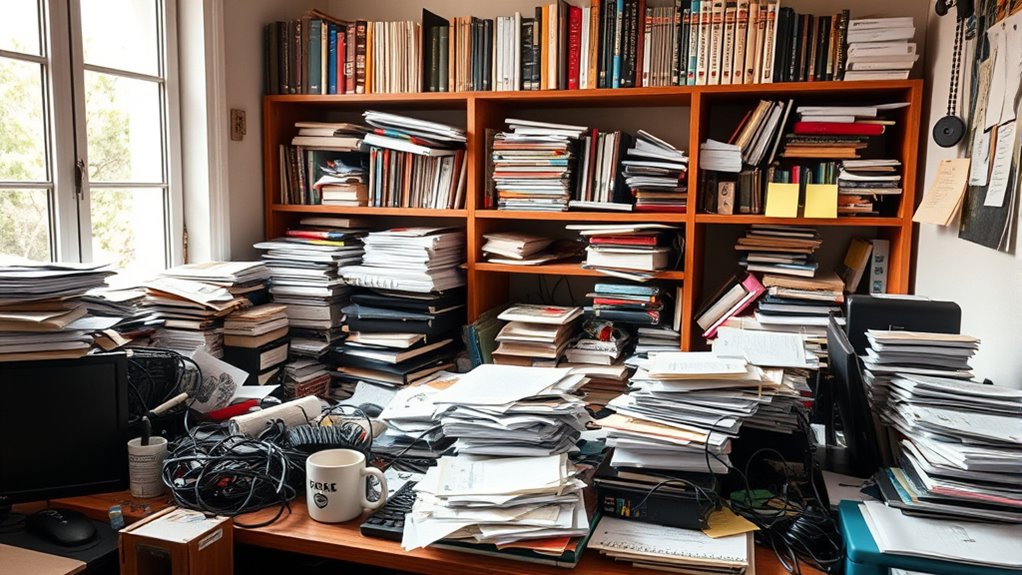
Implementing simple, consistent organization habits can considerably reduce clutter and improve your overall efficiency. Start by establishing decluttering routines that suit your schedule—set aside a few minutes daily or weekly to tidy up. Use effective storage solutions like labeled bins, shelves, and drawer dividers to keep items organized and accessible. Prioritize decluttering areas that cause the most chaos, such as your workspace or entryway. Regularly assess what you no longer need and remove it promptly. Incorporating these habits into your routine can help prevent clutter from accumulating. Proper storage solutions are essential for maintaining an organized environment. Creating a clutter-free space not only saves time but also enhances your mental clarity and reduces stress. Maintaining a clutter-free environment can also help you stay compliant with IRS regulations concerning the storage of valuable assets. Additionally, understanding common causes of disorganization can help you address underlying issues and develop more effective routines. Recognizing the impact of clutter on mental health can motivate sustained organizational efforts. By maintaining a disciplined approach to storage solutions and decluttering routines, you’ll create a more streamlined environment, save time searching for items, and boost your productivity every day.
Creating a Sustainable System for a Tidy Space

Building on effective decluttering habits, establishing a sustainable system guarantees your tidy space stays organized long-term. To do this, invest in practical storage solutions that maximize space and keep items accessible. Use bins, baskets, and labels to categorize belongings, making it easier to maintain order. Develop consistent decluttering habits, setting aside time weekly to reassess and reorganize. This prevents clutter from creeping back and ensures your system adapts as your needs change. Keep your storage solutions simple and functional, avoiding overcomplication. By committing to these habits and smart storage choices, you create a reliable framework that supports ongoing tidiness. Incorporating principles of space optimization can further enhance your storage efficiency. Additionally, choosing home security system options that fit your needs can help protect your organized space and give you peace of mind. Implementing organizational assessment tools can also streamline your efforts and keep everything in its place. This approach not only saves time but also reduces stress, helping you sustain a clutter-free environment effortlessly.
Frequently Asked Questions
How Does Clutter Impact Relationships With Family and Friends?
Clutter can strain your relationships with family and friends by increasing family conflict and causing social withdrawal. When your space is disorganized, you might feel embarrassed or overwhelmed, making you less likely to invite loved ones over or engage in social activities. This can lead to misunderstandings and emotional distance, as others may feel hurt or frustrated. Clearing clutter helps foster open communication, reducing conflict and encouraging more meaningful connections.
Can Decluttering Improve Sleep Quality and Overall Health?
Decluttering can greatly improve your sleep quality and overall health by enhancing sleep hygiene and reducing stress. When your space is organized, you create a calming environment that promotes restful sleep. Scientific studies suggest that a tidy space lowers cortisol levels, helping you relax more easily. Less stress means better immune function and mental clarity. So, taking time to declutter not only refreshes your environment but also supports your well-being and sleep health.
What Are the Emotional Barriers to Organizing and Decluttering?
You might find emotional attachment to belongings makes decluttering tough, as it taps into memories and feelings. Decision fatigue also plays a role, draining your energy with each choice you face about what to keep or discard. These emotional barriers create resistance, making it harder to organize. Recognize these feelings, take small steps, and remind yourself that letting go can bring clarity and peace.
How Often Should One Revisit Their Organization System?
You should revisit your organization system every few months to keep it effective. Set a maintenance schedule that fits your routine, like quarterly or bi-monthly, and conduct organizational audits during these times. Regularly evaluating your system helps identify clutter buildup or inefficiencies, ensuring your space remains functional. Staying consistent with these reviews prevents clutter from creeping back, saving you time and energy in the long run.
Are There Specific Tools or Products That Effectively Reduce Clutter?
Imagine you’re overwhelmed with papers and gadgets, but a simple storage solution like labeled bins easily sorts everything. Decluttering apps can also help you identify what to keep or toss, making the process more manageable. These tools work together to reduce clutter efficiently, saving you time and energy. By investing in practical storage solutions and using decluttering apps, you create a more organized, stress-free space.
Conclusion
So, isn’t it ironic how clutter, which promises to hold everything, ends up costing you so much—time, energy, and even money? You spend hours hunting for misplaced items, only to realize that organizing could save you more than it costs. Instead of being a sanctuary, your space becomes a drain. Maybe it’s time to embrace simplicity and discover that less truly is more—more peace, more efficiency, and surprisingly, more savings.
Flea & tick season Picks
flea and tick prevention
As an affiliate, we earn on qualifying purchases.