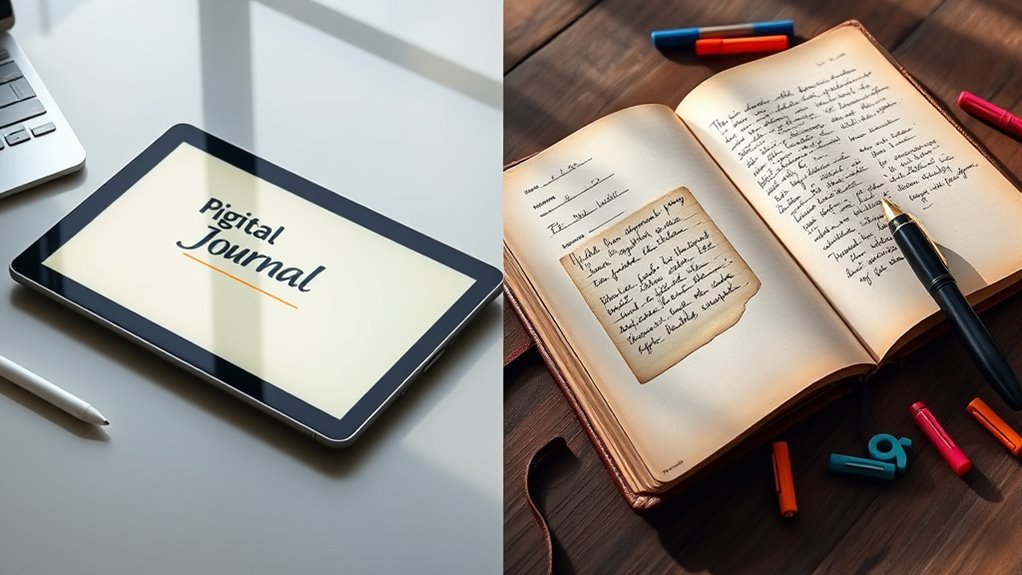

Digital journaling offers quick organization and easy access but can be interrupted by notifications, making it harder to stay focused. In contrast, paper journaling minimizes digital noise, encouraging a calmer, more mindful process that deepens emotional exploration. If you prefer structured efficiency or multimedia integration, digital works well. For more about balancing focus and journaling styles, explore how each method impacts your reflection habits and emotional clarity.

Get your wardrobe favorites delivered free with Prime
- Fast, free delivery on millions of items
- Prime Video, Amazon Music and more included
- Member-only deals all year
Key Takeaways
- Paper journaling minimizes digital distractions, fostering deeper focus and mindfulness during reflection sessions.
- Digital journaling offers quick access and organization, but notifications can interrupt concentration.
- Handwritten notes promote emotional depth and authenticity, enhancing focus on personal insights.
- Digital methods enable multimedia integration, which may divert attention from the core journaling process.
- Environmental factors like high contrast setups can improve focus for both digital and paper journaling.
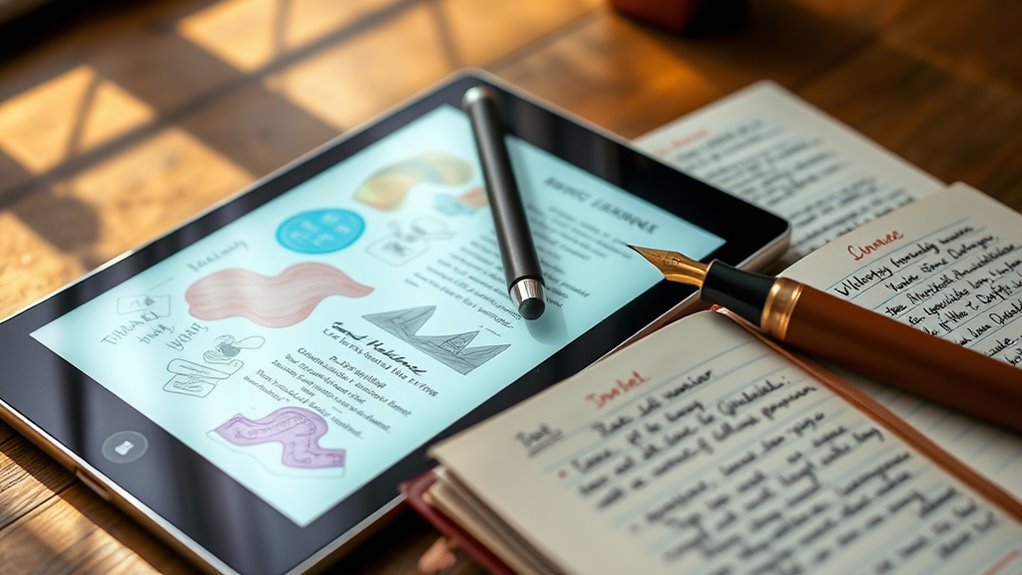
Have you ever wondered which journaling method suits you best—digital or paper? When it comes to note-taking efficiency, each approach offers distinct advantages and challenges. Digital journaling allows you to quickly organize and search through your notes, making it easier to keep track of ideas, deadlines, or insights. With the tap of a finger, you can add, delete, or modify entries without the clutter of paper. Plus, features like tagging and categorization improve your ability to locate specific thoughts or information swiftly, enhancing overall productivity. On the other hand, paper journaling may seem slower, but it encourages a more deliberate process. Writing by hand can help you remember details better and fosters a deeper connection to your thoughts, which can improve emotional expression. When you’re jotting down feelings, sketches, or spontaneous insights, the tactile experience of paper often feels more personal and authentic.
In terms of emotional expression, many find paper journaling more conducive to processing complex feelings. The physical act of writing by hand can serve as a calming ritual, allowing you to pour out emotions more freely without the distractions of notifications or digital interruptions. The imperfections in handwriting, the crossings out, and the free-flowing ink all add a layer of authenticity that digital text might lack. For some, this rawness enhances emotional clarity and self-awareness. Conversely, digital journaling offers unique tools for emotional expression through multimedia elements—photos, voice notes, and videos—that enrich your entries. You can easily add a voice recording of an emotional moment or include images that symbolize your feelings, making your journal more vivid and multidimensional.
However, each method’s impact on focus varies. Digital journaling, while efficient, can sometimes be a double-edged sword. Notifications and the temptation to multitask can fragment your attention, reducing your ability to stay present during your journaling sessions. The constant connectivity might hinder deep reflection, especially if you’re prone to distractions. Paper journaling, by contrast, minimizes these interruptions. Sitting down with a notebook creates a dedicated space free from digital noise, helping you cultivate a focused mindset. This quiet environment can encourage more profound emotional exploration and clarity, as you’re less likely to be pulled away by notifications or the urge to check your devices. Additionally, incorporating high contrast ratios in your home setup can improve focus and reduce eye strain during extended journaling sessions. Ultimately, choosing between digital and paper journaling depends on what you value most—whether it’s the speed and organization that digital offers or the emotional depth and mindfulness that paper encourages. Both methods can enhance your note-taking efficiency and emotional expression, but their impact on focus varies. Think about your routines and preferences. If you crave quick access and multimedia integration, digital might suit you best. If you prefer a mindful, distraction-free process that deepens emotional insight, paper journaling could be your ideal choice.
Popular right now

Sony WH-1000XM6 Wireless Noise-Canceling Over-Ear Headphones, Blue, Bundle

Sony WH-1000XM4C Wireless Noise-Cancelling Headphones, Black

Shark Navigator Robot Vacuum with Self-Empty Base, Dark Grey (RV2120AE)
As an affiliate, we earn on qualifying purchases.
Frequently Asked Questions
How Does Journaling Impact Mental Health?
Journaling boosts your mental health by allowing emotional expression and offering stress relief. When you put your thoughts on paper or digital space, you process feelings more effectively, reducing anxiety. It helps you identify patterns and gain clarity. Regular journaling creates an outlet for releasing emotions, which can improve mood and resilience. By making time for this practice, you actively support your mental well-being and foster a healthier, more balanced mindset.
Can Digital Journaling Improve Productivity?
Picture your digital journal as a sleek, organized toolbox, ready to boost your productivity, unlike cluttered paper notes. Digital journaling improves productivity by enhancing digital organization, making tasks easier to prioritize and track. Plus, it offers handwriting clarity, reducing misunderstandings. You can quickly search, edit, and access your entries, saving time and keeping you focused on your goals. Embracing digital journaling helps streamline your workflow effectively.
What Are the Best Tools for Digital Journaling?
You should try note-taking apps like Evernote or Notion for versatile digital journaling, as they sync across devices and organize your thoughts easily. Pair these with handwriting devices such as the Apple Pencil or stylus-enabled tablets to mimic paper journaling and boost focus. These tools combine the convenience of digital storage with the tactile feel of handwriting, helping you stay engaged and productive in your journaling routine.
Is Paper Journaling More Environmentally Friendly?
Think of paper journaling as planting a seed—you’re creating waste that can be recycled, offering benefits like reducing landfill buildup. While paper journaling uses resources, recycling benefits the environment by lowering paper waste. It’s more eco-friendly than digital options, especially if you choose recycled paper and responsibly dispose of your journals. So, yes, paper journaling can be more environmentally friendly if you prioritize recycling and minimal waste.
How Secure Is Digital Journaling Against Data Loss?
Digital journaling can be quite secure if you implement proper data backup strategies and stay aware of cybersecurity risks. You should regularly back up your files to the cloud or external drives and use strong, unique passwords. Keep your software updated to protect against vulnerabilities. While no system is completely risk-free, these steps help minimize data loss and keep your journal safe from cyber threats.
Conclusion
Choosing between digital and paper journaling is like picking your favorite trail—you’ll find what suits your style best. Digital journaling offers speed and portability, while paper journaling provides a tangible, distraction-free space. Both can boost your focus if used intentionally. Experiment with each to discover what fuels your creativity and clarity. Ultimately, whether you write on screens or paper, your journal becomes a trusted companion on your journey of self-discovery.