
Juggling multiple devices can overload your brain, making it harder to focus and process information effectively. Constant notifications and task switching drain mental energy, increase mistakes, and boost stress. Without boundaries, you may find it difficult to engage in deep work or stay productive. Managing alerts, creating focused environments, and practicing digital hygiene can help restore your concentration. Keep exploring to uncover how you can optimize your setup and regain control.
Key Takeaways
- Multitasking across multiple devices increases cognitive load, reducing focus and increasing errors.
- Constant notifications from various devices interrupt deep work, fragment attention, and cause digital fatigue.
- Lack of boundaries and cluttered setups make it harder to maintain sustained concentration.
- Frequent task switching and distraction management techniques are essential to protect focus.
- Ergonomic and digital hygiene practices help create an environment conducive to sustained attention.
The Science Behind Multitasking and Distraction
Although multitasking seems like an efficient way to get more done, your brain actually struggles to focus on multiple tasks at once. Neuroscience insights reveal that switching between tasks increases your cognitive load, making it harder to process information effectively. Instead of doing two things simultaneously, your brain rapidly shifts focus, which wastes mental energy and reduces productivity. This constant toggling hampers your ability to retain information and complete tasks efficiently. When your cognitive resources are divided, you’re more prone to mistakes and slower responses. Recognizing how multitasking taxes your brain helps you understand why distractions happen easily and why your focus suffers. Additionally, understanding the impact of executive function patterns can help you manage mental energy better. For example, certain cognitive processes are responsible for task switching, and optimizing these can improve focus. Enhancing your cognitive load management techniques can further support sustained attention. Moreover, headphone usage—such as noise-canceling headphones—can reduce auditory distractions and help maintain concentration. Ultimately, managing your cognitive load is key to maintaining attention and working smarter, not harder.
Signs Your Devices Are Disrupting Your Focus

If you notice you’re constantly stopping to check notifications, your devices might be pulling your attention away. Multitasking with multiple screens can make you less productive and more prone to mistakes. When focusing becomes a struggle, it’s a clear sign your devices are disrupting your flow. Incorporating practical mindfulness techniques can help you regain control and create a calmer, more focused environment. Recognizing how distractions impact your attention span is essential for developing better focus strategies. Additionally, understanding how digital fatigue affects your mental clarity can motivate you to set healthier boundaries with technology. Building awareness of trustworthiness of device tools can also help you choose and manage your gadgets more effectively, reducing unnecessary interruptions. Furthermore, understanding the contrast ratio of your devices can influence how easily your environment supports concentration and reduces eye strain.
Constant Notification Interruptions
Constant notification interruptions are a clear sign that your devices are disrupting your focus. Each ping, alert, or badge diverts your attention away from important tasks, making it hard to stay present. Over time, this constant distraction hampers your ability to engage in mindful browsing and develop healthier digital habits. To combat this, consider scheduling regular digital detox periods and turning off non-essential notifications. Recognize which notifications truly matter and mute the rest. Remember, reducing interruptions allows you to regain control over your focus and productivity. Additionally, understanding the importance of special events and themed breakfasts can help you create engaging community experiences that foster social interaction and diverse participation. Being aware of cultural and regional breakfasts can also inspire you to explore new culinary routines that refresh your mornings and boost your overall well-being. Managing your digital environment effectively can further support sustained concentration and mental clarity, helping you stay focused amidst the digital noise. Incorporating distraction management techniques, such as setting specific focus periods, can significantly improve your ability to concentrate for longer stretches.
Multitasking Decreases Productivity
Multitasking might seem like a way to get more done, but in reality, it often decreases your productivity. When you switch between tasks, your brain struggles to focus, causing mistakes and slower progress. Mindful multitasking, where you intentionally prioritize one task at a time, can help improve efficiency. Constant device disruptions make it tempting to handle multiple things simultaneously, but this spreads your attention thin. To combat this, consider a digital detox—step away from devices to reset your focus. By reducing the urge to multitask, you give yourself the chance to work more effectively and complete tasks with better quality. Recognizing that multitasking hampers productivity is the first step toward creating a more focused, less disrupted work environment. Incorporating a dedicated workspace can also help minimize distractions and improve concentration. Additionally, understanding how distractions affect your brain can motivate you to establish boundaries and protect your focus.
Difficulty Maintaining Focus
Devices often interrupt your focus without you even realizing it. You might find yourself drifting between tasks, struggling to stay engaged, and feeling overwhelmed. This difficulty maintaining focus stems from constant notifications and multitasking, which fragment your attention. Without mindful awareness, your mind quickly becomes distracted, making it hard to complete deep work. Improving your ergonomic setup can help reduce physical discomfort that distracts you, while incorporating mindfulness practices trains you to notice when your focus drifts. These strategies help you regain control over your attention, making it easier to stay present and productive. Recognizing these signs is the first step toward minimizing device disruptions, creating a more focused work environment, and reclaiming your concentration. Paying attention to distraction management can further enhance your ability to stay focused amidst device interruptions, especially considering how mental and emotional well-being techniques support sustained attention. Implementing attention restoration strategies can also aid in recovering focus after interruptions. Additionally, understanding AI security vulnerabilities can help you develop strategies to protect your digital environment, reducing unexpected distractions caused by security threats. Being aware of entertainment and parks operating hours can help you plan your breaks more effectively, avoiding unnecessary digital distractions during peak times.
The Psychological Toll of Constant Connectivity

While connectivity offers undeniable convenience, it also takes a significant psychological toll. Constant notifications and the urge to check devices can increase stress and anxiety, making it hard to achieve mental clarity. This ongoing distraction chips away at your ability to focus and relax. To counteract this, a digital detox becomes essential, giving your mind a break from the digital noise. Regularly disconnecting helps restore mental clarity, reduces feelings of overwhelm, and improves overall well-being. Without intentional breaks, you risk becoming overwhelmed, exhausted, and less productive. Recognizing the psychological impact of constant connectivity encourages you to create boundaries that support mental health, helping you regain control over your focus and emotional balance. Incorporating mindfulness practices can further enhance your ability to detach and recharge, especially as they promote emotional regulation and resilience. Additionally, understanding the psychological toll of digital overload can motivate more deliberate use of technology for a healthier mental state.
How Switching Between Devices Hampers Deep Work
Switching between multiple devices disrupts your ability to achieve sustained focus, making deep work more difficult. Each switch forces your brain to reorient, breaking concentration and increasing cognitive load. Poor device ergonomics, like awkward screen angles or uncomfortable keyboards, add to the distraction, causing physical discomfort that hampers focus. Constant toggling also skews your screen time balance, where time spent jumping between apps and devices reduces dedicated periods of deep work. Instead of maintaining flow, your attention becomes fragmented, requiring more effort to re-engage. To improve, consider optimizing device ergonomics for comfort and setting strict boundaries on device use. Prioritizing fewer devices and structured screen time helps create an environment conducive to sustained, undistracted focus.
The Impact of Notifications and Alerts on Concentration

Notifications and alerts intrude on your focus by constantly demanding your attention, making it difficult to sustain deep concentration. This notification overload fragments your mental bandwidth, forcing you to shift gears repeatedly. Each alert, whether a message, email, or app notification, contributes to alert fatigue, leaving you exhausted and less able to maintain sustained effort. The more alerts you receive, the more your brain becomes conditioned to expect interruptions, reducing your ability to enter a state of flow. Over time, this constant barrage diminishes your productivity and hampers creative thinking. You might find yourself checking notifications compulsively, unable to resist the urge to see what’s new. Recognizing how these interruptions chip away at your focus is the first step toward regaining control over your attention.
Strategies to Minimize Distractions From Multiple Screens

To effectively minimize distractions from multiple screens, you need to implement intentional strategies that streamline your digital environment. Start with a digital detox by limiting non-essential devices during focused work sessions. Turn off unnecessary notifications and close unused tabs to reduce visual clutter. Practice mindful browsing by setting specific intentions before engaging with content, avoiding mindless scrolling. Use app blockers or focus tools to restrict access to distracting sites. Establish designated times to check emails and social media, preventing constant interruptions. Rearranging your workspace to prioritize essential screens helps maintain focus. These steps create a calmer digital space, reducing overwhelm and improving concentration. By consciously managing your devices, you gain better control over your attention and productivity.
Building Boundaries: When and How to Disconnect
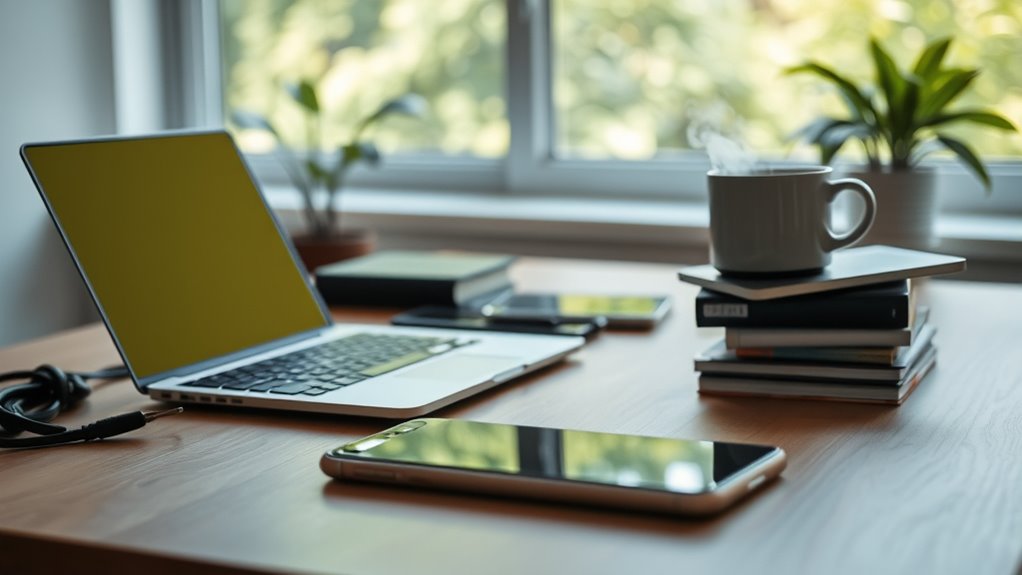
After reducing distractions from multiple screens, the next step is setting clear boundaries around your digital time. Creating tech free zones in your home or workspace helps reinforce these limits and signals when it’s time to disconnect. Designate specific areas where devices are off-limits, like the dining table or bedroom, to foster focus and relaxation. Regular digital detox periods are essential; schedule intentional breaks from screens daily or weekly to reset your mind. During these times, avoid checking emails, social media, or work apps. Building boundaries isn’t about complete avoidance but about intentionally choosing when to disconnect, allowing you to recharge and regain control over your focus. Clear boundaries help prevent digital overwhelm and cultivate healthier relationships with your devices.
The Role of Digital Hygiene in Maintaining Focus

Maintaining good digital hygiene is essential for staying focused in today’s hyper-connected world. Practicing mindful browsing keeps you aware of your online habits, reducing distractions. Regular digital detoxes give your mind a break from constant notifications, helping restore focus. To understand this better, consider the following table:
| Action | Purpose | Benefit |
|---|---|---|
| Digital Detox | Unplug from devices | Recharges mental clarity |
| Mindful Browsing | Consciously limit online time | Reduces mindless distractions |
| Clear Notifications | Disable unnecessary alerts | Minimizes interruptions |
| Scheduled Check-ins | Designate specific times | Prevents constant device use |
| Organized Devices | Keep apps and tabs tidy | Enhances focus and efficiency |
Tools and Apps to Manage Device Usage Effectively

Using the right tools can help you set clear limits on your device usage and stay focused. Many apps offer features like usage tracking and focus modes to minimize distractions, while device management tools let you control app access across multiple devices. By choosing effective solutions, you can create a more intentional digital environment that supports your productivity.
App Usage Limits
Managing your device usage becomes easier when you set clear limits with dedicated tools and apps. App usage limits help you define how much time you spend on specific apps or categories, reinforcing your digital boundaries. These tools allow you to schedule breaks, restrict access during focus periods, or set daily caps, ensuring you don’t get distracted by notifications or endless scrolling. By establishing these limits, you regain control over your screen time and prevent apps from encroaching on your productive hours. Many platforms, like iOS Screen Time or Android Digital Wellbeing, offer built-in options, while third-party apps provide customizable solutions. Using app usage limits keeps your focus sharp, reduces overwhelm, and promotes healthier device habits, ultimately supporting your ability to stay engaged with meaningful tasks.
Focus-Enhancing Features
Focus-enhancing features are powerful tools that help you stay on track by minimizing distractions and promoting mindful device use. Many apps and built-in tools enable you to block notifications, schedule focused sessions, or set app time limits, making it easier to resist impulse browsing. Incorporating mindfulness practices alongside these features can improve your overall focus and reduce stress. Additionally, optimizing your ergonomic setup—such as adjusting screen height and seating—can prevent physical discomfort that distracts you from your tasks. By combining focus-enhancing tools with mindful habits and a comfortable workspace, you create an environment that supports sustained attention. These strategies work together to make your multi-device setup less overwhelming and more conducive to productivity.
Device Management Tools
Device management tools are essential for maintaining control over your digital habits, helping you allocate your time more effectively across multiple devices. These tools enable seamless app synchronization, so you can switch between devices without losing your place or flow. They also promote better device ergonomics by allowing you to set usage limits, schedule downtime, or block distracting apps during work periods. With the right management apps, you can track your screen time, identify usage patterns, and make informed adjustments to stay focused. Using these tools reduces the risk of multitasking overload and helps create a healthier digital environment. Ultimately, they empower you to balance productivity and leisure, making your multi-device setup work for you rather than against you.
Creating a Workspace That Enhances Focus and Productivity

Creating a workspace that boosts focus and productivity starts with thoughtful organization and mindful design. An ergonomic setup ensures you stay comfortable and reduce fatigue during long work sessions, helping you maintain concentration. Invest in an adjustable chair, proper desk height, and supportive accessories to promote good posture. Ambient lighting is equally important; natural light is ideal, but if unavailable, opt for soft, warm lighting that minimizes glare and eye strain. Keep your workspace tidy, with essential tools within reach, and eliminate clutter that distracts you. A well-designed environment minimizes distractions and creates a calm, inviting space that encourages focus. By combining ergonomic principles with suitable lighting, you’ll set the stage for sustained productivity and a more enjoyable work experience.
Frequently Asked Questions
How Does Multi-Device Use Affect Long-Term Brain Health?
Using multiple devices can negatively impact your long-term brain health by disrupting neuroplasticity impacts and increasing cognitive fatigue. Constant switching hampers your brain’s ability to adapt and strengthen neural pathways, leading to reduced focus and mental resilience over time. This continuous multitasking strains your cognitive resources, making it harder to concentrate and process information efficiently. To protect your brain, limit device use and focus on single-tasking to support healthy neuroplasticity impacts.
Can Reducing Device Use Improve Sleep Quality and Focus?
Absolutely, reducing device use can remarkably boost your sleep quality and focus. Think of a digital detox as clearing the fog from your mind, allowing better sleep hygiene to work its magic. When you limit screen time, especially before bed, you create space for restorative rest and sharper concentration. Embrace this change—your mind and body will thank you, and you’ll find it easier to stay present and focused throughout the day.
What Are the Best Habits to Establish for Better Device Management?
To improve device management, you should establish habits like scheduling regular digital detox periods, where you disconnect from screens completely. Practice mindful browsing by setting specific goals for each session and avoiding mindless scrolling. Turn off notifications to minimize distractions, and create device-free zones in your home. These habits help you regain focus, reduce overstimulation, and foster healthier technology use, ultimately improving your productivity and well-being.
How Do Certain Apps Contribute to Decreased Attention Spans?
Certain apps contribute to decreased attention spans by promoting digital distraction and encouraging app addiction. They often use notifications, infinite scrolls, or rewards that keep you hooked, making it hard to focus on tasks. When you spend too much time on these apps, your ability to concentrate diminishes, and your attention becomes fragmented. To stay focused, limit your app usage and turn off non-essential notifications to reduce digital distraction.
Are There Specific Techniques to Regain Focus After Device Distractions?
Think of your focus as a garden that needs tending. To regain it after device distractions, try mindfulness exercises to clear your mind and reset your focus. Practice time blocking to allocate specific periods for tasks, minimizing interruptions. These techniques help you reclaim control, making it easier to stay on track and nurture your productivity. With consistent effort, you’ll cultivate a more focused, distraction-free environment.
Conclusion
To truly thrive, take control of your devices. Ditch distractions, develop digital discipline, and design a dedicated, distraction-free domain. By establishing boundaries and balancing your bandwidth, you bolster your brain’s ability to focus fully. Remember, reducing interruptions rejuvenates your productivity and restores your peace. So, simplify, set safeguards, and savor the satisfaction of sustained, focused success—because your best work begins when your devices don’t dominate your day.