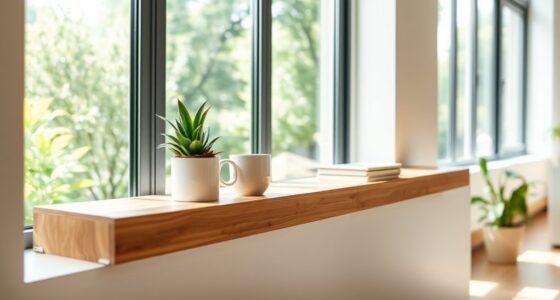
Co-working spaces are adopting minimalist designs to create calm, flexible environments that boost your productivity and well-being. These spaces utilize simple layouts, natural light, and neutral colors to minimize distractions and promote focus. Multi-functional furniture and space-saving solutions make it easy to adapt the space for different needs. Plus, a clean, clutter-free environment is easier to maintain and more cost-effective. Keep exploring to discover how these design choices support your work lifestyle.
Key Takeaways
- Minimalist design maximizes space efficiency, making co-working areas more adaptable and suitable for diverse work styles.
- Simplicity reduces visual clutter and noise, enhancing focus and psychological well-being for users.
- Clean, uncluttered environments are easier to maintain and promote a calming, productive atmosphere.
- Minimalist aesthetics align with modern technological integration, supporting flexible, multi-purpose workspace functions.
- Cost-effective and sustainable, minimalist design minimizes expenses while fostering a sleek, contemporary look.

Xyulmeo Mid Century Modern Electric Standing Desk with Storage, 55 x 22 Inch Small Sit Stand Up Desk, Wood Adjustable Height Computer Executive Desk for Home Office, Laptop, Walnut
【Electric Height Adjustable】This standing desk features a motorized lift system that allows you to adjust the desk height…
As an affiliate, we earn on qualifying purchases.
As an affiliate, we earn on qualifying purchases.
The Rise of Simplicity in Workspace Design
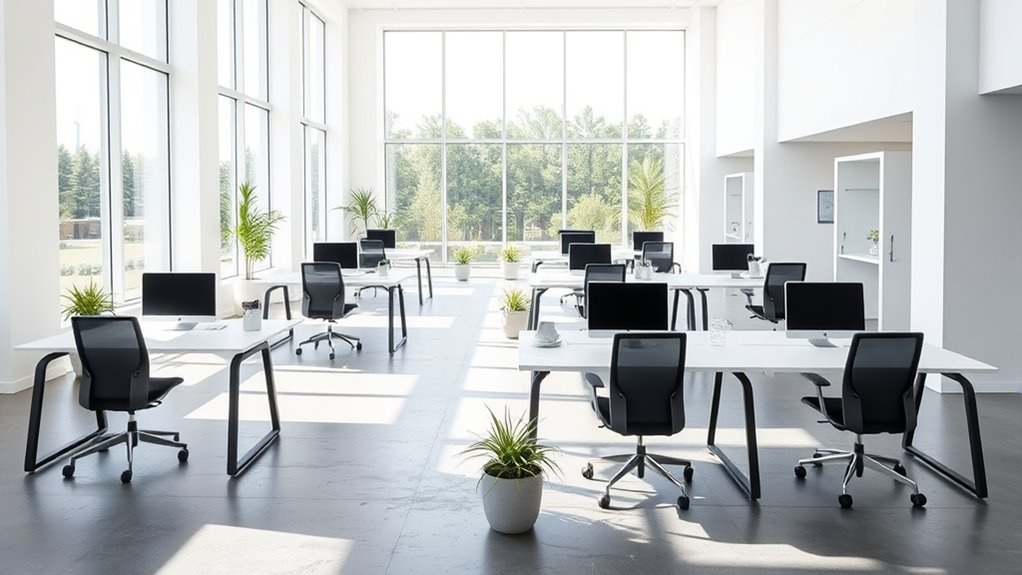
In recent years, there’s been a clear shift toward embracing simplicity in workspace design, especially in co-working spaces. This trend focuses on creating calming environments that foster productivity and well-being. Incorporating biophilic elements, like natural lighting, plants, and organic textures, helps connect users with nature, reducing stress and enhancing focus. Simplified layouts eliminate clutter, promoting clear movement and ease of navigation. These minimalistic approaches also support a clutter-free environment, which is essential for maintaining focus and reducing distractions. Additionally, integrating contrast ratio considerations into design can improve visual clarity and reduce eye strain, making spaces more comfortable for extended use. Ensuring proper attention management within these environments can further enhance user experience and productivity. Acoustic solutions are also essential, as they minimize noise distractions and create quieter zones for concentration. These features work together to produce a clean, serene atmosphere that supports collaboration without overwhelming the senses. By prioritizing simplicity, co-working spaces become more inviting, functional, and adaptable, meeting the needs of diverse users while maintaining an aesthetic that’s both modern and calming. Furthermore, implementing professional architectural solutions can optimize space utilization and ensure design consistency throughout the environment. Additionally, facilitating collaboration in a minimalist environment can lead to increased creativity and idea sharing among users.

Focusound 52 Pack Acoustic Foam Panels 1" x 12" x 12" Sound Proof Foam Panles Soundproofing Noise Cancelling Wedge Panels for Home Office Recoding Studio with 300PCS Double-Side Adhesive
Soundproofing – Acoustic foam panels triangular grooves structure for better noise absorption, helps to reduce and absorb unwanted…
As an affiliate, we earn on qualifying purchases.
As an affiliate, we earn on qualifying purchases.
Enhancing Focus Through Minimalist Aesthetics

Minimalist aesthetics in co-working spaces substantially boost focus by reducing visual clutter and sensory overload. When the environment is simple and clean, your mind can concentrate better on tasks without distractions. Effective use of color psychology helps create calming atmospheres, such as soft neutrals or muted tones, which promote relaxation and mental clarity. Acoustic treatment plays a vital role too; soundproofing and strategic placement of materials minimize noise, enhancing concentration. To optimize focus, consider these elements:
- Use muted, calming colors to foster tranquility
- Incorporate acoustic panels or soft furnishings for sound control
- Keep decor minimal to prevent visual distractions
- Awareness of self-awareness can aid in designing more effective and personalized workspace environments. Additionally, selecting components like electric bike conversion kits that are reliable and easy to install can reduce stress and streamline your daily routines, supporting a more focused work mindset. Paying attention to spatial layout can also help in designing an environment that naturally guides focus and reduces unnecessary movement.
A well-considered lighting design can further enhance concentration by reducing eye strain and creating a comfortable ambiance.

Caromolly Light Therapy Lamp, Sunlight Lamp 10000 Lux with Remote Control, 3 Color Temperature & 4 Brightness Level & Timer, Daylight Lamp for Home, Office, Decoration
UV-Free Light Therapy Lamp: Our happy therapy light lamp emits 10,000 lux(max) mimetic natural light, which provides a…
As an affiliate, we earn on qualifying purchases.
As an affiliate, we earn on qualifying purchases.
Flexibility and Versatility of Minimalist Furniture

Minimalist furniture is designed to adapt to your changing needs, offering multi-functional pieces that save space and enhance efficiency. You can easily reconfigure your workspace with versatile arrangements, making it suitable for different tasks or team sizes. Space-saving solutions help keep your environment open and clutter-free, boosting productivity and comfort. Incorporating smart marketing strategies can also help promote your space effectively and attract the right tenants or clients. Additionally, embracing mindfulness and clarity in your design choices can foster a more focused and harmonious work environment. Using efficient heating solutions, such as wood-burning stoves, can also contribute to creating a cozy and sustainable atmosphere within your space. Regularly assessing your layout and furniture choices ensures continued adaptability to your evolving needs.
Multi-Functional Furniture Pieces
Multi-functional furniture pieces are essential in co-working spaces because they maximize efficiency without sacrificing style. These versatile items often combine ergonomic comfort with aesthetic appeal, making the workspace both functional and inviting. They can serve multiple purposes, saving space while enhancing productivity. For example, a sleek desk that doubles as storage or a fold-away table that transforms into a lounge seating area. Incorporating space optimization strategies ensures that every square foot is utilized effectively, promoting a productive environment. Additionally, choosing furniture with multi-purpose features can help streamline the overall design and facilitate flexible use of the space.
Adaptable Workspace Arrangements
Have you ever noticed how adaptable furniture can transform a static workspace into a dynamic environment? Minimalist furniture in co-working spaces offers remarkable flexibility, allowing you to reconfigure your area quickly for different tasks. With sleek, multi-purpose desks and modular seating, you can easily shift from solo work to team collaboration. Incorporating neon lighting adds a modern touch, creating an energizing atmosphere that encourages productivity. Vintage decor elements, like retro chairs or antique accents, blend seamlessly with minimalist pieces, adding personality without clutter. This versatility lets you personalize your workspace while maintaining a clean, open feel. By choosing adaptable furniture, you create a space that evolves with your needs, fostering creativity and efficiency in a minimalist setting. Additionally, integrating spiritual symbolism such as symbols of transformation can subtly influence the ambiance, promoting positive energy and focus. Incorporating cozy textiles can enhance comfort and warmth, making the environment more inviting for extended work sessions. Moreover, selecting innovative and sustainable materials for furniture can support eco-friendly practices and sustainability goals. Incorporating modern technology such as wireless charging stations and smart lighting can further enhance functionality and convenience in minimalist co-working spaces.
Space-Saving Design Solutions
In small co-working spaces, maximizing every square inch becomes a priority, and flexible furniture plays a key role in achieving this goal. Minimalist designs focus on space-saving solutions that adapt to your needs, enhancing versatility without sacrificing style. Multi-functional furniture allows you to switch from individual work to collaborative sessions seamlessly. You can incorporate artistic expressions through sleek, customizable pieces that reflect your brand’s personality. Acoustic treatments integrated into furniture help control sound, creating a comfortable environment. Additionally, fold-away desks and stackable chairs free up space when not in use. These solutions optimize your layout, ensuring your space remains open and inviting while supporting various work styles. Flexibility and versatility in minimalist furniture empower you to make the most of limited square footage. Incorporating multi-purpose furniture can further enhance the adaptability of your workspace, making it easier to accommodate changing needs. Using space-saving design solutions can also improve overall functionality and comfort in your co-working environment.

ZckyCine 67" Expandable Dining Table Set with Chairs – Modern Rectangular Wooden Table, Space-Saving Multifunctional Furniture for Kitchen, Apartment, or Small Dining Room
Sturdy And Durable: The Tabletop Of The Dining Room Table Is Made Of High-Quality Wood, And The Sturdy…
As an affiliate, we earn on qualifying purchases.
As an affiliate, we earn on qualifying purchases.
The Psychological Benefits of Clean and Open Spaces
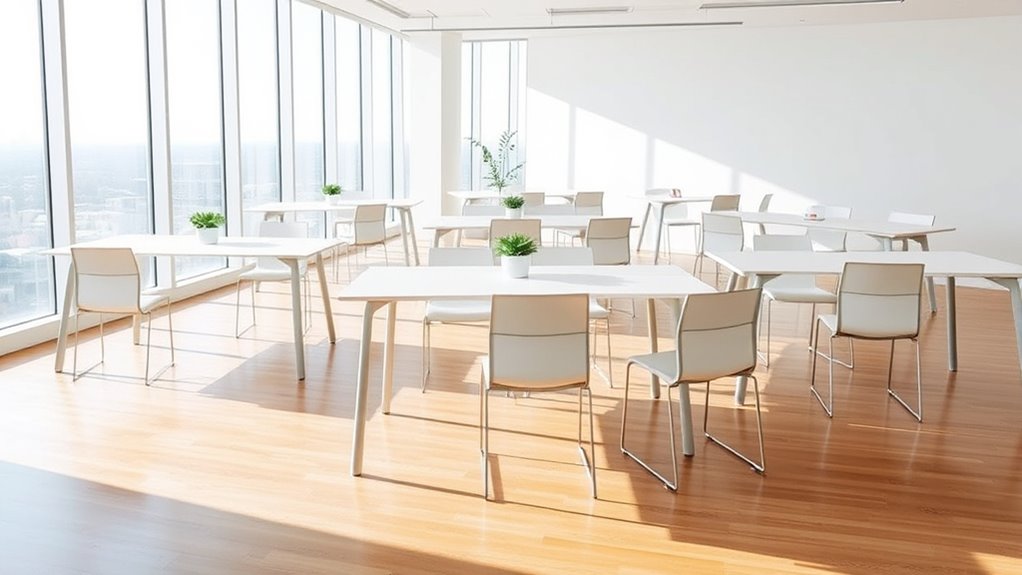
Clean and open spaces in co-working environments can markedly boost your mental clarity and reduce stress. When spaces are uncluttered, your mind feels less overwhelmed, allowing you to focus better. Color psychology plays a key role here; neutral tones and soft hues create a calming atmosphere that promotes relaxation and productivity. Additionally, open layouts foster a sense of freedom and reduce feelings of confinement. Acoustic comfort is also essential—minimized noise distractions help you stay concentrated and decrease anxiety. By designing with simplicity and spaciousness, you’re more likely to experience improved mood and mental well-being. Recognizing the importance of mental clarity can further enhance your overall well-being in these environments. Incorporating a clutter-free design can also support cognitive function by reducing potential distractions. Moreover, implementing intentional spatial arrangements encourages mindfulness and intentionality within your workspace.
Cost-Effectiveness and Maintenance Advantages
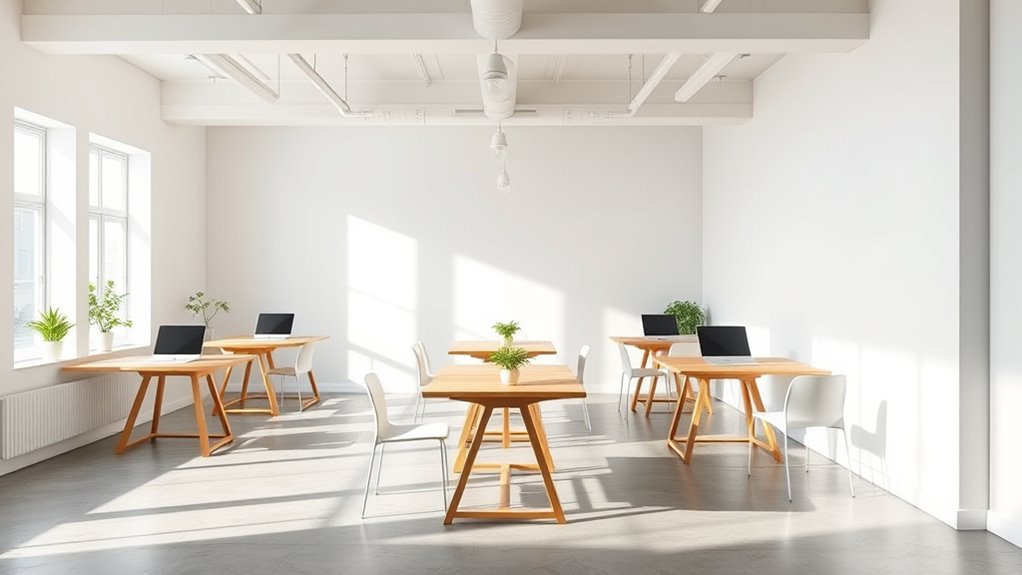
Minimalist design in co-working spaces substantially reduces overall costs by limiting the need for expensive furnishings and decor. This approach directly supports cost reduction by minimizing purchasing and replacement expenses. Additionally, the simple, uncluttered environment enhances maintenance efficiency, making cleaning and repairs quicker and easier. With fewer decorative elements and furniture, you spend less on upkeep and cleaning supplies. The streamlined design also means fewer surfaces and nooks to dust or repair, saving time and money.
- Fewer furnishings mean lower initial investment and replacement costs
- Simplified spaces are easier and faster to clean, reducing labor costs
- Less clutter results in fewer maintenance issues over time
Reflecting Modern Lifestyle and Work Trends

As remote work and flexible schedules become more common, co-working spaces need to adapt to these shifting lifestyles. Minimalist designs incorporate industrial charm and vintage accents to reflect modern work trends, creating a stylish yet functional environment. These elements evoke a sense of history and authenticity, appealing to professionals seeking both comfort and inspiration. The minimalist aesthetic allows for versatile use, accommodating varied work styles without clutter. To visualize this, consider the following ideas:
| Idea | Description | Impact |
|---|---|---|
| Industrial charm | Exposed brick, metal fixtures | Adds authenticity, modern appeal |
| Vintage accents | Retro light fixtures, antique furniture | Creates warmth, character |
| Flexible layouts | Movable furniture, open spaces | Supports remote, collaborative work |
| Neutral color palette | Grays, beiges, muted tones | Enhances focus, calm environment |
These trends mirror the evolving ways you work today.
Creating a Neutral Backdrop for Creativity and Collaboration

Creating a neutral backdrop in co-working spaces sets the stage for both creativity and collaboration to flourish. By choosing calming, muted colors based on color psychology, you reduce distractions and foster focus. Acoustic treatment plays a vital role too, absorbing noise and minimizing disruptions that hinder teamwork. A minimalist design eliminates visual clutter, allowing ideas to emerge freely.
A neutral backdrop enhances focus, fosters collaboration, and creates an inviting, adaptable environment for all.
- Use soft, neutral tones to create a soothing environment that enhances concentration.
- Incorporate acoustic panels or soft furnishings to control sound levels.
- Keep decor simple and functional, providing flexibility for different work styles.
This approach encourages innovation and open communication, making your space adaptable and inviting for diverse users. Neutral backdrops serve as a canvas for productivity to thrive.
Using Natural Light and Neutral Palettes to Boost Productivity

Natural light plays a essential role in enhancing productivity within co-working spaces, as it naturally boosts mood and energy levels. Incorporating biophilic design elements, such as large windows and skylights, maximizes daylight harvesting, ensuring ample natural illumination throughout the day. Neutral palettes complement this natural light by creating a calming environment that reduces visual stress and fosters focus. When you use soft, earthy tones, you allow the light to reflect gently, making the space feel open and inviting. This synergy between natural light and neutral colors helps maintain alertness and prevents fatigue. By prioritizing daylight harvesting and embracing biophilic design principles, you create a workspace that naturally energizes and supports your productivity.
Future Trends: Sustainability and Minimalist Innovation
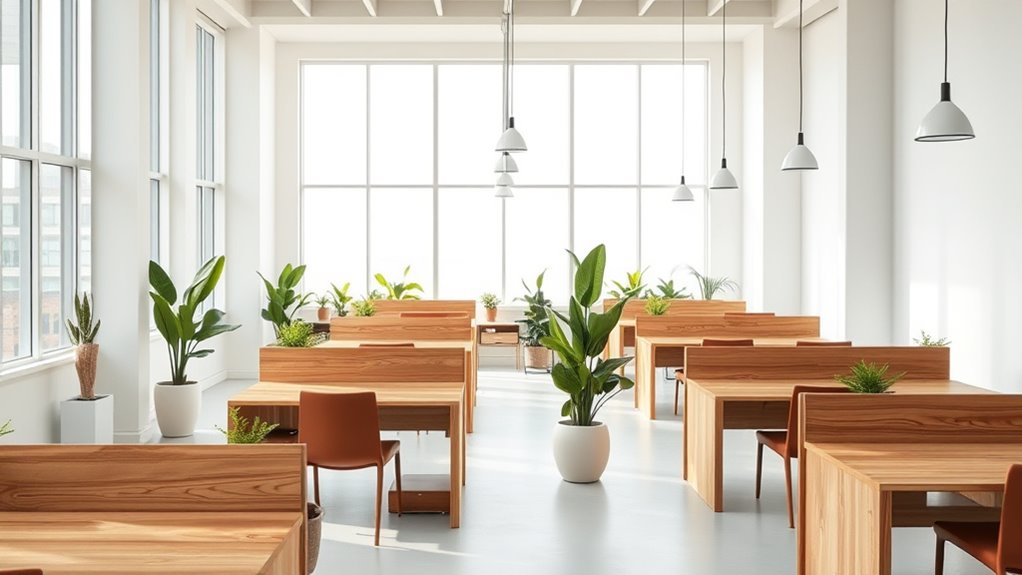
As you look ahead, sustainability will play a bigger role in co-working space designs, with eco-friendly materials becoming standard. Smart technology and space-saving solutions will also shape innovative, minimalist environments that maximize efficiency. Embracing these trends helps you create workspaces that are both environmentally conscious and highly functional.
Eco-Friendly Materials Adoption
Eco-friendly materials are becoming a cornerstone of minimalist co-working spaces, reflecting a growing commitment to sustainability. You’ll notice the shift toward using recyclable composites that reduce waste and lower the environmental footprint. These materials not only support eco-conscious goals but also maintain a sleek, modern aesthetic. Biodegradable finishes are also gaining popularity, offering a stylish way to guarantee that finishes break down naturally without harming the environment. By choosing such materials, you’re aligning your space with green principles while keeping the minimalist vibe intact.
- Incorporating recyclable composites for furniture and fixtures
- Applying biodegradable finishes to walls and surfaces
- Prioritizing renewable and low-impact materials for construction and decor
Smart, Space-Saving Design
Innovative smart technologies are transforming how you optimize space in minimalist co-working environments, making them more functional and sustainable. You can now incorporate artistic expression through versatile, multi-purpose furniture that adapts to your needs. Smart storage solutions help reduce clutter while maximizing the limited space. Acoustic optimization becomes essential, with intelligent sound-absorbing panels and noise-canceling systems creating a focused atmosphere. These innovations not only save physical space but also enhance the overall experience, fostering creativity and productivity. By integrating technology seamlessly, you guarantee your workspace remains sleek and efficient without sacrificing style or comfort. As minimalist design evolves, smart, space-saving features will continue to shape co-working spaces into dynamic, inspiring environments that prioritize both sustainability and user well-being.
Frequently Asked Questions
How Do Minimalist Designs Accommodate Diverse User Needs?
Minimalist designs accommodate your diverse needs by offering flexible layouts that adapt to different activities. You can easily reconfigure spaces for collaboration or quiet work, ensuring comfort and productivity. Decorative accents add personality without clutter, making the environment inviting. This approach helps you feel at ease, encouraging creativity and focus while maintaining a clean, functional space tailored to your unique requirements.
What Are the Challenges of Implementing Minimalism in Shared Spaces?
You might find that implementing minimalism in shared spaces is a tall order, especially when balancing private zones and aesthetic consistency. It’s like walking a tightrope—you need to keep everything streamlined without making it feel sterile or impersonal. Challenges include maintaining flexibility for diverse needs, avoiding clutter, and ensuring that the space still feels welcoming. With careful planning, however, you can create a minimalist environment that works for everyone.
How Does Minimalism Impact Social Interaction in Coworking Environments?
Minimalism in coworking spaces promotes open plan layouts that foster collaboration and ease social interaction. However, it can also challenge noise management, making it harder to concentrate or have private conversations. You’ll find that clean, uncluttered spaces encourage spontaneous interactions, but balancing openness with sound control is key. When managed well, minimalism enhances social connectivity without sacrificing comfort, creating an inviting environment for networking and teamwork.
Can Minimalist Spaces Adapt to Evolving Technological Requirements?
Yes, minimalist co-working spaces can adapt to evolving technological needs by integrating sustainable materials and ergonomic furniture. You’ll find flexible setups that support new devices and tech tools, making it easy to upgrade without clutter. By prioritizing clean lines and functional design, you create a versatile environment that stays current, promotes productivity, and offers comfort, ensuring your workspace remains efficient as technology advances.
What Role Does Culture Play in Minimalist Workspace Design?
Culture shapes your workspace like an artist molds clay, influencing every detail of design aesthetics. Your environment reflects cultural influences, making it more than just a place to work—it’s a statement of identity. Minimalist design, with its clean lines and open spaces, can seamlessly incorporate diverse cultural elements, fostering inclusivity and innovation. By embracing this, you create a space that resonates deeply with your team’s values and shared heritage.
Conclusion
Embrace simplicity to elevate focus, inspire creativity, and foster collaboration. Choose minimalism to create clarity, promote calm, and encourage versatility. Opt for clean lines, natural light, and neutral palettes to boost productivity and well-being. By adopting minimalist design, you not only transform your workspace but also align with modern trends, sustainability, and innovation. Embrace the future of work—where less truly is more, and every detail serves a purpose.