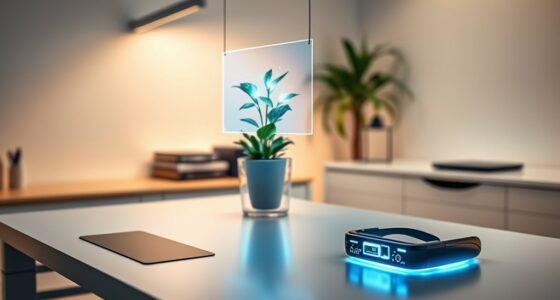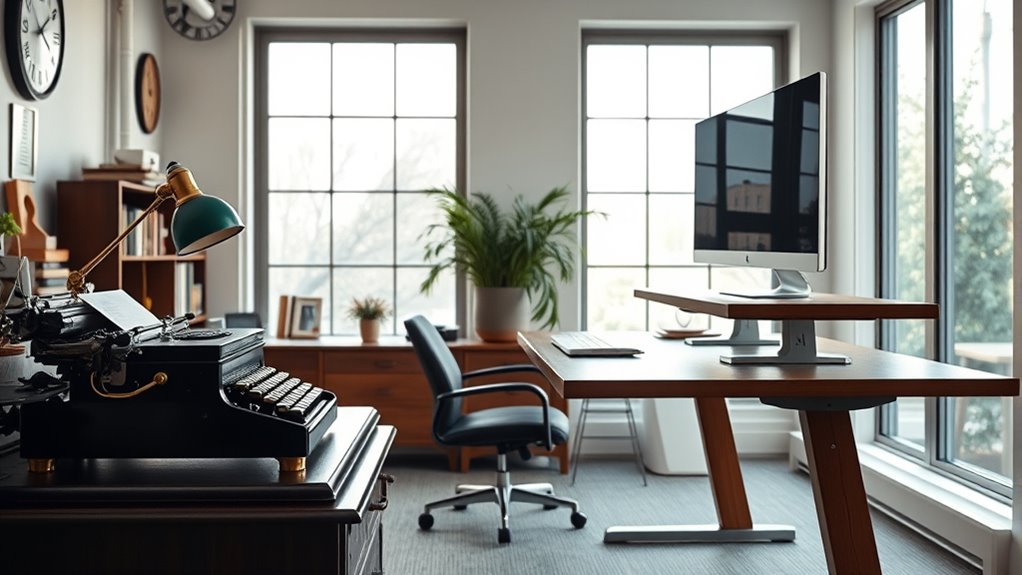

Workspace design has evolved from early factories and offices focused solely on efficiency to modern environments that prioritize comfort and health. The shift began with ergonomic research leading to adjustable chairs and desks, including sit-stand options. Technological innovations like smart furniture and automation continue to transform workspaces into flexible, user-centered spaces. If you want to discover how these changes shape work today, there’s much more to explore about this fascinating evolution.
Key Takeaways
- Workspace design evolved from utilitarian factory setups to ergonomic, user-centered environments emphasizing health and comfort.
- The introduction of ergonomic furniture, like adjustable chairs and desks, shifted focus toward reducing strain and injury.
- Technological innovations, including smart furniture and digital monitoring tools, enhanced workspace flexibility and personalized comfort.
- The rise of sit-stand desks and open-plan layouts reflects societal shifts toward movement, collaboration, and well-being.
- Future trends integrate automation and adaptable designs, creating dynamic workspaces prioritizing health, productivity, and user satisfaction.
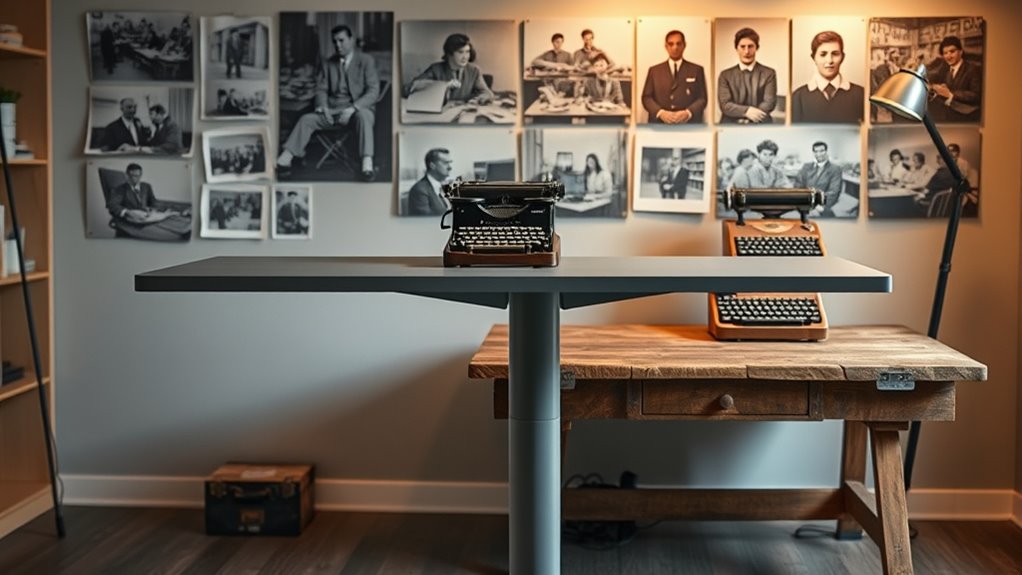
Workspace design has evolved substantially over centuries, reflecting changes in technology, work culture, and societal values. In recent decades, ergonomic trends and technological innovations have played pivotal roles in shaping how and where we work. As technology advanced, so did our understanding of comfort and efficiency, prompting a shift from simple, utilitarian spaces to more sophisticated environments designed with human well-being in mind. Early workspaces, like those in factories or offices, prioritized productivity over comfort, often neglecting ergonomic considerations. However, as research highlighted the importance of proper posture and movement, ergonomic trends gained momentum, influencing everything from chair design to desk height adjustments. These trends aimed to reduce strain, prevent injuries, and improve overall work performance. Technological innovations further accelerated this transformation, introducing adjustable desks, ergonomic chairs, and even smart furniture that adapts to individual needs. Today’s workspaces often feature sit-stand desks, which allow you to alternate between sitting and standing throughout the day, aligning with ergonomic principles that emphasize movement and flexibility. This shift not only boosts comfort but also promotes better circulation and reduces health risks associated with prolonged sitting. The integration of technology has also led to the rise of smart office environments, where sensors and automation help optimize lighting, temperature, and even ergonomic settings. For you, this means a workspace tailored to your comfort, driven by innovations that respond to your specific needs. As ergonomic trends continue to evolve, workplaces are becoming more adaptable, emphasizing user-centered design that prioritizes health and productivity. The rise of collaborative workspaces and open-plan offices reflects societal shifts towards teamwork and transparency, but these designs also incorporate ergonomic features to ensure comfort amid increased interaction. The fusion of ergonomic trends with technological innovations creates a dynamic environment that supports your physical health while enhancing efficiency. Additionally, the development of smart furniture and adjustable features exemplifies how modern workplaces are integrating technology to enhance user comfort and adaptability. You’re now more likely to find adjustable desks with programmable settings, ergonomic accessories, and digital tools that monitor your posture and activity levels. This ongoing evolution shows a clear trend: workspaces are no longer static zones focused solely on function but are dynamic environments that promote well-being and adaptability. As you navigate your workspace, you benefit from these advancements that blend ergonomic understanding with cutting-edge technology, making your workday more comfortable, healthier, and more productive than ever before. The history of workspace design demonstrates how integrating ergonomic trends and technological innovations continually reshapes the way we work, ensuring that comfort and efficiency go hand in hand for a more sustainable and satisfying work experience.
Frequently Asked Questions
How Did Cultural Trends Influence Workspace Design Changes?
Cultural trends heavily influence workspace design changes by reflecting societal values through cultural symbolism and aesthetic movements. You notice how modern offices incorporate minimalism inspired by the Bauhaus movement, emphasizing simplicity and functionality. As cultural attitudes toward health and well-being shift, workspace designs adapt with ergonomic furniture and standing desks, embodying a focus on productivity and self-care. These trends shape environments that resonate with current cultural ideals, making your workspace both functional and meaningful.
What Role Did Technological Advances Play in Evolving Workspaces?
Technological advances considerably shaped workspaces by enhancing both office aesthetics and aesthetic functionality. You benefit from innovations like computers, which streamline tasks and reduce clutter, creating a cleaner, more modern look. Standing desks and ergonomic chairs improve comfort and promote health, blending style with practicality. These innovations allow you to customize your workspace, making it more efficient, visually appealing, and aligned with contemporary trends focused on well-being and productivity.
How Have Ergonomic Considerations Shaped Modern Office Furniture?
You benefit from ergonomic considerations that shape modern office furniture by experiencing improved comfort and productivity. Keyboard ergonomics ensure your wrists stay aligned, reducing strain, while chair comfort supports your posture during long hours. These designs prioritize your well-being, minimizing the risk of repetitive strain injuries and enhancing focus. As a result, your workspace adapts to your needs, making work both healthier and more efficient.
What Environmental Factors Impacted Workspace Design Over Time?
Environmental factors have dramatically influenced workspace design, pushing you toward sustainability and innovation. You might notice how sustainable materials now shape furniture choices, reducing your carbon footprint. Lighting innovations, like adjustable LEDs, enhance your comfort and productivity. As awareness grows, you’re increasingly surrounded by eco-friendly options that not only support your well-being but also reflect a commitment to protecting the environment—making your workspace a smarter, greener place to work.
How Do Future Innovations Aim to Transform Work Environments?
Future innovations aim to transform your work environment through smart offices that utilize AI and IoT technology, making spaces more efficient and personalized. Virtual collaboration tools will become even more seamless, allowing you to work remotely with ease and real-time interaction. These advancements will create flexible, adaptive workspaces that enhance productivity, comfort, and connectivity, ensuring you stay engaged and effective regardless of where you’re working from.
Conclusion
As you’ve traveled through the evolution of workspace design, you’ve seen how it’s shifted like a river flowing to meet new needs. From clunky typewriters to sleek standing desks, each change reflects your growing awareness of comfort and productivity. Embrace these innovations as stepping stones on your journey, shaping a workspace that’s truly your own. After all, your environment is the canvas where your ideas come to life—ever-changing, always evolving.