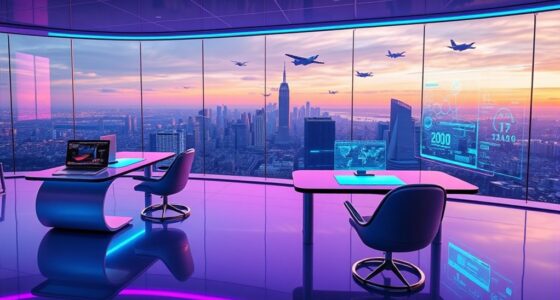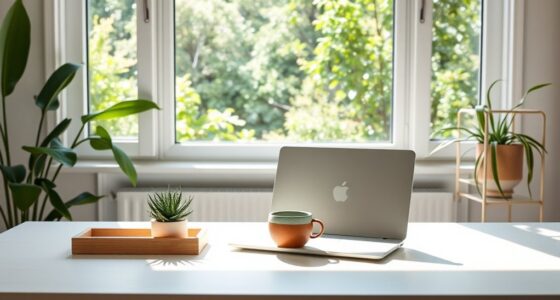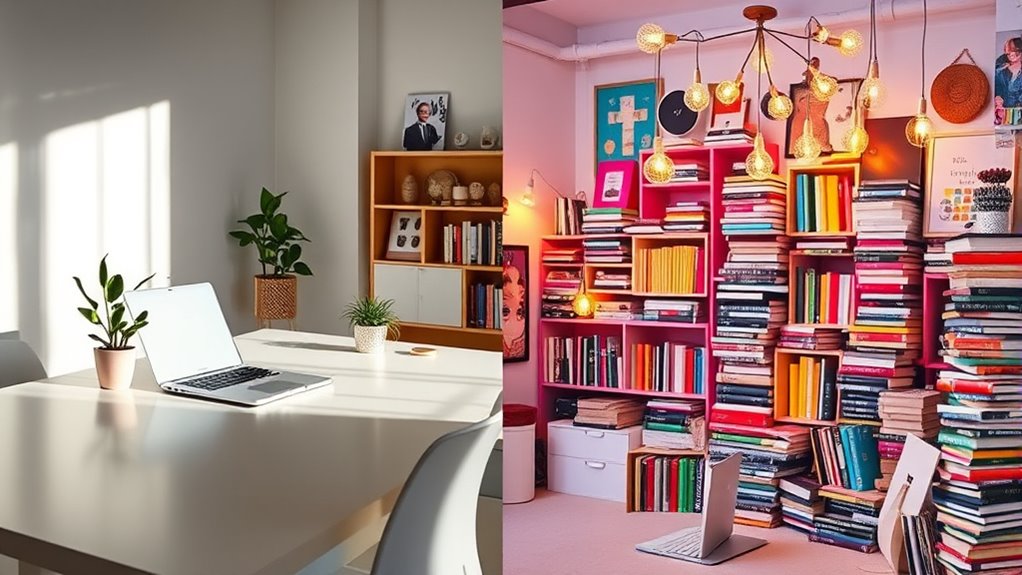

Minimalism and maximalism offer two contrasting workspace styles. Minimalism emphasizes clean lines, neutral colors, and clutter-free environments to boost focus and efficiency. Maximalism, on the other hand, features vibrant colors, layered decor, and personal touches that inspire creativity and personality. Your choice depends on your work needs and personality—whether you prefer calm clarity or lively inspiration. If you want to explore which style suits you best, there’s more to discover ahead.
Key Takeaways
- Minimalism emphasizes simplicity, clean lines, and clutter-free environments, promoting focus and clarity in the workspace.
- Maximalism features vibrant colors, layered textures, and elaborate decor, inspiring creativity and personal expression.
- Minimalist workspaces enhance organization and reduce distractions, while maximalist spaces foster motivation but can overwhelm focus.
- Color palettes: minimalism favors neutral tones; maximalism embraces bold, vivid hues and busy patterns.
- Choice between styles depends on space, work tasks, personal preferences, and desired work environment atmosphere.
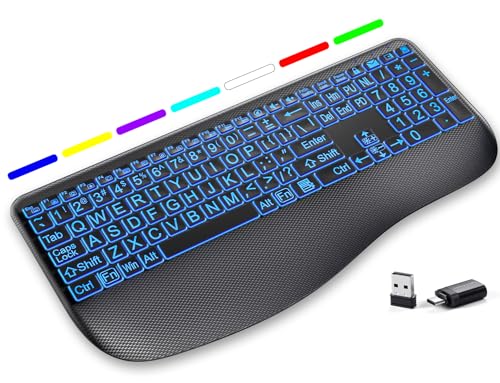
Large Print Backlit Wireless Keyboard – Ergonomic Keyboards with Wrist Rest, 7-Color Light up, Quiet Low Profile Keys, 2.4G Wireless Rechargeable Full Size Keypad for Computer Laptop Windows, Black
LARGE PRINT KEYS FOR EASY READING - Designed to be a full-size wireless keyboard with oversized high-contrast letters(16.54...
As an affiliate, we earn on qualifying purchases.
Defining the Core Principles of Minimalism and Maximalism

Understanding the core principles of minimalism and maximalism helps you appreciate their distinct philosophies. Minimalism emphasizes functional simplicity, stripping away unnecessary details to focus on what truly matters. It values clean lines, open space, and a clutter-free environment that promotes calm and clarity. In contrast, maximalism celebrates expressive ornamentation, embracing bold colors, intricate patterns, and layered textures. It thrives on visual richness, where each element has a purpose in creating a vibrant, dynamic space. While minimalism seeks to reduce distractions, maximalism invites you to explore abundance and personality through diverse design elements. Both styles serve different emotional and aesthetic needs, but each encourages intentionality—whether through pared-down simplicity or elaborate expression. Understanding these core principles helps you choose what resonates with your personal or workspace style. Additionally, visual harmony plays a crucial role in both styles, guiding how elements are balanced to achieve either serenity or exuberance. Achieving this harmony often requires an understanding of aesthetic balance, which is central to both minimalism and maximalism. Moreover, paying attention to color theory can enhance the effectiveness of either style by creating cohesive and pleasing environments. A thorough grasp of spatial organization further supports the successful implementation of either approach, ensuring that the space functions well and feels intentional. Recognizing how lighting design impacts mood and perception can also significantly influence the overall effectiveness of either style.

MEETION K9990 Slim Wireless Bluetooth Keyboard, Low Profile Quiet Typing, 3-Device Switching (2.4G+BT), Rechargeable Full Size Keyboard, Scissor Switch, for Windows Mac PC Desktop Laptop Tablet,Black
【Modern Minimalist Keyboard】Crafted with a two-tone black-gray premium finish, the K9990 delivers a smooth, tactile feel while boasting...
As an affiliate, we earn on qualifying purchases.
Visual Aesthetics and Design Elements in Each Style

Your choice of color palettes markedly impacts the overall feel of each style, with minimalism favoring neutral tones and maximalism embracing bold hues. Decorative accents in maximalism are often abundant and elaborate, while minimalism keeps them sparse and understated. Balancing these elements helps define the aesthetic and mood you aim to create in your space. Incorporating vintage decor can also influence the style’s ambiance, adding character whether you choose a minimalist or maximalist approach. Additionally, understanding design harmony can ensure that all elements work together cohesively, enhancing the visual appeal of your workspace. Recognizing color psychology can further help tailor the ambiance to evoke specific emotions and productivity levels within each style. Moreover, paying attention to visual balance ensures that neither style feels cluttered or empty, creating a harmonious environment. Maintaining visual clarity by avoiding unnecessary clutter can further reinforce the intended aesthetic and improve overall functionality.
Color Palette Choices
In minimalism, color palettes tend to be subdued and carefully curated, emphasizing simplicity through neutral tones like whites, blacks, and grays, with occasional accents of muted colors. You’ll often see monochrome schemes that create a cohesive, calming environment. Bold contrasts are used sparingly to highlight key features or add visual interest without cluttering the space. This approach keeps the workspace feeling open and uncluttered, allowing your focus to remain on essential elements. The simplicity of the color palette minimizes distractions, fostering a sense of tranquility and order. Overall, minimalism’s restrained use of color supports a clean, modern aesthetic that promotes clarity and productivity. It’s all about creating a balanced environment where every hue contributes to a sense of calm and purpose. Incorporating cultural intelligence principles can also help in designing workspace environments that resonate with diverse individuals and promote inclusivity. Additionally, understanding regional flavors and traditions can inspire subtle accents that make the space more welcoming and culturally sensitive.
Decorative Accents Balance
Decorative accents play an essential role in defining the visual appeal and overall harmony of a space, especially when contrasting minimalism and maximalism. In minimalist workspaces, you should opt for carefully selected decorative accents that enhance simplicity without cluttering. Each piece is intentional, contributing to space optimization by avoiding excess. Incorporating self-watering plant pots or other eco-friendly accessories can subtly promote sustainability while adding visual interest. Conversely, maximalist environments thrive on abundant decorative accents, creating a layered, vibrant look. Here, accents serve as focal points, reflecting personality and energy. Balancing these elements is fundamental; too many accents can overwhelm a space, while too few may diminish its character. When thoughtfully curated, decorative accents can also enhance sustainability by emphasizing eco-friendly and reusable materials. Whether you prefer a sparse or richly decorated workspace, understanding how to balance decorative accents ensures your environment remains visually appealing and functional.

Logitech Palm Rest for MX Keys, Premium,USB Connectivity, No-Slip Support for Hours of Comfortable Typing, Black
Performance for Long hours: firm wrist support keeps your hands in a nice, Relaxed position so you can...
As an affiliate, we earn on qualifying purchases.
Impact on Productivity and Focus in the Workspace

Your workspace’s clutter level can directly affect your ability to concentrate, making it harder to stay focused on tasks. Visual distractions from excessive decor or supplies might pull your attention away, reducing efficiency. The environment you choose can either boost your productivity or create unnecessary obstacles to your work. Incorporating unique and wicked planters can help organize and elevate your workspace aesthetic, promoting better focus. Practicing mindful decluttering can further enhance your workspace by reducing unnecessary items and fostering a more serene environment. Understanding the impact of wealth transformation and strategies in the broader context can also inform how you design a space that supports your goals and aspirations.
Clutter and Concentration
Clutter can considerably hinder your ability to concentrate and stay productive in the workspace. When your furniture arrangement is chaotic, your mind struggles to focus on tasks, leading to wasted time and frustration. A cluttered desk or disorganized shelves create visual noise that distracts you from important work. Proper furniture placement helps create clear pathways and designated zones for different activities, reducing the sense of chaos. Additionally, ambient lighting plays a crucial role in minimizing clutter’s impact; well-placed lighting enhances visibility and creates a calm atmosphere that promotes focus. When your workspace feels orderly and intentionally arranged, it’s easier to maintain concentration. Eliminating unnecessary clutter and optimizing furniture and lighting setup can notably improve your productivity and mental clarity.
Visual Distractions Effects
Visual distractions in the workspace can considerably diminish your ability to focus and complete tasks efficiently. When your environment contains too many focal point distractions, your attention shifts away from your work, reducing productivity. These distractions create visual overload effects, making it harder to filter out unnecessary stimuli. Maximalist spaces often feature vibrant colors, busy patterns, and numerous decorative elements that compete for your attention. This constant visual noise can lead to mental fatigue, decreased concentration, and frustration. Incorporating principles of projector compatibility and adjustable lighting can help further minimize visual clutter. Additionally, understanding visual overload effects and how they influence cognitive load can aid in designing more effective work environments. Recognizing the impact of visual clutter on mental sharpness is crucial for creating an environment that fosters focus. In contrast, minimalist workspaces reduce focal point distractions by limiting visual clutter, helping your mind stay centered on essential tasks. Understanding the importance of tuning and customized environment adjustments can further optimize your workspace for better focus. Recognizing how visual overload effects impact your focus allows you to design a workspace that minimizes distractions and supports sustained productivity.
Environment and Efficiency
A well-designed workspace directly influences your ability to stay focused and complete tasks efficiently. Minimalist environments, with clean surfaces and ergonomic furniture, reduce distractions and physical discomfort, boosting productivity. Maximalist spaces, filled with vibrant decor and accessories, can energize you but may also cause visual clutter, hindering focus. Lighting preferences play a vital role: soft, natural light enhances concentration, while harsh artificial light can cause fatigue. Here’s a visual comparison:
| Minimalism | Maximalism |
|---|---|
| Clear surfaces, few items | Colorful, layered decorations |
| Ergonomic furniture | Overstuffed chairs and desks |
| Soft natural lighting | Bright, varied lighting |
| Open, uncluttered space | Busy, stimulating environment |
| Focused atmosphere | Energizing chaos |
Additionally, incorporating natural light can significantly improve your workspace ambiance and productivity.

Amazon Basics Ultra Premium Wireless Keyboard and Mouse Combo, Rechargeable, Full-Size with Number Pad, Sleek Design, Plug and Play, Quiet Typing, 2.4GHz USB Receiver, Black
KEYBOARD & MOUSE BUNDLE: Enjoy a convenient wireless keyboard and mouse set with a full layout and ultra...
As an affiliate, we earn on qualifying purchases.
Personalization and Expression: How Each Style Reflects Identity
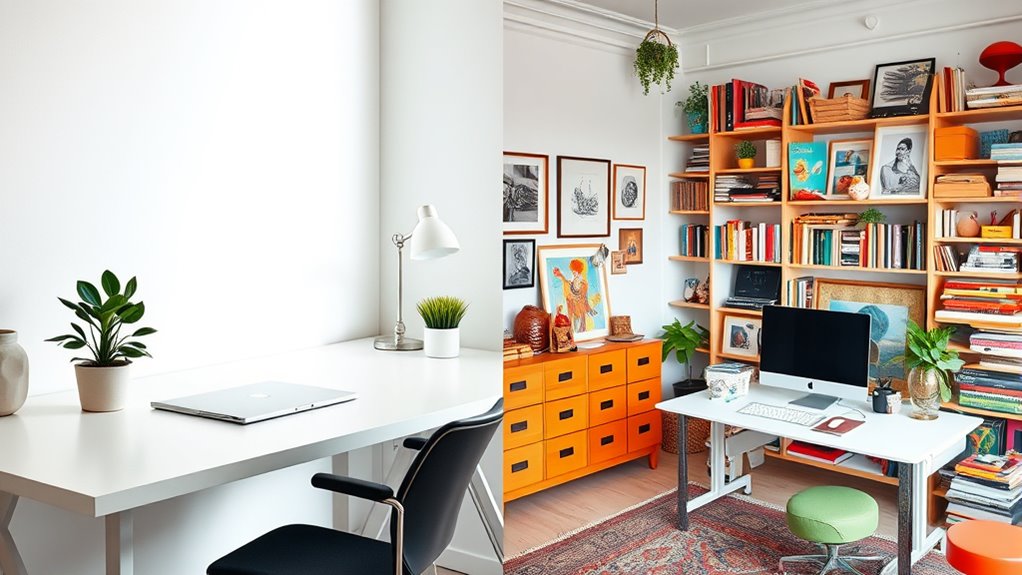
While minimalist spaces emphasize clean lines and simplicity, they often serve as a blank canvas that highlights your personality through carefully chosen details. Your personal identity shines in subtle touches—unique artwork, meaningful objects, or thoughtfully selected colors—that reflect who you are. Minimalism encourages you to express yourself selectively, showcasing your creative expression without clutter. Every item is deliberate, revealing your values and style in a refined way. This approach creates a workspace that feels authentic and intentional, allowing your personality to come through without distraction. By focusing on quality over quantity, you communicate your identity clearly, making your workspace a true reflection of yourself. Minimalism’s restrained nature emphasizes that less can indeed speak volumes about who you are, especially when intentional design choices guide the overall aesthetic.
Organizational Strategies and Clutter Management
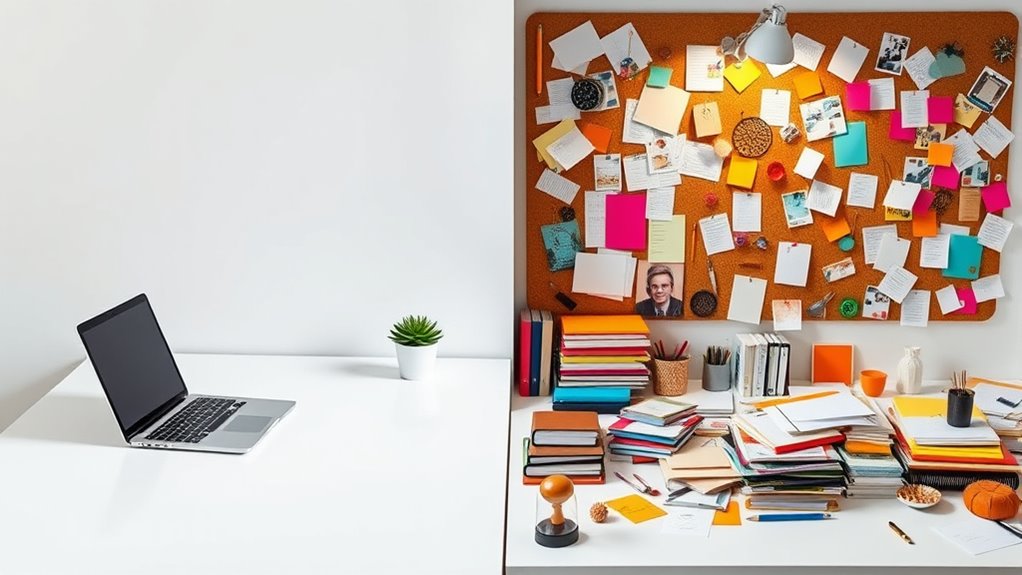
Effective organizational strategies are essential for maintaining a clutter-free space, regardless of your style. For minimalists, using sleek storage solutions like labeled bins or minimalist shelves helps keep essentials visible and accessible without clutter. Maximalists benefit from robust organizational systems such as multi-tiered drawers, wall-mounted racks, or decorative containers that accommodate their abundance while maintaining order. Regular decluttering is vital; discard items that no longer serve a purpose or fit your workspace’s aesthetic. Limit open surfaces to prevent buildup of paper or miscellaneous objects. Implementing specific zones for different tasks or items can streamline your workflow. Additionally, adopting efficient storage techniques can optimize space and improve overall organization. Incorporating clutter management strategies ensures that even maximalist environments remain functional and inspiring. Whether you prefer a simple or elaborate environment, adopting effective storage solutions and organizational systems guarantees your workspace remains functional, clean, and inspiring.
Benefits and Drawbacks of Minimalist Workspaces
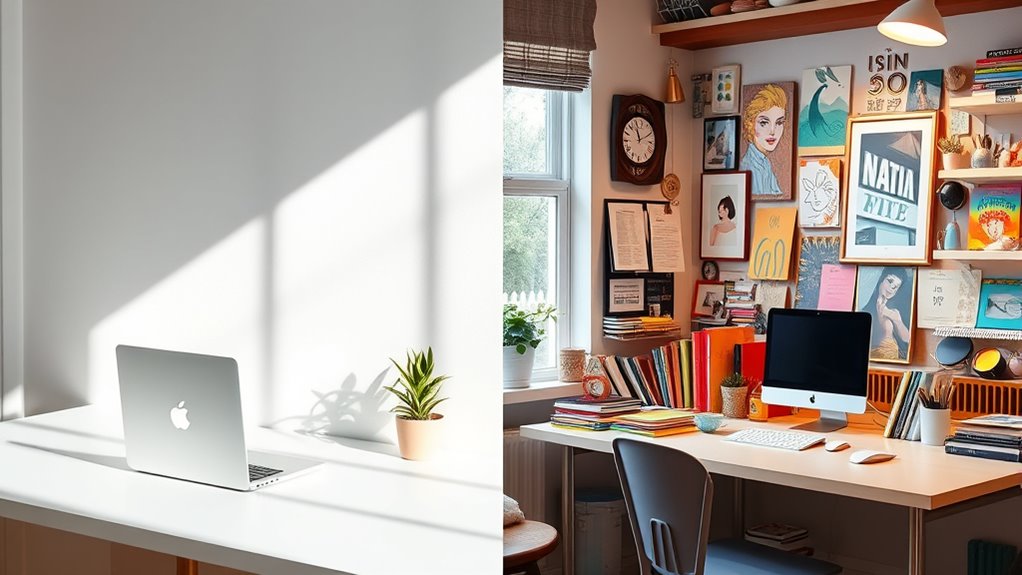
Have you ever wondered why minimalist workspaces are so popular? They promote clean, clutter-free environments that enhance workspace ergonomics, making it easier to stay organized and focused. With fewer distractions, you can improve productivity and reduce stress. Lighting considerations in minimalist setups often emphasize natural light or simple fixtures, creating a bright, calming atmosphere. However, a drawback is that minimalism can feel cold or impersonal if not balanced properly, possibly hindering creativity or comfort. Additionally, some find it challenging to maintain such a pared-down environment, especially if you thrive on personal touches or visual cues. While minimalist workspaces boost efficiency and clarity, they may require ongoing effort to keep clutter at bay and to ensure lighting remains adequate.
Advantages and Challenges of Maximalist Environments
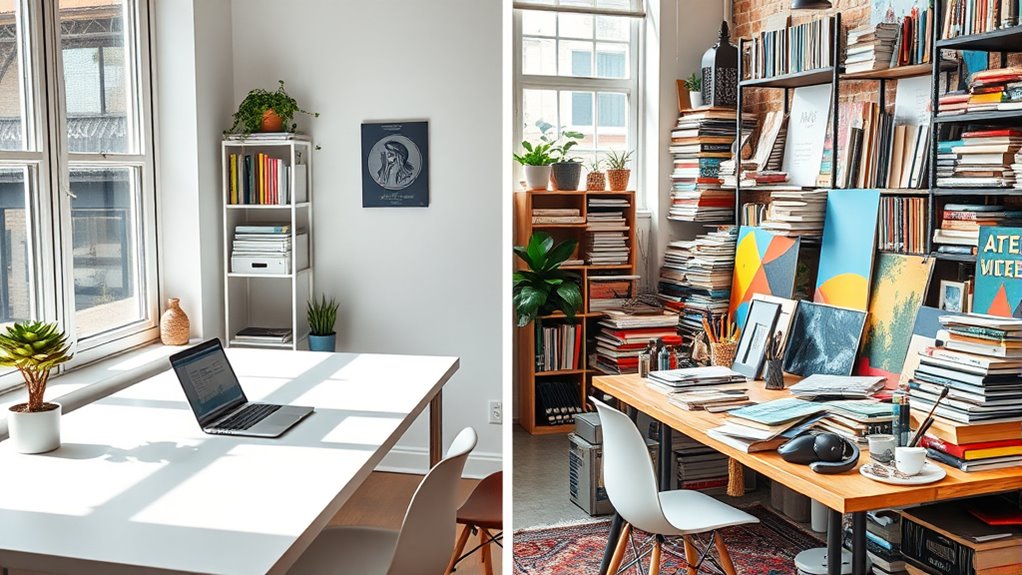
Maximalist environments offer a vibrant and stimulating space that can foster creativity and personal expression. They encourage you to surround yourself with colors, textures, and objects, making your workspace uniquely yours. This environment can boost emotional impact, inspiring motivation and passion. However, challenges exist: clutter may become overwhelming, reducing focus and productivity. You might find it difficult to locate essential tools or documents amidst the chaos. Overstimulation can lead to stress or distraction, hindering efficiency. To navigate these challenges, it’s crucial to balance visual richness with organization. Remember, a maximalist space should energize you without becoming a barrier to work, allowing your creative expression to flourish while maintaining clarity and order.
Choosing the Right Style for Your Work Style and Personality

Choosing a style that aligns with your work habits and personality is essential for creating an environment where you can thrive. If you prefer a clutter-free space, minimalism might suit your need for simplicity and focus. On the other hand, if you find inspiration in visual stimulation, maximalism with vibrant workspace accessories could energize you. Consider ergonomic considerations to guarantee comfort, regardless of style. A minimalist setup might feature sleek, functional furniture, while a maximalist space could include diverse accessories that reflect your personality. Think about your daily routine and what helps you stay productive. By matching your workspace style to your work style and personality, you create a personalized environment that boosts efficiency and satisfaction. The right choice supports your workflow and enhances your overall work experience.
Frequently Asked Questions
How Do Minimalism and Maximalism Influence Mental Well-Being at Work?
Minimalism boosts your mental well-being by reducing clutter and sensory overload, allowing you to focus better and feel calmer. Color psychology plays a role here, with neutral tones promoting relaxation. Maximalism, on the other hand, energizes you with vibrant colors and diverse elements, but it can also cause sensory overload if not balanced. Both styles impact your mood; choosing the right one depends on your personal preferences and work needs.
Can Hybrid Workspace Styles Combine Elements of Both Minimalism and Maximalism Effectively?
Think of your workspace as a Giver’s garden, blending simplicity and abundance. You can effectively combine minimalism’s clean, calming lines with maximalism’s decorative accents by creating functional zoning—dedicating areas for focus, creativity, and relaxation. This hybrid approach lets you enjoy the clarity of minimalism while embracing the personality and inspiration of maximalism, making your workspace both efficient and inspiring. It’s a balanced way to optimize your environment.
What Are the Cost Differences in Creating Minimalist Versus Maximalist Work Environments?
You’ll find that minimalist work environments tend to be less expensive overall, thanks to fewer furnishings and simpler decor, which lowers setup and maintenance costs. Maximalist spaces, however, often incur higher expenses due to more furniture, decorative items, and customization. Conducting an expense analysis reveals that minimalism typically has a lower initial investment and ongoing costs, while maximalist styles may require a larger budget upfront but can offer a more personalized workspace.
How Do Cultural Differences Impact the Preference for Minimalism or Maximalism?
You’re swept away by culture’s powerful influence, shaping your workspace style more than you realize. Cultural norms and aesthetic preferences can make minimalism feel like a gust of fresh air or maximalism a vibrant expression of identity. In some societies, simplicity symbolizes discipline and clarity, while others celebrate rich, layered environments as a sign of prosperity and creativity. Your cultural background deeply guides whether you lean towards minimalism or maximalism.
Which Style Better Adapts to Remote or Hybrid Working Setups?
You should choose maximalism for remote or hybrid setups because it allows for greater personalization trends, making your workspace feel comfortable and inspiring. Maximalist styles often incorporate ergonomic considerations, ensuring your setup supports your health during long work hours. This approach helps you create a dynamic, functional environment tailored to your needs, boosting productivity and well-being. Minimalism may lack the flexibility needed for personalized comfort in diverse work environments.
Conclusion
Ultimately, whether you lean toward minimalism or maximalism, your workspace reflects your essence. Embrace the style that fuels your creativity and focus—because your environment can either be a launching pad for success or a chaos that stifles it. Remember, your workspace is your sanctuary; make it a reflection of your true self. Choose wisely, and watch your productivity soar like a rocket—nothing less can match the power of a space tailored to you.