TL;DR
Men’s leather dress shoes include Oxfords, Derbies, brogues, loafers, and monk straps, with different levels of formality and comfort. Start with the occasions and outfits you wear most, then prioritize a secure, comfortable fit over the size printed on the box. Leather type, construction, rotation, and simple care all affect how a pair wears over time.
A pair of leather dress shoes can change how polished an outfit feels before you say a word. The smooth tap of a black Oxford on a hallway floor sends a different signal from a soft brown loafer on a casual Friday. Yet the most formal-looking pair is not automatically the best one for your feet, your closet, or your day.

Get your wardrobe favorites delivered free with Prime
- Fast, free delivery on millions of items
- Prime Video, Amazon Music and more included
- Member-only deals all year
This guide will help you tell the main styles apart, choose leather and construction with clear eyes, and find a fit that feels secure without painful pressure. You’ll also get a practical care routine and buying advice for a first pair, whether you wear a suit every weekday or need shoes for a handful of weddings and interviews.
The goal is simple: choose a pair you can wear comfortably, maintain sensibly, and match with the clothes already hanging in your closet. That matters more than chasing a label or paying extra for a feature you won’t use.
Choose Oxford, Derby, brogue, loafer, or monk strap based on your dress code and how formal you want the outfit to feel.
Black smooth leather suits many formal settings; dark brown often pairs flexibly with navy, grey, and earth tones.
Judge fit by heel security, toe room, and comfort on both feet; sizing varies by brand and last.
Treat welted, Blake-stitched, and cemented construction as tradeoffs in profile, flexibility, cost, and repair options.
Let wet shoes dry naturally, rotate pairs, and use care products suited to the leather type.
Choose the shoe shape that suits your occasions
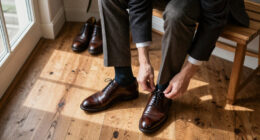
Men’s leather dress shoes come in several styles, and the shape tells you a lot about where each pair fits. A black cap-toe Oxford is a conventional choice for formal events and conservative offices; its closed lacing creates a continuous, tidy look that sits neatly under tailored trousers. A Derby’s open lacing looks a little more relaxed and may suit a higher instep because the quarters can spread farther apart. The right style makes getting dressed feel like a shortcut instead of a puzzle.
Think about your calendar and the clothes you actually wear. If you wear charcoal or navy suits to client meetings, a plain or cap-toe black Oxford will cover many formal settings. If your week includes chinos, textured jackets, and occasional suits, a dark brown Derby may work with more of your clothes, though it may be too casual for the strictest dress codes. A loafer can feel easy for a summer gathering, while a monk strap adds a buckle detail when you want something distinctive. Details affect not just appearance but versatility: the more formal or decorative the shoe, the fewer situations it may comfortably cover.
Brogue describes decorative perforations, not one particular lacing style: you can find broguing on Oxfords, Derbies, and other designs. More decoration generally reads as less formal because the extra visual detail draws attention away from the clean lines associated with formal dress. For example, a heavily perforated brown shoe may feel right with a tweed jacket but out of place at a strict black-tie event. A minimally detailed shoe is often easier to reuse across occasions.
- Oxford: closed lacing, usually a more formal look; a strong option when a neat, conservative appearance matters.
- Derby: open lacing, often easier to adjust across the instep; useful if you need more room or want a slightly less formal shoe.
- Loafer or monk strap: slip-on ease or a buckle accent, with formality depending on the shape and finish; consider whether that convenience or detail fits your usual dress code.
Popular right now

Vitamix VX1 Professional-Grade Blender, 64 oz, Black

Ninja Foodi 8-Quart DualZone 6-in-1 Air Fryer, Grey (DZ201)

Dyson V9 Motorbar Cordless Vacuum
As an affiliate, we earn on qualifying purchases.
Pick a color that earns its place in your closet
Men’s leather dress shoes work hardest when their color suits the clothes and events you already own. Black smooth leather is a traditional choice for formal occasions and conservative business dress. Its formality is useful when a dress code is strict, but can look severe alongside relaxed clothes. Dark brown offers range with navy, grey, and earth-toned outfits, particularly when your dress code leaves room for texture and personal style. That flexibility can make brown a practical first choice if most of your wardrobe is business casual.
Imagine you have one pair of suit trousers in navy and another in medium grey, plus a pair of stone chinos. A dark brown Derby can connect those outfits without making every look feel identical. If your job calls for a dark suit and formal meetings most days, black Oxfords may serve you more often. Neither color is a universal winner; your wardrobe makes the call. The useful question is not which color is more versatile in general, but which one will work with enough of your clothes to justify its space and cost.
Finish and detail change the impression too. A polished, plain black shoe looks sharper than a matte, perforated brown one. Suede is leather with a napped surface, and its softer texture usually reads more casually than smooth leather. That can make suede a pleasing match for a relaxed jacket, though a rainy commute or strict dress code may call for another option. Think about maintenance as well: a finish that suits your outfits but needs more care may be less convenient if the shoes will see frequent wet or dirty conditions.
Search snippets sometimes phrase a keyword as “s leather dress,” but the useful question is still what will pair with your clothes. Before buying, lay out two or three outfits you wear regularly. If the shoes work with those, they’re more likely to earn regular use instead of waiting untouched beside the door. This simple check also makes it easier to compare two similar pairs: choose the one that completes more of your actual outfits.
Find a fit you can wear through a full day
Men’s leather dress shoes should hold your heel securely, give your toes room to lie comfortably, and avoid painful pressure points. These checks matter because a shoe that slips can rub with every step, while a toe box that squeezes can become more uncomfortable as you spend hours standing or walking. Start with the size as a guide, not a promise: brands and lasts, the forms used to shape shoes, vary. Your feet can differ from each other too, so judge the pair on both feet while standing.
Try shoes later in the day if that reflects when you’ll wear them; feet can swell as the hours pass. Walk on a firm surface and notice whether your heel lifts excessively or your toes press against the front. For example, if a new Oxford pinches at the ball of your foot in the shop, don’t count on a magical break-in to solve it by your next work presentation. A shoe that feels secure but leaves room for natural movement is more likely to stay comfortable when the day gets long.
Leather may soften and give slightly with wear, but it won’t reliably fix a shoe that is too short or the wrong shape. Sizing varies by brand, and a “true to size” note cannot tell you how a last will suit your foot. When ordering online, read the brand’s fit guidance, check its return policy, and try the shoes indoors before deciding to keep them. A return option is especially useful when comparing widths or lasts, since a small fit difference can matter more than a construction feature you may never notice during wear.
Good fit feels secure without pain. A shoe that needs to hurt before you can wear it comfortably is giving you useful information: try a different size, width, or last.
If one foot is wider, choose for comfort on the wider side and ask a shoe professional about adjusting the fit for the other. You should be able to imagine walking from the train to your desk without thinking about your toes at every step. Comfort is not a bonus to trade away for appearance; it determines whether the shoes can serve the occasions you bought them for.
Compare construction before paying more
Construction describes how a shoe’s upper and sole connect, and it can affect flexibility, profile, repair options, and price. Those differences matter most in relation to how often you wear the shoes and what repairs are available nearby. A Goodyear welt uses a stitched welt that a cobbler can often replace or repair, though the shoes may feel thicker and take longer to break in. That durability can pay off with frequent use, but it does not help if the shape is uncomfortable or the shoes are worn only a few times a year. Blake-stitched shoes are often slimmer and more flexible, but repair options depend on the particular shoe and the cobbler.
Cemented shoes use adhesive to attach the sole. They can be lighter and less expensive, which may suit someone who wants a comfortable option for occasional events, though resoling can be harder or less economical. On the upper, full-grain leather retains the hide’s outer surface and can develop character with wear; corrected-grain leather has a more uniform treated surface and may show wear differently. These descriptions help set expectations, but they do not tell you whether a specific shoe is well made or suitable for your foot.
These labels are clues, not grades. A well-fitted, carefully made cemented shoe may be a better purchase for occasional wear than an expensive welted pair that hurts or never leaves the closet. Conversely, if you wear the same dress shoes often and have access to a cobbler, repairability may earn its extra cost over time. Consider the likely total cost: purchase price plus the repairs you can realistically get, weighed against how many comfortable wears you expect.
| Construction | Common feel or feature | What to check |
|---|---|---|
| Goodyear welt | Often thicker; can often be resoled | Fit, workmanship, and local repair options |
| Blake stitch | Often slim and flexible | Whether a cobbler can repair that model |
| Cemented | Can be light and less expensive | Price, expected wear, and sole replacement choices |
Construction can combine function with formality, but there’s no one build that wins every comparison. Ask what you can repair, how often you expect to wear the shoes, and whether they feel right on your feet. If you cannot find a local repair option or do not expect much wear, paying extra for resoling potential may bring little practical benefit.
Use a short care routine to keep leather looking its best
Leather dress shoes last longer in good shape when you let them dry naturally, keep their form between wears, and clean them with products suited to their finish. A little regular care beats a hurried rescue after salt, rain, and grit have dulled the leather. The purpose is to prevent small problems from building: grit can scuff a finish, and repeated dampness can stress leather and shorten the life of the sole. Think of shoe care as brushing dust off a jacket: quick, ordinary, and easier than waiting for a mess to set in.
After a damp commute, wipe away surface moisture and leave the shoes in a ventilated spot, away from radiators or direct heat. Heat can dry leather too quickly and damage it. Shoe trees help retain shape and absorb moisture; if you own only one pair, give the shoes a day to rest when possible instead of wearing them through every wet morning. Rotation gives the interior and leather time to dry, which can help reduce odor and wear from constant use.
- Let them dry: keep wet shoes away from direct heat so the leather dries gradually.
- Brush off dirt: use a suitable brush before grime settles in and scratches or dulls the surface.
- Condition when needed: match the product to the leather and avoid overdoing it, since excess product can leave residue or soften the leather more than you want.
- Polish smooth leather as desired: choose a suitable color and finish to refresh appearance or add shine.
- Rotate and repair early: assess worn soles, heels, or stitching before damage spreads and makes repair more involved.
Care changes with the material. Suede needs different tools from smooth calfskin, and patent leather or specialty finishes may need their own products. For instance, after a dry autumn walk, brushing dust from suede is a better first move than reaching for the polish you use on black Oxfords. Using the wrong product can leave marks or alter a finish, so if you’re unsure, ask a cobbler before applying it.
Buy for your real wardrobe, not a leather label
The best purchase starts with the setting you need shoes for and the outfits already in rotation. Black smooth-leather Oxfords suit many formal and conservative settings; brown shoes can work especially well with navy, grey, and earth-toned clothes. Shape, finish, and detailing still affect formality, so compare the whole shoe rather than choosing by color alone. A pair that suits one important event but clashes with your usual clothes may spend more time stored than worn.
Online shops make it easy to compare lasts, construction, and leather descriptions, but a photograph can’t tell you whether a heel slips or a toe box pinches. Check sizing advice and the return policy before ordering. If a brand offers a wider range of sizes or widths, that may make a meaningful difference; one person’s perfect fit can be another person’s cramped afternoon, even in the same labeled size. The more uncertain the fit, the more valuable a straightforward return policy becomes.
Buying a repairable pair can be part of a plan to buy fewer shoes, but repairability by itself doesn’t prove a product is sustainable. Claims such as “ethical” or “eco-friendly” need specific evidence. Ask what material is used, whether replacement soles are available, and whether a local cobbler can work on that model. A shoe you can wear comfortably for years and actually maintain is more useful than one that looks impressive on a product page. Its potential lifespan only matters if the fit, style, and repair access make regular use realistic.
For example, if you attend two weddings a year and rarely wear a suit, you may prefer a comfortable, moderately priced pair that fits those events. If you commute in dress shoes four days a week, sturdier construction and a second pair to rotate may better suit your routine. The second pair lets each shoe dry between wears, while a repairable build may spread its higher price over more use. Both choices can be sensible when the shoes meet your needs.
Frequently Asked Questions
What is the difference between an Oxford and a Derby?
Oxfords have closed lacing, which gives them a neat, traditionally formal look. Derbies have open lacing and may feel easier to adjust across a higher instep. If you need shoes for conservative business dress, start with an Oxford; for a more relaxed work wardrobe, a Derby may suit more outfits.
Are brown leather dress shoes appropriate with a suit?
Brown leather shoes often pair well with navy, grey, and earth-toned suits, especially in business-casual settings. Black remains a more traditional choice for conservative formal dress. Your shoe’s shape, finish, and decorative details also affect the impression.
How should leather dress shoes fit?
Your heel should feel secure, your toes should have comfortable room, and the shoe should not create painful pressure. Walk in both shoes before deciding, since feet can differ. Leather may soften slightly, but it won’t reliably fix a shoe that is too short or the wrong shape.
Are Goodyear welted shoes worth the extra cost?
They may be worth it if you expect to wear the shoes often, the fit is right, and you can have them repaired or resoled. A welted build alone doesn’t guarantee good materials or workmanship. For occasional wear, a comfortable, less expensive shoe may make more sense.
How do you care for leather dress shoes after they get wet?
Wipe off surface moisture and let the shoes dry naturally in a ventilated spot, away from direct heat. Use shoe trees if you have them, and wait until the shoes are dry before applying products. Suede, patent leather, and other specialty finishes need care suited to their surface.
Conclusion
Choose leather dress shoes by the days you’ll wear them: start with the occasion, check that the fit feels secure and comfortable, then weigh construction and care against your budget. A repairable shoe only earns its keep if it fits well and suits your routine.
Keep the pair that lets you walk into the room thinking about the people you’re meeting, not the pressure on your toes. That’s when good shoes become part of your day instead of the whole story.