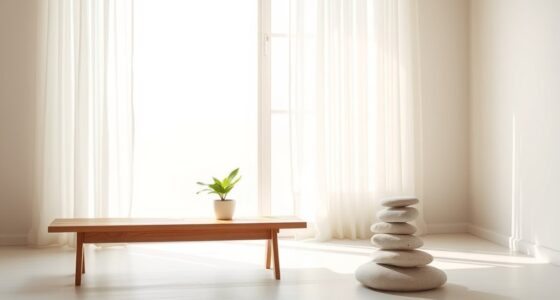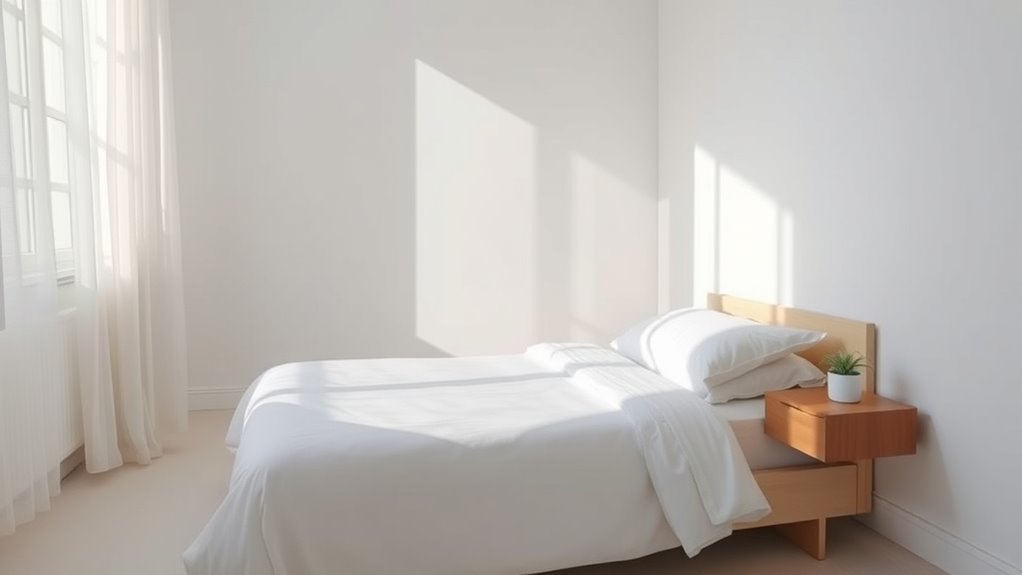

Clearing clutter and embracing minimalism can help ease your anxiety by creating a peaceful, organized space where you feel more in control. When your environment is tidy, it reduces visual chaos that often overwhelms you and boosts your sense of calm and clarity. Simplifying your surroundings allows you to focus better, feel less stressed, and develop emotional resilience. If you want to discover more ways minimalism supports mental health, there’s still much to explore.
Key Takeaways
- Clearing clutter reduces visual chaos, lowering stress levels and creating a calming environment that eases anxiety.
- Minimalism emphasizes quality over quantity, helping individuals let go of excess and achieve mental clarity.
- Organizing living spaces fosters a sense of control, boosting confidence and reducing feelings of overwhelm.
- A tidy environment supports mindfulness practices and emotional stability, promoting overall mental well-being.
- Simplifying possessions and routines encourages positive mindset shifts, reducing material-related guilt and anxiety.
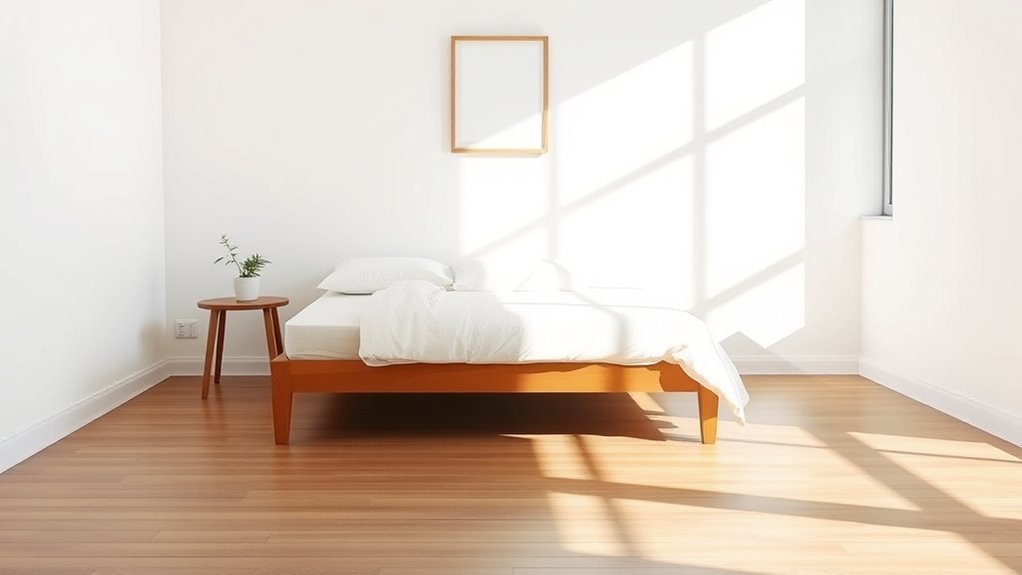
Have you ever wondered how simplifying your life can impact your mental well-being? When your environment is cluttered and chaotic, it’s easy to feel overwhelmed or anxious. That’s where space organization comes into play. By intentionally decluttering and arranging your surroundings, you create a sense of order that can profoundly influence your emotional well-being. When your space is organized, you’re less likely to feel stressed or distracted by unnecessary clutter. Instead, you can focus on what truly matters, making it easier to relax and find peace during your daily routines.
Clearing clutter isn’t just about aesthetics; it’s about creating a mental sanctuary. When your environment is tidy, your mind can breathe easier. You’ll notice that tasks become less intimidating because you’re not constantly bombarded by visual chaos. Space organization helps you establish a sense of control, which is essential for managing anxiety. Instead of feeling overwhelmed by the mess, you gain clarity and purpose. As you develop a habit of decluttering, you start to see your surroundings as a reflection of your emotional state. A clean, organized space can foster feelings of accomplishment and calm, reducing emotional stress.
A tidy space fosters calm, clarity, and emotional well-being, making tasks easier and reducing stress.
Moreover, minimalism encourages you to focus on quality over quantity. When you let go of excess possessions, you free up physical space, which translates into mental space. This simplification allows you to prioritize your mental health and emotional well-being. You begin to appreciate the value of intentional living—choosing only what adds meaning to your life instead of accumulating things out of habit or obligation. This mindset shift can lessen feelings of guilt or anxiety associated with clutter and materialism, helping you cultivate a more positive outlook.
As you practice space organization and embrace minimalism, you’ll find it easier to establish routines that promote emotional stability. A well-organized environment minimizes distractions, giving you the mental clarity needed to focus on self-care and mindfulness practices. Over time, this consistency reinforces your sense of stability, which is vital for managing mental health challenges like anxiety or depression. Plus, a tidy space can boost your confidence and motivation, encouraging you to maintain healthy habits that support your emotional well-being. Additionally, understanding the importance of space organization can empower you to create lasting changes that support your mental health journey.
In the end, simplifying your environment isn’t just about aesthetics; it’s a powerful tool for nurturing your mental health. When you prioritize space organization and minimalism, you create a calming atmosphere that encourages emotional resilience. The act of decluttering becomes a form of self-care—one that helps you feel more centered, grounded, and in control of your mental landscape. So, start small, and watch how clearing clutter transforms not just your space but your overall emotional well-being.
Frequently Asked Questions
How Quickly Can Decluttering Impact Mental Health?
You can notice some emotional response and benefits within days of decluttering, but the full timeframe varies based on your habits and goals. As you clear clutter, you might feel a sense of relief and calm soon after, while ongoing decluttering can lead to long-term mental health improvements. Consistency is key, and even small progress can boost your mood and reduce anxiety over time.
Are There Specific Minimalist Practices That Improve Anxiety?
Yes, certain minimalist practices can considerably soothe your anxiety. Focusing on color psychology, choose calming hues like blues and greens to create a peaceful space. Practice effective time management by setting aside dedicated decluttering sessions, reducing overwhelm. Simplifying your environment with intentional organization helps you feel more in control. These mindful methods foster tranquility, transforming your space into a sanctuary that alleviates anxiety and encourages mental clarity.
Can Minimalism Help With Depression or Only Anxiety?
Minimalism can help with depression by fostering mental clarity and reducing overwhelm, not just anxiety. Embracing minimalist habits like decluttering regularly and simplifying your space can lift your mood and create a sense of control. When your environment is less chaotic, you’ll find it easier to focus on what truly matters, which can boost your overall mental well-being and help combat feelings of depression.
What Are Common Challenges When Adopting a Minimalist Lifestyle?
When adopting a minimalist lifestyle, you’ll face challenges like space optimization, deciding what to keep, and resisting consumerism. Digital decluttering can be tough, as you need to regularly manage emails and files. You might also struggle with emotional attachment to belongings. Staying consistent requires discipline and patience, but focusing on your goals helps. Overcoming these hurdles leads to a calmer, more intentional life, making the effort worthwhile.
Is Professional Help Necessary Alongside Minimalism for Mental Health?
You don’t always need professional help alongside minimalism for mental health, but therapeutic support can boost your emotional resilience. If you find yourself overwhelmed or struggling with deeper issues, seeking a therapist can provide valuable guidance. Combining minimalism with therapy helps address underlying causes of anxiety, making your journey toward mental clarity more effective. Remember, prioritizing your emotional well-being is key, and professional support can be a crucial part of that process.
Conclusion
By simplifying your space, you might find it easier to clear your mind and reduce anxiety. Minimalism isn’t just about aesthetics—it’s about creating a calming environment that supports your mental health. So, why not try decluttering today and see how it impacts your well-being? Could a simpler space be the key to a calmer mind? Sometimes, clearing out the clutter is the first step toward finding peace within yourself.