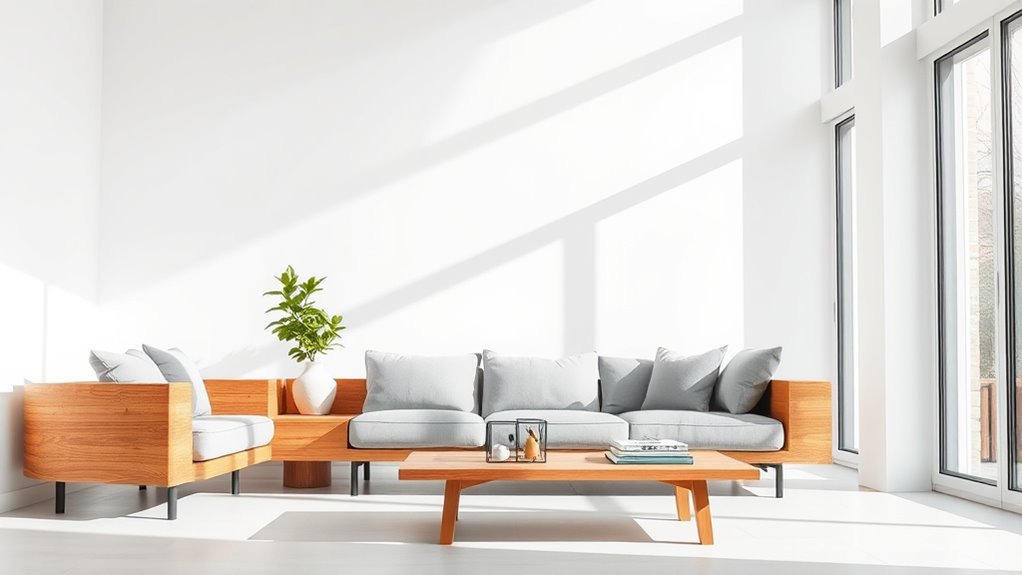

Many believe minimalism means giving up all possessions or that you need to be wealthy, but it’s actually about intentional choices that enhance your life, regardless of budget. It doesn’t require sacrificing comforts or major lifestyle changes—small, manageable adjustments can create a more purposeful space. It’s not just a trend; minimalism is sustainable and adaptable. If you’re curious, explore how embracing imperfection and focusing on what truly matters can make this approach achievable for you.
Key Takeaways
- Minimalism is about intentionality and value, not deprivation or lack of possessions.
- It is accessible and affordable, emphasizing quality and mindful consumption over cost.
- Minimalism enhances comfort and aesthetic appeal without sacrificing personal joy.
- Achieving minimalism doesn’t require perfection; small, manageable changes lead to sustainable benefits.
- It promotes environmental sustainability and overall well-being through mindful living.

Under Shelf Storage Baskets, Foldable Carbon Steel Under Cabinet Basket for Kitchen Cabinets Pantries Bookshelves Desk, Space-Saving Storage Solution (Black, 2 Pack)
Space-Saving and Convenient: This foldable under cabinet basket organizer allows for easy storage and transportation, making it ideal…
As an affiliate, we earn on qualifying purchases.
As an affiliate, we earn on qualifying purchases.
Minimalism Means Giving Up All Possessions
Many people believe that minimalism requires giving up all possessions, but that’s a misconception. Minimalism is about possessions management, not deprivation. It encourages you to keep only what adds value or really matters to you. You don’t have to toss everything out; instead, focus on intentional choices. Emotional detachment plays a key role here—letting go of sentimental clutter that no longer serves you. By practicing emotional detachment, you free yourself from the hold of unnecessary items, making it easier to create a space that feels calm and purposeful. Developing a mindful possessions approach can help you focus on what truly enhances your life. Additionally, understanding nanotechnology’s potential can inspire innovative ways to optimize space and resource management in your environment. For example, utilizing space-efficient storage solutions can further streamline your environment and support your minimalist goals. Recognizing technological advancements can open up new possibilities for sustainable and efficient living. Minimalism isn’t about scarcity; it’s about clarity and mindful living. You can still own belongings, but they should align with your priorities and bring genuine joy, not clutter or guilt. For example, adopting a minimalist approach to possessions can help you manage your belongings more effectively and maintain a balanced, intentional lifestyle.

GloTika 3-Tier Over Toilet Storage with Anti-Tilt Safety System – 150lb Total Capacity Metal Bathroom Shelves Including Paper Holder & 4 Hooks, Space Saving Above Commode Organizer (64" H, Black)
[Maximize Vertical Space] – Utilize the often-ignored area above your commode to create an organized environment. With dimensions…
As an affiliate, we earn on qualifying purchases.
As an affiliate, we earn on qualifying purchases.
You Have to Be Rich to Practice Minimalism

You don’t need to be wealthy to practice minimalism. Accessible minimalism is designed to fit any budget, emphasizing quality over quantity without breaking the bank. Budget-friendly tips like decluttering what you no longer need, shopping secondhand, or focusing on experiences over possessions make minimalism achievable for everyone. It’s about simplifying your life, not spending more money. You can start small, such as organizing your space or setting limits on new purchases. Minimalism isn’t exclusive to the rich; it’s a mindset that encourages mindful consumption and intentional living. By focusing on what truly adds value, you’ll find that living simply is accessible and affordable, regardless of your income level. Minimalism mindset can help you develop an effective plan to incorporate minimalism into your daily routine.

Lifewit 6 Pack Clothes Storage Bins with Lids, Foldable Blanket Storage Bags with Zippers, Clear Window and Reinforced Handles, Closet and Organization for Clothing, Sweater, Comforter, Bedding
Reinforced Handle: The storage bag handle is sewn with two layers of thick fabric, the load-bearing capacity is…
As an affiliate, we earn on qualifying purchases.
As an affiliate, we earn on qualifying purchases.
Minimalism Is About Living Without Comforts

Minimalism isn’t about giving up comforts; it’s about simplifying what truly brings you joy. You focus on quality over quantity, so your home and possessions serve a purpose and feel special. Living minimally means prioritizing meaningful experiences without sacrificing the comforts that make life enjoyable. Embracing a Victorian-inspired aesthetic can add a touch of elegance and uniqueness to minimalist spaces, showcasing how intricate designs and mechanical details can coexist with simplicity. Understanding resources and tools available can help you create a balanced space that reflects both your style and values, especially as technological innovations make design customization more accessible. Being aware of signs of spoilage in items like lemon juice can help maintain a fresh and safe environment in your home, and exploring specialized hair products can enhance your personal grooming routine.
Simplifies Comforts, Not Joy
Contrary to the misconception that minimalism requires sacrificing all comforts, it actually focuses on removing excess to make room for what truly brings joy. You don’t have to give up cozy essentials; instead, you prioritize what enhances your joyful living and emotional fulfillment. Minimalism helps you clear clutter, so your space supports relaxation and wellbeing. Incorporating intentional choices can further enhance your community engagement with your environment. This approach ensures your environment nurtures happiness without unnecessary distractions. Recognizing the importance of visual clarity in your environment can contribute to a more peaceful and focused living space. Understanding the role of aesthetic simplicity can also help you maintain a radiant and youthful appearance as part of your overall well-being.
Prioritizes Quality Over Quantity
While minimalism often involves decluttering, its true focus is on choosing quality over quantity. You prioritize a quality focus, which means selecting items that truly serve a purpose and bring value to your life. This approach helps you avoid waste and superficial consumption, emphasizing durability and craftsmanship. Minimalism isn’t about living without comforts; it’s about surrounding yourself with meaningful, well-made things. By focusing on intentionality, you create a space that’s both functional and aesthetically pleasing. Proper projector maintenance, such as regular cleaning and timely bulb replacements, ensures your setup remains optimal and extends the lifespan of your equipment. This intentional approach fosters a more mindful lifestyle, where every item has a reason, and your environment supports your well-being instead of cluttering it. Embracing purposeful consumption allows you to build a home that truly enhances your daily life. Additionally, understanding financial terms and jargon can help you make more informed decisions about your purchases and investments, ensuring your lifestyle remains sustainable and aligned with your values.

ECR4Kids Tri-Me Table and Cube Chair Set, Multipurpose Furniture, Red, 3-Piece
Kids Table and Chair Set: Adaptable table and two seats for toddlers to use as a chair, bench,…
As an affiliate, we earn on qualifying purchases.
As an affiliate, we earn on qualifying purchases.
Decluttering Is the Only Aspect of Minimalism

Many people assume that decluttering is the only part of minimalism, but there’s much more to it than just organizing your space. Minimalism focuses on space optimization, creating environments that promote calm and functionality. It’s about intentionally choosing what you keep, not just removing clutter. By doing so, you enhance the aesthetic appeal of your surroundings, making them more visually pleasing and easier to maintain. Minimalism encourages you to contemplate the purpose behind each item, ensuring your space reflects your values and lifestyle. It’s not just about stripping away possessions but cultivating a mindful approach to how you live and interact with your environment. Recognizing the importance of mindful decision-making can also support individuals in adopting a minimalistic mindset and making sustainable changes. Additionally, understanding cybersecurity best practices can help protect your digital life as part of a holistic minimalist lifestyle. Incorporating creative expression through personalized decor or craft projects can further enrich your minimalism journey. Practicing positive thinking can also empower you to sustain your minimalist lifestyle and overcome challenges along the way. Ultimately, minimalism is a holistic mindset that extends beyond decluttering, shaping how you experience your space and life.
Minimalism Requires Major Lifestyle Overhauls

Many believe minimalism demands a complete lifestyle overhaul, but that’s not true. It can simplify your daily routines with minimal effort, leading to a big impact. You don’t need drastic changes—small adjustments can make a significant difference.
Simplifies Daily Routines
Despite common beliefs, embracing minimalism doesn’t mean you have to overhaul your entire lifestyle. In fact, it can make your daily routines much simpler. Minimalism encourages you to focus on what truly matters, streamlining your daily organization. By decluttering your space, you reduce distractions and save time searching for items or making decisions. Creating practical routines becomes easier when your environment supports efficiency. You might start by simplifying your wardrobe or setting specific times for tasks, which helps eliminate unnecessary steps. Minimalism isn’t about drastic changes; it’s about making intentional choices that foster clarity and reduce stress. Over time, these small adjustments lead to more straightforward, manageable daily routines that free up mental and physical space for what’s important.
Minimal Effort, Big Impact
While minimalism often appears simple, achieving its benefits can require significant lifestyle changes. You might think effortless living comes from just decluttering, but impactful minimalism involves reevaluating priorities and habits. Small adjustments, like reducing possessions or simplifying routines, can lead to profound results. It’s not about overhauling your entire life overnight but making mindful choices that create space for what truly matters. These changes may seem minor initially, yet they foster a more intentional, stress-free existence. By focusing on quality over quantity and cutting out excess, you’ll find that minimal effort can produce big impact. Embracing impactful minimalism allows you to enjoy a more manageable, meaningful lifestyle without the burden of unnecessary clutter or distraction.
Minimalism Is Just a Trend, Not a Sustainable Choice
Some people dismiss minimalism as just a passing trend, but this perspective overlooks its deeper benefits. Minimalism promotes sustainable living by encouraging intentional choices that reduce waste and excess. It’s a lifestyle that can evolve with you, not fade away with fleeting fads. To visualize this, consider these aspects:
| Impact on Environment | Personal Fulfillment | Long-term Benefits |
|---|---|---|
| Reduces clutter | Increases clarity | Cost savings |
| Lowers consumption | Enhances focus | Sustainable habits |
| Minimizes waste | Promotes mindfulness | Resilience over time |
| Less resource use | Encourages purpose | Reduced environmental footprint |
| Promotes quality over quantity | Better mental health | Lifestyle that lasts |
You Need to Be Perfect to Be a Minimalist
Many believe you have to be perfect or completely decluttered to embrace minimalism, but that’s a misconception. Perfection is unrealistic, and aiming for it can discourage you from starting. Minimalism isn’t about having the perfect home or eliminating every item; it’s about adopting a minimalist mindset that prioritizes what truly matters. You don’t need to declutter everything overnight or become a minimalist expert. Instead, focus on small, manageable changes that align with your lifestyle. Remember, minimalism is a journey, not a destination. Embracing imperfection allows you to build sustainable habits over time, making minimalism accessible and enjoyable rather than a source of stress. It’s about progress, not perfection.
Frequently Asked Questions
Can Minimalism Be Adapted to Any Lifestyle or Personality?
Yes, minimalism can be adapted to any lifestyle or personality. You can customize it based on your personal preferences and cultural differences, making it as simple or as functional as you need. Whether you’re someone who values decluttering or prefers a more minimalist aesthetic, you can incorporate minimalism in a way that suits your daily routines and cultural background, creating a space that feels authentic and comfortable for you.
Is Minimalism Suitable for Families or Only Singles?
Minimalism is definitely suitable for families, promoting family-friendly living and even multi-generational minimalism. You can tailor minimalism to fit your family’s needs by decluttering shared spaces and focusing on meaningful possessions. It encourages a simpler, more intentional lifestyle that benefits everyone, helping reduce stress and create a more harmonious home. Whether you’re single or have a large family, minimalism can be adapted to improve your living environment.
How Does Minimalism Affect Mental Health and Well-Being?
Minimalism can considerably boost your mental health and well-being by reducing stress and promoting emotional clarity. When you declutter your environment, you create a calmer space that helps you focus and feel more in control. This simplicity minimizes distractions, easing anxiety and allowing you to prioritize what truly matters. Embracing minimalism encourages mindfulness, leading to a more balanced and peaceful mindset, ultimately enhancing your overall mental health.
Can Minimalism Help Reduce Environmental Impact?
Minimalism makes a meaningful difference by reducing your environmental impact. When you embrace eco-friendly choices and prioritize sustainable living, you cut down on waste, lower resource consumption, and diminish pollution. By mindfully minimizing possessions and habits, you actively contribute to a healthier planet. Your minimalist mindset promotes eco-conscious actions, helping conserve resources and combat climate change, making your lifestyle not only simpler but also substantially more sustainable and environmentally friendly.
Is Minimalism a Temporary Trend or a Long-Term Commitment?
Minimalism isn’t just a temporary trend; it’s a long-term commitment to changing how you view consumer culture and material possessions. As you adopt minimalism, you’ll find it becomes a sustainable lifestyle choice that helps reduce clutter and environmental impact. By intentionally choosing quality over quantity, you stay committed, making minimalism a lasting part of your life rather than a fleeting fad.
Conclusion
Don’t let myths hold you back from exploring minimalism. It’s not about giving up everything or needing wealth; it’s about making space for what truly matters. You don’t have to overhaul your entire life or sacrifice comfort to benefit. Minimalism isn’t a fleeting trend or perfection; it’s a flexible, personal journey. Embrace the idea that small, intentional changes can create a big, lasting impact—because minimalism is for everyone, not just the perfect or the wealthy.