

Mental clutter and physical clutter are closely linked, with each fueling the other. When your thoughts feel overwhelmed or chaotic, your environment often becomes disorganized. Conversely, a messy space can increase mental stress and hinder focus. Clearing your mind and physical space together breaks this cycle, leading to more calm and clarity. As you explore further, you’ll discover simple ways to create harmony between your inner and outer worlds.
Key Takeaways
- Mental clutter, like negative thoughts and emotional baggage, directly contributes to physical disorganization and cluttered environments.
- Overwhelm from mental overload impairs prioritization, leading to neglected cleaning and increased physical clutter.
- Clearing physical clutter can reduce mental stress, creating a positive feedback loop that enhances emotional well-being.
- Digital clutter adds to mental overload, which can manifest as physical disorganization in living and workspaces.
- Mindfulness and emotional clarity are essential for addressing both mental and physical clutter effectively.
Understanding the Nature of Mental and Physical Clutter

Understanding the nature of mental and physical clutter reveals how closely these two forms of disorder are connected. Your thought patterns often mirror the chaos around you, making it harder to focus or feel calm. Emotional baggage, like unresolved conflicts or lingering regrets, weighs heavily on your mind, cluttering your mental space. This mental overload can lead to physical clutter, as you struggle to prioritize or let go of belongings. When your thoughts are tangled, it’s tempting to avoid clearing out your space, creating a cycle that feeds both mental and physical disorder. Recognizing this connection helps you understand that decluttering isn’t just about cleaning—it’s about addressing the internal factors that influence your environment. Clearing mental clutter can make physical clutter easier to manage. Additionally, understanding the impact of juice cleansing and detox strategies can motivate healthier habits that support mental clarity, emphasizing the importance of holistic well-being practices. Research shows that mindfulness practices can significantly reduce mental clutter while simultaneously encouraging physical organization. Cultivating emotional awareness can help break the cycle by allowing you to process underlying feelings that contribute to clutter.
How Mental Overload Impacts Your Living Space

When your mind feels overwhelmed, it’s easy for your space to become disorganized. Mental clutter fuels chaos, making it harder to keep things tidy and functional. Stress from mental overload can also lead to neglecting maintenance, causing your living area to suffer. Recognizing the importance of embracing the journey can help you manage both your mental and physical environment more effectively. Additionally, AI security solutions can assist in managing digital clutter, reducing mental stress related to information overload.
Overwhelm Sparks Disorganization
Feeling overwhelmed mentally often leads to physical disorganization in your living space. When your mind is overloaded with emotional baggage and digital clutter, it’s hard to keep things tidy. Mental fatigue drains your energy, making it easier to neglect decluttering or organizing. The more mental chaos you experience, the messier your environment becomes, reinforcing feelings of stress and helplessness.
- You might leave piles of unopened mail or laundry, simply because mental exhaustion saps your motivation.
- Digital overload, like endless notifications, can distract you from tackling physical clutter.
- Emotional baggage may cause you to avoid cleaning or making decisions about your space, perpetuating disarray.
This cycle keeps your environment disorganized and your mind overwhelmed, creating a feedback loop that’s tough to break.
Mental Clutter Creates Chaos
Mental clutter doesn’t just stay in your mind—it spills over into your living space, creating chaos you can’t escape. When your thoughts are overwhelmed, your environment reflects that disarray, making it harder to find what you need and stay organized. This mental overload hampers mindful productivity, leaving you stuck in a cycle of distraction and frustration. Without emotional clarity, clutter accumulates because you lack the mental space to address it. As your mind fills with worries, tasks, and unfinished ideas, your surroundings mirror that chaos, trapping you in a feedback loop. Recognizing the importance of emotional support can be a crucial step towards achieving mental clarity and better organization. Incorporating mindfulness techniques can further aid in reducing mental overload, making it easier to manage physical clutter and create a more harmonious living space. Additionally, understanding how mental health impacts your physical environment emphasizes the need for holistic self-care.
Stress Affects Maintenance
Stress from mental overload can quickly turn into physical clutter if you don’t actively address it. When your mind is overwhelmed, clutter management becomes harder, and your living space suffers. Mindful stress can cause you to delay chores or forget organizing tasks, making clutter pile up unintentionally. To break this cycle, recognize when stress is mounting and take small steps to manage it. These quick actions can help prevent mental clutter from spilling into your environment. Additionally, understanding cookie categories can help you better manage your online habits, reducing digital overload that may contribute to mental stress. Incorporating sound design techniques like mindful breathing sounds can also promote relaxation and help you stay focused on organizing tasks. Moreover, establishing routine habits can reinforce a sense of control and make clutter management feel more achievable. – Prioritize daily tidying to keep clutter at bay – Practice mindful stress techniques like deep breathing – Set aside time for regular organization sessions
The Psychological Effects of a Cluttered Environment

A cluttered environment can substantially impact your psychological well-being by overwhelming your mind and making it harder to focus. When your space is chaotic, you carry emotional baggage that adds to your mental load, intensifying feelings of stress and anxiety. This clutter creates cognitive overload, forcing your brain to process unnecessary stimuli, which hampers your ability to think clearly or prioritize tasks. Over time, this persistent mental noise can lead to feelings of frustration, irritability, and burnout. You may find yourself more easily distracted and less able to relax, as your environment constantly signals chaos. Engaging in Remote Hackathons can be a productive way to channel your focus and boost mental clarity by working on innovative projects in a structured, goal-oriented setting. Clearing physical clutter isn’t just about tidiness; it’s a crucial step toward reducing emotional and mental clutter, promoting a calmer, more focused state of mind. Additionally, reducing cluttered environments can lower your exposure to unnecessary stimuli, allowing your brain to recover from sensory overload. Recognizing the importance of organized spaces can further enhance mental clarity by creating a sense of calm and control. Developing routines for dividing responsibilities can also help prevent clutter from accumulating and reduce mental stress. Furthermore, incorporating skincare and beauty routines, such as the use of trusted eye patches or ice masks, can also contribute to overall mental wellness by fostering self-care and relaxation.
Strategies to Declutter Your Mind and Your Home

To effectively declutter your mind and your home, start by establishing simple, consistent routines that promote organization and mental clarity. Incorporate mindfulness techniques to stay present and reduce mental noise. Simplify your physical storage by regularly sorting and discarding items you no longer need, creating space for what truly matters. Focus on maintaining routines like daily tidying or setting aside time for reflection. These habits help prevent clutter from accumulating both mentally and physically. Regularly reviewing your possessions can also help you identify unnecessary items that contribute to clutter and mental overload. Incorporating vertical storage solutions can maximize space and keep clutter out of sight, further supporting mental clarity. Understanding the benefits of curiosity can motivate you to explore new ways to organize and declutter effectively. Recognizing that celebrity transformations often involve decluttering their lives can inspire personal change and motivate you to start your own journey. Remember, decluttering isn’t a one-time task; it’s a continuous process that benefits from steady effort. Developing a mindset focused on organized living can make the process more sustainable and rewarding. By combining mindfulness practices with practical physical storage strategies, you’ll create an environment that nurtures clarity and peace. Small, deliberate steps make a big difference in transforming your space and mind.
The Role of Mindfulness and Organization in Reducing Clutter
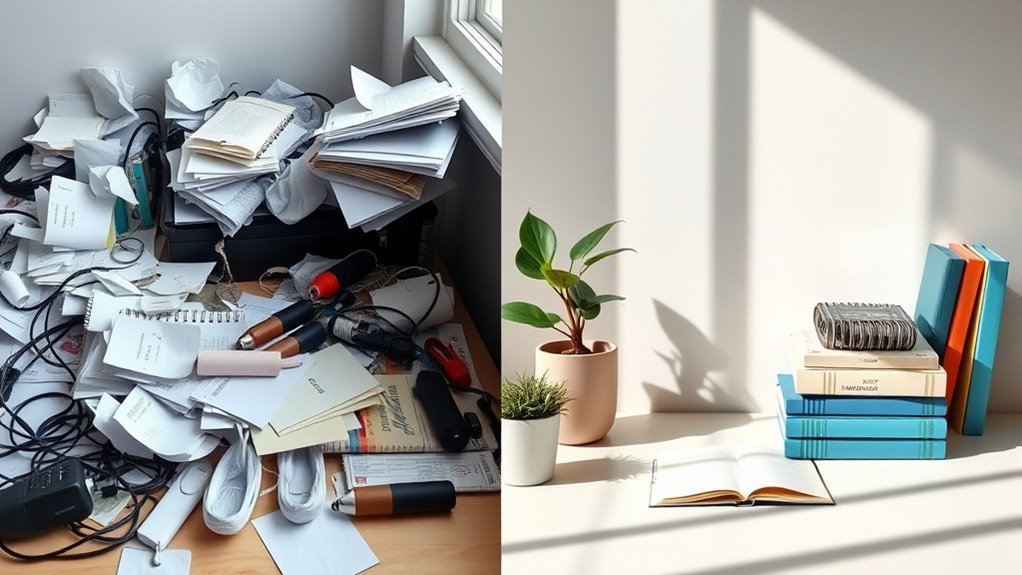
Practicing mindful decision-making helps you recognize what truly adds value to your space and your life. When your environment is organized, it fosters a sense of calm that makes it easier to stay focused and reduce clutter. By combining mindfulness with organization, you create a cycle that supports mental clarity and physical order. Incorporating signs of spoilage into your awareness can help you better identify what no longer serves you, both in your physical environment and mental state. Recognizing dog names that evoke positive associations can also contribute to creating a peaceful and uplifting atmosphere. Regularly assessing your surroundings for clutter hotspots can further aid in maintaining an organized and peaceful space.
Mindful Decision-Making Strategies
When you approach clutter with mindfulness, you become more aware of your habits and the reasons behind your possessions. This awareness helps you recognize decision fatigue, making it easier to avoid impulsive clutter accumulation. By staying present, you can identify emotional baggage tied to certain items, reducing the urge to hold onto things out of guilt or nostalgia.
To practice mindful decision-making:
- Pause before discarding or keeping items, asking yourself if it truly adds value.
- Reflect on whether emotional baggage influences your attachment to possessions.
- Limit daily decisions about clutter to prevent overwhelm and maintain clarity.
These strategies empower you to make conscious choices, ultimately creating a calmer, more organized space—and mind.
Organized Environments Promote Calm
Creating an organized environment naturally fosters a sense of calm by reducing visual and mental chaos. When your space is tidy, you can practice mindful journaling to process your thoughts and emotions, which further clears mental clutter. Clutter visualization helps you see what’s unnecessary, making it easier to let go of possessions that no longer serve you. As you tidy up, focus on the present moment, noticing how each item’s placement influences your mood. An organized space minimizes distractions, allowing your mind to settle and stay focused. This intentional approach creates a ripple effect—calmer surroundings promote clearer thinking, and mindful habits reinforce your sense of control. Together, organization and mindfulness cultivate a peaceful environment that supports mental clarity and emotional well-being.
Creating a Harmonious Balance Between Inner and Outer Spaces

Achieving a harmonious balance between your inner and outer spaces requires intentional effort and awareness. When you develop emotional awareness, you better understand your feelings and how they influence your environment. Practice creative visualization by imagining your ideal space and mental state, aligning both. This helps you identify what needs adjustment inside and out. To nurture this balance:
Cultivate emotional awareness and visualize your ideal space to harmonize your inner and outer worlds.
- Regularly declutter your physical space to reflect mental clarity
- Use mindfulness techniques to stay present and aware of your emotions
- Visualize positive scenarios to reinforce a peaceful inner state
Frequently Asked Questions
Can Mental Clutter Cause Physical Clutter Over Time?
Yes, mental clutter can lead to physical clutter over time. When you experience cognitive overload, your mind becomes overwhelmed, making it harder to stay organized. Without mindfulness practices to clear mental space, you might neglect tidying up or lose track of belongings. This cycle causes physical clutter to accumulate, which only adds to your mental stress. Addressing mental clutter through mindfulness can help break this cycle and keep both your mind and space tidy.
How Does Emotional Stress Influence Physical Organization?
Ironically, emotional stress often makes your physical space feel even more chaotic. When you carry emotional baggage, it’s harder to stay organized, and clutter piles up as a visual reminder of your stress. Practicing mindfulness helps you process emotions, reducing mental clutter and making it easier to keep your space tidy. You’ll find that emotional clarity naturally leads to better physical organization, creating a calmer, more balanced environment.
Are There Specific Habits That Link Mental Clarity to Physical Space?
You can link mental clarity to your physical space through mindful habits, like regularly decluttering and setting designated spots for essentials. Pay attention to environmental cues, such as natural light or organized surroundings, which boost focus. When you practice these habits, you create a calming atmosphere that reduces mental clutter, making it easier to stay organized and clear-headed. Consistent effort strengthens this positive connection over time.
Does Decluttering One Area Improve Mental Well-Being?
Like a lighthouse guiding ships, decluttering one area can markedly boost your mental well-being. When you clear physical space, you create room for mindfulness practices and improve your daily routines. This act reduces stress and mental clutter, making it easier to focus and feel calmer. So, yes, tidying up isn’t just physical—it’s a powerful step toward a clearer mind and a more balanced life.
What Role Does Sleep Play in Managing Mental and Physical Clutter?
Sleep plays a vital role in managing both mental and physical clutter by improving your sleep quality and fostering restful habits. When you prioritize consistent, restful sleep, your mind clears mental clutter, boosting focus and emotional resilience. Physically, better sleep helps you stay energized and motivated to declutter your environment. In turn, a tidy space and a rested mind create a positive cycle, reducing stress and enhancing overall well-being.
Conclusion
By clearing your mind and your space, you create a symphony of calm that resonates through every corner of your life. When mental and physical clutter intertwine, they form a tangled web that drains your energy. But with mindful organization, you can untangle the knots and restore harmony. Remember, a tidy space isn’t just about looks—it’s the foundation for a clearer mind and a more balanced, vibrant life. Your journey to peace starts with one simple step.