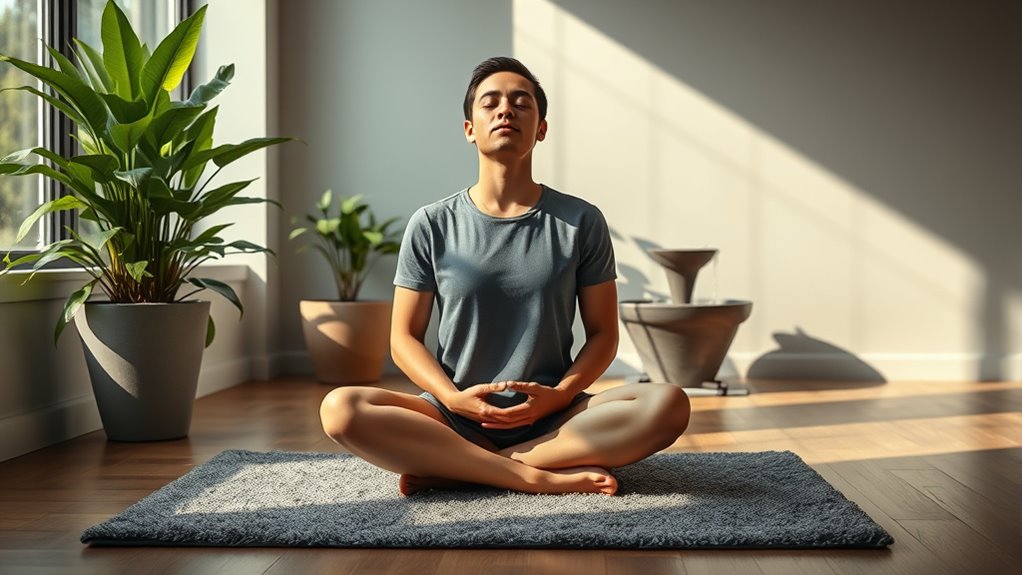
On stressful days at work, try practicing simple breathing exercises to help you stay calm and focused. Techniques like focusing on your breath sensations, breathing slowly for four counts, holding, exhaling gently, and pausing can calm your nervous system and reduce anxiety. These quick practices support better communication and decision-making, creating a more collaborative environment. Keep exploring these techniques to discover how consistent practice can boost your resilience and overall well-being during hectic days.
Key Takeaways
- Practice box breathing (4-4-4-4) to quickly calm nerves and sharpen focus during stressful work moments.
- Use mindful breathing to enhance emotional regulation and maintain clarity amidst deadlines.
- Incorporate brief breathing exercises during breaks to reduce overall stress and prevent burnout.
- Focus on breath sensations to improve active listening and thoughtful communication with colleagues.
- Regular practice builds resilience, helping you stay centered and productive during high-pressure days.

In today’s fast-paced work environment, practicing mindfulness can considerably improve your focus, reduce stress, and boost overall productivity. One effective way to cultivate mindfulness during stressful days is through breathing exercises. These techniques can help you stay centered, make clearer decisions, and communicate more mindfully with colleagues. When your mind is cluttered with worries or deadlines, mindful communication falters, and stress levels spike. By taking a few moments to focus on your breath, you create space between stimulus and response, allowing you to approach interactions with calmness and clarity. Mindful breathing is a foundational practice that supports emotional regulation and mental clarity. Start by simply noticing your breath without trying to change it. Pay attention to the sensation of air entering and leaving your nostrils or the rise and fall of your chest. If your mind drifts to tasks or worries, gently bring your focus back to your breath. This practice, often called Mindful breathing, can be done anywhere—at your desk, in a meeting, or during a quick break. Regularly engaging in these stress reduction techniques helps you develop resilience to workplace stressors, making it easier to maintain composure and communicate thoughtfully even during high-pressure moments.
Another effective breathing exercise is the box breathing technique. Inhale slowly through your nose for a count of four, hold your breath for four counts, exhale gently for four counts, and then pause for another four counts before repeating. This rhythmic pattern calms your nervous system, reduces anxiety, and sharpens your focus. Incorporating such stress reduction techniques into your daily routine can lead to noticeable improvements in your emotional regulation and overall well-being at work.
Practicing mindful breathing also enhances your ability to engage in mindful communication. When you’re calm, you’re more likely to listen actively, choose your words carefully, and respond thoughtfully instead of reacting impulsively. This not only improves your relationships with colleagues but also creates a more collaborative and respectful work environment. additionally, taking these moments to breathe can prevent misunderstandings and reduce conflicts caused by miscommunication or heightened stress.
Incorporating mindful breathing exercises into your workday doesn’t require much time or special equipment. Just a few minutes of intentional focus on your breath can make a significant difference in how you handle stress and communicate with others. Over time, these stress reduction techniques become habit, empowering you to stay present and engaged, no matter how hectic your schedule gets. By prioritizing mindfulness through breathing, you foster a more balanced, resilient, and productive work life.
Frequently Asked Questions
Can Breathing Exercises Replace Professional Stress Therapy?
Breathing exercises can’t replace clinical therapy, especially for severe stress or mental health issues. While they help manage daily stress by improving breathing patterns and promoting relaxation, they aren’t a substitute for professional treatment. If you’re experiencing persistent or intense stress, it’s important to seek clinical therapy. Breathing techniques can complement therapy, but they shouldn’t be relied on alone to address underlying mental health concerns.
How Long Should I Practice Breathing Exercises Daily?
Think of meditative routines as your daily mental tune-up. You should practice breathing exercises for about 10 to 15 minutes each day, focusing on breathing duration that feels comfortable and calming. Consistency is key, so aim to incorporate these into your routine every day, especially during stressful moments. This regular practice helps you build resilience, reduce stress, and stay centered, like a lighthouse guiding you through rough waters.
Are There Specific Breathing Techniques for Different Stress Levels?
Yes, different stress levels call for specific techniques. When you’re mildly stressed, try diaphragmatic breathing to calm your nerves. If stress feels overwhelming, practice alternate nostril breathing to balance your mood and reduce anxiety. You can switch between these methods depending on how intense your stress is. Incorporate these techniques into your daily routine to effectively manage stress and maintain focus during busy workdays.
Can Mindfulness Improve Focus During High-Pressure Meetings?
Yes, mindfulness can improve your focus during high-pressure meetings. By practicing mindful listening, you stay fully present, reducing distractions and enhancing mental clarity. Taking a few deep breaths before and during the meeting helps calm your mind, allowing you to process information better. This combination of mindful listening and intentional breathing keeps you alert, engaged, and able to respond thoughtfully, even when the pressure’s on.
Is It Effective to Do Breathing Exercises at Your Desk?
Doing breathing exercises at your desk is like hitting a reset button during a hectic day. They’re highly effective for office relaxation and fit seamlessly into your desk routines. By taking a few deep breaths, you can reduce stress, clear your mind, and regain focus quickly. Incorporating these simple practices into your workday helps you stay calm, centered, and more productive, even amidst chaos.
Conclusion
By incorporating these breathing exercises into your workday, you transform stress from an unwelcome intruder into a fleeting visitor. Just as a lighthouse guides ships safely to shore, mindfulness lights your way through chaos, anchoring you in calm amidst the storm. Remember, each mindful breath is a small act of rebellion against stress, opening the door to clarity and peace. Embrace these practices, and watch how your workday turns from overwhelming to grounded—one breath at a time.