A minimalist workspace can reduce your stress by creating a calm, organized environment that minimizes distractions and sensory overload. Scientific studies show that clutter impairs focus, increases mental workload, and triggers anxiety. Simplified spaces with neutral colors, tidy surfaces, and thoughtful design promote relaxation and mental clarity. While minimalism works well for many, personal preferences matter. If you explore the science further, you’ll discover practical tips to optimize your workspace for well-being.
Key Takeaways
- Minimalist workspaces reduce visual clutter, decreasing cognitive load and enhancing focus, which lowers stress levels.
- Neutral colors and simple designs promote relaxation and mental clarity, helping to alleviate stress.
- Organized environments foster a sense of control and reduce sensory overload, contributing to stress reduction.
- Natural lighting and calming decor in minimalist spaces boost mood and relaxation.
- Clear, tidy spaces support psychological resilience and decision-making, decreasing environmental stressors.
The Connection Between Environment and Mental Health
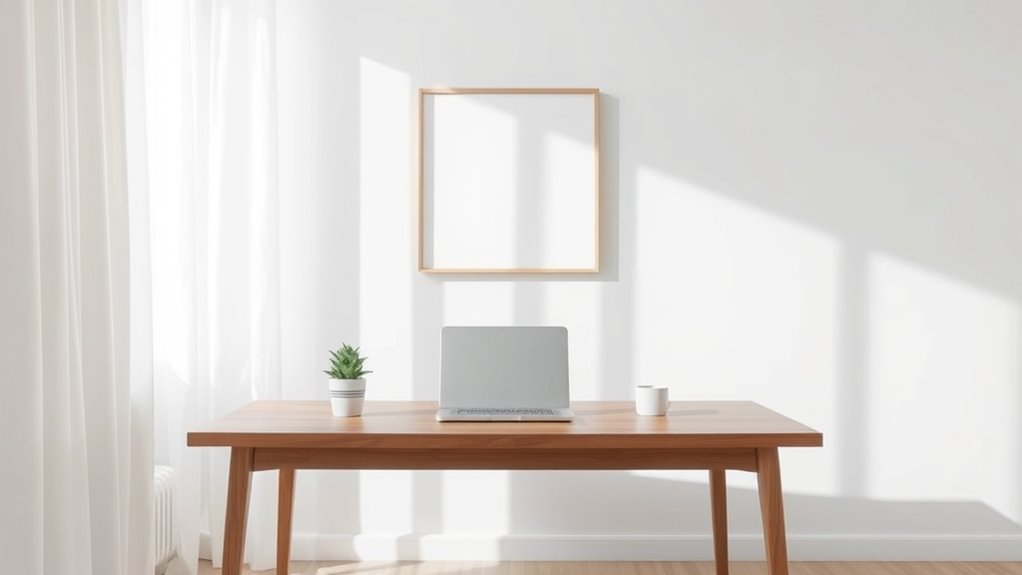
Your environment plays a crucial role in shaping your mental health, especially when it comes to your workspace. An aesthetically appealing space can boost your mood and motivation, making it easier to focus and feel calm. When your workspace has a clean, simple design, it reduces unnecessary sensory stimulation that can overwhelm you. Minimalist setups with neutral colors, natural light, and uncluttered surfaces create a soothing atmosphere, helping you stay centered. The aesthetic appeal of a tidy, organized environment fosters a sense of control and clarity, which directly impacts your mental well-being. Additionally, air quality can influence your mood and cognitive function, further supporting a healthier mental state. Improving wall surfaces and finishes with proper paint or wallpaper choices can enhance the overall atmosphere and promote relaxation. Selecting the right projector for a home workspace can also improve your focus by providing clear visuals and reducing eye strain. Limiting distractions and visual harmony can also reduce cognitive load, making it easier to maintain focus and calmness. Creating a clutter-free zone through organized storage solutions can significantly reduce stress and improve overall mental clarity. By creating a workspace that supports relaxation and productivity, you can effectively lower stress levels and promote better mental health.
How Clutter Impacts Cognitive Functioning
Clutter in your workspace can considerably impair your ability to think clearly and make decisions. When your environment is chaotic, your brain struggles to focus, leading to decreased productivity and increased stress. Visual chaos triggers your brain’s attention system, making it harder to filter out distractions. Imagine a desk cluttered with papers, random objects, and tangled cords, all vying for your attention. Color psychology plays a role too—bright, mismatched colors can overstimulate your senses, while dull tones drain energy. Ergonomic design reduces physical discomfort, helping you stay alert, yet clutter negates these benefits. Visual clutter creates mental noise, overwhelming your cognitive load. Simplifying your space clears mental pathways, sharpening focus and enhancing decision-making. Less clutter equals a calmer, more efficient mind. Incorporating organized storage solutions can further reduce visual distractions and promote a sense of order. Additionally, research indicates that minimalist workspace environments can promote mental clarity and reduce stress levels.
Psychological Benefits of Minimalist Design
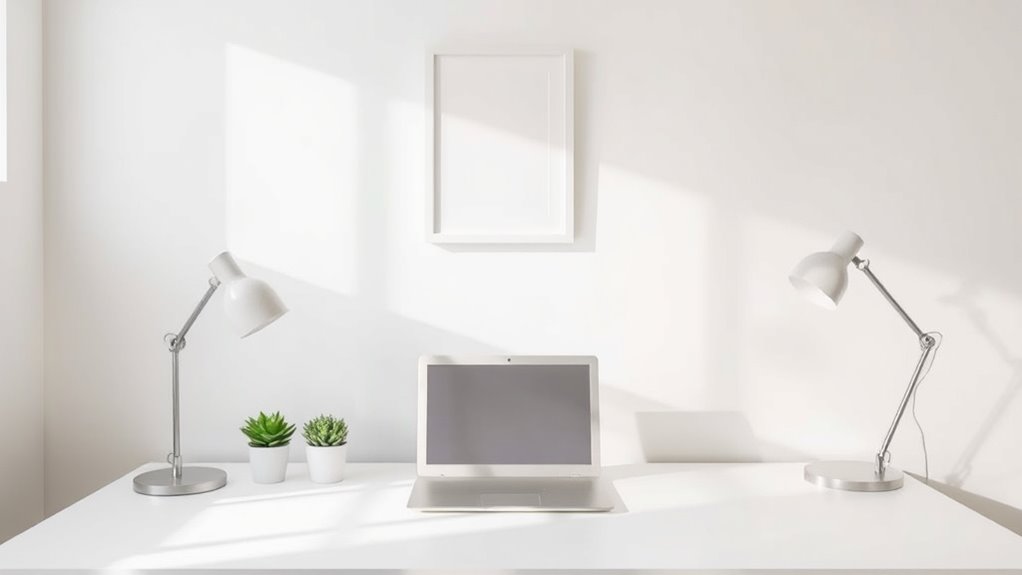
A tidy, minimalist workspace can substantially boost your mental well-being by fostering a sense of calm and control. When your environment is simple and uncluttered, it reduces sensory overload, helping you focus and feel more centered. Color psychology plays a key role here; neutral tones like soft whites, blues, or greens promote relaxation and clarity. Additionally, ergonomic furniture not only enhances physical comfort but also minimizes distractions caused by discomfort or pain, contributing to better mental health. Minimalist design removes visual noise, making it easier to concentrate and feel less overwhelmed. As a result, you’ll likely experience decreased anxiety and increased productivity. Incorporating clutter management can further enhance these psychological benefits. Keeping your space organized and free from unnecessary items supports your psychological resilience and creates a more positive mindset, especially when paired with organized storage solutions.
Research Findings on Stress Reduction and Workspace Simplicity

Numerous studies have demonstrated that simplifying workspaces can considerably reduce stress levels. When your environment is clear and organized, your mind feels less overwhelmed. Research highlights that color psychology plays a significant role: soothing hues like soft blues or greens promote calmness. Incorporating ergonomic accessories, such as supportive chairs and adjustable desks, also lowers physical discomfort and mental strain. Imagine a workspace with:
A tidy, calming workspace with ergonomic tools reduces stress and boosts focus.
- Clean, clutter-free surfaces that foster clarity
- Muted, calming colors that ease anxiety
- Ergonomic tools that support comfort and focus
Additionally, considering reliable backup power options can ensure your workspace remains functional during outages, helping you stay stress-free even in unexpected situations. Creating a space with vintage farmhouse decor can add a sense of warmth and familiarity that further promotes relaxation. Incorporating environmental psychology principles can deepen your understanding of how space influences mood and stress levels. Implementing furniture arrangement techniques can further enhance the flow and reduce distractions within your environment. These elements work together to create an environment that minimizes distractions and reduces cortisol levels. The science consistently shows that streamlined spaces encourage relaxation, helping you feel more in control and less stressed throughout your workday.
The Role of Visual Order in Enhancing Focus

When your workspace maintains a clear visual order, it becomes easier to concentrate on your tasks and stay productive. Visual harmony minimizes distractions, allowing your mind to focus without unnecessary clutter competing for attention. A tidy environment reduces cognitive overload, making it simpler to process information efficiently. Color psychology plays an essential role here; calming hues like blues and greens promote relaxation and sharp focus, while too many bright or conflicting colors can create visual noise. By organizing your workspace with deliberate color choices and maintaining an orderly layout, you foster a sense of calm and control. Incorporating mindfulness practices, such as focused breathing or visualization, can further enhance your ability to maintain this visual order, leading to improved mental clarity. Research shows that automation in organizing digital and physical spaces can also contribute to reduced stress levels. This deliberate visual order helps you stay engaged with your work, minimizes stress, and boosts your overall concentration, especially when integrated with smart home fitness tools that support a balanced lifestyle. Additionally, understanding how family connections and social support systems influence mental well-being underscores the importance of a balanced environment for reducing stress. Moreover, studies on ethical hacking reveal that a structured and well-organized approach to complex tasks can significantly enhance focus and reduce anxiety.
Practical Tips for Creating a Minimalist Workspace
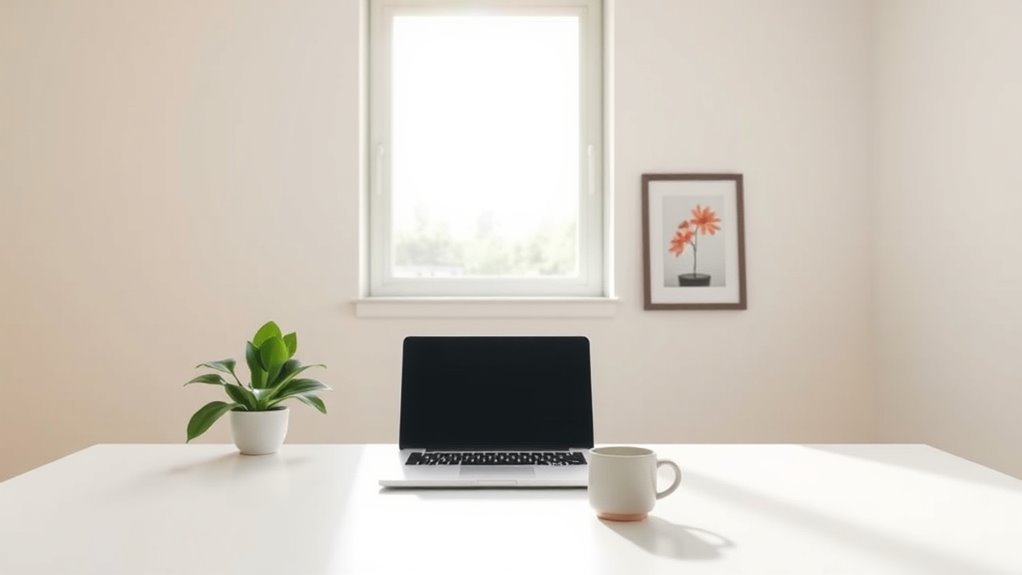
To create a minimalist workspace, start by decluttering regularly to keep your area organized. Choose neutral colors that promote calm and focus, and use functional storage solutions to keep essentials accessible. These simple steps help reduce stress and boost productivity in your environment. Additionally, maintaining your workspace with proper cleaning techniques can prevent buildup and promote a more comfortable and efficient area. Incorporating data privacy practices such as safeguarding sensitive information can further enhance your focus and overall well-being in your workspace. Regularly inspecting your workspace for hygiene can also help prevent illness and maintain a healthy environment. Moreover, implementing skin care routines, like moisturizing after cleaning, can contribute to overall comfort and a fresh feeling while working.
Declutter Regularly
Regularly decluttering your workspace keeps it organized and promotes a sense of calm. When you clear away unnecessary items, your environment feels more open and less stressful. Focus on maintaining a tidy space with essentials like ergonomic seating, which supports good posture, and natural lighting that lifts your mood. To create a clutter-free zone, consider these tips:
- Keep only frequently used items within reach, storing extras elsewhere
- Use sleek organizers or trays to contain small objects
- Regularly revisit and remove outdated papers or supplies
This habit helps prevent chaos from building up, making it easier to focus and stay relaxed. A minimalist workspace, maintained by consistent decluttering, fosters clarity and reduces mental clutter, ultimately lowering stress levels.
Use Neutral Colors
Choosing the right colors can substantially enhance the calming atmosphere of your minimalist workspace. Neutral shades like soft whites, beiges, and muted grays promote a sense of tranquility, aligning with color psychology principles that reduce stress. These colors help prevent visual clutter and create a clean, cohesive look. Pair neutral tones with well-placed ambient lighting to further foster relaxation; warm lighting complements the subtle hues and softens the environment. Avoid bright, bold colors that can overstimulate your senses and detract from focus. Instead, stick to a simple color palette that encourages calmness and clarity. Consistent use of neutral colors and ambient lighting makes your workspace more inviting, less distracting, and ultimately more conducive to reduced stress and increased productivity.
Incorporate Functional Storage
In a minimalist workspace, incorporating functional storage is essential to maintain a clutter-free environment. It helps you organize supplies efficiently and reduces visual chaos, which can heighten stress. Use sleek, ergonomic furniture with built-in storage compartments to keep everything within reach yet out of sight. Opt for wall-mounted shelves or drawers to maximize space and keep your desk clear. Ensure ambient lighting complements your storage solutions, making it easy to find what you need without straining your eyes. Visualize your workspace with:
- Hidden drawers under your desk for essentials
- Vertical shelves for books and supplies
- Cable organizers to keep cords tidy
These strategies foster a calm, organized space that supports focus and minimizes stress, creating a more productive environment.
Potential Limitations of Minimalism as a Stress-Relief Strategy
While minimalism can reduce clutter and create a calming environment, it isn’t a one-size-fits-all solution for stress relief. Many people overstate its benefits, assuming that decluttering automatically alleviates stress. In reality, minimalism’s effectiveness varies depending on individual preferences and circumstances. Cultural differences also play a role; what feels soothing in one culture might seem sparse or uninviting in another. For some, a minimalist space may lack personal touches that foster comfort and emotional connection. Additionally, the process of decluttering can sometimes cause stress rather than reduce it, especially if you feel overwhelmed by the task. Recognizing these limitations helps you adopt a balanced approach, understanding that minimalism isn’t a universal remedy but one of many tools to manage stress effectively.
Comparing Minimalist and Traditional Work Environments
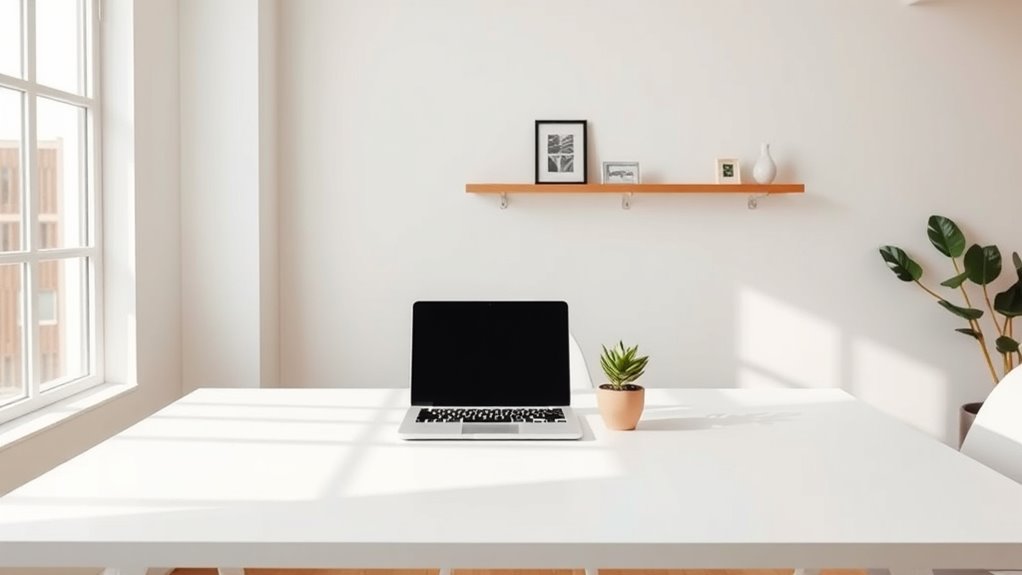
Minimalist work environments emphasize simplicity, clean lines, and clutter-free spaces to promote focus and reduce distractions. In contrast, traditional workspaces often feature abundant decor, busy layouts, and varied textures that can overwhelm your senses. Minimalist setups prioritize ergonomic furniture, ensuring comfort without excess, and ambient lighting that creates a calm atmosphere. Visualize a workspace with:
- Sleek desks and chairs with clean design
- Soft, warm lighting that minimizes glare
- Minimal accessories, like a single plant or clock
Compared to traditional environments filled with colorful posters and cluttered shelves, minimalism reduces visual noise, helping you concentrate better. The simplicity fosters a sense of calm, while traditional spaces might induce stress through sensory overload. Both approaches serve different needs, but minimalism’s focus on essential elements can considerably lower your stress levels.
Personalization Within a Minimalist Framework

Even within a minimalist workspace, adding personal touches can boost your motivation and sense of belonging. Personalization options allow you to incorporate elements that reflect your personality without cluttering your environment. For example, choosing a favorite color for your accessories or displaying a meaningful photo can enhance your connection to the space. Aesthetic customization helps you create a harmonious environment that feels comfortable and inspiring. The key is to select a few meaningful items that complement your minimalist design, rather than overwhelming your workspace. This balance encourages a sense of ownership while maintaining simplicity. Ultimately, small personalized details can improve your mood and focus, making your workspace more inviting without compromising the calming effect of minimalism.
Future Directions in Workspace Design and Mental Well-Being

As workplace design continues to evolve, integrating mental well-being into the core of future workspace concepts is becoming increasingly essential. You’ll see a shift toward spaces that promote calm and focus through thoughtful features like ergonomic furniture, which supports your posture and reduces strain, and ambient lighting that mimics natural daylight to improve mood. Future designs may include:
- Flexible layouts that adapt to your daily needs and activities
- Biophilic elements like plants and natural materials to reduce stress
- Quiet zones with soothing lighting and soundproofing for mental clarity
These innovations aim to create environments that foster well-being, helping you work more efficiently and feel less overwhelmed. The goal is a workspace that nurtures mental health as much as productivity.
Frequently Asked Questions
Can a Minimalist Workspace Improve Long-Term Mental Health?
A minimalist workspace can improve your long-term mental health by providing ergonomic benefits and reducing clutter. When your environment is organized and free of distractions, you’re less likely to feel overwhelmed or stressed. This clarity promotes focus and calmness, which can enhance your overall well-being over time. By maintaining a simple, ergonomic setup, you create a space that supports your mental health, making it easier to stay balanced and motivated.
How Does Color Choice Influence Stress in Minimalist Environments?
Think of your workspace as a calm lake. Light, neutral colors in minimalist environments evoke tranquility through color psychology, reducing stress. Bright or bold shades can create visual chaos, disrupting your focus and increasing tension. By choosing soothing hues, you enhance visual simplicity, which helps your mind relax. So, your color choices directly influence your stress levels, making a simple, harmonious palette essential for a peaceful workspace.
Are There Specific Tasks Better Suited for Minimalist Workspaces?
You’ll find that tasks requiring focus and deep thinking are best suited for minimalist workspaces, especially when equipped with ergonomic furniture. Keep decorative accessories minimal so they don’t distract you. The simplicity helps you stay organized and reduces clutter-induced stress, allowing for better concentration. Ergonomic furniture ensures comfort during extended periods, boosting productivity. This setup creates an environment where you can work efficiently without feeling overwhelmed by unnecessary distractions.
What Are Common Challenges When Transitioning to a Minimalist Workspace?
You might face challenges like clutter removal and developing new organizational habits when shifting to a minimalist workspace. It can be tough to let go of familiar items or adjust your routine. You’ll need patience and consistency to create a clean, clutter-free environment. Establishing new habits helps maintain simplicity, making it easier to stay focused and reduce stress over time. Remember, gradual changes make the process smoother and more sustainable.
Does Minimalism Benefit All Personality Types Equally?
Minimalism doesn’t work like a one-size-fits-all magic wand—you’re unique, and so are your personality traits. Some people thrive in minimalist environments, feeling calmer and more focused, thanks to personality adaptability. Others, with different individual differences, might find a stark space dull or uninspiring. So, no, minimalism benefits everyone equally; instead, it’s about tailoring your workspace to match your personality and preferences.
Conclusion
Imagine your workspace as a blank canvas, ready to inspire clarity and peace. By embracing minimalism, you clear away the chaos, allowing your mind to breathe and focus to flourish. It’s not just about aesthetics—it’s about creating a sanctuary where stress can’t take root. When your environment aligns with your need for calm, you can finally write your own story of tranquility and focus, one mindful stroke at a time.