As workplaces shift back toward quiet, private spaces, cubicles are making a noticeable comeback because they help you focus, reduce distractions, and support mental well-being. Modern office design balances collaboration with privacy by incorporating soundproof zones, flexible partitions, and ergonomic furniture. If you want to understand why many companies prioritize quiet environments now and discover how these changes boost productivity and comfort, keep exploring the evolving office landscape.
Key Takeaways
- Quiet offices with private cubicles reduce distractions, boosting focus and productivity.
- Soundproof zones and acoustic treatments create calm environments for deep work.
- Privacy screens and modular partitions balance collaboration with individual concentration.
- Ergonomic furniture and adaptable layouts enhance comfort and efficiency in quiet workspaces.
- The shift responds to employee needs for mental well-being, privacy, and reduced noise pollution.

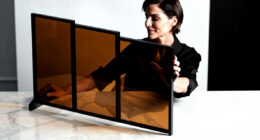
Houseables Partition Wall, Soundproof Room Dividers, Office Partitions, Sound Proof Dividers, Office Privacy Panel, Acoustic Privacy Panels, Noise Dampening Walls, Separator, Cubicle, Grey, 3PC, 72×67
SOUND REDUCTION – Designed to reduce sound, this acoustical partition helps absorb and soften surrounding noise, creating a…
As an affiliate, we earn on qualifying purchases.
As an affiliate, we earn on qualifying purchases.
The Evolution of Office Design and Employee Preferences
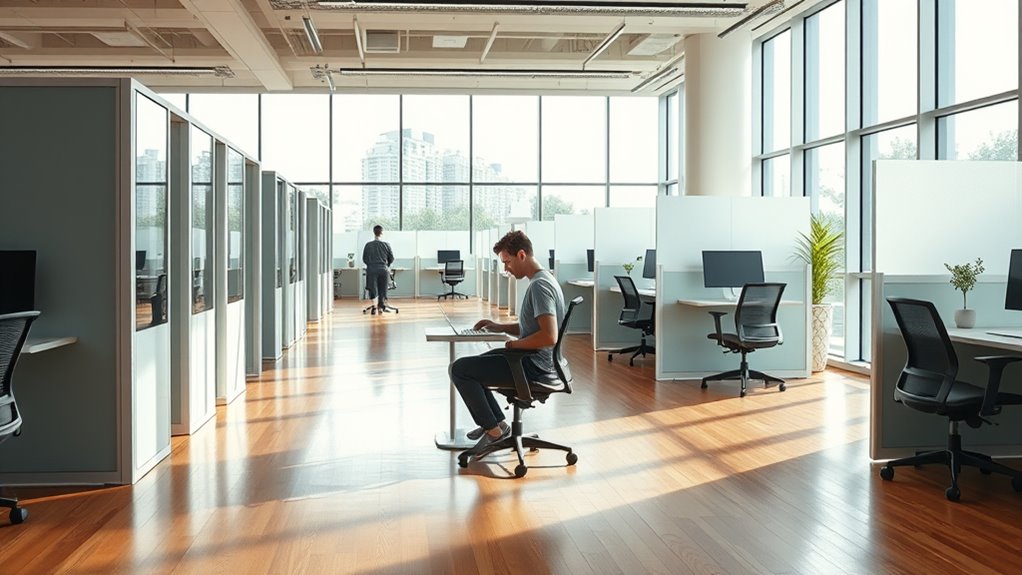
The way offices are designed has changed dramatically over the years, reflecting shifts in employee preferences and work culture. Open plan layouts and shared spaces became popular for promoting collaboration and communication. These designs aimed to foster a sense of community and ease of idea exchange. However, as time went on, many workers found open plans noisy and distracting, impacting focus and productivity. The emphasis shifted toward creating environments that balance interaction with individual work needs. Employee preferences now favor quiet zones and private spaces, allowing for concentration and mental clarity. Additionally, the use of eye patches and other personal care routines has become more common in office settings to help employees manage fatigue and maintain a professional appearance throughout the day. This evolution highlights a move away from solely open, shared spaces toward more versatile, adaptable office setups that respect both collaboration and individual privacy. Incorporating soundproofing and acoustic treatments has proven effective in creating more comfortable environments for focused work. The integration of acoustic panels and other sound management solutions helps reduce noise distractions and enhances overall comfort. Furthermore, the implementation of noise reduction techniques has contributed significantly to creating productive work environments. Integrating quiet zones and private work areas has become essential for supporting diverse work styles and improving overall employee well-being.

BestOffice | Ergonomic Office Chair | Mid-Back Swivel Desk Chair | Breathable Backrest & Lumbar Support | Adjustable Height | Sponge Seat | Rolling Wheels | Dark Black | for Adults & Women
BREATHABLE MESH BACK: 100% ventilated mesh back promotes airflow to keep you cool and comfortable during long hours…
As an affiliate, we earn on qualifying purchases.
As an affiliate, we earn on qualifying purchases.
Benefits of Private Workspaces for Productivity and Well-Being
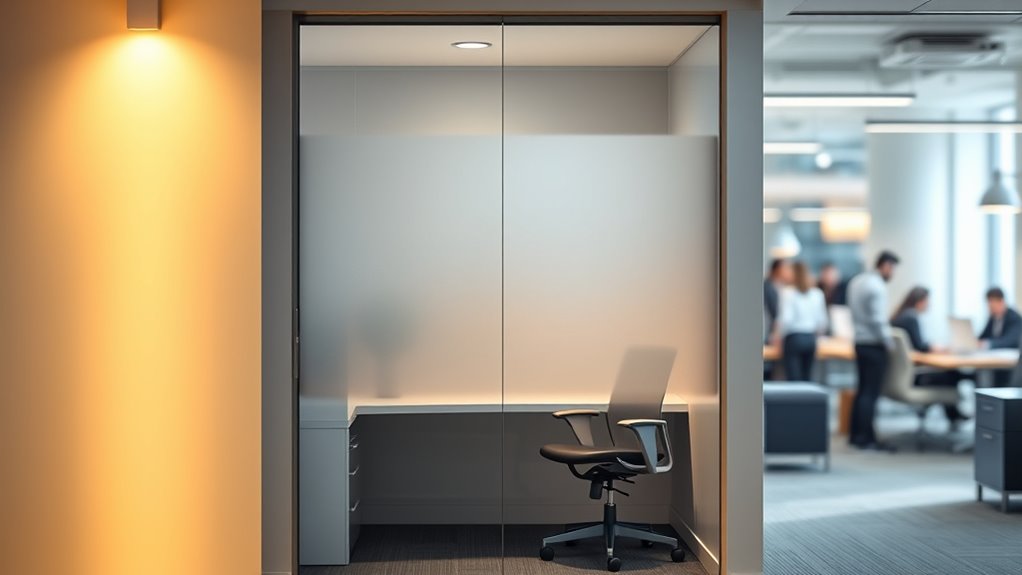
Having a private workspace helps you stay focused by minimizing distractions. It also supports better mental health by providing a quiet environment to recharge. Plus, increased privacy and comfort make it easier to perform your best every day. Implementing ergonomic furniture can further enhance comfort and productivity in your private office. Additionally, customizing your workspace with performance upgrades such as proper lighting and organization tools can optimize your efficiency. Creating an environment tailored to your needs can also reduce remote work burnout, ensuring sustained focus and well-being.
Reduced Distractions Enhance Focus
When you work in a private space, fewer interruptions let you concentrate more effectively. Reduced ambient noise minimizes distractions, allowing you to focus on tasks with greater clarity. Sound masking systems can help drown out background chatter and office noise, creating a more peaceful environment. By controlling ambient noise levels, you can block out sudden disruptions and maintain steady attention. Private workspaces help you stay productive by providing a quiet setting that supports deep concentration. This environment minimizes the need to multitask or switch tasks due to external interruptions. As a result, your work becomes more efficient, and you can accomplish tasks with greater precision. Additionally, hydrocolloid technology used in acne patches demonstrates how targeted, controlled environments can promote faster healing and better results. Overall, reduced distractions in private offices considerably boost your ability to stay focused and perform at your best. Incorporating sound design principles such as sound masking can further optimize these environments for productivity.
Improved Mental Health Outcomes
Private workspaces can markedly boost your mental health by reducing stress and anxiety associated with chaotic or noisy environments. Open plan challenges, like constant noise and interruptions, often lead to burnout and decreased well-being. By having a private space, you create a calm setting that promotes focus and emotional stability. This improves your overall sense of control and reduces feelings of overwhelm. While collaborative spaces are essential, balancing them with quiet zones helps prevent mental fatigue. Consider the following benefits:
| Benefit | Effect | Example |
|---|---|---|
| Reduced Noise | Lowers stress levels | Focused work without distractions |
| Enhanced Privacy | Less social pressure | Comfortable for deep thinking |
| Better Work-Life Balance | Less spillover stress | Clear separation from personal life |
A private workspace can also help manage mental well-being by providing a dedicated environment that minimizes external stressors. Creating a designated quiet zone within your workspace can further support concentration and emotional health.
Increased Privacy and Comfort
Creating a personal workspace that offers increased privacy and comfort can substantially boost your productivity and well-being. When you have a dedicated, quiet area, you’re less distracted by open floor noise and nearby conversations, allowing you to focus better. This privacy helps you:
- Minimize interruptions from communal areas, improving concentration.
- Reduce stress caused by constant background chatter.
- Personalize your space for comfort, boosting morale.
- Feel more in control of your environment, enhancing overall well-being.
- Incorporating bike maintenance routines into your workspace can encourage short, mindful breaks that refresh your focus and mental clarity. Additionally, having a private space can help you stay adaptable to regulatory changes in your work environment, ensuring consistency and stability. Creating a designated area can also promote better productivity habits, making it easier to establish routines that support your workflow.
A private workspace offers a sanctuary amid open floor layouts, balancing collaboration with individual focus. It helps you switch seamlessly between teamwork and solo tasks, making your workday more efficient and comfortable. Ultimately, increased privacy supports both your mental health and productivity.

Room Divider for Office Privacy – Modular Freestanding Partition with Whiteboard, PET Acoustic Panel, and Frosted Acrylic, Workflow Multi-Functional Wall, Gray Frame, Easy Assembly (70” x 70”)
Balanced Acoustics and Collaboration: This modular office room divider combines a magnetic whiteboard, sound-dampening PET acoustic panel (absorbing…
As an affiliate, we earn on qualifying purchases.
As an affiliate, we earn on qualifying purchases.
The Impact of Distractions on Focus and Creativity
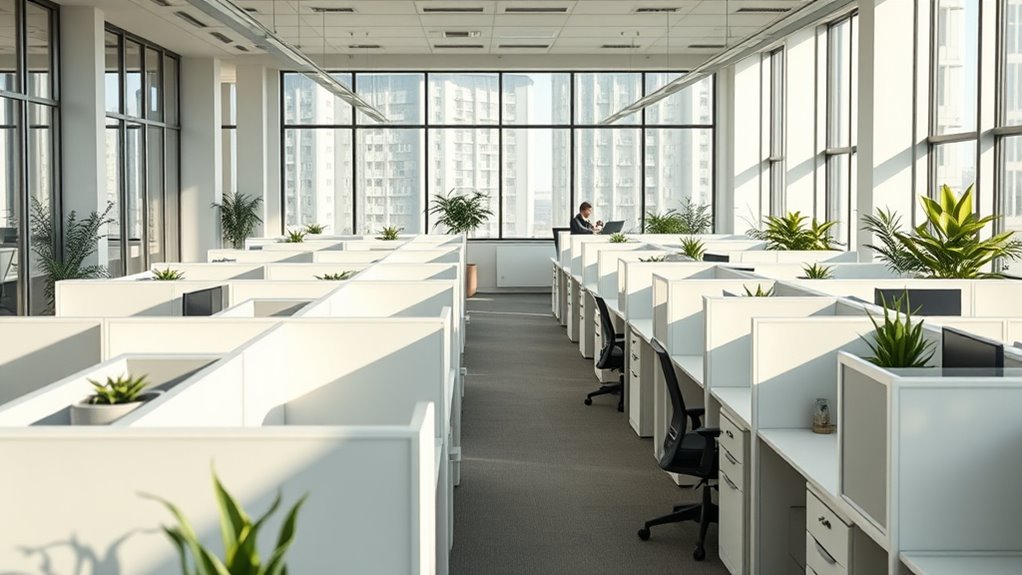
Have you ever noticed how easily your focus slips away when you’re surrounded by constant notifications and interruptions? Distractions severely hinder your ability to concentrate and stifle creativity. Sound masking helps by reducing background noise, making it easier to stay on task. Acoustic panels absorb distracting sounds, creating a calmer environment that promotes focus. Without these tools, noise pollution can break your train of thought, making it harder to think deeply or innovate. When your workspace is noisy or unpredictable, your brain struggles to filter out distractions, decreasing productivity and stifling creative ideas. Returning to quieter, more controlled environments allows your mind to settle, enhancing focus and encouraging original thinking. Additionally, performance upgrades in your workspace can optimize acoustic conditions to better support concentration. Eliminating unnecessary noise is key to *access* your full creative potential. Properly designed acoustic environments can also help reduce sound pollution, further supporting sustained attention and innovation. Implementing these tuning techniques can significantly improve overall workspace efficiency, especially through acoustic treatment that targets specific frequency issues.

Focusound 52 Pack Acoustic Foam Panels 1" x 12" x 12" Sound Proof Foam Panles Soundproofing Noise Cancelling Wedge Panels for Home Office Recoding Studio with 300PCS Double-Side Adhesive
Soundproofing – Acoustic foam panels triangular grooves structure for better noise absorption, helps to reduce and absorb unwanted…
As an affiliate, we earn on qualifying purchases.
As an affiliate, we earn on qualifying purchases.
How Quiet Offices Support Mental Health and Reduce Stress
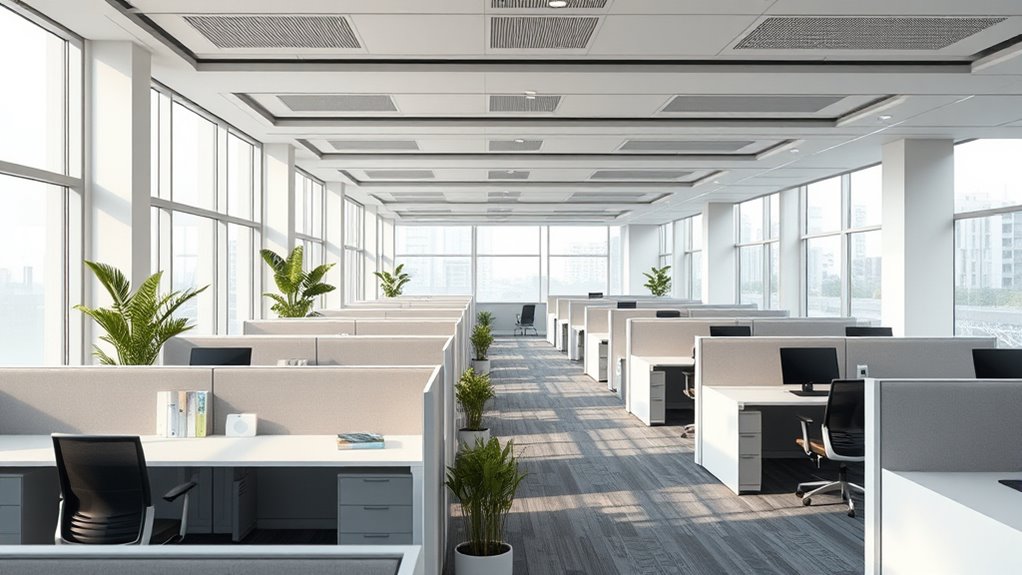
Quiet offices help you stay focused by reducing distractions, making it easier to concentrate on your tasks. Having your own space can lower feelings of anxiety and give you a sense of control. When the environment is controlled and calm, it supports better mental health and lessens stress throughout your workday. Additionally, incorporating elements like hydration and refreshment can further enhance overall well-being in a quiet workspace. Practicing mindful decluttering in your workspace can create a more organized and serene environment, promoting mental clarity and reducing stress.
Minimized Distractions Enhance Focus
When distractions are minimized in the workplace, it becomes easier to concentrate on your tasks and maintain productivity. Quiet offices reduce noise interruptions, allowing you to focus better. Features like sound masking create a consistent background sound that masks disruptive noises, while acoustic panels absorb sound waves, preventing echo and muffling distractions. To enhance focus further, consider:
- Using noise-canceling headphones for personal quiet.
- Arranging your workspace away from high-traffic areas.
- Implementing sound masking systems for steady ambient noise.
- Installing acoustic panels to improve sound quality and reduce noise levels.
- Understanding divorce-related stress management techniques can further improve mental clarity and overall well-being. Incorporating soundproofing techniques can significantly decrease noise levels, creating a more serene environment conducive to concentration.
These strategies help you stay engaged, lower stress, and boost mental clarity, making quiet offices an essential environment for ideal performance.
Personal Space Reduces Anxiety
Reducing distractions in the workplace not only boosts focus but also helps lower stress levels by giving you more control over your environment. When your personal space feels secure, your anxiety diminishes, and you can concentrate better. Quiet offices with soundproofing techniques block out disruptive noise, creating a peaceful atmosphere. Ergonomic furniture further enhances comfort, reducing physical tension that can contribute to mental stress. Imagine a workspace where your boundaries are respected, and you feel at ease. Here’s how it impacts you:
| Comfort | Focus | Well-being |
|---|---|---|
| Soundproofing blocks noise | Less distraction | Reduced anxiety |
| Ergonomic furniture eases tension | Better concentration | Mental clarity |
| Personal space fosters safety | Confidence in work | Stress relief |
| Quiet environment promotes calm | Peace of mind | Improved mental health |
Controlled Environment Promotes Calm
Creating a controlled environment in your workspace plays a crucial role in supporting your mental health and lowering stress levels. Quiet offices help you focus and feel calmer, reducing the impact of open plan challenges and shared workspace concerns. When noise and distractions are minimized, you experience less frustration and mental fatigue. Here are four ways a quiet workspace promotes calm:
- Limits auditory distractions, easing concentration.
- Reduces the feeling of being overwhelmed in busy environments.
- Encourages better work-life boundaries, lowering burnout risk.
- Creates a sense of personal safety and comfort, supporting mental well-being.
Technological Innovations Enhancing Private Work Areas
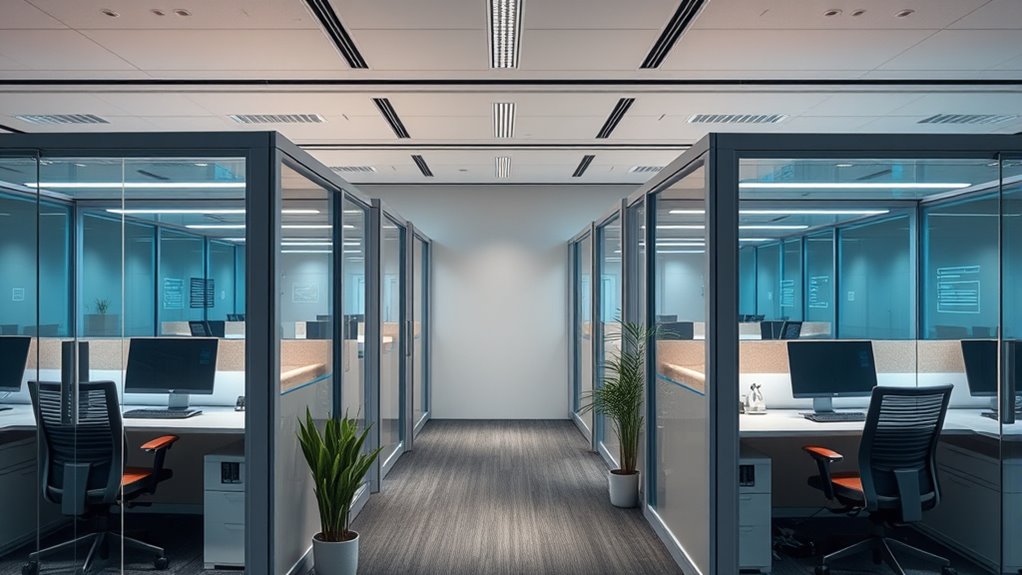
Advancements in technology are transforming private work areas by making them more functional and personalized. Virtual reality allows you to create immersive environments tailored to your tasks, enhancing focus and reducing distractions. With VR, you can simulate different settings, from quiet libraries to dynamic workspaces, adapting your environment instantly. Ergonomic furniture also plays a vital role, offering adjustable desks, supportive chairs, and accessories designed to improve comfort and productivity. These innovations help you customize your workspace to fit your needs, reducing physical strain and increasing efficiency. Smart technology further enhances your privacy by integrating noise-canceling systems and automated lighting controls. Together, these tools make private work areas more adaptable, comfortable, and conducive to deep concentration.
Balancing Collaboration and Concentration in Modern Workspaces
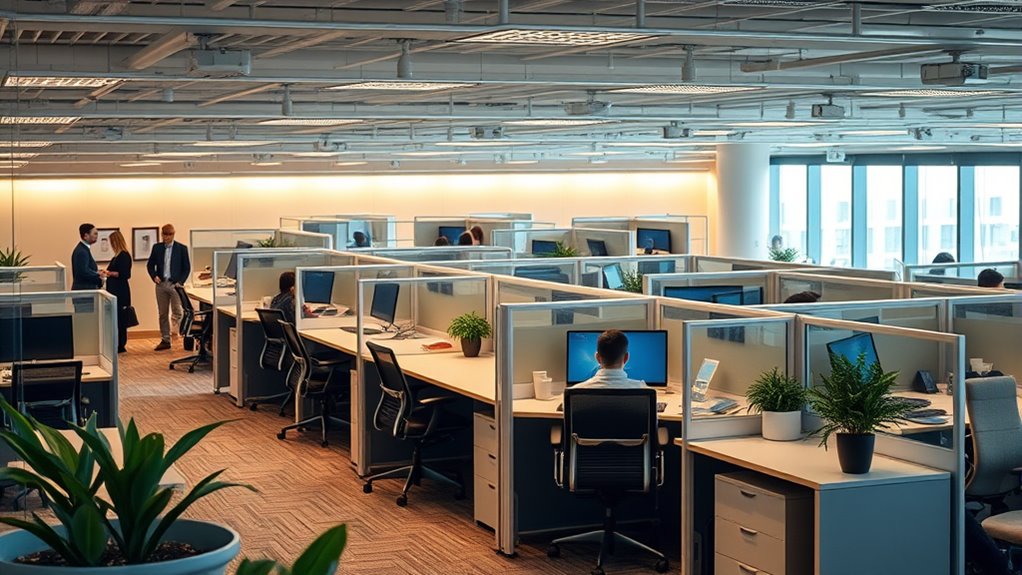
As modern workspaces evolve, finding the right balance between collaboration and concentration becomes essential for productivity. Open plan challenges, like noise management, can hinder focus while encouraging teamwork. To strike this balance, consider these strategies:
- Designate quiet zones where concentration is prioritized.
- Use sound-absorbing materials to reduce noise distractions.
- Implement flexible spaces that adapt for collaboration or solitude.
- Encourage team members to respect quiet hours and zones.
Case Studies: Companies Embracing the Return of Cubicles
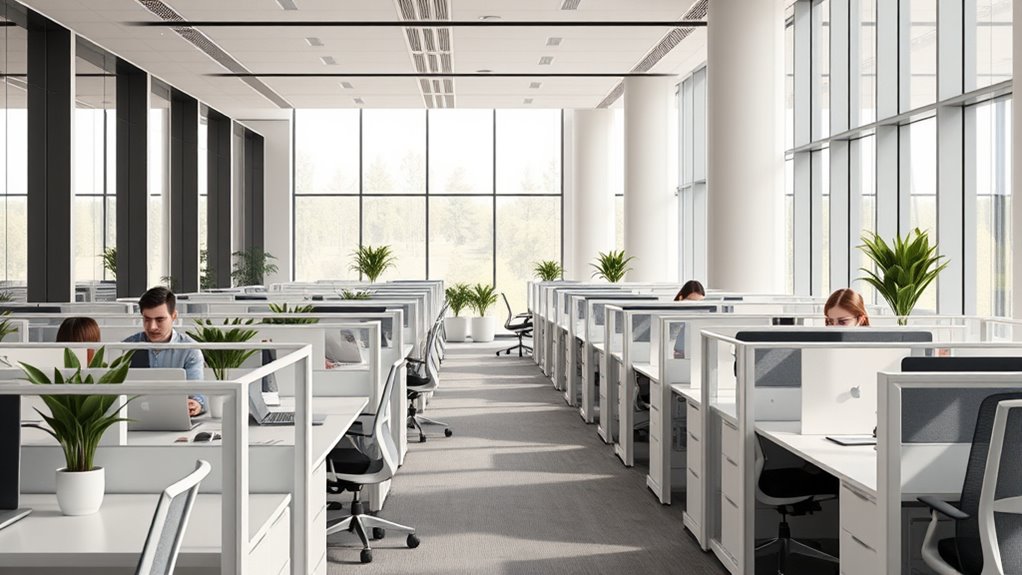
While open-plan offices have dominated modern workspaces, some companies are reevaluating their layout strategies to improve employee focus and productivity. They’re turning back to cubicles to address open plan challenges like noise, distractions, and lack of privacy. For instance, TechCorp reintroduced cubicles with ergonomic furniture, creating designated quiet zones that boost concentration. Similarly, FinBank found that individual workspaces reduce errors and fatigue, leading to better overall performance. These companies prioritize employee well-being by investing in ergonomic furniture that supports posture and comfort within cubicle environments. The shift isn’t about abandoning collaboration but balancing it with privacy. These case studies show that companies recognize the value of quiet spaces in fostering focus and efficiency, demonstrating that the return of cubicles can be a strategic move to enhance productivity.
Future Trends in Office Layouts and Privacy Solutions
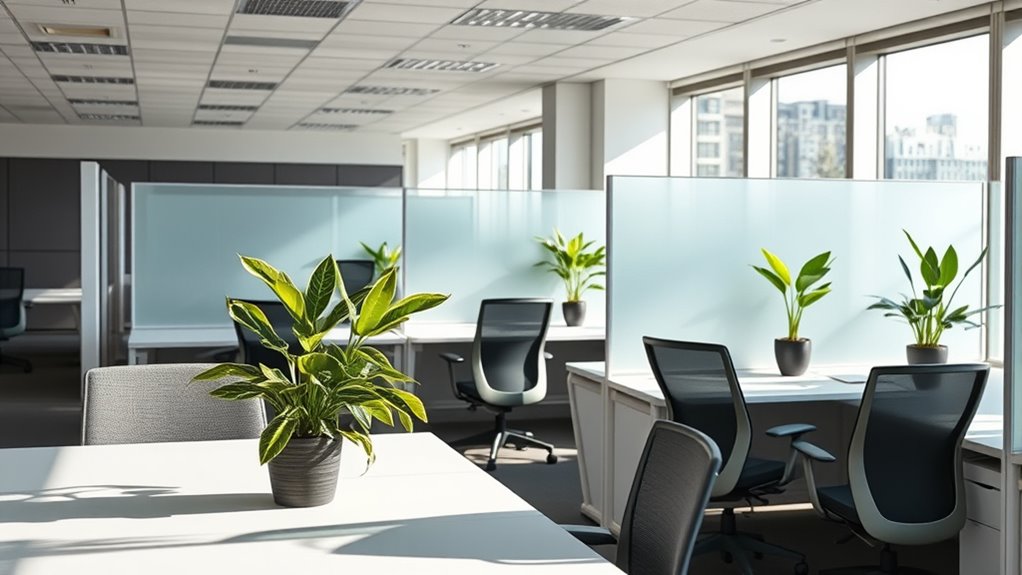
Looking ahead, office layouts are increasingly blending traditional and innovative privacy solutions to meet evolving employee needs. To tackle open plan challenges, companies are incorporating flexible partitions and soundproof zones that balance openness with quiet spaces. Ergonomic furniture will continue to play a key role, boosting comfort and productivity. Future trends include:
- Modular workstations that adapt to individual tasks
- Smart privacy screens with adjustable transparency
- Dedicated focus zones with acoustic treatments
- Integration of ergonomic furniture to support well-being
These strategies help create environments that foster collaboration without sacrificing privacy. By combining traditional cubicles with modern design elements, you’ll find office spaces more adaptable, comfortable, and efficient for diverse work styles.
Frequently Asked Questions
How Do Cubicles Affect Employee Collaboration and Communication?
Cubicles can limit employee collaboration and communication by creating physical barriers, but they also enhance visual privacy and reduce noise distractions through sound masking. This setup allows you to focus better while still providing opportunities for quick, informal conversations. To improve teamwork, consider incorporating sound masking systems and adjustable partitions, helping you balance privacy with open communication, ultimately fostering a more productive and comfortable work environment.
Are Private Offices More Cost-Effective Than Open-Plan Layouts?
Private offices are generally more cost-effective than open-plan layouts because they optimize space utilization and reduce noise distractions, leading to increased productivity. While initial setup costs may be higher, you save long-term by minimizing disruptions and enhancing focus. Private offices also require less shared infrastructure, making them a smarter choice for managing expenses while providing employees with dedicated, quiet spaces to work efficiently.
What Role Does Office Acoustics Play in Workspace Design?
Office acoustics are like the silent backbone of workspace design. You focus on sound masking and acoustic panels to reduce noise distractions and create a calmer environment. Sound masking acts like a gentle blanket, drowning out background chatter, while acoustic panels absorb sound waves, preventing echoes. Together, they improve concentration, productivity, and comfort, making your workspace more inviting and efficient. Prioritizing acoustics truly transforms office ambiance for everyone.
How Can Companies Customize Cubicle Designs for Different Roles?
You can customize cubicle designs for different roles by using personalized partitions that reflect individual needs or team functions. Incorporate ergonomic customization to guarantee comfort and productivity, such as adjustable desks or supportive chairs. Tailor storage options for specific tasks, and adjust lighting to suit different work styles. By focusing on these elements, you create a workspace that enhances efficiency and well-being, catering to diverse roles seamlessly.
Do Quieter Offices Impact Overall Company Culture and Morale?
Quieter offices positively impact your company culture and morale by reducing office noise, which helps employees focus better and feel more comfortable. When noise levels drop, your team can concentrate on tasks without distractions, leading to increased productivity and job satisfaction. This creates a supportive environment where employees feel valued and engaged, ultimately fostering a stronger, more cohesive company culture. Quiet offices boost morale by making the workplace more pleasant and conducive to success.
Conclusion
Imagine stepping into an office where quiet corners let your ideas flourish like seeds taking root. As more companies embrace private workspaces, they’re creating environments that nurture focus and reduce stress—like a well-tended garden. With technology supporting privacy and a balance between collaboration and solitude, you’ll find yourself more productive and energized. The comeback of cubicles isn’t just about walls; it’s about cultivating spaces where your best work can grow.