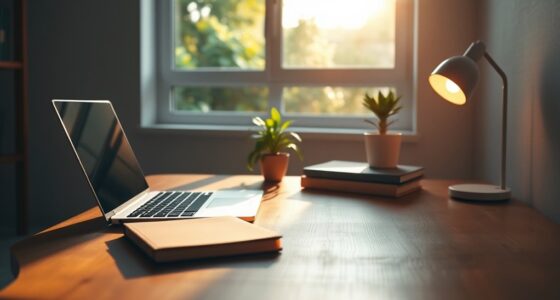
Simplifying your workspace can considerably reduce work-from-home burnout by cutting down clutter that distracts and overwhelms you. When your environment is organized and clutter-free, you’ll experience less stress, better focus, and a sense of control. Plus, ergonomic setups and personalized touches create a calming, productive space. Taking steps to declutter and streamline now can make a real difference in your well-being, and you’ll discover effective strategies to maintain this balance along the way.
Key Takeaways
- Simplifying your workspace reduces visual and mental clutter, decreasing stress and improving focus.
- An organized environment enhances productivity and prevents overwhelm, helping to combat burnout.
- Ergonomic setup and minimal distractions promote physical comfort and mental clarity during work.
- Decluttering routines create a calming atmosphere, fostering a sense of control and well-being.
- A tidy, personalized space encourages healthier work habits and long-term resilience against burnout.

Logitech G413 SE Full-Size Mechanical Gaming Keyboard - Backlit Keyboard with Tactile Mechanical Switches, Anti-Ghosting, Compatible with Windows, macOS - Black Aluminum
Take your gaming skills to the next level: The Logitech G413 SE is a full-size keyboard with gaming-first...
As an affiliate, we earn on qualifying purchases.
Understanding the Link Between Workspace Clutter and Stress

Have you ever noticed how a messy workspace can make you feel overwhelmed? Clutter increases stress levels by distracting your mind and reducing focus. When your space is disorganized, it’s harder to find what you need, which adds frustration and wastes time. Incorporating a digital detox by reducing unnecessary screens and notifications can help clear mental clutter. An ergonomic design also plays a role; properly arranged furniture and tools prevent physical strain and promote comfort. When your environment is tidy and thoughtfully set up, you’ll experience less stress and more control over your work. Additionally, ergonomic design can improve posture and prevent discomfort during long working hours. Simplifying your workspace isn’t just about aesthetics; it’s about creating a mental space that fosters calm and efficiency. Clear, organized spaces support your well-being and reduce burnout triggers. Simple systems can make maintaining your workspace easier and more sustainable over time, especially when integrated with smart technology that automates routine tasks. Implementing organizational strategies can further enhance your productivity and reduce mental fatigue. Creating a stress-free environment can significantly improve your overall work experience and mental health.

XPPen Drawing Tablet with Screen Full-Laminated Graphics Drawing Monitor Artist13.3 Pro Graphics Tablet with Adjustable Stand and 8 Shortcut Keys (8192 Levels Pen Pressure, 123% sRGB)
PLEASE NOTE:XPPen Artist13.3 Pro drawing tablet Need to connect with computer,you need to use it with your computer...
As an affiliate, we earn on qualifying purchases.
The Psychological Benefits of a Minimalist Work Environment

A clutter-free workspace often leads to a clearer mind, making it easier to focus and stay motivated. When your environment is free of visual clutter, your brain isn’t overwhelmed by unnecessary stimuli. This reduction helps you achieve greater mental clarity, allowing you to think more clearly and make decisions faster. A minimalist work environment minimizes distractions, so you can direct your energy toward your tasks instead of constantly tidying or feeling overwhelmed. The psychological benefits include decreased anxiety and a sense of control, which can boost your productivity and overall well-being. Incorporating elements like sound healing into your routine can also provide a comforting mental break, enhancing your overall well-being. Additionally, understanding personality traits can help you tailor your workspace to suit your specific needs and preferences. Recognizing the importance of projector technology can also help you create an environment that supports focused work and relaxation. Embracing positive thinking techniques can further reinforce a calm and productive mindset, making your workspace a true sanctuary for work and rejuvenation.

XPPen Updated Deco 01 V3 Drawing Tablet-16384 Levels of Pressure Battery-Free Stylus, 10x6 Inch OSU Graphic Tablet, 8 Hotkeys for Digital Art, Teaching, Gaming Drawing Pad for Chrome, PC, Mac, Android
Word-first 16K Pressure Levels: The upgraded stylus features 16,384 levels of pressure sensitivity and supports up to 60...
As an affiliate, we earn on qualifying purchases.
Practical Steps to Declutter Your Home Office

To effectively declutter your home office, start by setting aside dedicated time to organize your space. Begin with digital organization—delete unnecessary files, organize folders, and streamline your desktop. This reduces digital clutter and makes it easier to find what you need. Next, focus on creating an ergonomic setup: adjust your chair, monitor height, and keyboard placement to promote comfort and reduce strain. Clear off your desk, keeping only essential items within reach. Use storage solutions like bins or shelves to keep supplies tidy. Regularly revisit your organization to maintain a clutter-free environment. A clean, well-organized workspace minimizes distractions, boosts productivity, and helps prevent burnout. Incorporating proper workspace safety guidelines ensures your home office remains a healthy environment. Practicing mindful decluttering can also support sustainable habits by reducing unnecessary waste and promoting responsible consumption. Additionally, adopting minimalist principles can aid in maintaining a clutter-free and focused workspace. Taking these practical steps transforms your home office into a functional, stress-free zone.

Arteck 2.4G Wireless Keyboard Stainless Steel Ultra Slim Full Size Keyboard with Numeric Keypad for Computer/Desktop/PC/Laptop/Surface/Smart TV and Windows 10/8/ 7 Built in Rechargeable Battery
Easy Setup: Simply insert the nano USB receiver into your computer and use the keyboard instantly.
As an affiliate, we earn on qualifying purchases.
How Simplification Can Boost Focus and Efficiency

Simplifying your workspace removes unnecessary clutter and distractions, allowing you to focus on what truly matters. An ergonomic design ensures your chair, desk, and monitor support proper posture, reducing physical strain and boosting your concentration. When your workspace is streamlined, you spend less time searching for items or steering through cluttered surfaces. Digital organization plays a vital role too—clearing your desktop, organizing files, and closing unused tabs help you stay focused on your tasks. A clean, well-structured environment minimizes mental clutter, making it easier to prioritize and complete work efficiently. Incorporating sleep-friendly lighting and calming colors into your workspace can also promote relaxation and mental clarity. Additionally, adopting sustainable office supplies and practices can enhance your sense of purpose and well-being. By intentionally simplifying both your physical and digital spaces, you create an atmosphere conducive to sustained focus, ultimately enhancing your productivity and reducing burnout.
Real-Life Examples: Transformations and Outcomes

Many remote workers find that decluttering their space sharpens their focus and boosts productivity. Personalizing your workspace can make you feel more comfortable and motivated throughout the day. Simplifying routines helps reduce stress, making work-from-home life more sustainable and enjoyable. Additionally, incorporating ergonomic bike components can improve comfort during breaks and help prevent fatigue. Creating an organized environment can also foster a sense of control and reduce feelings of overwhelm, making daily tasks feel more manageable. Embracing creative practice in daily routines can enhance problem-solving skills and foster a more positive mindset toward work challenges. Leveraging automation technologies in your workflow can further streamline tasks and reduce mental clutter, while ensuring your workspace remains nutrient-rich can boost overall well-being.
Decluttering Boosts Focus
When you clear away clutter from your workspace, you immediately create an environment that’s easier to focus in. A tidy space reduces distractions and enhances sensory organization, helping your brain process information more efficiently. Incorporating thoughtful color psychology can boost alertness and calmness, sharpening your concentration. For example, soft blues promote tranquility, while vibrant yellows energize your mind. Decluttering also allows you to better identify essential tools, streamlining your workflow. Consider these key elements:
- Strategic use of calming or energizing colors
- Proper placement of frequently used items
- Removing unnecessary objects for clarity
- Creating designated zones for specific tasks
- Using visual cues to maintain organization
- Practicing self-reflection to continually improve your workspace setup
This intentional approach transforms your workspace into a focused environment, reducing burnout and increasing productivity.
Personalized Spaces Increase Comfort
Personalized spaces considerably boost your comfort and sense of ownership, making your work-from-home experience more enjoyable and sustainable. When you incorporate ergonomic furniture, you reduce physical strain and increase productivity, turning your workspace into a supportive environment. Adding personalized decor—like photos, artwork, or meaningful objects—creates a space that feels uniquely yours, encouraging you to settle in and focus. For example, Sarah transformed her corner by choosing an ergonomic chair and decorating with family photos, which made her feel more relaxed and motivated. Similarly, James customized his desk with favorite artwork and ergonomic accessories, helping him stay comfortable during long hours. These simple changes foster a stronger connection to your workspace, ultimately reducing discomfort and burnout over time. Incorporating body awareness practices into your routine can further enhance your comfort and resilience while working from home. Additionally, selecting the right ergonomic furniture can significantly improve posture and reduce fatigue during long work sessions. Understanding the importance of cybersecurity principles can also help you create a safer digital workspace, minimizing stress related to potential threats. Moreover, maintaining a tidy and organized space can also contribute to a clearer mind and greater efficiency.
Simplified Routines Reduce Stress
Streamlining your daily routines can substantially cut down on stress and make your work-from-home experience more manageable. By establishing clear start and end times, scheduling regular creative breaks, and sticking to consistent tasks, you create a predictable flow that reduces overwhelm. Simplified routines help you avoid decision fatigue and foster a sense of control. Real-life examples show that people who optimize their schedules often experience lower anxiety and increased productivity. Incorporating ergonomic setups into your routine ensures comfort during long hours, preventing aches that add to stress. Consider these strategies:
- Designate specific work hours
- Schedule short, creative breaks
- Prioritize tasks daily
- Maintain ergonomic setups
- Limit distractions during work blocks
Tips for Maintaining a Streamlined Workspace Over Time

Maintaining a tidy workspace over time requires regular habits and intentional organization. Start by scheduling weekly decluttering sessions to remove unnecessary items and keep your space functional. Incorporate ergonomic design principles, such as adjustable chairs and monitor stands, to promote comfort and reduce strain. Regular digital detoxes help prevent clutter from digital files and notifications, making it easier to stay focused. Create designated zones for work and break areas to maintain boundaries. Use storage solutions that are easy to access and update, so your workspace remains efficient. Make it a habit to review and reorganize your setup periodically, ensuring everything serves a purpose and nothing accumulates unnecessarily. These ongoing practices help sustain a streamlined environment, reducing burnout and supporting productivity.
Frequently Asked Questions
How Long Does It Typically Take to See Benefits From Workspace Decluttering?
You might start noticing benefits from decluttering your workspace within a few days to a week. Removing visual clutter can make your environment feel calmer, while reducing emotional clutter eases stress. As you clear your space, you’ll likely experience increased focus and productivity quickly. The key is consistent effort; the more you maintain your organized workspace, the faster you’ll enjoy the mental clarity and reduced burnout.
Can Decluttering Reduce Work-From-Home Stress Even if Productivity Remains Unchanged?
Yes, decluttering can reduce work-from-home stress even if your productivity stays the same. Clearing visual clutter helps create a calmer environment, which boosts your mental clarity. When your space is organized, you feel less overwhelmed and more focused, making work feel less stressful. You’ll notice a sense of control and peace, helping you manage daily pressures better without necessarily changing your output.
What Are Common Obstacles to Maintaining a Minimalist Workspace Long-Term?
You might struggle to maintain a minimalist workspace long-term because personal habits, like accumulating clutter or procrastinating organization, can take over. Storage solutions often become overwhelmed or poorly planned, making it tempting to revert to clutter. To stay consistent, develop routines that prioritize tidiness and invest in smart storage options. Staying mindful of your habits helps prevent clutter buildup, ensuring your workspace remains simple and functional over time.
Does Workspace Decluttering Improve Mental Health Beyond Stress Reduction?
Decluttering your workspace can boost your mental health beyond just reducing stress. When you create an organized environment, it fosters mindfulness practices, helping you stay present and focused. Additionally, ergonomic design guarantees comfort, preventing physical discomfort that can affect your mood. By simplifying your space, you promote clarity and calmness, making it easier to maintain positive mental health habits and enhancing your overall well-being during work-from-home routines.
Are There Specific Tools or Products Recommended for Effective Workspace Organization?
You should consider using digital organizers like task management apps to keep your work streamlined and accessible. Ergonomic accessories, such as adjustable chairs and keyboard stands, can boost comfort and productivity. Combining these tools helps you maintain an organized, efficient workspace, reducing clutter and mental fatigue. Make sure to choose products that suit your needs and space, creating a more focused environment for your work-from-home routine.
Conclusion
By embracing a simpler workspace, you create a calmer environment that gently nurtures your focus and well-being. Keeping clutter at bay isn’t about perfection—it’s about giving yourself space to breathe and thrive. Over time, this mindful approach can subtly transform your work-from-home experience, making daily tasks feel a little lighter and more manageable. Remember, a tidy space softly encourages a clearer mind, helping you stay balanced and inspired every day.