
To set up your space to get started, clear away clutter and keep only essentials within reach like your computer, notepad, and pens. Arrange your workspace in a quiet, comfortable spot with good lighting to promote focus. Develop routines, such as tidying up before each work session, to signal it’s time to concentrate. Adding ergonomic tools and tech can boost comfort and motivation. Keep exploring to discover more tips for transforming your space into a productivity haven.
Key Takeaways
- Clear your workspace of non-essential items to reduce distractions and focus on current tasks.
- Arrange your workspace ergonomically with good lighting and comfortable seating to enhance physical comfort.
- Position your workstation in a quiet, dedicated area to minimize external interruptions.
- Incorporate organizational tools like trays, folders, and storage bins to keep supplies accessible and tidy.
- Develop a routine of tidying your workspace before each work session to signal focus and prepare your mind.
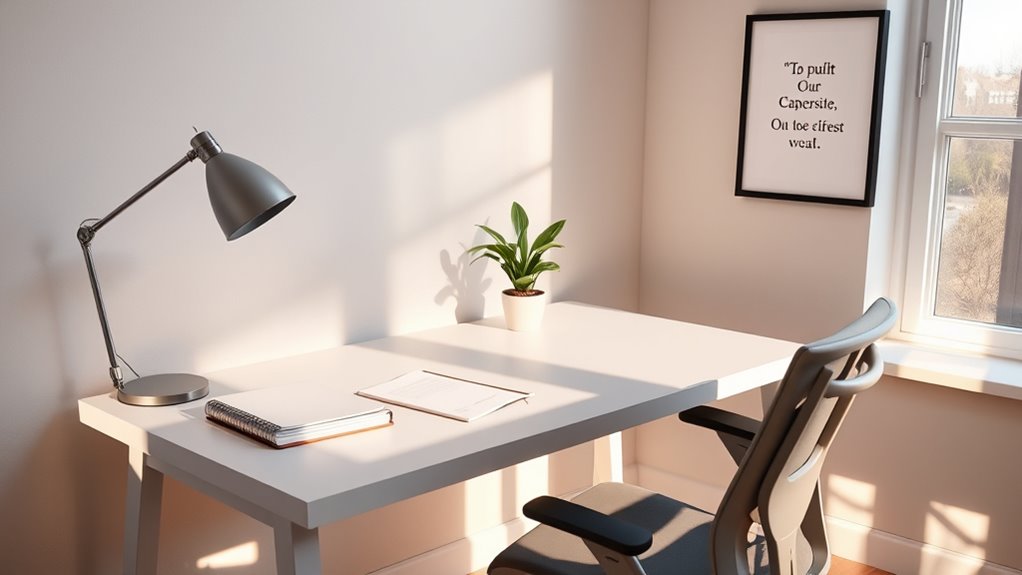
Procrastination can feel like a stubborn obstacle that keeps you from reaching your goals, but the good news is that you can beat it with effective strategies. One of the most impactful ways to do this is by setting up your workspace to promote focus and productivity. When your environment is organized and conducive to work, you’ll find it easier to start tasks and stay on track. It all begins with understanding that workspace organization directly influences your ability to manage time effectively. A cluttered desk or chaotic surroundings can lead to distractions, making it harder to prioritize your work and stick to a schedule. Conversely, a tidy, well-arranged space helps you see what needs to be done and reduces the mental clutter that often triggers procrastination.
Start by decluttering your workspace. Clear away anything that doesn’t serve a purpose for your current tasks. Keep only the essentials within arm’s reach—your computer, notepad, pens, and any tools or documents you need for the day. This minimizes the temptation to wander or get sidetracked by unrelated items. Also, invest in organizational tools like trays, file folders, or storage bins to keep papers and supplies neatly sorted. When everything has a designated place, you’ll spend less time searching for things, which frees up more time for actual work.
Next, consider how your workspace layout impacts your time management. Position your workstation in a way that minimizes distractions. If possible, choose a quiet corner or a space that’s separate from high-traffic areas. Good lighting and a comfortable chair can also improve your focus and reduce physical discomfort that might lead to procrastination. Establishing a dedicated work zone signals to your brain that it’s time to concentrate, making it easier to get started and stay engaged. Incorporating smart fitness technology such as ergonomic accessories or wearable tech can also enhance your comfort and focus during work sessions.
Finally, develop routines around your workspace setup. Before each work session, spend a few minutes tidying your area. It’s a simple habit that primes your mind to switch into work mode. As you organize your space regularly, you’ll notice a decrease in the time it takes to get started on tasks and an increase in your overall productivity. Remember, your environment is a tool that either supports or hinders your efforts, so take control of your workspace to maximize your time management and keep procrastination at bay.
Top picks for "procrastination buster sett"
Open Amazon search results for this keyword.
As an affiliate, we earn on qualifying purchases.
Frequently Asked Questions
How Can I Stay Motivated After Initial Setup?
To stay motivated after your initial setup, rely on your motivational triggers like visual cues or rewarding yourself for progress. Keep accountability partners involved—they’ll encourage you and keep you honest. Break tasks into smaller steps to avoid feeling overwhelmed, and celebrate small wins. Regularly remind yourself of your goals and why you started. This combination of triggers and accountability keeps your momentum strong and helps you push through any dips in motivation.
What Tools Help Maintain an Organized Workspace?
You can maintain an organized workspace by using smart storage solutions like shelves, drawers, and cable organizers to keep clutter out of sight. Incorporate ergonomic accessories such as adjustable chairs, keyboard stands, and monitor risers to boost comfort and productivity. These tools help you stay focused and efficient, making it easier to find what you need quickly and creating a workspace that encourages consistent motivation and organization.
How Do I Handle Distractions in My Setup?
Did you know that the average person loses 23 minutes daily to distractions? To handle interruptions, you should prioritize noise reduction—use noise-canceling headphones or white noise machines—and optimize your lighting to create a calm, focused environment. Keep your workspace tidy, turn off non-essential notifications, and establish boundaries with others. These steps help minimize distractions, keeping you productive and engaged in your tasks.
Can Environment Changes Improve Productivity Long-Term?
Yes, environment changes can boost your productivity long-term. You should invest in ergonomic furniture to reduce discomfort and prevent fatigue, helping you stay focused. Additionally, ambient lighting sets a comfortable mood, minimizing eye strain and improving concentration. These adjustments create a workspace that promotes sustained productivity, making it easier for you to stay engaged and motivated over time. Small environment tweaks can lead to significant, lasting improvements in your work habits.
How Often Should I Redesign My Workspace?
You should redesign your workspace every 3 to 6 months to keep things fresh and motivating. Incorporate new decorating themes to stimulate creativity and make your space more inviting. Don’t forget ergonomic adjustments—adjust your chair, desk, and monitor height—to stay comfortable and avoid fatigue. Regular updates help maintain focus, boost productivity, and prevent your environment from becoming stale, ensuring you stay inspired and ready to work.
Conclusion
Now that you’ve set up your space for success, remember, your environment is the fertile ground where motivation blooms. When you clear the clutter and organize your surroundings, you’re planting seeds of productivity that grow stronger each day. Don’t let procrastination be the weeds choking your progress. Instead, tend to your space with care, and watch as your focus flourishes like a vibrant garden—ready to spring to life whenever you’re ready to start.