

Your workspace mirrors your mental state through its organization, clutter, and environment. A tidy, well-organized space signals clarity, focus, and control, while clutter indicates overwhelm or stress. Adding calming colors, natural light, and personal touches can boost your mood and mental clarity. Small adjustments, like decluttering or incorporating soothing elements, make a big difference in how you feel and function. To learn how your environment reflects your inner world—and how to improve it—continue exploring these insights.
Key Takeaways
- Cluttered or chaotic workspaces often mirror feelings of overwhelm or mental disorganization.
- Calm, organized environments foster clarity, focus, and positive emotional states.
- Personal touches and color choices in a workspace reflect and influence current moods.
- Visual simplicity and sensory elements can signal a balanced, centered mental state.
- Regular workspace organization promotes emotional resilience and supports mental well-being.
The Impact of Clutter on Mental Clarity

Clutter in your workspace can considerably hinder your mental clarity, making it harder to focus and think clearly. When your environment is chaotic, your mind struggles to process information efficiently. Practicing mindful placement of items helps create a sense of order, reducing unnecessary distractions. Aim for visual simplicity by keeping only essential objects within view, which minimizes mental clutter and promotes calmness. A tidy workspace allows your brain to concentrate on tasks rather than being overwhelmed by clutter. When you intentionally organize your space with purpose, you foster a more focused and productive mindset. Remember, a clean environment isn’t just about aesthetics; it directly influences your mental well-being and clarity, helping you approach work with a clearer, more centered mind. Additionally, maintaining a well-organized environment can enhance your ability to detect hidden information and improve overall situational awareness. This heightened awareness can be crucial for perceiving subtle cues and anomalies that might otherwise go unnoticed, especially when your environment supports visual simplicity and mental focus. Developing mindful organization habits further reinforces the connection between your environment and mental clarity, making it easier to sustain a calm, focused state over time.
Signs of Stress Hidden in Your Workspace

Even if your workspace appears tidy, subtle signs of stress can be hiding beneath the surface. Pay attention to your workspace habits, as they often reveal stress signals. For example, constant rearranging, neglecting organization, or frequent desk clutter can indicate underlying tension. You might also notice you’re more prone to distractions or procrastination, which are classic stress signs. Additionally, neglecting proper detoxification of your environment or routines can exacerbate feelings of overwhelm. Incorporating visual harmony through balanced colors and organized surfaces may also reduce subconscious stress triggers. Recognizing how AI-driven insights can help identify environmental stressors enables a more proactive approach to workspace wellness.
Creating a Space That Fosters Calm and Focus

To create a space that promotes calm and focus, start by decluttering to clear your mind and reduce distractions. Add soothing elements like soft lighting, plants, or calming colors to enhance your environment. These small changes can make a big difference in how centered and productive you feel. Incorporating mindful decluttering into your organization can further improve your workspace’s efficiency and functionality. Additionally, choosing ergonomic furniture can support your posture and overall well-being during work sessions.
Declutter for Clarity
Have you noticed how a messy workspace can distract you and drain your energy? Decluttering promotes clarity, helping you focus on what truly matters. Embrace mindful minimalism by keeping only essentials within reach, reducing visual noise. This intentional organization streamlines your environment, making it easier to find what you need and stay productive. Take a few minutes each day to tidy up, discard what no longer serves you, and create designated spots for your supplies. A clutter-free space reflects a calm mind and encourages a focused mindset. When your environment is intentional and organized, you’ll feel more in control and less overwhelmed. Clarity in your surroundings leads to clarity in your thoughts, boosting your overall mental well-being. Additionally, maintaining a tidy environment can help reduce stress during challenging transitions, similar to how understanding the legal process can ease emotional strain during a divorce resources and tools. Keeping your space organized also aligns with the importance of DIY Tiny House Construction Time, where planning and orderliness can significantly impact the overall timeline and success of your project.
Incorporate Soothing Elements
Creating a calming workspace begins with adding soothing elements that promote focus and relaxation. Incorporate gentle sounds like soft music or nature noises to reduce stress and enhance concentration. Calming scents such as lavender or chamomile can also help create a peaceful atmosphere. These elements signal your mind to relax, making it easier to stay focused and productive. Using top mattress toppers or comfortable mats can improve overall well-being and support mental clarity during work sessions. Additionally, incorporating financial organization strategies can help reduce stress related to work-related finances, further enhancing your mental state. Recognizing the cultural significance of environment in shaping mood can deepen your understanding of how your surroundings influence your mental health. Understanding the beneficial ingredients in eye patches, like collagen and hyaluronic acid, can also contribute to a comprehensive self-care routine that supports your relaxation and wellness goals. Incorporating healthy habits, such as proper hydration and regular breaks, further supports a balanced mental state. Use the table below for ideas:
| Soothing Sounds | Calming Scents |
|---|---|
| Nature sounds | Lavender essential oil |
| White noise | Chamomile tea scent |
| Soft music | Eucalyptus aroma |
| Gentle water flows | Vanilla or sandalwood |
| Ambient sounds | Freshly brewed coffee |
Personalization as a Reflection of Your Mood

Your workspace’s colors can mirror your mood, with calming shades promoting focus and brighter hues energizing you. When your desk is cluttered, it often signals mental chaos rather than clarity. Personalizing your space lets you reflect your current feelings and adjust your environment to support your well-being. Incorporating glycolic acid products into your skincare routine can also provide an added layer of comfort and safety. Additionally, ensuring your environment aligns with your entertainment preferences can help foster a balanced mental state. Optimizing your space with productivity tools can further enhance your overall sense of control and wellbeing.
Color Choices and Mood
The colors you choose for your workspace often reflect your current mood and influence how you feel throughout the day. Color symbolism reveals the emotional associations tied to different hues, shaping your subconscious responses. For example, blue promotes calmness and focus, while red can energize and stimulate action. Selecting mood enhancing palettes aligns your environment with your mental state, helping to foster productivity or relaxation as needed. Bright, vibrant colors might boost enthusiasm during creative tasks, whereas softer tones create a sense of tranquility. Your color choices serve as a visual mirror of your feelings, reinforcing your mindset or encouraging shifts. By intentionally choosing colors that resonate with your mood, you can craft a workspace that supports your emotional well-being and enhances your overall performance.
Clutter Indicates Clarity
When your workspace is cluttered, it often signals underlying feelings of overwhelm or disorganization, whereas a tidy environment reflects clarity and focus. Embracing mindful minimalism helps you create an intentional space that promotes mental clarity. When you intentionally reduce clutter, you clear mental and physical distractions, making it easier to concentrate on your tasks. A clean, organized workspace communicates a sense of control and purpose, boosting your confidence and productivity. Personalizing your space thoughtfully—using meaningful objects rather than excess—further reflects your current mindset. This intentional approach not only supports your mental well-being but also encourages a calm, focused environment. Clutter-free spaces mirror a clear mind, reinforcing positive habits and a balanced outlook.
The Role of Organization in Emotional Well-Being

Organizing your workspace can considerably boost your emotional well-being by reducing stress and creating a sense of control. Practicing mindful organization helps you design an emotional space that feels calming and purposeful. When your environment is tidy, you’re less likely to feel overwhelmed, making it easier to focus and feel grounded. Moving intentionally through your space, arranging items thoughtfully, and keeping only what serves you fosters clarity and stability. This mindful approach encourages positive habits that support mental health, helping you avoid chaos and distraction. A well-organized workspace isn’t just about aesthetics; it’s about cultivating an environment that nurtures your emotional resilience. When your surroundings reflect calm and order, your mood and mindset naturally follow suit.
Small Changes, Big Effects on Mental Health

Small adjustments in your daily routine or environment can lead to significant improvements in your mental health. Practicing mindful minimalism helps you focus on what truly matters, reducing clutter that overwhelms your mind. Incorporate intentional touches, like a calming plant or a meaningful photo, to create a sense of peace and purpose. These small changes can diminish stress and foster clarity, making your workspace a reflection of your mental well-being. By simplifying your surroundings and adding thoughtful details, you send a message to yourself that calm and focus are priorities. Even minor, deliberate modifications can boost your mood, enhance productivity, and promote a healthier mindset over time. Remember, big effects often start with small, mindful adjustments.
Designing Environments That Support Your Best Self
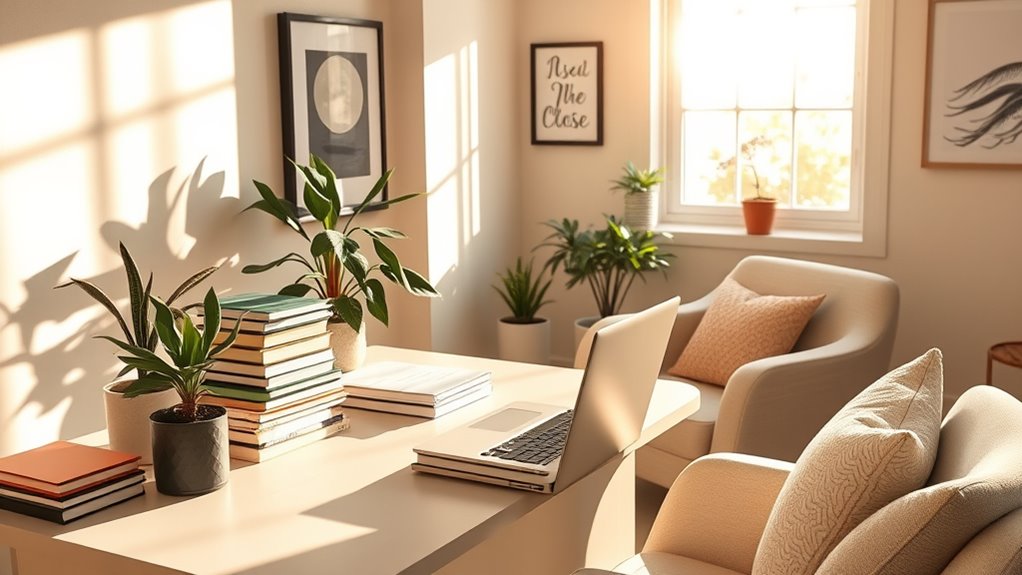
Have you ever considered how your environment influences your ability to thrive? Designing spaces that support your best self starts with ergonomic furniture, which promotes comfort and reduces physical strain. Invest in an adjustable chair and desk that fit your body’s needs, helping you stay focused and energized. Natural lighting is equally essential; it boosts your mood and enhances alertness. Position your workspace near windows or use daylight-simulating bulbs to maximize light exposure. Keep clutter minimal to create a calming atmosphere. Incorporate plants or personal touches to make the space inviting. Your environment should nurture productivity and well-being, reflecting your goals. By consciously designing your workspace with ergonomic furniture and natural lighting, you set the stage for mental clarity, creativity, and overall success.
Frequently Asked Questions
How Quickly Can Workspace Changes Improve Mental Health?
Workspace changes can boost your mental health almost immediately. Organizing your workspace and adding ergonomic design elements reduce physical stress and create a calming environment. When you declutter, you feel more in control, which lifts your mood. Adjusting your chair, desk, or lighting can provide quick relief from discomfort. These small but impactful updates help you feel more focused, relaxed, and motivated, often within minutes or hours of making the change.
What Colors Are Most Effective for Reducing Stress?
Ever wonder what colors can turn your stress into calm? Soft blues and gentle greens are proven by color psychology to promote relaxation, making them ideal for calming color schemes. These hues help lower anxiety and foster focus. Incorporate these shades into your workspace to create a soothing environment. When your surroundings are peaceful, your mind can breathe easier, reducing stress and enhancing overall well-being.
Can a Messy Desk Boost Creativity?
A messy desk can actually boost creativity by fostering personal organization and encouraging free thinking. Spatial clutter allows your mind to make unexpected connections and generate new ideas without strict order. Instead of stressing over tidiness, embrace the chaos as a reflection of your creative process. Keep in mind, though, that too much clutter might become overwhelming, so find a balance that sparks your innovation while maintaining some structure.
How Does Lighting Influence Your Mood at Work?
Lighting considerably influences your mood at work through lighting psychology, which links light conditions to emotional states. Bright, natural light boosts mood enhancement by increasing alertness and positivity, making you feel more energized and focused. Conversely, dim or harsh lighting can cause fatigue or irritability. To optimize your environment, use a mix of natural and warm artificial light, creating a balanced space that fosters well-being and productivity.
What Scent Choices Promote Relaxation in Your Environment?
You can promote relaxation in your environment by choosing essential oil blends with calming aromas like lavender, chamomile, or ylang-ylang. These scents help reduce stress and improve focus, making your workspace more peaceful. Diffuse these essential oils regularly or add a few drops to a cotton ball near your desk. Incorporating calming aromas naturally creates a soothing atmosphere that positively impacts your mental state and productivity.
Conclusion
So, next time your workspace feels overwhelming, remember it’s probably just your mind’s mirror—if only you’d tidy up, you might find clarity. Ironically, creating a calm environment takes effort, yet it’s often the last thing you prioritize. But hey, a little organization could be the secret to a better mood. After all, who knew that your surroundings could be your best mental health ally—sometimes, the simplest change makes the biggest difference.