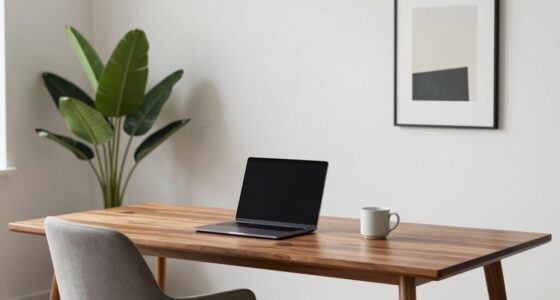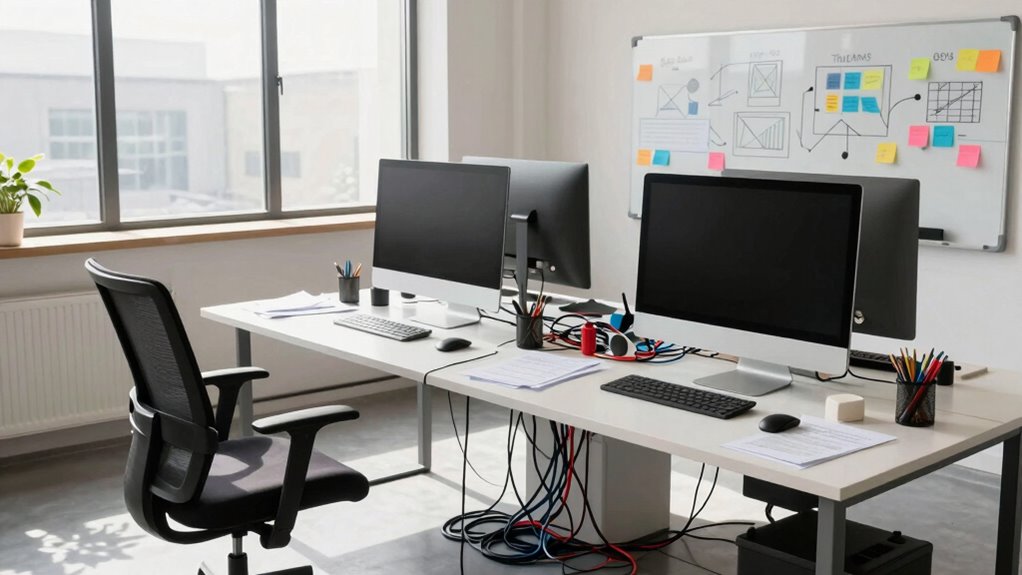

To turn workspace frustration into better design rules, start by identifying what causes discomfort, noise, or clutter. View these issues as opportunities for targeted improvements. Make simple, cost-effective adjustments like ergonomic tweaks, acoustic solutions, and thoughtful layout changes. Regularly reassess your space to uncover new pain points and refine your approach. Small, intentional tweaks can markedly boost comfort and productivity—if you keep exploring, you’ll discover even more effective strategies.
Open a free Amazon Business account
Business pricing, bulk buying and tax-exempt orders.
As an affiliate, we earn on qualifying purchases.
Key Takeaways
- Identify specific frustrations as opportunities for targeted design improvements.
- Use ergonomic principles to adjust furniture and equipment for comfort and efficiency.
- Incorporate acoustic solutions like panels or plants to reduce noise distractions.
- Reorganize workspace layout to enhance functionality and minimize clutter.
- Implement small, cost-effective tweaks based on feedback to continually improve the environment.

Workspace frustrations can often feel like setbacks, but they’re actually opportunities to improve your environment. When you find yourself struggling with discomfort, noise, or clutter, instead of feeling defeated, use those moments as clues for better design rules. One of the first steps is to contemplate ergonomic adjustments. If your chair isn’t supporting your back properly or your monitor is at an awkward height, it’s time to make changes. Proper ergonomic setups don’t just boost comfort—they also enhance productivity. Adjust your chair height so your feet rest flat on the floor, and guarantee your wrists aren’t strained while typing. Position your monitor at eye level to reduce neck strain, and keep frequently used items within easy reach to prevent unnecessary stretching. These small, intentional adjustments can turn your workspace into a more comfortable, efficient zone. Incorporating wholesome cooking ideas into your routine can also promote overall well-being, making your workspace feel more nurturing and balanced.
Alongside ergonomic changes, acoustic solutions play an essential role in transforming frustration into functional design. Excessive noise can distract you, increase stress, and reduce your focus. To combat this, consider adding sound-absorbing panels, rugs, or even plants that help dampen noise. If you work in a shared space, noise-canceling headphones can become your best allies, blocking out distractions and helping you concentrate. Rearranging your furniture to create designated quiet zones can also make a significant difference. When you address acoustic issues head-on, you create an environment that fosters concentration and calm, making your workspace feel less chaotic and more controlled. Additionally, paying attention to workspace layout can significantly impact your overall comfort and efficiency. Observing your environment and making intentional changes can lead to a more ergonomic workspace, reducing discomfort and increasing productivity. Incorporating sound management strategies can further optimize your environment for focus and relaxation. Recognizing the importance of workspace organization can also help minimize clutter and streamline your daily routines.
Turning frustrations into actionable design rules requires observing what’s causing your discomfort and systematically addressing those issues. If your chair causes back pain, prioritize ergonomic adjustments. If noise interrupts your workflow, implement acoustic solutions. Each frustration points to a specific design tweak that can improve your overall workspace. Keep in mind that these changes don’t have to be costly or complicated; often, simple improvements can produce profound results. Regularly reassess your environment to identify new pain points and adapt your design rules accordingly. Remember, your workspace should serve your needs, not hinder them. By actively applying ergonomic adjustments and acoustic solutions, you not only eliminate frustrations but also create a workspace that supports your productivity, comfort, and well-being.
As an affiliate, we earn on qualifying purchases.
Frequently Asked Questions
How Can I Measure Workspace Frustration Effectively?
You can measure workspace frustration effectively by conducting ergonomic assessments and gathering employee surveys. Ergonomic assessments help identify physical discomfort or inefficiencies, while employee surveys reveal emotional and mental frustrations. Combining these methods gives you an all-encompassing view of issues. Regularly analyzing this feedback allows you to pinpoint specific problems, track progress over time, and implement targeted improvements, ultimately creating a more comfortable, productive workspace that reduces frustration.
What Tools Assist in Analyzing Workspace Pain Points?
Wondering which tools reveal your workspace pain points? Ergonomic assessments are key—they pinpoint physical discomforts and inefficiencies. Combine this with employee surveys to uncover hidden frustrations and gather honest feedback. Together, these tools create a detailed picture of what needs fixing. By actively analyzing this data, you can craft smarter, more comfortable workspace designs, transforming frustration into productive, user-friendly environments that truly support your team’s needs.
How Do Cultural Differences Impact Workspace Design?
Cultural differences greatly influence workspace design, as cultural nuances shape preferences for space, privacy, and collaboration. You should consider these nuances to create inclusive environments. Design adaptations might include flexible layouts, private zones, or communal areas tailored to diverse cultural expectations. By understanding and respecting cultural nuances, you guarantee your workspace accommodates everyone’s needs, fostering comfort and productivity. This approach ultimately results in a more harmonious and effective work environment.
What Budget Considerations Are Involved in Redesigning Workspaces?
When redesigning workspaces, you need to focus on cost analysis and budget planning to keep expenses in check. Start by estimating renovation costs, furniture, and technology upgrades, then prioritize essential changes. Consider long-term savings like energy efficiency or flexible layouts. By carefully analyzing costs upfront, you guarantee your redesign aligns with your financial resources, preventing overspending and helping you create a functional, inspiring space within your budget.
How Long Does It Typically Take to See Improvements?
You’ll typically see improvements within a few weeks to a few months, depending on the project scope. As you implement ergonomic comfort features and enhance aesthetic appeal, you’ll notice staff become more satisfied and productive. Keep in mind that some adjustments, like furniture upgrades or layout changes, may take longer to fully settle. Regular feedback during this period helps fine-tune the workspace, ensuring lasting positive results.
As an affiliate, we earn on qualifying purchases.
Conclusion
By recognizing that your frustrations often mirror broader design flaws, you unknowingly stumble upon solutions that improve everyone’s workspace. Sometimes, it’s in those small, coincidental moments—like a misplaced chair or a cluttered desk—that you discover the rules waiting to be rewritten. Embrace these quirks as opportunities, and you’ll find that your frustrations transform into insights, guiding you toward smarter, more intuitive design rules. After all, progress often begins where chaos unexpectedly meets clarity.
monitor riser for ergonomic setup
As an affiliate, we earn on qualifying purchases.
As an affiliate, we earn on qualifying purchases.
As an affiliate, we earn on qualifying purchases.
Fall Picks
fall essentials
As an affiliate, we earn on qualifying purchases.