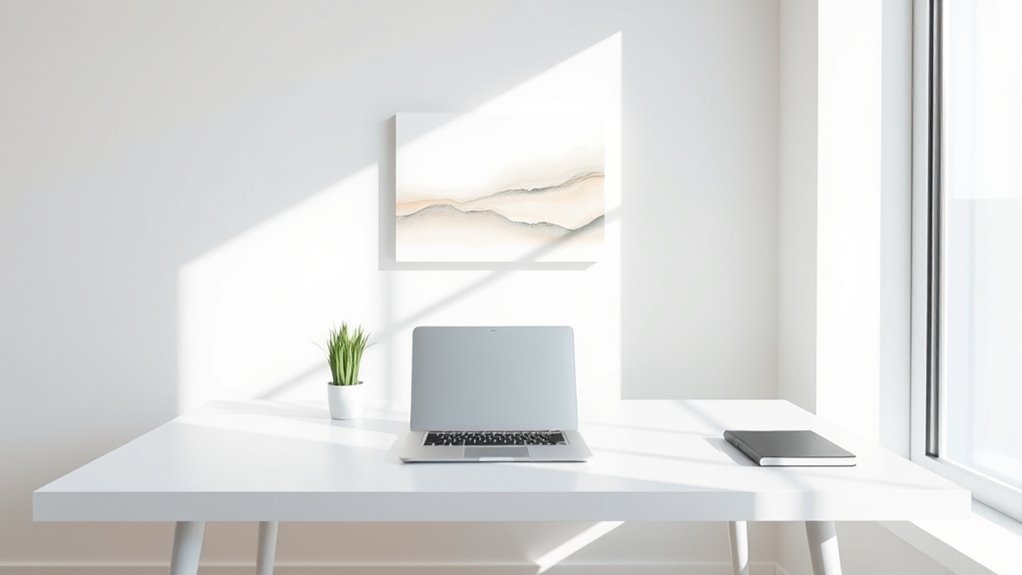

To create a minimalist workspace, start by decluttering your current area and removing anything unnecessary. Choose a calming, neutral color palette like beige or gray to promote focus. Opt for functional, streamlined furniture that saves space and complements your style. Organize essentials clearly, using practical storage solutions, and add simple decor like plants or artwork. Establish a regular routine to keep your space tidy—if you continue with these steps, you’ll create a serene, efficient environment that boosts productivity.
Key Takeaways
- Clear your desk and surrounding area of unnecessary items to reveal essential workspace components.
- Choose neutral, soft tones for walls and decor, incorporating minimal accents for a calming environment.
- Select multi-functional, space-saving furniture with clean lines to optimize room and reduce clutter.
- Use practical storage solutions like drawers and trays to organize supplies and cables neatly.
- Establish regular routines for cleaning and decluttering to maintain a tidy, functional workspace.
Assess Your Current Workspace and Identify Clutter

Before you can create a minimalist workspace, you need to understand what’s currently taking up space and causing clutter. Start by evaluating your desk and surrounding area. Look for items that are unnecessary or rarely used, such as outdated papers, bulky office supplies, or excess décor. Pay special attention to your ergonomic seating—ensure it’s supportive and not cluttered with accessories. Also, examine your cable management. Tangled cords and exposed wires create visual chaos and waste space. Organize cables using clips or sleeves, and remove any that aren’t essential. Clearing out non-essential items and improving cable management will give you a clearer, more functional workspace. Incorporating clutter assessment as the first step helps you identify the true sources of disorganization, making your efforts more targeted and effective. Additionally, consider home essentials to optimize your workspace setup for comfort and efficiency. Conducting a thorough space evaluation can reveal hidden clutter hotspots that may not be immediately obvious. This initial assessment sets the stage for creating a clean, clutter-free environment that promotes focus and productivity. To further enhance your workspace, consider evaluating storage solutions that can help keep your area tidy and organized.
Choose a Neutral Color Palette for a Calming Atmosphere

Choosing soft, muted tones creates a calming atmosphere in your workspace. Stick to a consistent color scheme and add minimal accent colors to keep the look clean and cohesive. This approach helps you stay focused and relaxed while working. Incorporating warm color palettes can also reduce visual clutter and promote a sense of tranquility. Additionally, understanding how self watering plant pots work and their benefits can enhance your space by ensuring healthy, low-maintenance greenery. Moreover, selecting mindful design principles can help you create a space that minimizes distractions and fosters concentration. Furthermore, understanding how attention influences creative practice can help you design a space that minimizes distractions and fosters concentration.
Soft, Muted Tones
A neutral color palette with soft, muted tones instantly creates a calming atmosphere in your workspace. To enhance this effect, incorporate ambient lighting that provides gentle, diffuse illumination, reducing harsh shadows and glare. Use soft textiles like plush rugs, cushions, or curtains in shades of beige, gray, or taupe to add warmth and texture without clutter. These subtle colors help maintain a sense of tranquility and focus, making your environment inviting and peaceful. Keep your color choices understated to avoid visual distraction, allowing your mind to relax and concentrate. By combining soft textiles with ambient lighting, you establish a harmonious, minimalist space that feels balanced and soothing. Incorporating color psychology principles can further optimize your workspace ambiance for mental clarity and calmness. Additionally, selecting decorative planters that complement your color scheme can subtly enhance the aesthetic without overwhelming the minimalist design. Exploring minimalist design principles can provide additional guidance for creating a cohesive environment. Incorporating off-road vehicle themes subtly into your decor can add a unique touch that reflects your personal interests without disrupting the serene environment.
Consistent Color Scheme
Selecting a consistent, neutral color scheme is essential for creating a calming workspace. When you choose colors that complement each other, you achieve better color harmony, which promotes a sense of tranquility. Stick to shades like soft grays, warm beiges, or muted whites to avoid visual clutter. A unified palette helps establish visual balance, making your space feel organized and peaceful. Consistency in your color choices prevents distractions and allows your mind to focus more easily. Keep your walls, furniture, and accessories within this neutral spectrum. This cohesive approach simplifies decision-making and creates a serene environment that encourages productivity. Remember, a harmonious color scheme is the foundation for a minimalist workspace that feels both relaxing and visually appealing. Incorporating layered textures and colors can enhance the cozy, inviting atmosphere of your workspace while maintaining its simplicity.
Minimal Accent Colors
To create a calming workspace, incorporating minimal accent colors within a neutral palette can make a significant difference. Choose subtle color accents that complement your base tones, avoiding overwhelming contrasts. Thoughtful accent color pairing enhances visual interest without clutter. For example, soft blues or muted greens work well with beige or gray backgrounds. Imagine a workspace with a sleek desk, a white wall, and a single pastel-colored plant pot. Here’s an example of how subtle accents can be applied:
| Neutral Base | Accent Color | Placement |
|---|---|---|
| Light gray | Dusty blue | Desk accessories |
| Warm beige | Sage green | Small decorative items |
| Cool white | Blush pink | Art or wall decor |
| Charcoal | Light taupe | Minimalist shelving |
These accents keep your workspace serene yet engaging.
Select Functional and Minimalist Furniture

When selecting furniture for your workspace, focus on pieces that serve multiple purposes to maximize your space. Choose neutral colors carefully to create a calm, cohesive environment, and look for space-saving designs that keep your area uncluttered. By prioritizing functionality and simplicity, you’ll establish a minimalist setup that’s both practical and visually soothing.
Prioritize Multi-Functional Pieces
Opting for multi-functional furniture allows you to maximize space without sacrificing style or utility. These pieces combine form and function, helping you reduce clutter while maintaining a clean look. Look for versatile storage options, like desks with built-in drawers or beds with under-bed compartments, to keep your workspace organized. Multi functional furniture encourages a minimalist approach by serving multiple purposes in one piece, freeing up room for other essentials. When selecting these items, prioritize clean lines and simple designs that blend seamlessly with your overall aesthetic. This way, you create a streamlined environment that’s both practical and visually calming. By focusing on versatile storage solutions, you’ll craft a workspace that feels spacious, efficient, and clutter-free. Additionally, choosing furniture with multi-purpose design can further enhance the functionality of your minimalist setup, especially when considering cultural heritage influences that may affect your style choices. Incorporating cybersecurity considerations, such as secure storage options, can also help protect your workspace from digital threats and maintain a safe environment. Understanding alimony laws can help you plan financially and avoid unexpected expenses during your setup process. Moreover, exploring Hackathons can provide innovative ideas for creating tech-savvy and adaptable workspace solutions.
Choose Neutral Colors Carefully
Choosing neutral colors for your workspace can create a calm, cohesive environment that promotes focus and productivity. Color psychology plays a key role; soft tones like beige, gray, or taupe reduce distractions and foster relaxation. When applying paint, opt for smooth, even paint application to avoid uneven textures that can disturb your concentration. Carefully selecting neutral shades ensures your space remains versatile and timeless. Consider how different neutrals complement your lighting and furniture. Here’s a quick overview:
| Neutral Color | Effect on Mood | Best Use Case |
|---|---|---|
| Beige | Warm, inviting | Background walls |
| Gray | Calm, balanced | Desk or accent walls |
| Taupe | Sophisticated, subtle | Furniture and trims |
Additionally, incorporating decorative accents such as artwork or plants can enhance the space without overwhelming the minimalist aesthetic. Choosing colors thoughtfully can also influence mood enhancement and overall well-being in your workspace. Recognizing the importance of textile line elements, such as fabric or soft furnishings, can further soften the environment and add subtle texture to your minimalist design. Including wall organization systems can also help maintain a clutter-free and streamlined space that aligns with minimalist principles.
Opt for Space-Saving Designs
Selecting space-saving furniture is essential for creating a minimalist workspace that feels open and uncluttered. Focus on pieces that offer compact storage solutions, helping you keep essentials organized without taking up unnecessary space. Opt for multi-functional furniture, like desks with built-in drawers or wall-mounted shelves, that maximize every inch and support space optimization. Avoid bulky or ornate designs that can overwhelm the room. Instead, choose streamlined, minimalist pieces with clean lines that blend seamlessly into your environment. This approach not only maintains a tidy appearance but also enhances functionality. By prioritizing space-saving designs, you create a workspace that’s both efficient and calming, making it easier to focus and stay productive in a clutter-free setting.
Organize and Declutter Your Desk Space

To create a minimalist workspace, start by clearing everything off your desk to see what you truly need. As you sort through items, prioritize essential tools and discard or store away anything unnecessary. Use practical storage solutions like drawers, trays, or sleek containers to keep clutter out of sight, creating a clean surface. Incorporate ergonomic accessories thoughtfully; choose only those that enhance comfort and productivity without adding visual noise. Keep cables organized with clips or sleeves to avoid tangles and maintain a tidy appearance. Regularly reassess your workspace, removing items that no longer serve a purpose. Being mindful of storage and organization options can help prolong the lifespan of your items and maintain a clutter-free environment. A well-organized, clutter-free desk not only improves focus but also promotes a calming atmosphere, essential for a minimalist setup.
Incorporate Simple, Inspiring Decor Elements

Adding simple, inspiring decor elements can enhance your minimalist workspace without cluttering it. Focus on items that boost motivation and comfort while maintaining a clean look. Use soft artificial lighting, like a sleek desk lamp or warm LED strips, to create a calming atmosphere. Incorporate ergonomic accessories, such as an adjustable chair or supportive wrist rests, for comfort and functionality. Keep decor minimal but meaningful—think small plants, monochrome artwork, or a minimalist clock. These elements should serve as inspiration without overwhelming your space. Remember, less is more; choose quality over quantity. Carefully selected decor can elevate your workspace’s aesthetic and mood, making it a place where productivity feels natural and inviting.
Establish a Maintenance Routine to Keep Things Tidy
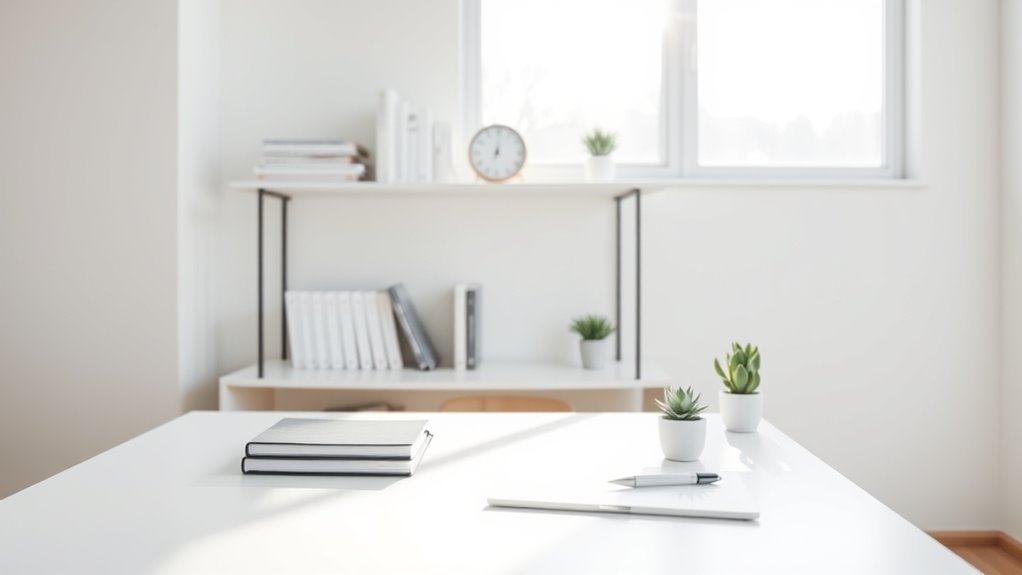
Maintaining a tidy minimalist workspace requires establishing a consistent routine that keeps clutter at bay. Start by creating a cleaning schedule—set aside a few minutes daily or weekly to tidy surfaces and organize essentials. Regularly implementing decluttering tips helps prevent accumulation of unnecessary items. For example, review your desk at the end of each day and put away or discard anything not essential. Keep only what you use frequently within arm’s reach, and store the rest out of sight. Make tidying part of your daily habits, so clutter doesn’t pile up. This routine ensures your workspace stays calm, functional, and inspiring. By sticking to your cleaning schedule and decluttering regularly, you’ll maintain a minimalist environment that supports focus and productivity.
Frequently Asked Questions
How Can I Personalize My Minimalist Workspace Without Cluttering It?
You can personalize your minimalist workspace by adding a few meaningful decorative pieces, like artwork or a small plant, that reflect your style without cluttering. Incorporate functional accessories, such as a sleek desk organizer or a stylish lamp, to make the space uniquely yours while keeping it tidy. Opt for simple, intentional decor that enhances your environment without overwhelming it, maintaining the minimalist aesthetic.
What Are Some Budget-Friendly Tips for Creating a Minimalist Office?
Think of your office as a sleek, modern vessel—simple yet functional. To keep it budget-friendly, craft DIY decor that adds personality without clutter, like handmade art or repurposed items. Use budget storage solutions such as stackable bins or wall-mounted shelves to keep essentials organized. Focus on quality over quantity, and prioritize multipurpose furniture to maximize space without overspending. This approach creates a clean, inspiring workspace that feels both personal and affordable.
How Do I Choose Eco-Friendly Materials for My Workspace?
You choose eco-friendly materials by prioritizing sustainable sourcing, ensuring the products come from responsibly managed resources. Look for items made from biodegradable options, which break down naturally and reduce environmental impact. Check labels for certifications like FSC or Green Seal, and opt for recycled or reclaimed materials whenever possible. This way, your workspace stays minimalist while supporting eco-conscious choices that benefit the planet.
Can a Minimalist Workspace Improve My Productivity?
A minimalist workspace can supercharge your productivity boost and clear your mind like a whirlwind of mental clarity. When you declutter and organize your space, distractions fade away, and focus sharpens. This simple change makes your work feel less overwhelming and more manageable. You’ll find yourself completing tasks faster, staying motivated, and feeling more in control. Embrace minimalism, and watch your efficiency skyrocket beyond what you thought possible!
How Do I Handle Sentimental Items in a Minimalist Setup?
You handle sentimental items in a minimalist setup by recognizing their emotional attachment but limiting their presence. Choose a few meaningful pieces that truly bring you joy and display or store them thoughtfully. For sentimental clutter, consider photographing items to preserve memories without physical space. Regularly reassess your collection, keeping only what resonates most, and let go of the rest. This balance helps maintain a clean, peaceful workspace while honoring your emotional ties.
Conclusion
Creating a minimalist workspace is like tending a peaceful garden—you need to prune regularly to keep it thriving. By evaluating your space, choosing calming colors, and organizing thoughtfully, you craft an environment that boosts focus and reduces stress. Stick to your maintenance routine, and your workspace will stay as serene as a still lake. With a little effort, you’ll enjoy a clutter-free zone that inspires productivity and clarity every day.