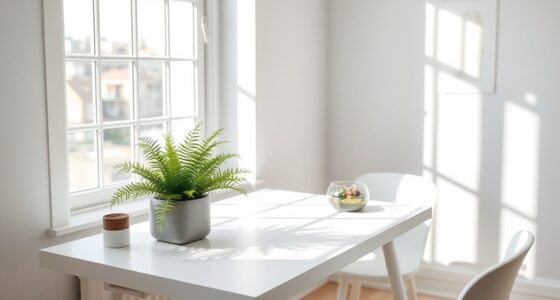
Great minimalist workspaces share five key elements that help you stay focused and comfortable. First, ergonomic accessories support your body and reduce strain. Neutral color palettes create a calm environment free of distractions. Clutter-free surfaces and smart storage keep everything organized and spacious. good lighting, especially natural light, enhances mood and reduces eye strain. finally, a cohesive design balances function and simplicity, fostering concentration. Keep exploring to discover how these elements can transform your workspace seamlessly.
Key Takeaways
- Clean, clutter-free surfaces that promote focus and organization.
- Neutral color palettes creating a calm and unobtrusive environment.
- Ergonomic accessories supporting comfort and reducing physical strain.
- Optimal lighting, emphasizing natural light and soft, warm illumination.
- Cohesive design principles balancing simplicity, function, and aesthetic harmony.

Have you ever wondered what makes a workspace truly effective and inspiring? It’s not just about having a desk and a chair; it’s about creating an environment that promotes focus, comfort, and clarity. One key element that many great minimalist workspaces share is the thoughtful use of ergonomic accessories. These tools aren’t just about style—they’re about supporting your body and reducing strain as you work. An ergonomic keyboard, an adjustable monitor stand, or an ergonomic chair can make a significant difference in your daily comfort and long-term health. When your body feels good, your mind stays sharp, and productivity naturally increases. Incorporating these accessories into your workspace signals that you value both function and well-being, which is essential for a space that fosters focus and creativity.
Supporting your body with ergonomic accessories enhances focus, comfort, and long-term well-being in minimalist workspaces.
Another hallmark of effective minimalist workspaces is the use of neutral color palettes. These colors—think soft grays, warm beiges, or muted whites—serve as a calming backdrop that minimizes distractions and helps you concentrate. Neutral tones create a serene atmosphere, making the space feel open and uncluttered, even if you have a few essential items on your desk. They also allow you to easily introduce subtle accents or personal touches without overwhelming the visual harmony. This simplicity in color choice encourages a sense of calm, helping you stay centered and motivated throughout your workday. When your environment feels balanced and cohesive, it’s easier to maintain focus and avoid visual fatigue.
A great minimalist workspace also prioritizes clean lines and clutter-free surfaces. When you keep only what’s necessary on your desk, you reduce mental clutter and make it easier to find what you need quickly. This often involves investing in storage solutions that blend seamlessly with your overall design, like sleek drawers or hidden compartments. The goal is to have a workspace that invites productivity without overwhelming your senses. Coupled with neutral color palettes, these elements work together to create a harmonious environment that feels spacious and organized, rather than chaotic. Additionally, choosing furniture and accessories that incorporate efficient design can further streamline your workspace and enhance functionality.
Finally, lighting plays an essential role in great minimalist workspaces. Natural light is ideal, but if that’s limited, a simple, well-placed lamp with soft, warm light can do wonders. Good lighting reduces eye strain and boosts your mood, making your workspace more inviting and conducive to work. When combined with ergonomic accessories and neutral hues, thoughtful lighting completes the picture of a balanced, effective workspace that inspires you to do your best every day.

Logitech G413 SE Full-Size Mechanical Gaming Keyboard - Backlit Keyboard with Tactile Mechanical Switches, Anti-Ghosting, Compatible with Windows, macOS - Black Aluminum
Take your gaming skills to the next level: The Logitech G413 SE is a full-size keyboard with gaming-first...
As an affiliate, we earn on qualifying purchases.
Frequently Asked Questions
How Do Minimalist Workspaces Boost Productivity?
Minimalist workspaces boost your productivity by reducing distractions and creating a calm environment. Ergonomic furniture keeps you comfortable and focused, preventing fatigue. Natural lighting energizes you and enhances concentration, making it easier to stay on task. When your space is simple and well-organized, you can prioritize your work without clutter, helping you stay efficient and motivated throughout the day.
What Are Common Mistakes to Avoid in Minimalist Design?
Your minimalist workspace can turn chaotic if you clutter it with unnecessary decorative accessories or pick chaotic color schemes. Avoid over-accessorizing, which can overwhelm the space and defeat the purpose of minimalism. Stick to a simple, cohesive color palette and only include essential decor that enhances focus. Keep surfaces clear and organized, and don’t fall into the trap of thinking more decor equals better style. Less truly is more.
Can Minimalist Workspaces Accommodate Creative Tools?
Yes, minimalist workspaces can accommodate creative tools by using creative storage solutions that keep your tools organized without clutter. You can also design for flexibility of layout, allowing you to easily adapt your space as your needs change. This way, you maintain a clean, inspiring environment that fosters creativity while still enjoying the simplicity and order that define minimalist design.
How Often Should Minimalist Spaces Be Decluttered?
Think of your minimalist space as a garden that needs regular tending. You should declutter every few months to keep it thriving. Use smart storage solutions to hide away unnecessary items, and stick to a calm color scheme that promotes focus. This routine prevents chaos, allowing your workspace to stay serene and functional, much like a well-maintained garden that blooms beautifully through consistent care.
Are Minimalist Workspaces Suitable for All Industries?
Minimalist workspaces can suit most industries, especially if you prioritize ergonomic considerations and remote collaboration. They create a clean, focused environment that boosts productivity and reduces distractions. Whether you’re in tech, design, or admin, a minimalist setup helps you stay organized and comfortable. Just adapt the design to your industry’s needs, ensuring your workspace supports collaboration remotely and promotes ergonomic health.

ONEMIX 42" LED Desk Lamp with Clamp, Architect Desk Light with Remote, Adjustable 4-Segment Bar, 1800LM Bright, Eye-Caring Desk Lamp for Home Office, Reading, Study, Dual Monitors, Workbench(Black)
Ultra-Wide & Super-Bright Light Bar: This 42-inch LED desk lamp features a 4-segment architect-style light bar with independently...
As an affiliate, we earn on qualifying purchases.
Conclusion
By blending balance, brightness, and a breezy simplicity, you create a workspace that works wonders. Keep clutter clear, colors calming, and corners clean to cultivate clarity and creativity. When your space is neat, natural, and nuanced, productivity flows freely. So, embrace the essentials, eliminate excess, and enjoy an environment that energizes your efforts. With these elements in mind, you’ll foster focus, freedom, and a fresh feeling every time you step in.

LitONES Led Desk Lamps for Home Office with Base, Tall Desk Lamp with 50 Light Modes & Memory and Timer Func Computer Light, Flexible Adjustable Table Lamps for Video Conference, Architect or Study
𝐄𝐲𝐞-𝐂𝐚𝐫𝐢𝐧𝐠, 𝐒𝐨𝐟𝐭, 𝐆𝐥𝐚𝐫𝐞-𝐅𝐫𝐞𝐞 𝐈𝐥𝐥𝐮𝐦𝐢𝐧𝐚𝐭𝐢𝐨𝐧 – This 15W LED desk lamp features LitONES’ exclusive 4-layer optical soft panel with...
As an affiliate, we earn on qualifying purchases.

Micomlan Led Desk Lamp with Clamp, Architect Desk Lamp for Home Office with Atmosphere Lighting, 24W Ultra Bright Auto Dimming Computer Light Stepless Dimming and Tempering LED Table Light
7 Rotatable Joints: Micomlan swing arms led desk light features 7 strongly damped joints with 3 ultra bright...
As an affiliate, we earn on qualifying purchases.