
To create a bright, minimal office without harsh glare, focus on even light distribution with multiple light sources that complement natural daylight. Use fixtures with diffusers, shades, or adjustable designs to soften and regulate brightness. Place lighting strategically—overhead for general illumination and task lights for work areas—while controlling color temperature to set the right mood. Proper placement, layering, and adjustments will ensure comfort and focus, helping you master a glare-free workspace. Keep exploring further tips to perfect your setup.

Get your wardrobe favorites delivered free with Prime
- Fast, free delivery on millions of items
- Prime Video, Amazon Music and more included
- Member-only deals all year
Key Takeaways
- Use layered lighting with diffusers and shades to evenly distribute light and reduce glare.
- Select fixtures with proper placement, including overhead ambient and task lighting, for uniform illumination.
- Adjust brightness levels with dimming controls to prevent harsh contrasts and eye strain.
- Incorporate natural light through well-placed windows and skylights, controlling glare with window treatments.
- Choose color temperatures that promote alertness (cool) or coziness (warm) based on desired office atmosphere.
As an affiliate, we earn on qualifying purchases.
Understanding the Basics of Office Lighting

Good office lighting is essential for productivity and comfort, but understanding its basics can seem intimidating. One key factor is color temperature, which affects the mood and focus of your workspace. Cooler temperatures (around 4000K to 5000K) promote alertness, while warmer tones (2700K to 3000K) create a cozy atmosphere. Light distribution is equally important; even, well-spread lighting reduces shadows and glare that can strain your eyes. Proper light placement ensures your entire workspace is evenly illuminated, preventing dark corners or overly bright spots. Combining the right color temperature with effective light distribution helps create a balanced environment, enhancing focus and minimizing fatigue. Additionally, understanding sound vibrations can contribute to a more holistic approach to creating a comfortable workspace. Incorporating elements like ambient noise or soft background sounds can improve concentration and overall well-being. Paying attention to lighting quality and how it interacts with other sensory factors can further optimize your office setup. For example, choosing diffusers with aroma oils can subtly influence mood and alertness, complementing your lighting choices. Exploring cybersecurity risks, such as the impact of outages on your digital infrastructure, can also help in designing a resilient workspace. By paying attention to these fundamentals, you set the foundation for a sleek, functional minimal office.
dimmable overhead office lighting fixtures
As an affiliate, we earn on qualifying purchases.
As an affiliate, we earn on qualifying purchases.
Choosing the Right Light Bulbs for a Minimal Aesthetic
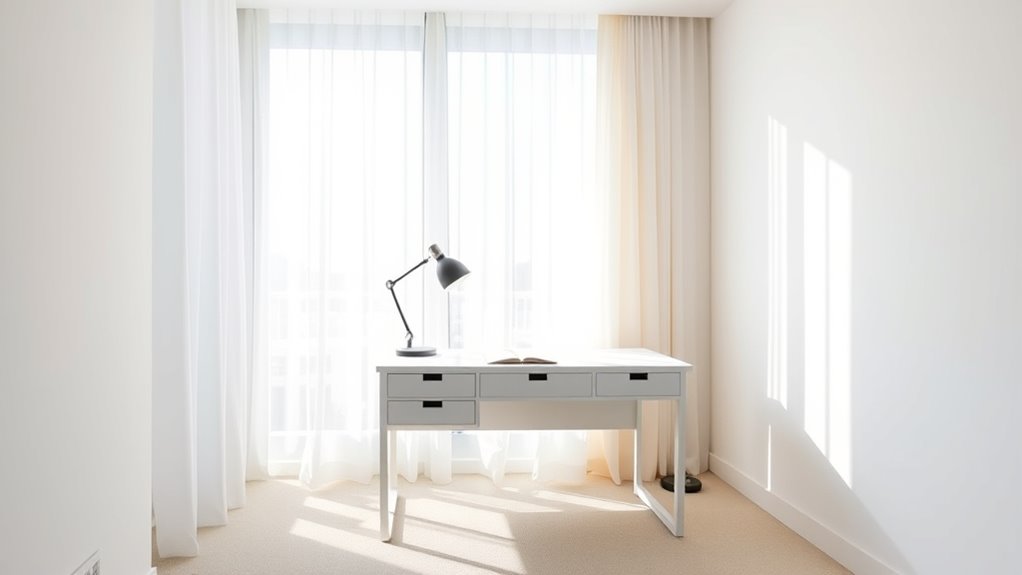
When choosing light bulbs for a minimal look, consider whether warm or cool tones best suit your space, as they set different moods. Brightness and lumens also matter, ensuring your lighting is functional without overpowering the simplicity. Picking the right combination helps create a clean, cohesive aesthetic that feels just right. Incorporating vertical storage solutions for organization can further enhance the minimal environment by keeping clutter out of sight and maintaining clarity. Additionally, selecting bulbs with accurate color rendering ensures that the true colors of your space are preserved under the chosen lighting. Understanding how creativity influences design choices can also inspire innovative ways to optimize lighting for both form and function.
Warm vs. Cool Tones
Choosing the right light bulb tone can dramatically influence the mood and aesthetic of your minimal space. Warm tones, with lower color temperature, create a cozy, inviting atmosphere that promotes relaxation. They enhance comfort and add a touch of softness to your environment. Cool tones, with higher color temperature, produce a crisp, energizing vibe, perfect for focus and productivity. They give your space a modern, clean look that emphasizes clarity. When selecting bulbs, consider the mood you want to foster—warm for calmness or cool for alertness. The right choice enhances your minimal design without clutter or distraction. Remember, color temperature plays a key role in mood enhancement, helping you craft a space that’s both functional and visually harmonious. Additionally, understanding asset division laws can be useful if you plan to expand your property portfolio or make significant investments to complement your minimalist office aesthetic. To further refine your lighting choices, it is helpful to consider the benefits of eye patches, particularly how different lighting conditions can affect skin and eye health in a workspace. For example, selecting bulbs with appropriate lighting intensity can help reduce eye strain and improve overall comfort during long work hours.
Brightness and Lumens
Have you ever wondered how to make sure your minimal space feels bright enough without overwhelming it? The key is understanding lumens measurement, which indicates the light output of your bulbs. Higher lumens mean brighter light, but too much can create glare. For a comfortable, minimal office, aim for bulbs with around 450 to 800 lumens, depending on your space size. Here’s a quick guide:
| Room Size | Recommended Lumens |
|---|---|
| Small (up to 80 sq ft) | 450-600 lumens |
| Medium (80-150 sq ft) | 600-800 lumens |
| Large (over 150 sq ft) | 800+ lumens |
Choosing the right light output ensures your space feels lively yet calm, avoiding harsh shadows or glare. Considering lighting design principles can further enhance the ambiance of your minimal office. Additionally, selecting fixtures with diffused lighting options can help reduce glare and create a softer, more even illumination. Incorporating appropriate light layering can also improve overall comfort and functionality in your workspace, especially when combined with air purifiers, which improve indoor air quality for a healthier environment. Understanding lumens measurement is essential for achieving the perfect balance of brightness and comfort in your space.
As an affiliate, we earn on qualifying purchases.
Incorporating Natural Light Effectively
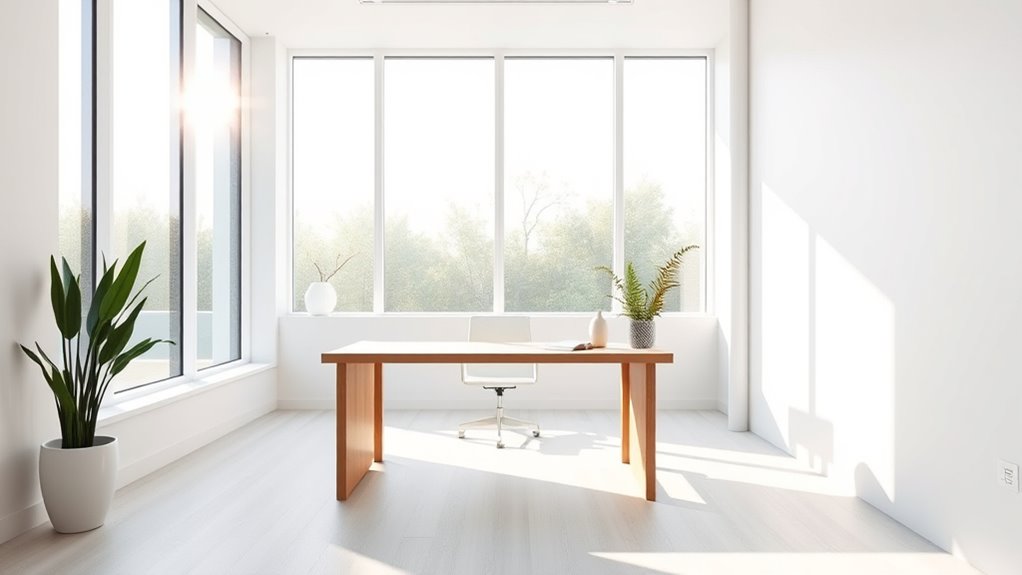
To make the most of natural light, you need to understand how to optimize your space effectively. Start with strategic window placement; position windows where they’ll maximize daylight without causing glare or overheating. Use large, unobstructed windows on the north or east sides for gentle, consistent light, avoiding direct afternoon sun. Consider skylight benefits, like bringing in daylight from above, which helps illuminate deep into your office and reduces reliance on artificial lighting. Keep window treatments light and adjustable to control glare and maintain a bright, comfortable environment. By thoughtfully arranging windows and harnessing skylights, you create a naturally bright workspace that feels open and inviting, reducing the need for artificial lighting during daytime hours. Additionally, light-colored walls can help reflect natural light further into the space, enhancing overall brightness and creating a more airy atmosphere.
adjustable task light for workspace
As an affiliate, we earn on qualifying purchases.
As an affiliate, we earn on qualifying purchases.
Balancing Artificial Lighting for Uniform Illumination
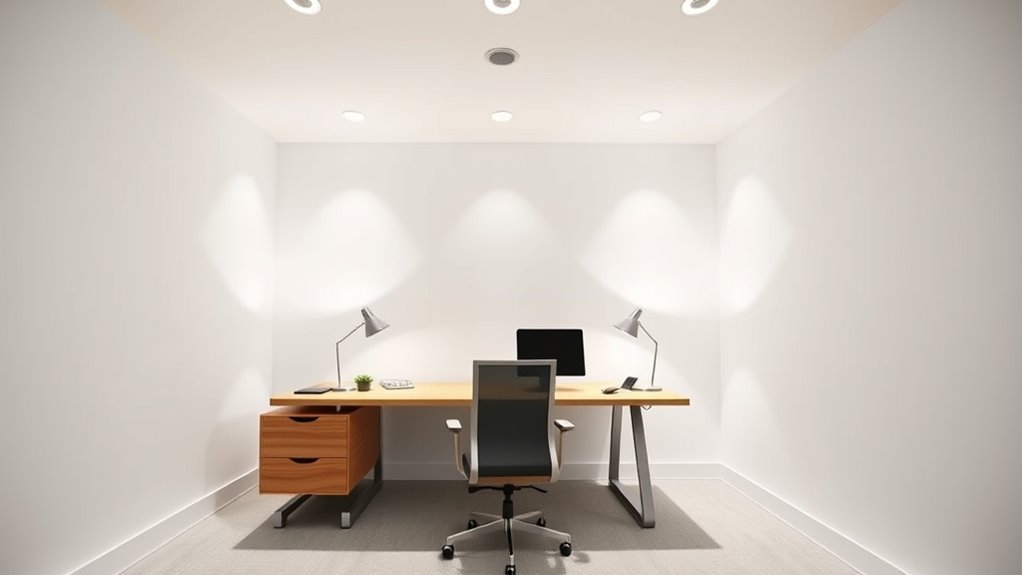
To achieve even lighting, you need to use multiple light sources that work together seamlessly. Adjust the light intensity to prevent hotspots and dark spots, ensuring consistent brightness across the space. Additionally, electric bike performance can be affected by lighting conditions, so good illumination helps maintain focus and safety. Properly designed lighting layout can also enhance the overall aesthetic and functionality of your office. Also, aim to minimize shadows and glare that can disrupt uniform illumination and affect visual comfort. Being aware of potential lighting issues can help you troubleshoot and optimize your setup effectively. Incorporating adjustable fixtures can further help control light distribution and adapt to different tasks or times of day. Furthermore, understanding how smart lighting controls operate enables you to fine-tune your lighting environment for optimal comfort and efficiency.
Use Multiple Light Sources
Using multiple light sources is essential for achieving even illumination and eliminating harsh shadows. By layering light, you create a balanced environment that reduces glare and enhances visibility. Choose fixtures thoughtfully to guarantee they complement each other and provide consistent brightness. Mix ambient, task, and accent lighting to fill all areas evenly. Proper fixture selection is key—opt for fixtures that distribute light softly and avoid overly bright or focused beams. Incorporating lighting control systems can further optimize brightness levels and energy efficiency throughout the workspace. To ensure a cohesive look, consider the aesthetic style of your fixtures, which should complement your overall office decor. Additionally, understanding lighting principles helps in designing an effective lighting plan that supports productivity and comfort. Here’s a quick guide:
| Light Type | Purpose | Fixture Type | Placement | Brightness Level |
|---|---|---|---|---|
| Ambient | General light | Recessed or ceiling fixtures | Ceiling center | Soft, even |
| Task | Work areas | Desk lamps | Desks, workstations | Focused, bright |
| Accent | Highlight features | Wall sconces | Walls, artwork | Mild, decorative |
| Overhead | Reduce shadows | Pendant lights | Above key spots | Adjustable |
| Under-cabinet | Specific tasks | Under-cabinet LEDs | Shelves, counters | Direct, bright |
This layered approach ensures your office stays bright and balanced.
Adjust Light Intensity
Have you ever noticed uneven lighting in a room despite having multiple fixtures? You can fix this by adjusting light intensity for a balanced look. Dimming controls are your best friend here—they let you fine-tune each light source to create even illumination. Light layering involves combining ambient, task, and accent lighting at different intensities to prevent harsh shadows and glare. Start by setting your main lights to a comfortable level, then add dimmers to adjust secondary sources as needed. This way, you control the overall brightness while maintaining a uniform environment. Properly balancing light intensity not only improves visual comfort but also enhances the room’s minimal aesthetic, ensuring your office feels bright, inviting, and free from distracting glare.
Minimize Shadows and Glare
Balancing artificial lighting is essential to minimize shadows and glare, creating a comfortable and visually appealing environment. Properly combining ambient vs. task lighting ensures an even illumination that reduces harsh contrasts. Use task specific lighting to focus light where needed, like on your workspace, without over-illuminating the entire room. Position fixtures strategically to avoid casting shadows on your work surface. Incorporate diffusers or indirect lighting to soften glare and distribute light evenly. Adjust light levels to prevent eye strain and maintain a bright, minimal office atmosphere. Remember, the goal is to achieve uniform illumination that supports productivity while minimizing visual discomfort. Proper balancing makes your space feel inviting, functional, and free of distracting shadows or glare.
Using Diffusers and Shades to Minimize Glare
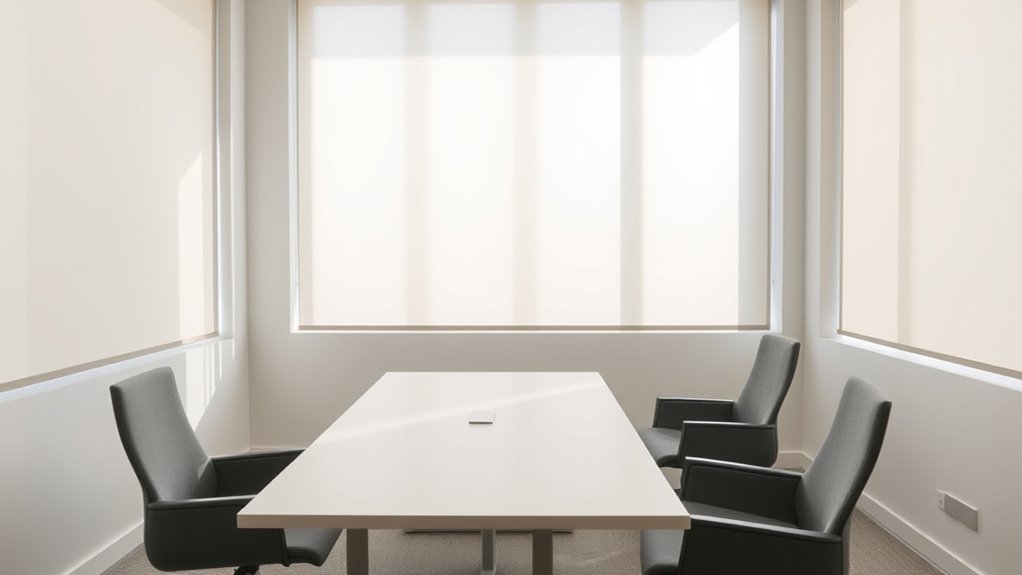
Glare from direct or harsh lighting can be distracting and uncomfortable, but adding diffusers and shades helps control it effectively. Diffuser materials, such as frosted glass or acrylic, scatter light evenly, softening sharp shadows and reducing glare. Shades come in various styles—like roller, fabric, or adjustable arm designs—that block or diffuse light before it reaches your eyes. Choosing the right shade style allows you to customize how much light filters into your workspace, minimizing glare while maintaining brightness. By layering diffusers and shades, you create a balanced lighting environment that’s comfortable and functional. This simple adjustment prevents eye strain and enhances focus, making your office a more inviting and productive space.
Strategic Placement of Light Sources
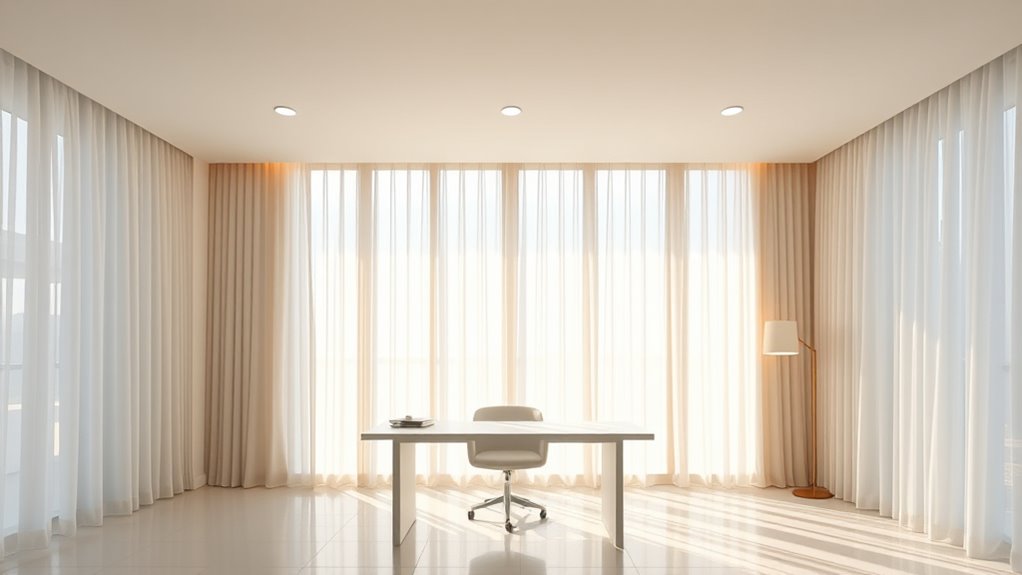
Strategic placement of light sources is essential for creating an effective and comfortable lighting environment. You want to balance ambient lighting with task-specific lighting to reduce glare and shadow. Position ambient lights overhead or on the ceiling to evenly illuminate the space without causing harsh contrasts. Use task lights on your desk or work areas to provide focused illumination where needed. Consider the placement of fixtures to avoid direct glare into your eyes or reflections on screens. Combining ambient and task lighting ensures ideal brightness and reduces eye strain. Proper placement also allows you to highlight specific areas or objects, making your workspace functional and inviting.
- Position ambient lights centrally overhead
- Place task lights close to work surfaces
- Avoid direct glare into your eyes
- Use adjustable fixtures for flexibility
Adjusting Brightness Levels for Different Tasks
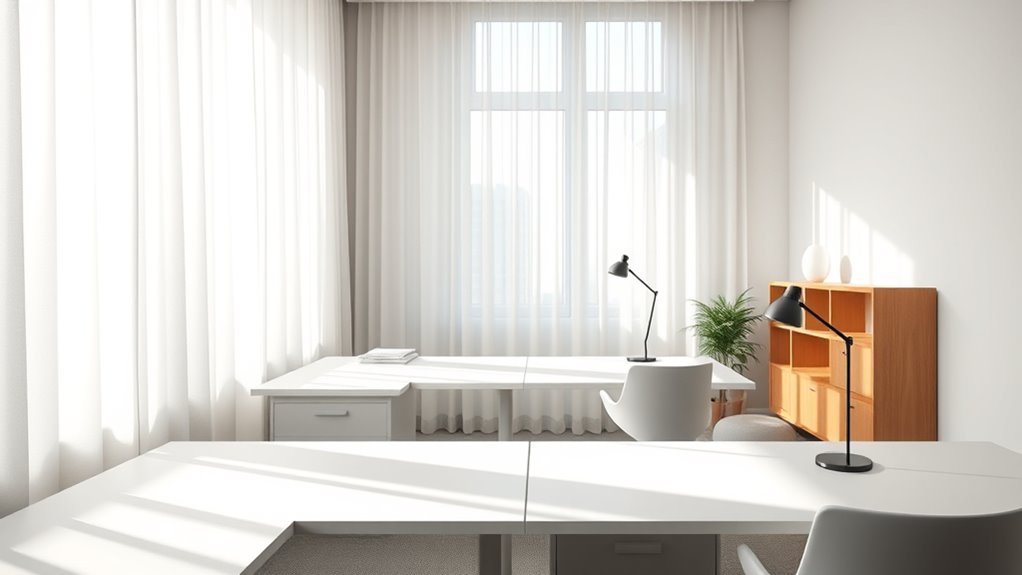
Adjusting brightness levels is crucial to guarantee your lighting suits the specific task at hand. Proper task-specific lighting ensures you have enough illumination for detailed activities like reading or writing, reducing eye strain. To do this, differentiate between ambient versus task lighting. Ambient lighting provides overall brightness, while task lighting focuses directly on your work area. For tasks requiring precision, increase the brightness with adjustable desk lamps or focused fixtures. When switching to less demanding tasks, dim the lights to prevent glare and fatigue. Consider installing dimmers or adjustable fixtures to easily modify light levels as needed. Balancing ambient and task lighting creates a comfortable, efficient environment that adapts to your work, helping you stay productive without harsh glare or insufficient illumination.
Maintaining and Updating Your Lighting Setup
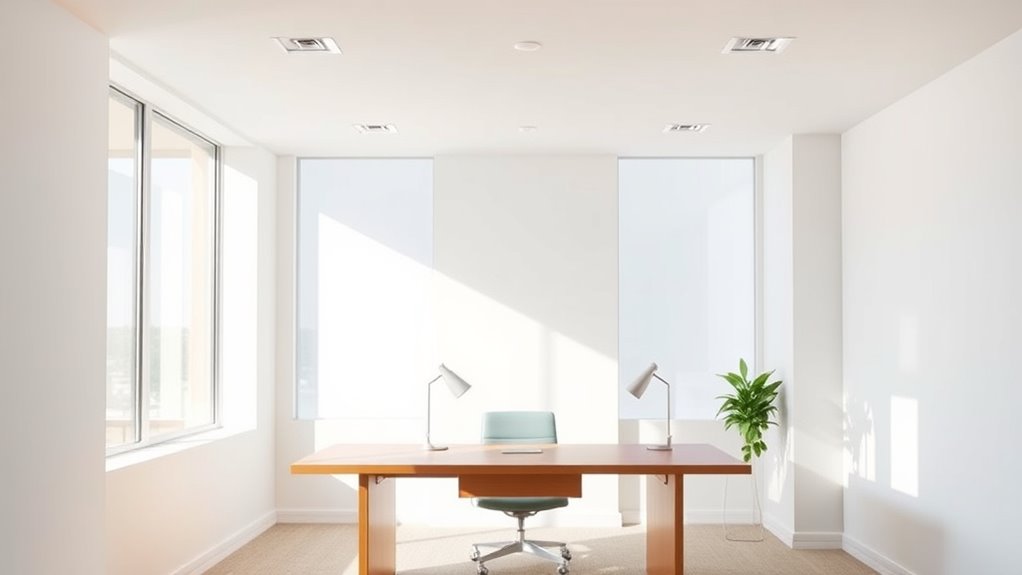
Regularly maintaining and updating your lighting setup keeps it functioning *best* and adapts to your changing needs. Check your lighting controls to verify they operate smoothly and adjust brightness as needed. Keep an eye on your color temperature to maintain a comfortable, glare-free environment; switching between warmer and cooler tones can improve focus or relaxation. Replacing outdated bulbs or fixtures enhances efficiency and light quality. Consider upgrading your lighting controls for better flexibility, such as dimmers or smart systems that respond to natural light levels. Regular cleaning of fixtures prevents dust buildup, which can dull illumination. Periodically reassess your setup to see if new options, like adjustable color temperature LEDs, could improve your workspace. Staying proactive ensures your lighting remains effective, comfortable, and aligned with your evolving needs.
Frequently Asked Questions
How Can I Reduce Eye Strain Caused by Office Lighting?
To reduce eye strain, you should use ergonomic lighting that minimizes glare and harsh shadows. Position your monitor to avoid reflections and incorporate adjustable task lighting for focused work. Take advantage of natural light benefits by placing your desk near windows, but diffuse it with blinds or curtains to prevent glare. Regular breaks also help, and adjusting screen brightness to match ambient light keeps your eyes comfortable all day.
What Are the Best Colors for Minimalistic Office Lighting?
You should choose neutral colors like soft whites or warm beige for minimalistic office lighting. Opt for lighting with a color temperature around 4000K to 5000K, which mimics natural daylight and reduces eye strain. Keep ambient hues subtle and consistent, avoiding overly vibrant or cool tones that can cause discomfort. This approach creates a calming atmosphere, enhancing focus while minimizing harsh glare and eye fatigue.
How Do I Prevent Flickering Lights in My Workspace?
To prevent flickering LED lights, verify your bulbs are compatible with your ballast, as mismatched components cause flickering. Check the ballast’s specifications and replace it if necessary with one designed for LED compatibility. Also, upgrade to flicker-free LED fixtures and use high-quality power supplies. Regularly inspect and maintain your lighting system to catch issues early, ensuring a steady, glare-free workspace.
Can Smart Lighting Improve My Office’s Brightness Control?
Smart lighting can be a game-changer, giving you more control over your office’s brightness. With smart light schedules, you can set the perfect lighting for different times of day, ensuring consistent brightness without flickering or glare. Plus, voice-controlled lighting lets you adjust brightness on the fly, making your workspace more flexible and comfortable. It’s like having a lighting wizard right at your fingertips.
What Are Eco-Friendly Lighting Options for a Minimal Office?
You can choose eco-friendly lighting options like solar-powered lights and LED fixtures for your minimal office. Solar options harness renewable energy, reducing your carbon footprint, while LED sustainability guarantees energy efficiency and longevity. These choices help you create a bright, minimal space that’s eco-conscious. Incorporate solar-powered desk lamps or switch to LED bulbs to enjoy sustainable lighting without sacrificing brightness or style in your office.
Conclusion
Now that you understand the essentials of creating a bright, minimal office, the real transformation begins. With thoughtful placement, natural light, and the right fixtures, you’ll craft a space that’s both functional and inviting. But don’t stop here—there’s always room for improvement. As you fine-tune your lighting, unexpected nuances might emerge, revealing new ways to elevate your workspace. Are you ready to uncover the full potential of your office’s illumination?
Columbus Day / Indigenous Peoples' Day Picks
long weekend sales
As an affiliate, we earn on qualifying purchases.