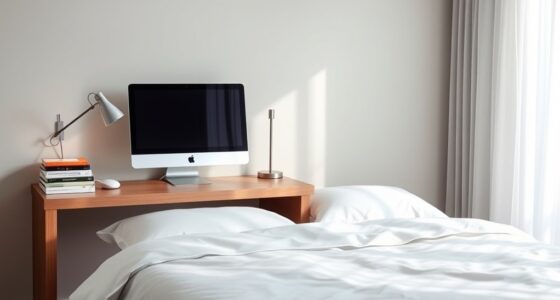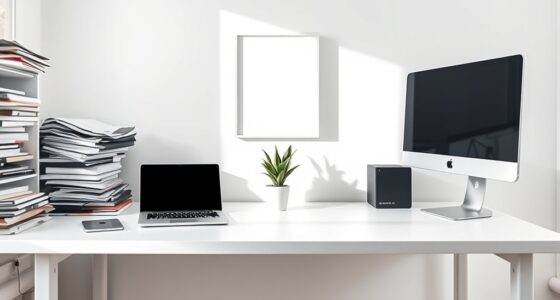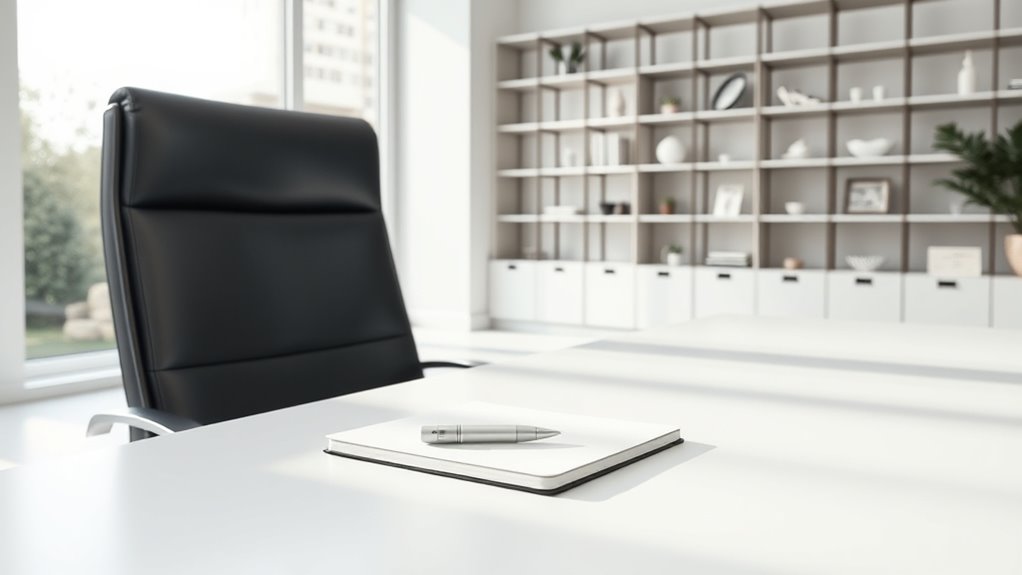
To avoid mistakes in your minimalist office, don’t sacrifice function for form. Prioritize ergonomic accessories like supportive chairs and adjustable desks to prevent discomfort over time. Choose a balanced color palette with subtle accents, and keep clutter to promote mental clarity. Guarantee proper lighting, preferably natural, complemented by unobtrusive fixtures. Remember, a stylish space isn’t worth sacrificing comfort and health—taking these steps will help you create a functional, inspiring workspace. If you want to learn more, keep exploring these essential tips.

Get your wardrobe favorites delivered free with Prime
- Fast, free delivery on millions of items
- Prime Video, Amazon Music and more included
- Member-only deals all year
Key Takeaways
- Prioritize ergonomic accessories like supportive chairs and adjustable desks to ensure comfort without sacrificing style.
- Incorporate subtle color accents and proper lighting to energize the space while maintaining minimalism.
- Avoid clutter by regularly decluttering and selecting only functional, intentional items that serve a purpose.
- Balance aesthetics with practicality, ensuring furniture and decor support long-term health and productivity.
- Use natural light and simple fixtures to enhance visibility and create a harmonious, efficient workspace.
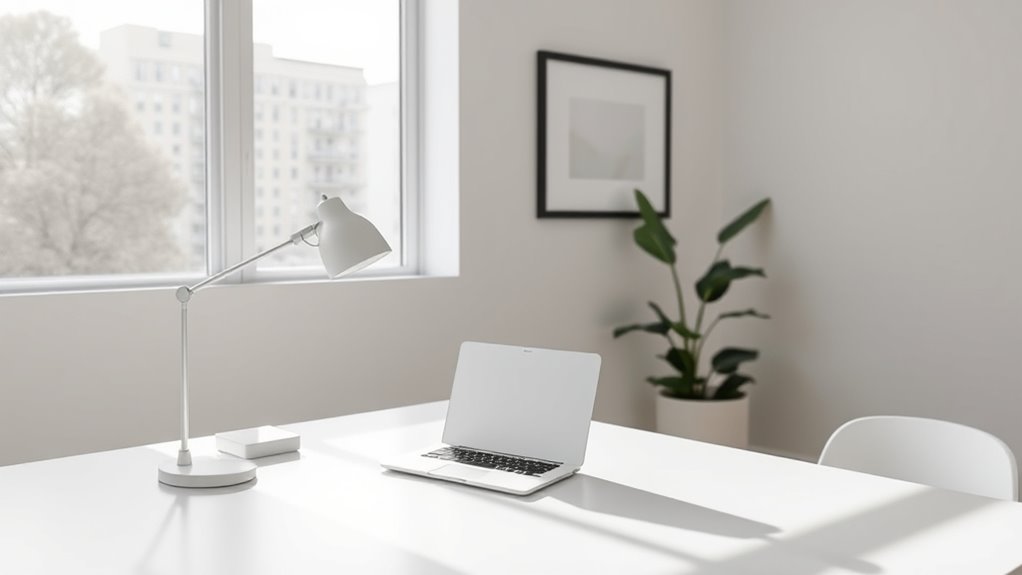
A minimalist office can boost productivity and foster a calm work environment, but it’s easy to make mistakes that undermine these benefits. One common pitfall is sacrificing function for form, which might seem appealing initially but can hinder your efficiency in the long run. When designing a minimalist space, it’s tempting to focus solely on sleek, visually appealing elements, but neglecting practical needs can lead to frustration and reduced productivity. For example, choosing furniture or accessories that look good but aren’t ergonomic can cause discomfort, fatigue, and even long-term health issues. To avoid this, invest in ergonomic accessories—like supportive chairs, adjustable desks, and wrist supports—making certain that your workspace promotes good posture and comfort. These accessories might not be as minimal in appearance as you’d like, but their functionality is vital for maintaining focus and preventing strain during extended work hours. Additionally, integrating innovative European cloud servers can optimize your workflow by ensuring your digital infrastructure is both secure and energy-efficient, supporting a seamless and sustainable working environment.
Prioritize ergonomic accessories to enhance comfort and productivity in your minimalist office.
Another critical aspect to take into account is your color palette choices. A minimalist office often emphasizes neutral tones or monochromatic schemes, which can create a serene environment. However, overly dull or monochrome settings can become monotonous and emotionally draining. Striking the right balance with your color palette is key; incorporate subtle pops of color through accessories, wall art, or organizational tools to add vibrancy without cluttering the space. These small touches can energize your environment and keep your mind engaged, all while maintaining the minimalist aesthetic. Remember, simplicity isn’t about stripping your space of personality—it’s about creating a cohesive, functional environment that supports your work habits.
Avoid clutter at all costs. Minimalism isn’t just about empty space; it’s about intentionality. Every item in your office should serve a purpose, whether it’s a sleek desk organizer or a minimalist lamp. If you add unnecessary decorative objects or keep outdated supplies, you risk creating visual chaos that distracts you and hampers focus. Regularly declutter and reassess your setup to make sure everything aligns with your workflow and aesthetic goals. Keep surfaces clear and store items out of sight unless they’re essential for daily tasks, which helps reinforce a sense of calm and clarity.
Finally, don’t underestimate the importance of lighting in a minimalist office. Natural light is ideal, but supplement it with simple, unobtrusive fixtures that provide adequate illumination without overwhelming the space. Proper lighting enhances the minimalist design, highlights your carefully chosen color palette, and ensures ergonomic accessories work effectively by reducing eye strain. When you pay attention to these details—ergonomic accessories, thoughtful color choices, decluttering, and lighting—you’ll create a minimalist office that’s both beautiful and highly functional, allowing you to work efficiently without sacrificing comfort or style.
Frequently Asked Questions
How Can I Balance Aesthetics and Practicality in My Minimalist Office?
To balance aesthetics and practicality, choose a cohesive color scheme that promotes focus and calm. Keep decorative accessories minimal but meaningful, like a sleek plant or artwork, to add personality without clutter. Prioritize functional furniture that fits your space and workflow. Regularly declutter to maintain a clean look, ensuring your office remains both beautiful and efficient. This approach helps you create a stylish yet practical minimalist workspace.
What Are Common Overlooked Ergonomic Issues in Minimalist Setups?
You might overlook ergonomic hazards like improper monitor height or unsupported wrists, leading to overlooked posture issues. These hazards can cause discomfort or long-term health problems if ignored. Make sure your chair supports your back, your feet are flat on the floor, and the monitor is eye level. Regularly check your posture and adjust your setup to prevent overlooked ergonomic issues, ensuring your minimalist space remains both functional and healthy.
How Often Should I Declutter My Minimalist Office Space?
You should declutter your minimalist office space at least once every three to six months. Regularly review your storage solutions and remove items that no longer serve a purpose. Don’t let decorative accents accumulate and create visual clutter. Staying consistent keeps your space functional and inspiring. If you notice things piling up or your workspace feeling chaotic, it’s time to declutter. Keeping a tidy, balanced environment boosts productivity and peace of mind.
Can Minimalist Offices Improve Productivity and Focus?
Minimalist offices can boost your productivity and focus by applying effective design principles and choosing calming color schemes. When your space is streamlined and free of clutter, you’ll find it easier to concentrate. Incorporate simple, functional furniture and neutral or soothing colors to create a serene environment. This intentional approach minimizes distractions, helping you stay focused and efficient throughout your workday, ultimately enhancing your overall performance.
What Budget-Friendly Tips Exist for Maintaining a Minimalist Workspace?
Think of your workspace as a garden—you want it neat and thriving without overspending. Use budget decor like simple art prints or plants to add personality. Embrace DIY organization by repurposing jars, boxes, or trays to keep clutter at bay. Prioritize quality over quantity, and keep only essentials visible. With a little creativity, you’ll craft a minimalist haven that boosts focus without breaking the bank.
Conclusion
Think of your minimalist office like a sleek sailboat. If you overload it with unnecessary gear, it’ll sink or lose its speed. Keep only what truly serves you, allowing your space to glide smoothly through your workday. Remember, simplicity isn’t about stripping everything away but finding the perfect balance. By avoiding common mistakes, you create a vessel that’s both beautiful and functional—ready to navigate any challenge with ease and grace.
Halloween Picks
halloween
As an affiliate, we earn on qualifying purchases.