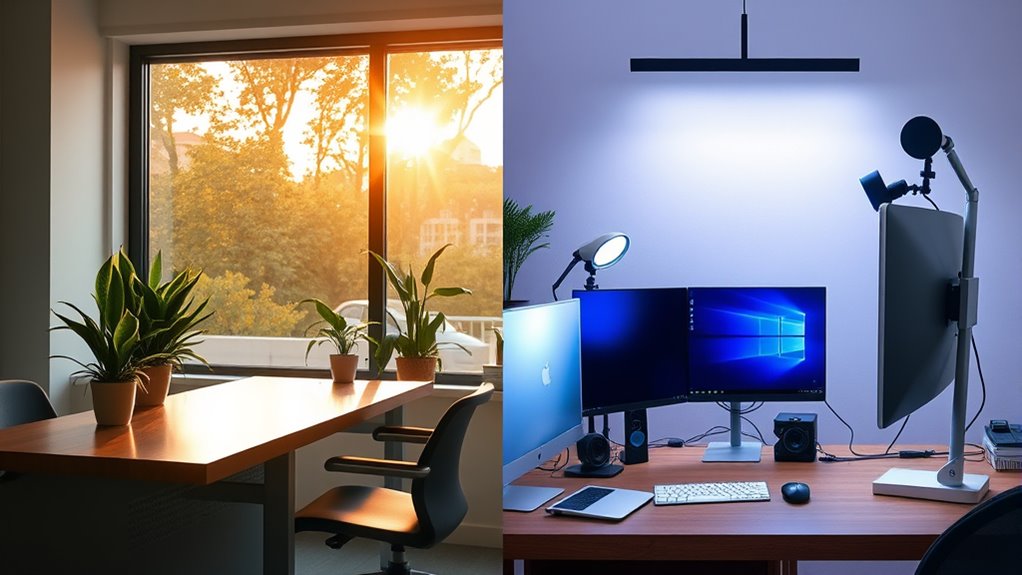

Balancing natural and artificial light in your workspace boosts comfort, productivity, and energy efficiency. Make the most of natural light when available to reduce energy use and enhance mood, especially during the day. Use adjustable artificial lighting, like LED lamps, to maintain consistent brightness and focus when natural light isn’t enough. Combining both sources thoughtfully creates an adaptable environment that supports your health and saves energy. Keep exploring to discover how to optimize your lighting setup even further.

Get your wardrobe favorites delivered free with Prime
- Fast, free delivery on millions of items
- Prime Video, Amazon Music and more included
- Member-only deals all year
Key Takeaways
- Balance natural and artificial light to maximize energy efficiency and maintain consistent, comfortable workspace illumination.
- Utilize natural light during peak daylight hours to reduce reliance on artificial lighting and enhance mood.
- Choose adjustable artificial lighting with appropriate color temperature for flexibility and optimal focus when natural light is limited.
- Consider window placement, weather, and time of day to optimize natural light intake and minimize glare or shadows.
- Incorporate energy-efficient LEDs to complement natural light, supporting sustainability and reducing operational costs.
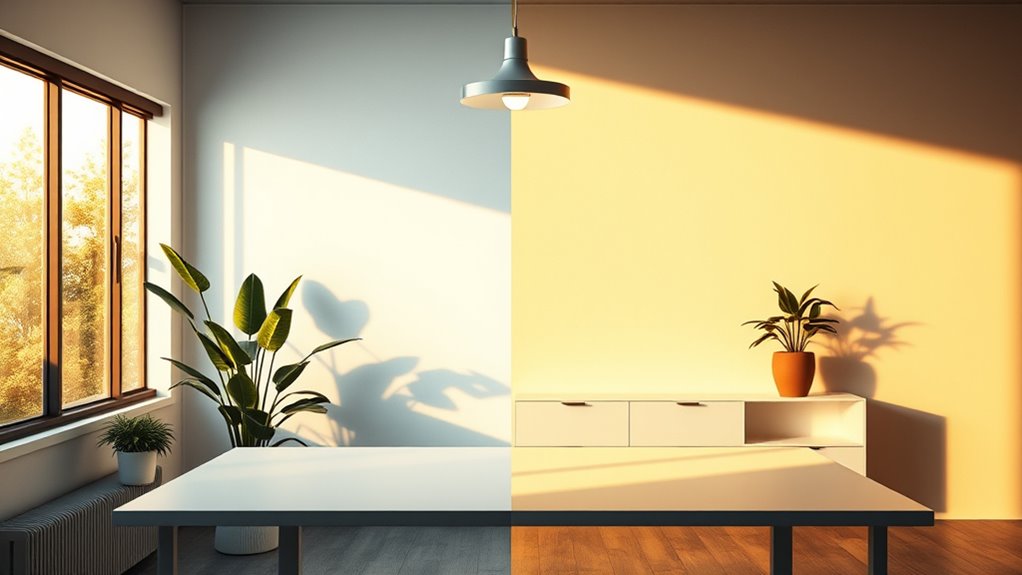
Have you ever wondered whether natural light or artificial light is better for your space? It’s a common question, especially when you’re trying to create an environment that’s both comfortable and productive. The choice isn’t always straightforward, but understanding the nuances can help you make the best decision for your workspace. When considering natural light, one of the biggest advantages is its dynamic quality, which changes throughout the day and can boost your mood and alertness. Natural light also offers a broad spectrum of wavelengths, providing a more accurate representation of colors and reducing eye strain. However, it’s important to deliberate factors like the position of windows, weather conditions, and time of day, which can influence how much light you get and whether it’s consistent enough for your needs.
On the other hand, artificial lighting provides controllability and consistency. You can set it to suit your preferred brightness level, regardless of the weather or time outside. This is particularly useful if your workspace is windowless or if natural light fluctuates too much. When choosing artificial lighting, pay attention to color temperature; warmer tones create a cozy atmosphere, while cooler tones help boost focus and energy. The right color temperature can make a significant difference in how you feel and perform during work hours. Additionally, modern LED lights are highly energy efficient, meaning you can enjoy bright, effective illumination without racking up high electricity bills. Energy efficiency is a key benefit of artificial lighting, especially if you’re concerned about reducing your carbon footprint or saving on costs over time.
Furthermore, understanding lighting quality can help you optimize your workspace for both health and productivity. Balancing natural and artificial light can give you the best of both worlds. For example, you might rely on natural light during the day when it’s abundant, then switch to energy-efficient LED lamps to maintain consistent lighting in the evening. This approach helps optimize your workspace, ensuring you’re not overly dependent on artificial light and that your environment remains comfortable and conducive to productivity. Remember, the goal is to create a lighting setup that supports your activities while being mindful of energy consumption and overall ambiance. By understanding the importance of color temperature and energy efficiency in artificial lighting, you can tailor your workspace to be both functional and sustainable. Ultimately, the most effective lighting solution is one that adapts to your needs, taking advantage of natural light when available and supplementing it with energy-efficient artificial sources when necessary.
As an affiliate, we earn on qualifying purchases.
Frequently Asked Questions
How Does Lighting Affect Long-Term Eye Health?
Lighting greatly impacts your long-term eye health by reducing glare and eye strain. Poor lighting, whether too harsh or dim, forces your eyes to work harder, increasing fatigue and risk of damage over time. By choosing proper lighting, you can minimize glare reduction and prevent eye strain, helping maintain healthy vision. Regularly adjusting your workspace lighting can protect your eyes and improve comfort during extended periods of work or screen time.
Can Specific Light Spectrums Improve Productivity?
Yes, specific light spectrums can boost your productivity. You should focus on color temperature and light wavelength; cooler temperatures (around 5000K-6500K) with blue light wavelengths enhance alertness and concentration. Using lighting that mimics natural daylight helps your brain stay active and focused, especially during long work sessions. Adjusting your workspace lighting to include these spectrums creates an environment that promotes focus, efficiency, and overall work performance.
What Are the Energy Costs of Natural Versus Artificial Lighting?
Think of natural light as a free sunrise, but it’s unpredictable and dependent on weather. Its energy consumption is negligible, making it highly cost-efficient long-term. Artificial lighting, like Edison’s bulbs, consumes electricity, increasing your energy costs. While it provides consistent illumination, it’s less cost-efficient over time. To optimize your workspace, combine natural light with energy-efficient artificial options to balance cost and productivity effectively.
How Do Seasonal Changes Impact Workspace Lighting Choices?
Seasonal daylight greatly influences your workspace lighting choices. During winter, you get less natural light, so you might need more artificial lighting or reposition your workspace closer to windows with good daylight exposure. In summer, longer daylight hours and strategic window positioning let you maximize natural light, reducing your reliance on artificial light. Adjust your window coverings and workspace layout seasonally to optimize light, energy use, and comfort throughout the year.
Are There Ergonomic Guidelines for Optimal Lighting Placement?
Yes, ergonomic guidelines recommend placing your lighting fixtures to minimize glare and shadows, ensuring comfortable workspace conditions. You should position lighting fixtures to provide even ambient light levels, avoiding harsh contrasts that strain your eyes. Keep fixtures at appropriate heights and angles, and avoid direct glare into your eyes. Proper lighting fixture placement helps reduce fatigue, enhances focus, and promotes overall ergonomic comfort during your workday.
As an affiliate, we earn on qualifying purchases.
Conclusion
So, whether you bask in the glorious glow of natural sunlight or rely on the oh-so-exciting flicker of artificial bulbs, remember it’s all about your productivity (and avoiding that midnight snack-induced eye strain). Embrace your inner lighting connoisseur and pick what makes you look like you’ve got your life together. After all, who needs perfect lighting when you’ve got coffee, right? Now go shine—or don’t—your call.
As an affiliate, we earn on qualifying purchases.
energy-efficient workspace lighting
As an affiliate, we earn on qualifying purchases.
As an affiliate, we earn on qualifying purchases.
Columbus Day / Indigenous Peoples' Day Picks
long weekend sales
As an affiliate, we earn on qualifying purchases.