

The one-in, one-out rule is a simple way to keep your office clutter-free by ensuring that every new item you bring in is balanced out by removing an existing one. This approach prevents accumulation and encourages regular organization, making your workspace more efficient and less stressful. By maintaining this habit, you’ll create a cleaner, more productive environment. Keep exploring — you’ll discover practical tips to make this system work best for you.
Key Takeaways
- The rule ensures each new item added prompts the removal of an existing one, preventing accumulation of clutter.
- It encourages regular workspace evaluation, promoting a minimalist and organized environment.
- Implementing this rule enhances digital and physical storage efficiency, reducing stress and improving productivity.
- Consistent enforcement fosters discipline, making clutter management a habitual part of workspace maintenance.
- Clear guidelines and team involvement sustain long-term orderliness and prevent workspace clutter from recurring.

Logitech G413 SE Full-Size Mechanical Gaming Keyboard - Backlit Keyboard with Tactile Mechanical Switches, Anti-Ghosting, Compatible with Windows, macOS - Black Aluminum
Take your gaming skills to the next level: The Logitech G413 SE is a full-size keyboard with gaming-first...
As an affiliate, we earn on qualifying purchases.
Understanding the Concept Behind the Rule

The One-In, One-Out rule is designed to simplify and streamline regulatory processes by ensuring that for every new rule or regulation introduced, an existing one is removed. Applied to office organization, this rule promotes better inventory management by preventing clutter and excess supplies. When you add a new item or tool to your workspace, you’re expected to remove an equivalent or unnecessary item, keeping your space manageable. This practice also aligns with principles of effective home maintenance, which emphasize regular assessment and elimination of unnecessary items to improve overall comfort and efficiency. Incorporating sustainable organization practices encourages ongoing evaluation of your workspace, ensuring it remains functional and clutter-free over time. This approach also enhances workspace ergonomics, as it encourages you to evaluate what you truly need and eliminate distractions. By maintaining a balanced environment, you create a more efficient workspace and comfortable workspace. The core idea is to stop accumulating unnecessary items, which can hinder productivity and increase stress. Regularly assessing and decluttering your workspace supports sustainable organization and helps maintain a clear, focused environment. Additionally, adopting a minimalist mindset can further reinforce these habits, promoting long-term orderliness and peace of mind.

Logitech Z207 2.0 Stereo Computer Speakers with Bluetooth
Versatile setup with speakers that connect easily to computers and other devices via Bluetooth wireless or 3.5mm cable
As an affiliate, we earn on qualifying purchases.
Benefits of Implementing the One-In, One-Out System

Have you ever felt overwhelmed by clutter or struggled to find what you need at work? Implementing the one-in, one-out system offers clear benefits. It keeps your workspace tidy, reducing stress and saving time. This approach encourages digital organization, making files easier to locate and manage. By limiting physical clutter, you create an environment conducive to ergonomic design, which boosts comfort and productivity. Additionally, applying principles from storage in a cool, dark place can help maintain the longevity of physical items and supplies. Being mindful of well-being tips can also help you adapt your workspace and workflow in an increasingly digital environment. Incorporating regular eye patch benefits into your routine can help reduce eye strain caused by prolonged screen time, further enhancing your overall work comfort. Moreover, selecting the right tea kettle material can improve your daily routine by ensuring optimal brewing temperatures and safety.

Creative Pebble 2.0 USB-Powered Desktop Speakers with Far-Field Drivers and Passive Radiators for Pcs and Laptops (Black)
Single USB cable for computers and laptops | enjoy a hassle-free Audio experience with a single USB cable...
As an affiliate, we earn on qualifying purchases.
Steps to Start Applying the Rule in Your Workspace

To start applying the one-in, one-out rule, you need to evaluate your current clutter levels and identify areas that need organization. Next, set clear rules so everyone understands how to maintain the system consistently. Incorporating practical, room-by-room solutions can help streamline this process and ensure long-term success. Implementing dedicated spaces for specific items can further help reduce unnecessary clutter and make it easier to maintain order. Regularly monitoring website performance metrics can provide insights into how well your organization strategies are working and where adjustments may be needed. Additionally, understanding market volatility and how it impacts your assets can help you make informed decisions about your investments and keep your workspace aligned with your financial goals. Finally, enforce these rules regularly to guarantee your workspace stays tidy and efficient.
Assess Current Clutter Levels
Before you start applying the One-In, One-Out rule, it’s essential to evaluate your current clutter levels. Take a close look at your workspace to identify areas overflowing with papers, supplies, or miscellaneous items. This assessment helps you understand what’s unnecessary and what needs better organization. Use effective organizational strategies and explore storage solutions that fit your space and needs. Consider how often you use certain items and whether they’re worth keeping. Recognizing patterns of clutter can guide you in making smarter decisions. Additionally, understanding special occasions can help you select appropriate storage and display options for related equipment and accessories. Incorporating digital literacy into your organization can also streamline your workspace by reducing paper clutter through digital documents and tools. Being aware of annuity features can also assist in selecting appropriate storage and display options for related equipment and accessories.
Set Clear Rules
Establishing clear rules is essential for successfully implementing the One-In, One-Out system in your workspace. To build effective organizational habits, define specific guidelines that everyone understands. This clarity helps reduce clutter psychology, where confusion fuels disorganization. Use the table below to set your rules:
| Rule | Explanation |
|---|---|
| Limit new items | Only add items if you remove an existing one |
| Regular decluttering | Schedule consistent times to reassess and remove clutter |
| Designated spaces | Assign specific spots for items to stay organized |
| Accountability measures | Track adherence to the rules to maintain discipline |
Incorporating plant Sanctuary principles, such as maintaining a clutter-free environment, can also promote a more calming and productive workspace. Creating a distraction-free zone by removing unnecessary items makes it easier to focus and stay organized. Additionally, understanding the importance of fraud detection techniques can help in establishing robust security protocols to prevent issues like theft or data breaches. Setting clear boundaries around work and personal spaces can help sustain these organizational habits. Implementing consistent routines can further reinforce these rules and make clutter control a habitual part of your day. Clear rules create a framework that makes clutter easier to manage and sustain.
Enforce Consistently
Enforcing the One-In, One-Out rule consistently is essential for maintaining organization over time. It ensures your workspace stays clutter-free and helps reinforce good habits. To do this effectively, use reliable storage solutions that make it easy to put away items immediately. Apply organizational techniques like designated bins or folders to categorize belongings. Stay vigilant by regularly reviewing what enters and exits your space. Set reminders or cues to reinforce the habit daily. Remember, consistency builds discipline and prevents clutter from sneaking back in.
- Use visual cues to remind yourself of the rule
- Incorporate storage solutions that suit your workflow
- Schedule weekly decluttering sessions
- Keep organizational techniques simple and accessible
- Hold yourself accountable with checklists or progress trackers

Computer Speakers for Desktop PC Monitor, USB Plug-in, Wired, Computer Soundbar for PC, Laptop Speakers with Adaptive-Channel-Switching, Loud Sound, Deep Bass, USB C Adapter, Easy to Clip on Monitor
[COMPATIBLE WITH USB DEVICES] - Our USB Speakers are compatible with Windows, macOS, ChromeOS, and Linux, making them...
As an affiliate, we earn on qualifying purchases.
Common Challenges and How to Overcome Them

Implementing the One-In, One-Out rule can be challenging because it often meets resistance from team members who fear losing valuable resources or adding extra workload. To address this, focus on improving desk organization and boosting employee engagement. Clearly communicate that the goal is to streamline workspaces, making tasks easier and reducing clutter. Use the following table to identify common issues and solutions:
| Challenge | Solution |
|---|---|
| Resistance to change | Highlight benefits and involve staff in decision-making |
| Fear of losing resources | Ensure proper resource management and transparency |
| Maintaining consistency | Regular reminders and leadership support |
Tools and Supplies to Support Your Decluttering Efforts
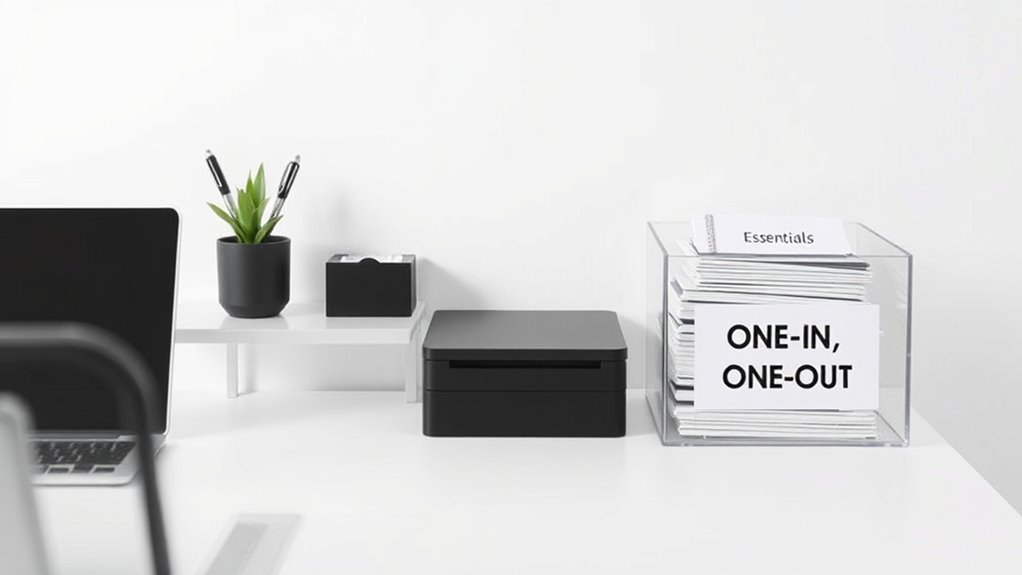
Having the right tools can make your decluttering process much easier. Storage containers, labeling supplies, and cleaning essentials help you stay organized and maintain your space. Investing in these supplies guarantees your efforts are effective and sustainable.
Storage Containers and Bins
Are you ready to make your decluttering efforts more effective? Storage containers and bins are essential tools to keep your office organized and clutter-free. Use clear, stackable bins for quick visibility of items, especially for digital filing accessories or ergonomic accessories. Incorporate labeled boxes for different categories—papers, supplies, or tech gear—to streamline retrieval. Consider small containers for loose items like chargers or pens, reducing mess. Make sure your storage solutions fit your space and work habits, promoting efficiency. Proper containers help enforce your one-in, one-out rule, preventing accumulation. They also protect delicate items and make moving or cleaning easier. With smart storage, you’ll create a tidy environment that encourages productivity and minimizes stress.
Labeling and Organization Tools
Effective labeling and organization tools are essential for maintaining a tidy workspace and ensuring quick access to your items. Using clear labeling systems helps distinguish categories and keeps everything in its place. Organizational tools like file dividers, drawer inserts, and stackable trays streamline your space, making it easier to find what you need. Consider this setup:
| Label Type | Tool Example | Purpose |
|---|---|---|
| Standard Labels | Printable adhesive labels | Identify files and bins |
| Categorization | Color-coded labels | Differentiate priority levels |
| Storage Labels | Transparent label tape | Mark containers clearly |
| Digital Labels | Barcode tags | Track inventory efficiently |
These tools create a visual system that minimizes clutter and saves time, making your decluttering efforts more effective.
Cleaning and Maintenance Supplies
To keep your space truly organized, you need the right cleaning and maintenance supplies at hand. Eco-friendly cleaning products reduce chemical clutter and promote healthier environments. Opt for tools that support storage optimization, making it easier to keep supplies tucked away yet accessible. Having versatile items ensures you can tackle different surfaces efficiently. Regular maintenance tools help prevent buildup of clutter and dirt, supporting your one-in, one-out rule. Consider investing in compact, multi-purpose supplies to save space and reduce waste. Using eco-friendly cleaning options not only benefits the environment but also encourages sustainable habits. Proper storage keeps supplies organized, minimizes clutter, and makes cleaning quicker and more effective.
- Reusable microfiber cloths
- Eco-friendly all-purpose cleaner
- Compact spray bottles
- Multi-use scrub brushes
- Stackable storage containers
Maintaining Consistency and Staying Motivated

Maintaining consistency and staying motivated can be challenging, especially when progress feels slow or obstacles arise. To keep moving forward, implement motivational strategies like rewarding small wins and tracking your progress. Focus on habit formation by setting clear routines that become automatic over time. Break tasks into manageable steps to avoid overwhelm and celebrate each achievement to boost your enthusiasm. Use the following table to reinforce your efforts:
| Tip | Example |
|---|---|
| Set daily goals | Clear, achievable tasks each morning |
| Track progress | Keep a journal of completed decluttering tasks |
| Reward yourself | Treat yourself after reaching milestones |
| Find accountability | Share goals with a friend or colleague |
| Stay flexible | Adjust routines when needed to stay on track |
Creative Ways to Maximize Space With Minimal Items

When you focus on consistent habits and motivation, it becomes easier to keep your space organized over time. To maximize space with minimal items, prioritize multifunctional tools and smart storage solutions. Keep digital organization tight; declutter your files regularly to free physical space. Opt for ergonomic workspace designs that use vertical storage and compact furniture, making the most of limited areas. Use wall-mounted shelves or magnetic boards to hold essential items without cluttering your desk. Choose sleek, minimalistic accessories that serve multiple purposes. Regularly evaluate your items, removing what’s unnecessary. This approach not only saves space but also streamlines your workflow, making your office more efficient and comfortable.
- Emphasize multi-use items for versatility
- Utilize vertical storage options
- Keep digital clutter in check
- Invest in space-saving furniture
- Regularly review and declutter
Real-Life Examples of Successful Clutter Control

Real-life examples show how effective clutter control can transform a space. In office organization, implementing the one-in, one-out rule has made a significant difference. For instance, one professional set a weekly reminder to donate or discard one item whenever they brought in a new one. This simple clutter management strategy kept their desk tidy and improved productivity. Another example involves a small business owner who created a dedicated space for incoming supplies and only kept essential items. By consistently applying the rule, they reduced clutter and made their workspace more efficient. These success stories demonstrate that disciplined clutter management doesn’t require complex systems—just a commitment to maintaining balance. Your office can experience similar improvements by adopting these practical, easy-to-follow examples of clutter control.
Tips for Extending the Rule Beyond Your Desk

To effectively extend the one-in, one-out rule beyond your desk, start by applying it to other areas of your home or workspace where clutter tends to accumulate. This approach encourages better office supply management and fosters employee participation in maintaining order. In shared spaces, set clear guidelines for handling incoming items and removing outdated or unused supplies. Encourage team members to be mindful of clutter and to contribute to a clutter-free environment. Create designated zones for storage and review items regularly to prevent accumulation. When everyone understands the rule’s importance, it becomes a collective effort that sustains organization.
- Foster a team mindset for managing supplies
- Regularly review shared storage spaces
- Encourage accountability for clutter
- Limit unnecessary items entering the workspace
- Promote ongoing participation for lasting results
Frequently Asked Questions
Can the Rule Be Adapted for Digital Clutter Management?
Yes, you can adapt the rule for digital clutter management. When you add a new file or app, delete or archive an older one to keep your digital organization streamlined. This helps prevent virtual clutter from piling up and makes finding important documents easier. By consistently applying the one-in, one-out approach, you maintain a tidy digital workspace, reducing stress and boosting productivity.
How Long Does It Typically Take to See Results?
You’ll notice a productivity boost within just a few days of implementing the One-In, One-Out rule. Most people see visible results in about two weeks, as clutter decreases and organization improves. Consistent application is key, and these organization tips help reinforce good habits. Keep at it, and you’ll find your workspace becomes more efficient, making it easier to focus and complete tasks effectively.
Is the Rule Effective in Shared Office Spaces?
Yes, the one-in, one-out rule works well in shared office spaces for office organization and clutter reduction. When everyone follows this rule, it prevents accumulation of unnecessary items, making the environment more efficient and tidy. You’ll notice a cleaner workspace and less clutter over time. Encourage team members to participate, and you’ll see a positive impact on overall office organization and productivity.
What if I Need to Keep More Items at My Desk?
Imagine your desk as a garden; sometimes, you need more space to nurture your plants. If you must keep more items, create designated personal storage areas, like garden sheds, to prevent clutter. This way, you balance your need for essential items while maintaining clutter prevention. Regularly reassess your supplies, ensuring only what’s necessary stays at your desk, keeping your workspace both functional and organized.
How Do I Handle Sentimental or Bulky Items?
When handling sentimental or bulky items, you should consider creative storage solutions that honor emotional attachment without cluttering your space. Use labeled boxes or decorative bins to keep these items organized and easily accessible. Remember, it’s okay to let go of some things if they no longer serve a purpose. Prioritize items that hold the most meaning, and store bulky items in a dedicated area to keep your desk tidy and functional.
Conclusion
By applying the one-in, one-out rule, you can reduce clutter and create a more organized workspace. Did you know that a cluttered desk can cost you up to 20% more time in productivity? Staying consistent with this simple trick not only clears your space but also boosts focus. Keep motivated, embrace minimalism, and watch your office become a more efficient, stress-free zone. Your perfect workspace is just one item away!