
To create a minimalist workspace from scratch, start by evaluating your current setup and clearing clutter. Choose calming, neutral colors and select only essential furniture that’s functional and streamlined. Organize supplies with smart storage, add simple decor like plants, and set up a clean, ergonomic desk. Establish daily routines to maintain tidiness and personalize with inspiring items. Keep your space calm and functional, and you’ll discover how to transform it into a peaceful, focused environment.
Key Takeaways
- Clear your space by removing unnecessary items and decluttering to establish a clean foundation.
- Choose a neutral color palette and incorporate natural light to create a calm, cohesive aesthetic.
- Select essential, multifunctional furniture with simple, streamlined designs for functionality and minimalism.
- Organize supplies with labeled containers and wall-mounted storage to maintain order and reduce visual clutter.
- Develop daily routines for tidying and updating decor to sustain a serene, minimalist workspace environment.
Assess Your Current Workspace and Identify Clutter

Before you can create a minimalist workspace, you need to understand what currently occupies your space. Start by evaluating your desk ergonomics—notice how your setup affects comfort and productivity. Is your monitor at eye level? Are your chairs supportive enough? Next, identify clutter that distracts or hampers your workflow. Clear off unnecessary items, papers, and gadgets cluttering your surface. Also, pay attention to ambient noise—are there sources of constant background noise? If so, consider ways to reduce it, like adding soft furnishings or noise-canceling options. By appraising these aspects, you’ll gain a clear picture of what’s unnecessary and what can be optimized. Additionally, understanding color accuracy in projectors can motivate you to incorporate better visual organization and color schemes into your workspace, creating a more calming environment. This step lays the foundation for transforming your workspace into a clean, efficient environment that promotes focus and calm.
Define Your Minimalist Workspace Goals
Have you ever wondered what a truly effective minimalist workspace looks like for you? Setting clear goals helps you focus on what matters most, ensuring your space supports productivity and well-being. Think about your ideal workspace ergonomics—comfort, posture, and accessibility. Also, consider digital decluttering: reducing distractions and organizing files. To clarify your goals, reflect on these aspects:
| Physical Environment | Digital Environment |
|---|---|
| Comfortable chair | Organized folders |
| Adequate lighting | Fewer notifications |
| Clear desk | Minimal apps |
| Ergonomic setup | Simplified workflows |
Define your priorities based on these factors, shaping a workspace that’s functional and inspiring, aligned with your personal needs. Incorporating pressure relief through ergonomic design can significantly enhance comfort and support sustained focus. Additionally, understanding the importance of healthy boundaries can help maintain a clutter-free environment that fosters focus and peace. Recognizing the role of sound design in creating a distraction-free atmosphere can further optimize your workspace environment. Remember that ergonomic principles can help you create a sustainable and comfortable workspace that promotes long-term productivity. Moreover, practicing mindful organization can ensure your workspace remains efficient and clutter-free over time.
Choose a Neutral Color Palette for a Calm Environment
Choosing the right color palette plays a significant role in creating a calm and focused workspace. Neutral colors like soft whites, beiges, and gentle grays promote tranquility and reduce visual distractions. Understanding color psychology helps you select hues that foster productivity and relaxation. For example, cool tones can enhance concentration, while warm neutrals add coziness without overwhelming the senses. When applying paint, opt for smooth, even coverage to maintain a clean, minimalist look. Avoid bold or bright colors that can evoke energy or stress, instead favoring muted shades that create a serene environment. This thoughtful color selection sets the foundation for a workspace that encourages clarity and focus, making it easier to stay productive and calm throughout your workday. Incorporating color schemes aligned with your goals can further optimize your environment for concentration and peace. Additionally, integrating elements of mindful design can help sustain a balanced atmosphere conducive to sustained focus and well-being. Implementing AI security measures in your workspace can also protect sensitive data and enhance overall safety. Using natural light and incorporating subtle textures can also enhance the calming effect of your minimalist workspace, while considering the use of natural materials can further promote a connection to nature and tranquility.
Select Essential Furniture and Declutter Non-Essentials
Focus on choosing furniture that serves multiple purposes to save space and enhance functionality. Clear out anything that doesn’t support your work or add value to your environment. Keeping only essential pieces helps create a clean, focused workspace. Additionally, consider safety aspects such as stable furniture and proper storage to ensure a secure and efficient environment. Incorporating ergonomic design principles can also improve comfort and productivity during long work sessions. Being mindful of material quality can further extend the longevity and appearance of your workspace furniture. To maintain a calming atmosphere, select decor that aligns with a minimalist aesthetic and promotes focus. Understanding solar energy benefits can inspire eco-friendly choices in your workspace setup.
Prioritize Multi-Functional Pieces
Since space is limited in a minimalist workspace, selecting multi-functional furniture allows you to maximize utility without cluttering the area. Look for pieces that serve multiple purposes, such as a desk with built-in storage or a fold-away table. Multi functional furniture helps you create flexible layouts, enabling you to adapt your workspace for different tasks or preferences. By choosing versatile items, you reduce the need for extra furniture and keep your space clean and organized. Prioritize quality over quantity, ensuring each piece adds value and functionality. This approach keeps your workspace streamlined while maintaining the flexibility you need for productivity. Ultimately, multi-functional pieces make your minimalist setup efficient, adaptable, and clutter-free. Online resources are available to help you find the best furniture options for your needs.
Remove Non-Essential Items
To create a minimalist workspace, you need to remove non-essential items that clutter your environment. Start by sorting through your desk and shelving, keeping only what’s necessary for your daily tasks. Decorative accents and personal mementos can add personality, but limit them to a few meaningful pieces. Remove excess decor that doesn’t serve a purpose or distract you. Clear away any items that don’t contribute to your productivity or well-being. Decluttering helps create a clean, focused space where you can work efficiently. Store or donate items that no longer serve you, and resist the temptation to fill your workspace with unnecessary clutter. A streamlined environment fosters clarity and calm, making it easier to concentrate and stay organized. Incorporating essential furniture designed for simplicity can further enhance your workspace’s functionality and aesthetic, especially when choosing pieces that support minimalist principles. Additionally, selecting multi-functional furniture can help maximize your space while maintaining a clutter-free environment. Utilizing storage solutions that promote neatness can also contribute to a more organized and efficient workspace. Using quality materials in your furniture can ensure durability and a cohesive look in your minimalist setup.
Organize Your Supplies With Storage Solutions
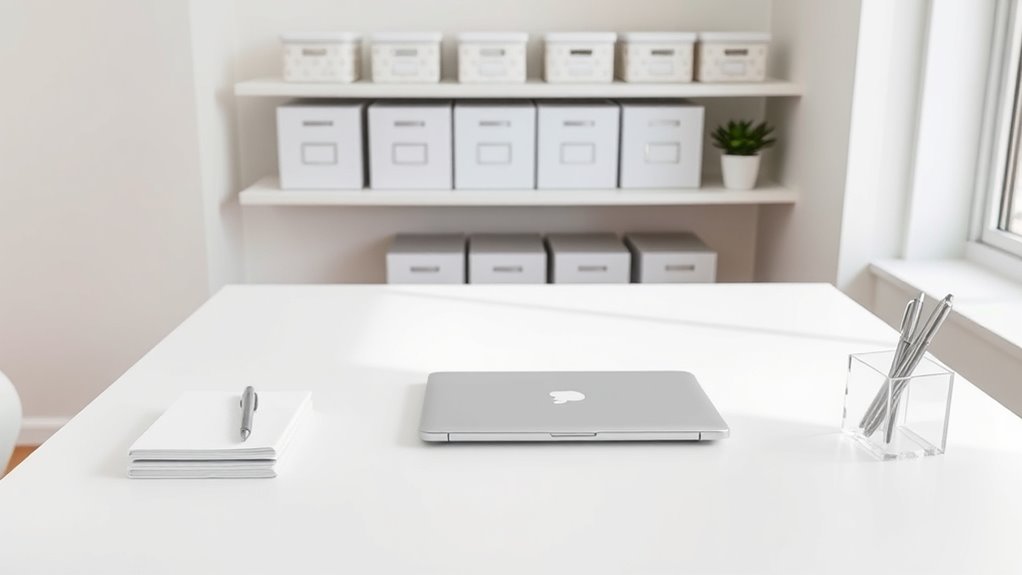
To keep your workspace tidy, choose smart storage options that fit your needs and space. Regularly declutter to prevent buildup and maintain a clean environment. These simple steps make it easier to stay organized and focused on your work. Incorporating well-sourced coverage of your supplies can help ensure you select the most effective storage solutions.
Choose Smart Storage Options
Choosing the right storage options is essential for maintaining a clutter-free workspace. Smart storage solutions help you maximize space while keeping essentials within reach. Opt for multi-functional furniture like desks with built-in drawers or shelves to reduce surface clutter. Use clear containers or labeled bins to organize supplies, making it easy to find what you need without creating chaos. Wall-mounted organizers are excellent for saving desk space and keeping frequently used items accessible. Avoid overstuffing drawers or shelves; instead, curate what you truly need daily. Effective clutter management involves choosing storage that complements your workflow, ensuring your workspace stays minimal and efficient. Remember, the goal is to create a clean, organized environment that fosters focus and productivity.
Declutter Regularly
Maintaining a clutter-free workspace requires more than just smart storage options; it’s about regularly evaluating and tidying your supplies to prevent buildup. Set aside time weekly to declutter and reassess your organization tips, ensuring everything has a designated place. This habit keeps your workspace streamlined and enhances ergonomic design by reducing unnecessary movement and distractions. When you declutter, remove items you no longer need or use, and reorganize essential supplies for quick access. Use storage solutions that fit your workflow, and avoid overcrowding surfaces. Regularly decluttering not only maintains a minimalist aesthetic but also boosts productivity and focus. By making this a routine, your workspace remains calm, efficient, and conducive to your best work.
Optimize Lighting for Focus and Comfort

Good lighting is essential for creating a workspace that boosts focus and reduces eye strain. To achieve this, maximize natural light by positioning your desk near windows, but avoid glare. Supplement with task lighting, like adjustable desk lamps, for focused activities. Consider these tips:
- Use daylight bulbs to mimic natural light during cloudy days
- Position your monitor to reduce screen glare
- Install dimmable lights for adjustable brightness
- Keep your workspace free of clutter that blocks light
- Use light-colored walls to reflect and amplify light
Balancing natural light with proper task lighting helps create a comfortable environment that keeps you alert and minimizes eye fatigue. Proper lighting setup makes your minimalist workspace a functional and pleasant place to work.
Incorporate Simple Decorations to Enhance Aesthetics
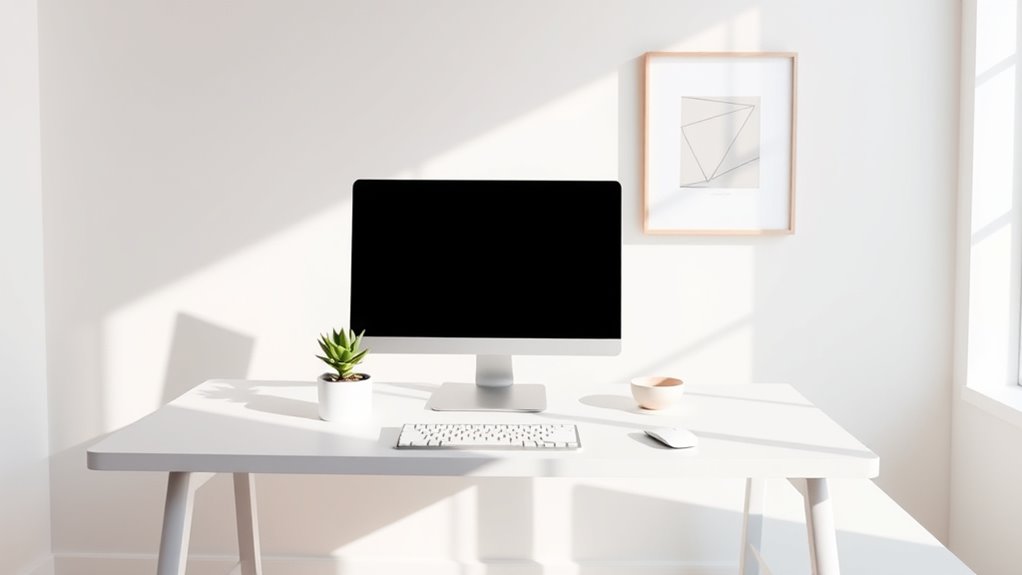
Adding simple decorations to your workspace can considerably boost its visual appeal without cluttering your minimalist setup. Start with a piece of simple wall art, like a clean-line print or a subtle photograph, to add personality without overwhelming the space. Incorporate plants and greenery to bring life and a touch of nature, which also helps improve air quality and reduce stress. Keep decorations minimal—avoid excess ornaments or busy patterns—and focus on quality over quantity. A single low-maintenance plant or a sleek framed quote can create a calming atmosphere while maintaining simplicity. Remember, the goal is to enhance the space’s aesthetics while preserving its uncluttered, functional vibe. With thoughtful, minimal decorations, your workspace becomes more inviting and inspiring without sacrificing its minimalist integrity.
Set Up a Clean and Functional Desk Area

Start by selecting minimalist desk furniture that keeps your workspace uncluttered and functional. Next, organize cables and accessories to prevent distractions and maintain a tidy surface. Finally, add calming elements like a small plant or soft lighting to create a peaceful environment that boosts focus.
Choose Minimalist Desk Furniture
Choosing minimalist desk furniture is essential for creating a clean and efficient workspace. Opt for pieces that combine function and simplicity, avoiding clutter. An ergonomic seating option ensures comfort during long hours, reducing strain. Adjustable desks let you customize your workspace height, promoting better posture. Keep surfaces free of unnecessary items to maintain a streamlined look. Consider the following:
- Sleek, clutter-free desk with clean lines
- Adjustable desk for versatile positioning
- Ergonomic chair supporting healthy posture
- Minimalist storage solutions to hide supplies
- Simple desk accessories that serve a purpose
Organize Cables and Accessories
A cluttered desk can quickly undermine your minimalist setup, making it feel chaotic rather than calm. To create a clean and functional workspace, focus on cable management by using clips, sleeves, or under-desk trays to keep cords out of sight. This reduces visual clutter and prevents tangles. Next, organize accessories like pens, notebooks, and tech gadgets with simple containers or drawer dividers, so everything has a designated spot. Limit the number of items on your desk to only what you regularly use, and store the rest elsewhere. Regularly review and tidy your accessories to maintain a streamlined appearance. Proper cable management and accessory organization help you achieve a tidy, efficient workspace that promotes focus and calm.
Incorporate Calming Elements
Creating a calming workspace begins with establishing a clean and organized environment that promotes focus and tranquility. To enhance this sense of calm, incorporate soothing textures and natural elements into your desk area. Use soft, tactile materials like felt or linen for your mouse pad or desk accessories. Add small potted plants or natural wood items to introduce freshness and a connection to nature. Keep clutter minimal to avoid visual chaos. Consider gentle lighting, such as warm-toned bulbs or a small candle, to create a cozy atmosphere. Here are some ideas:
- Incorporate textured, natural fabrics
- Place greenery or succulents
- Use wooden or stone desk accessories
- Opt for soft, warm lighting
- Keep surfaces clear and tidy
Establish Daily Maintenance Routines

Have you ever noticed how small daily habits can keep your workspace tidy and organized? Establishing a routine makes daily cleaning effortless and prevents clutter buildup. Start each day by reviewing your habit tracking chart to stay motivated. Dedicate a few minutes to clear surfaces, put away stray items, and organize your essentials. To visualize this, imagine:
| Day | Task | Time |
|---|---|---|
| Monday | Wipe desk surfaces | 2 min |
| Wednesday | Sort papers and mail | 3 min |
| Friday | Empty trash bin | 1 min |
Consistent daily cleaning minimizes mess and creates a workspace that inspires productivity. Tracking your habits guarantees these routines become second nature, keeping your space minimalist and inviting.
Personalize Your Space for Inspiration and Motivation
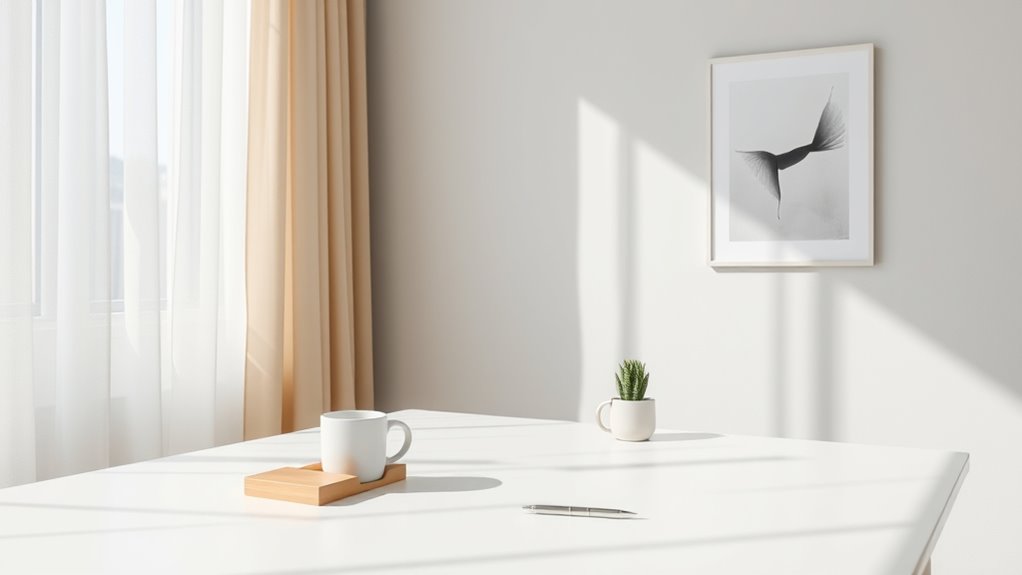
Personalizing your workspace transforms it from a generic area into a source of inspiration and motivation. Adding personalized decor and inspiring artwork creates a space that reflects your style and sparks creativity. Choose pieces that resonate with you, whether it’s a meaningful quote, a photo, or a small plant. Keep it simple; clutter can diminish your focus. Incorporate items that motivate you to stay productive, like a vision board or favorite book. Regularly refresh your inspiring artwork to keep your energy high. Remember, your workspace should feel welcoming and uniquely yours, fueling your passion for work and making the minimalist environment more enjoyable. Personal touches turn a basic setup into a space that encourages both calm and inspiration.
Frequently Asked Questions
How Do I Maintain Minimalism Long-Term?
Think of your minimalist workspace as a garden that needs regular weeding. To maintain it long-term, stay committed to simple decor organization and clear clutter consistently. Establish a routine maintenance schedule—weekly tidying helps prevent buildup. When you resist the urge to overdecorate or add unnecessary items, you’ll keep your space serene and functional. Small, consistent efforts make minimalism feel natural and sustainable, turning your workspace into a lasting haven of productivity.
What Budget Should I Allocate for Minimalist Workspace Setup?
You should allocate a budget of around $200 to $500 for your minimalist workspace setup. Focus on smart budget planning by choosing versatile furniture pieces that serve multiple purposes, like a desk with storage or a compact chair. Prioritize quality over quantity to guarantee longevity, and consider second-hand or budget-friendly stores. This approach keeps your setup simple, functional, and cost-effective, aligning with your minimalist goals.
Can a Small Space Be Effectively Minimalist?
Did you know 85% of people find small spaces more inspiring? Yes, a small space can be effectively minimalist with smart organizational tips. Focus on multifunctional furniture, declutter regularly, and use vertical storage to maximize space. Keep only essentials and opt for simple, clean designs. This approach makes your workspace feel open, calm, and productive, proving size doesn’t limit your ability to create a minimalist environment.
How Do I Handle Sentimental Items in a Minimalist Workspace?
To handle sentimental clutter in your minimalist workspace, prioritize keepsake organization by selecting only a few meaningful items that truly bring you joy. Store other sentimental items in a designated box or drawer, keeping them out of sight but accessible if needed. Regularly review and declutter to make certain your workspace remains functional and calming. Remember, quality over quantity helps maintain a clutter-free environment that fosters focus and productivity.
What Are Common Mistakes to Avoid When Creating a Minimalist Office?
You might think adding a few decorative items won’t hurt, but excessive decoration leads to clutter accumulation. Avoid this mistake by sticking to essential, functional pieces and keeping surfaces clear. Don’t let your workspace become a storage area for unnecessary items. Regularly declutter and prioritize quality over quantity. This ensures your office remains calm, organized, and truly minimalist, helping you focus and work efficiently without distractions.
Conclusion
Now that your minimalist workspace is taking shape, imagine the clarity you’ll feel each day. With every item in its place and a calm environment around you, productivity flows effortlessly. But this isn’t the end—your space will evolve as you do. Stay mindful and ready to adapt, because the true magic happens when your workspace reflects your growth and inspiration. Are you prepared to experience the transformative power of your simplified sanctuary?