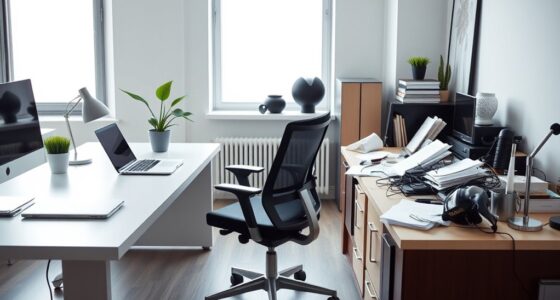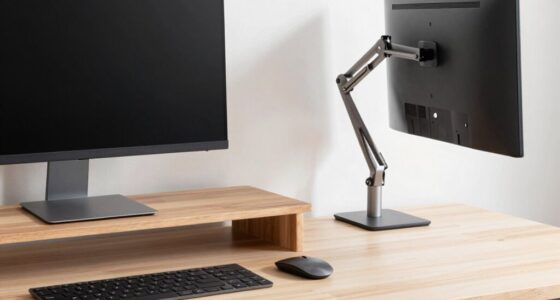

Your desk placement can profoundly impact your mood and output. Positioning your desk near windows boosts natural light, which enhances your mood and keeps you alert. An ergonomic setup reduces discomfort, helping you focus longer. Incorporating plants or natural materials adds to your mental clarity, while good lighting prevents eye strain and fatigue. Thoughtful placement creates a positive environment that supports motivation and productivity. Keep exploring to discover how to optimize your workspace for even better results.

Get your wardrobe favorites delivered free with Prime
- Fast, free delivery on millions of items
- Prime Video, Amazon Music and more included
- Member-only deals all year
Key Takeaways
- Placing the desk near windows with natural light boosts mood and increases alertness.
- Proper ergonomic positioning reduces physical discomfort, enhancing focus and overall productivity.
- Incorporating biophilic elements like plants improves mental well-being and motivation.
- Well-lit workspaces decrease eye strain, promoting mental clarity and sustained energy.
- Strategic desk placement supports better posture and circadian rhythm, positively impacting mood and output.
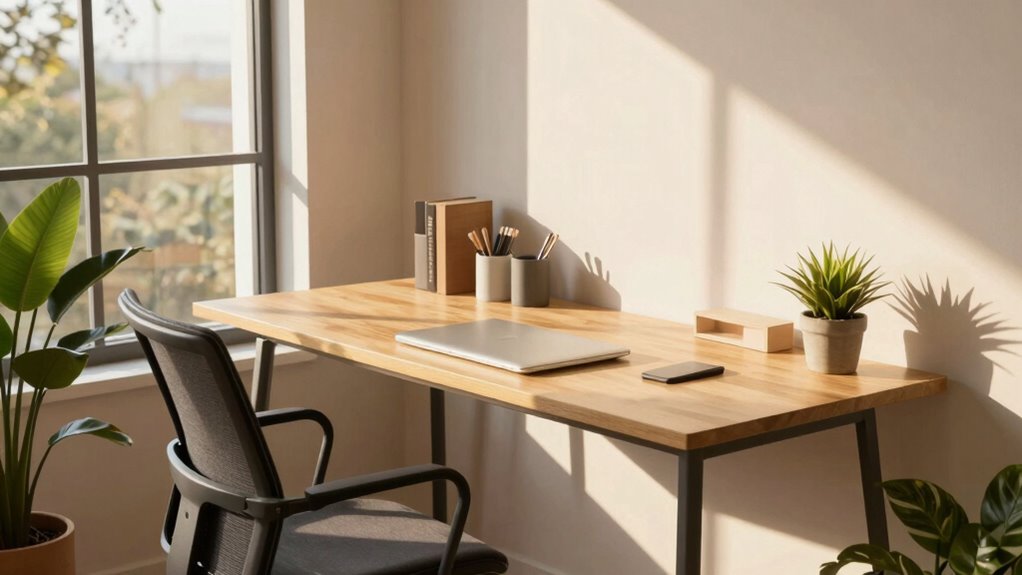
Where you place your desk can substantially influence your mood and productivity throughout the day. The way you position your workspace affects not only how motivated you feel but also how efficiently you get things done. One of the most effective ways to optimize your desk placement is to prioritize ergonomic positioning. When your desk is aligned with ergonomic principles, you reduce physical strain, which helps you stay focused longer and prevents discomfort that can drain your energy. Your monitor should be at eye level, your chair adjusted so your feet rest flat on the floor, and your wrists kept in a neutral position while typing. These small adjustments make a significant difference in your overall comfort, reducing fatigue and frustration that can negatively impact your mood.
Proper ergonomic setup boosts comfort, focus, and mood by reducing strain and preventing fatigue throughout your workday.
In addition to ergonomic positioning, natural light plays a crucial role in shaping your mental state. Placing your desk near a window allows sunlight to stream in, which can boost your mood and increase alertness. Natural light helps regulate your circadian rhythm, making you feel more awake during the day and improving your overall well-being. It also reduces the need for artificial lighting, which can sometimes cause eye strain or headaches if poorly managed. When you sit in a well-lit space, you’re likely to feel more energized and positive, which translates into better output. If natural light isn’t an option, consider investing in full-spectrum bulbs that mimic daylight to recreate similar benefits. Creating a well-lit workspace can significantly enhance your mental clarity and motivation. Additionally, incorporating biophilic design elements, such as plants or natural materials, can further boost your mood and connection to nature, fostering a more positive environment. Proper lighting conditions can also influence your circadian rhythm and overall mood, emphasizing the importance of thoughtful placement and lighting choices. Being mindful of light exposure throughout your workday can also help maintain your energy levels and prevent fatigue. Ensuring proper ergonomic positioning not only supports physical health but also contributes to a more positive mental state, making it easier to stay motivated and focused.
As an affiliate, we earn on qualifying purchases.
Frequently Asked Questions
Can Desk Placement Influence Creativity Levels?
Yes, your desk placement can influence creativity levels. When you position your desk near a window view, it exposes you to natural light and inspiring scenery, boosting your creative thinking. Additionally, maintaining good desk proximity to inspiring elements or collaborative spaces encourages idea flow and innovation. By optimizing your desk placement, you create an environment that fosters creativity, helping you generate fresh ideas and stay motivated throughout your workday.
Does Natural Light Impact Productivity More Than Desk Position?
Natural light impacts your productivity more than desk arrangement because it boosts your mood and reduces eye strain, keeping you energized. When your desk is positioned near windows, you get consistent natural light, which can improve focus and creativity. Think of it as hitting two birds with one stone—great workspace setup and better mental clarity. Prioritizing natural light can truly transform your workday, making you more efficient and happier.
How Does Desk Orientation Affect Communication With Colleagues?
Your desk orientation directly influences colleague interaction and office privacy. Facing a common area or open space encourages more spontaneous conversations, boosting collaboration. However, if you’re positioned to face away or have a partition, it enhances office privacy, reducing interruptions. This setup allows you to control your level of interaction, making it easier to focus when needed while still enabling quick communication with colleagues when necessary.
Can Desk Placement Reduce Work-Related Stress?
Like a gentle breeze calming stormy waters, thoughtful desk placement can reduce your work-related stress. When you position your desk to respect personal space and enhance environmental comfort, you create a sanctuary amid chaos. This mindful setup fosters a sense of control and tranquility, making it easier to focus and relax. By tailoring your workspace, you transform stress into productivity, turning your environment into a haven where you can thrive.
Is There an Optimal Desk Position for Energy Throughout the Day?
Position your desk facing natural light, ideally near a window, to boost energy and capitalize on ergonomic benefits. This setup minimizes visual distractions, helping you stay focused longer. Keep your screen at eye level and maintain good posture to prevent fatigue. By aligning your workspace this way, you’ll stay alert and productive throughout the day, enjoying sustained energy and a more positive mood.
As an affiliate, we earn on qualifying purchases.
Conclusion
So, don’t dismiss the power of desk placement—it really can boost your mood and productivity. Sure, rearranging might seem like a hassle, but the positive impact on your day makes it worth the effort. Even if you think your current setup works fine, a small tweak could bring surprising benefits. Give it a try; you might just find yourself feeling happier and more focused, all because of a simple change in your workspace.
As an affiliate, we earn on qualifying purchases.
As an affiliate, we earn on qualifying purchases.
Fall Picks
fall essentials
As an affiliate, we earn on qualifying purchases.