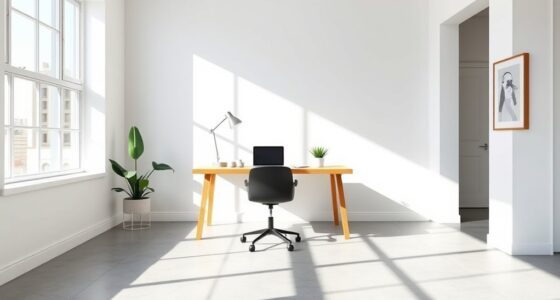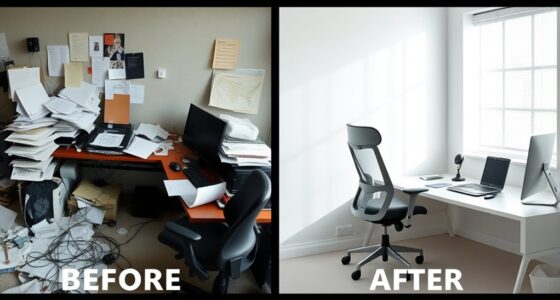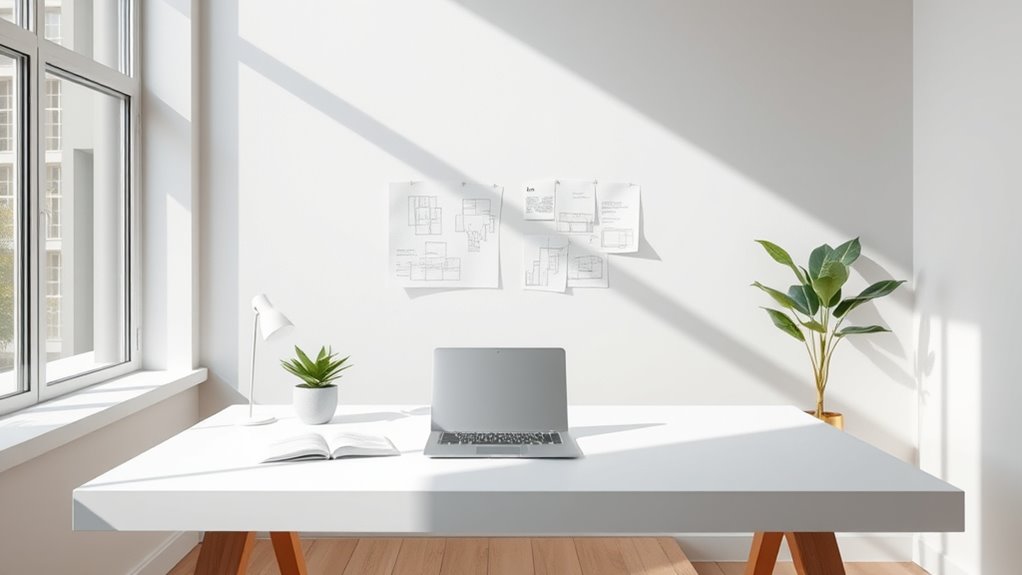

Inspiring minimalist workspaces in history, like architects’ studios, showcase the power of simple design paired with intentional material choices. These spaces prioritize clarity and focus by minimizing clutter, using natural materials like wood, concrete, and sleek metals. Carefully curated, they create environments that foster productivity and creativity. The clean lines and honest materials reflect deliberate philosophy and timeless functionality. Explore further to discover how these visionary spaces continue to influence modern minimalist environments.
Key Takeaways
- Architects’ studios often exemplify minimalist design through open layouts, clean lines, and carefully curated materials like concrete, wood, and glass.
- Historical examples highlight the use of honest, unadorned materials to create authentic and purposeful work environments.
- Many iconic studios emphasize simplicity and restraint, fostering focus and creativity with minimal clutter.
- Material combinations such as concrete and glass evoke modern, sleek aesthetics aligned with minimalism’s principles.
- These spaces demonstrate how deliberate design choices and material selections inspire productivity and timeless elegance.
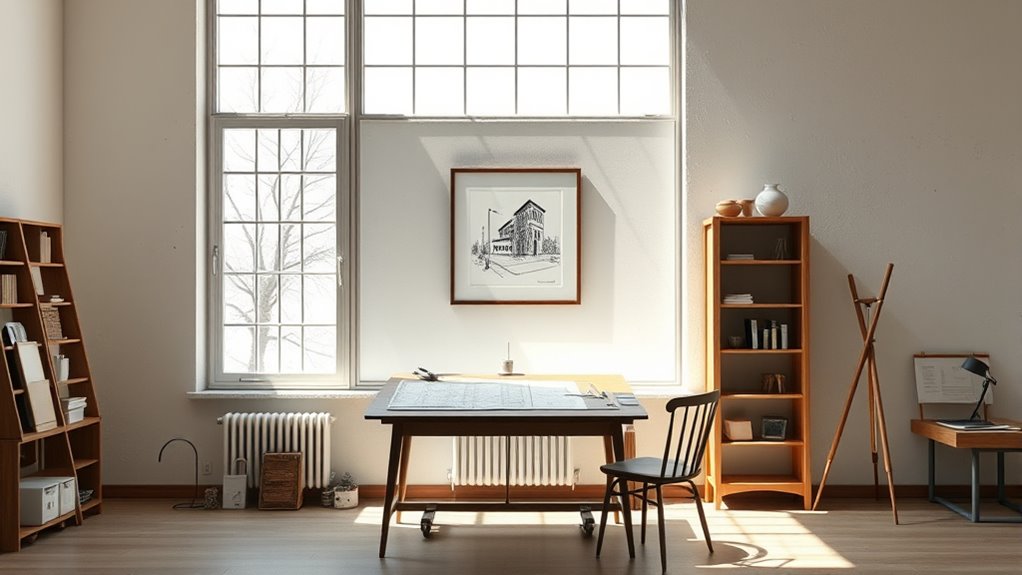
Throughout history, minimalist workspaces have evolved as a response to changing needs for efficiency and clarity. When you look at these spaces, what stands out is how they embody a clear design philosophy: less is more. This approach isn’t just about aesthetics; it’s about creating environments that foster focus and productivity by eliminating distractions. As you explore the origins of minimalist workspaces, you’ll notice that their success hinges on deliberate material choices, which play a pivotal role in shaping the overall feel and function of a space. The materials selected often emphasize simplicity and durability, such as polished wood, concrete, or sleek metal surfaces, which reflect the values of restraint and purpose.
Minimalist workspaces utilize simple, durable materials to foster focus and eliminate distractions.
In architect’s studios and creative spaces, the design philosophy often centers around clarity and intentionality. These spaces are carefully curated to support the work process, minimizing clutter and visual noise. You’ll find that the furniture and fixtures are chosen not only for their aesthetic appeal but also for their practicality. For example, a minimalist studio might feature a single, sturdy desk made of natural wood, paired with a streamlined chair that offers comfort without excess decoration. The emphasis is on clean lines and open space, allowing ideas to flow freely without interruption. The material choices here aren’t accidental; they’re selected to create a sense of calm and focus. Natural materials like wood and stone can add warmth and texture, balancing the starkness of minimalist design.
Throughout history, architects have pushed the boundaries of this philosophy, experimenting with different combinations of materials to evoke specific moods or functions. You’ll see how concrete walls paired with glass partitions can create a sleek, modern aesthetic that feels both open and contained. These choices emphasize function over form, but they also communicate a philosophy of honesty—materials are left exposed and unadorned, revealing their true nature. This transparency in material choices aligns perfectly with the minimalist ethos: authenticity and purpose drive every decision, resulting in workspaces that are not only visually striking but also supremely functional. Incorporating Free Floating elements can further enhance a sense of openness and flexibility within these environments.
As you consider these historic examples, you’ll realize that minimalist workspaces are more than just simple designs; they are carefully crafted environments rooted in a clear philosophy and deliberate material choices. They serve as timeless models for creating spaces that enhance productivity and clarity, proving that sometimes, stripping away the unnecessary can reveal the greatest potential. By understanding the core principles behind these spaces, you can appreciate how thoughtful design and material selection continue to influence modern minimalist work environments.
Frequently Asked Questions
How Have Minimalist Workspaces Influenced Modern Interior Design Trends?
Minimalist workspaces have profoundly shaped modern interior design by emphasizing a modern aesthetic rooted in functional simplicity. You’re encouraged to focus on clean lines, clutter-free spaces, and neutral palettes, which foster productivity and calm. This approach influences trends like open-plan layouts and multi-purpose furniture, making your workspace both stylish and efficient. By embracing minimalist principles, you create an environment that balances beauty and practicality seamlessly.
What Materials Were Commonly Used in Historic Minimalist Architectural Studios?
Imagine stepping into a historic minimalist studio, where material selection emphasized simplicity and function. You’d notice the use of natural materials like wood, stone, and brick, reflecting cultural influences and a desire for authenticity. Modernists often incorporated glass for transparency and light, while metal accents added subtle contrast. These choices created a serene, clutter-free environment, inspiring today’s sleek, minimal designs rooted in a rich tradition of thoughtful, intentional material use.
How Did Minimalist Workspaces Impact Architects’ Productivity and Creativity?
You’ll find that minimalist workspaces boost your productivity and spark creativity by promoting clean workspace organization, reducing distractions, and encouraging focus. With simple, uncluttered environments, you’re more likely to find creative inspiration and generate innovative ideas. The absence of excess allows your mind to breathe, helping you stay motivated and efficient. Ultimately, a minimalist workspace empowers you to work smarter, reveal your full potential through clarity and purposeful design.
Are There Specific Cultural or Regional Influences on Minimalist Workspace Designs?
Think of minimalist workspace designs as a mirror reflecting cultural symbolism and regional aesthetics. You’ll notice that in Japan, simplicity blends with Zen influences, creating serene environments. Scandinavian designs emphasize functionality and natural elements, embodying regional aesthetics. These cultural nuances shape how you perceive space, making your workspace not just minimal but also a reflection of cultural identity, influencing your mood, focus, and creativity in subtle yet profound ways.
What Challenges Did Architects Face When Designing Minimalist Studios Historically?
You might find that architects historically faced challenges like space constraints and material limitations when designing minimalist studios. These constraints pushed you to optimize every inch, ensuring functionality without clutter. Limited materials meant you had to be innovative, selecting versatile or sustainable options. Balancing simplicity and practicality required careful planning, making sure each element served a purpose while maintaining aesthetic clarity. Ultimately, these challenges shaped the clean, efficient designs you admire today.
Conclusion
As you envision these historic minimalist workspaces, picture sunlight spilling across uncluttered desks and clean lines guiding your focus. The quiet simplicity invites creativity, making every surface a blank canvas. In embracing this timeless approach, you can transform your own space into a sanctuary of clarity and inspiration, where ideas flow freely like a gentle breeze through open windows. Remember, sometimes less truly is more—letting space breathe release your full creative potential.