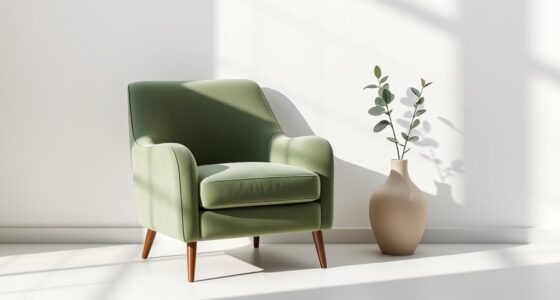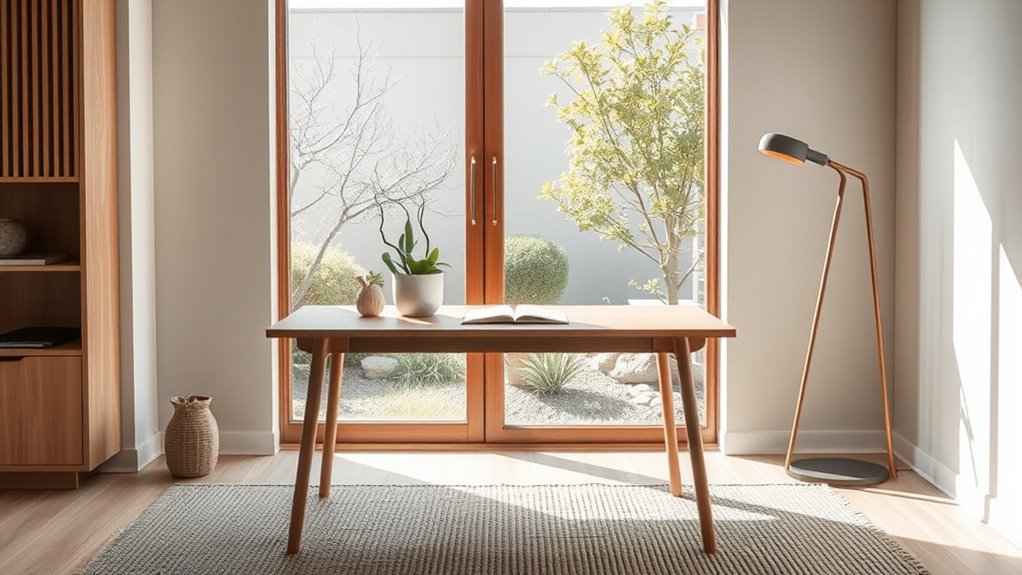

A japandi style workspace combines Japanese calm and Scandinavian minimalism to create a serene, clutter-free environment that boosts focus and mindfulness. Focus on natural materials like wood, linen, and stone, paired with muted neutrals such as beige and soft gray. Keep furniture simple and functional, with smart storage solutions, and incorporate plants or Japanese art for warmth. For a balanced, harmonious space that adapts to your needs, explore how these principles come together in detail.
Key Takeaways
- Combines Japanese serenity and Scandinavian minimalism through natural materials, muted colors, and clean, functional furniture.
- Emphasizes clutter-free, organized spaces using smart storage solutions and minimalist decor.
- Incorporates eco-friendly materials like wood, linen, and bamboo to promote sustainability and tactile warmth.
- Utilizes natural light, neutral tones, and calming textures to foster focus, tranquility, and mindfulness.
- Designs with ergonomic furniture and flexible layouts that support health, productivity, and adaptability.
The Principles Behind Japandi Design
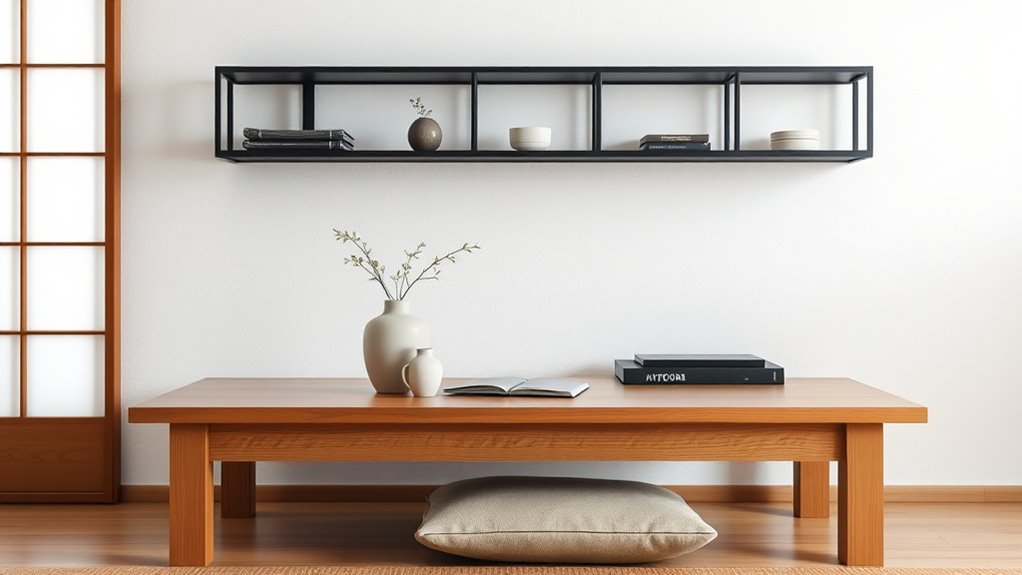
To understand Japandi design, you need to recognize its core principles, which blend the serenity and simplicity of Japanese aesthetics with the minimalism and functionality of Scandinavian style. Central to this approach are zen principles, emphasizing calm, balance, and mindfulness in your workspace. These principles encourage you to create an environment free of clutter, fostering focus and tranquility. Additionally, Japandi embraces a sustainability focus, prioritizing eco-friendly materials and sustainable practices. This not only aligns with nature but also promotes durability and timeless appeal. Incorporating sustainable materials and eco-conscious choices helps reinforce the environmentally responsible aspect of Japandi. By integrating zen principles and a sustainability focus, you craft a space that’s both peaceful and environmentally responsible. Incorporating mindful decluttering strategies can help maintain this harmony, ensuring your workspace stays organized and clutter-free. Moreover, understanding the Relationships – Personality Test can help you create a workspace that supports healthy interactions and personal growth within your environment. Incorporating color psychology can further enhance the mood and productivity of your space. Considering the subconscious power during sleep can also influence how you design your environment to promote relaxation and positive energy. The result is a harmonious setting that supports your well-being and aligns with modern values of simplicity and ecological consciousness.
Key Elements to Incorporate in Your Workspace
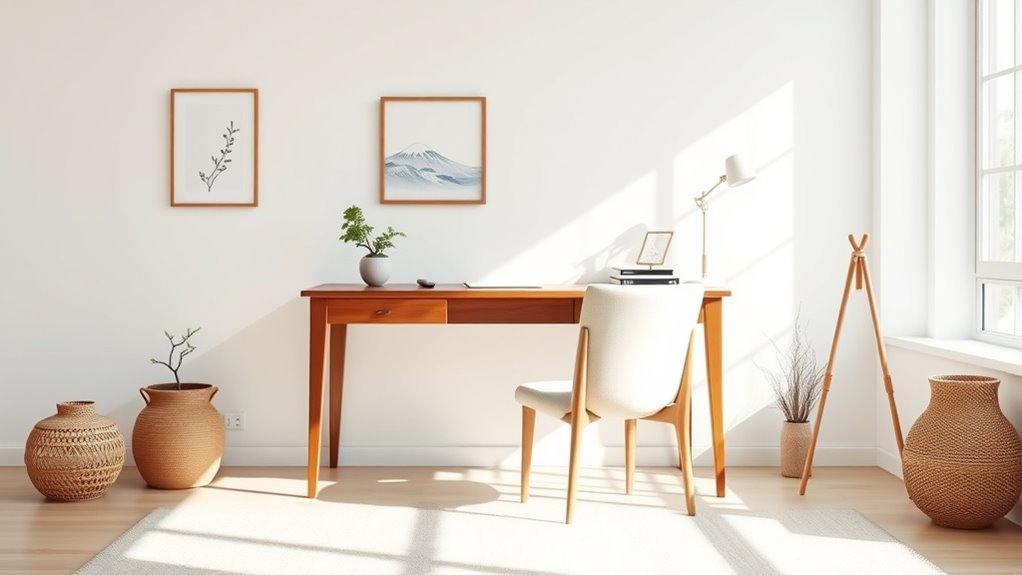
Creating a Japandi-inspired workspace involves thoughtfully selecting key elements that embody simplicity, functionality, and tranquility. Focus on ergonomic furniture, which supports your posture while maintaining clean lines and minimal ornamentation. Choose pieces that blend natural materials with Scandinavian craftsmanship, ensuring comfort without clutter. Incorporate smart storage solutions to keep your space organized and free of visual noise. Use sleek, built-in shelves or hidden compartments to maintain a tidy environment. Keep surfaces clear, emphasizing open space and uncluttered surfaces that promote calm and focus. Select minimalist accessories that add warmth and personality without overwhelming the senses. Incorporating sustainable fabrics like Suprem fabric can also contribute to an eco-friendly and durable environment. Paying attention to ergonomic design principles helps optimize comfort and productivity in your workspace. Additionally, selecting environmentally conscious materials supports sustainable living and enhances the overall harmony of your space. Incorporating natural light and gentle color palettes further amplifies the tranquil atmosphere of a Japandi style workspace. By combining ergonomic furniture with smart storage, you create a balanced workspace that inspires productivity and serenity in a true Japandi style.
Choosing the Right Materials and Colors

Selecting the right materials and colors is essential for achieving an authentic Japandi look, as they set the tone for your entire workspace. Focus on natural textures like wood, linen, and stone to bring warmth and tactile interest. Opt for muted palettes with soft neutrals, such as beige, taupe, and gentle grays, to create a calming environment. These subdued colors help maintain the minimalist aesthetic and promote focus. Avoid bold or overly bright hues, which can disrupt the serenity of the space. Instead, choose materials that age gracefully and develop character over time, emphasizing simplicity and quality. Incorporating natural materials such as bamboo or cork can further enhance the organic feel of the design. Additionally, exploring color psychology can help you select hues that foster tranquility and concentration. Paying attention to material durability ensures your workspace remains attractive and functional over the years. Selecting materials that are both eco-friendly and sustainable aligns with the values of the Japandi style, emphasizing harmony with nature. Understanding the best beaches can inspire a sense of calm and natural beauty that complements the Japandi aesthetic. By carefully selecting natural textures and muted palettes, you’ll craft a workspace that embodies the peaceful harmony characteristic of Japandi style.
Tips for Creating a Functional and Calm Environment

Achieving a functional and calm workspace requires intentional organization and mindful design choices. Incorporate feng shui principles to promote positive energy flow, such as positioning your desk to face the door and avoiding clutter. Use ergonomic furniture to ensure comfort and reduce strain, which boosts focus and well-being. Keep your space simple and uncluttered, emphasizing natural light and neutral tones. Consider the following layout for harmony:
| Purpose | Element | Tip |
|---|---|---|
| Productivity | Ergonomic furniture | Invest in supportive chairs |
| Calmness | Natural materials | Use wood and soft fabrics |
| Balance | Layout arrangement | Maintain clear pathways |
This mindful setup encourages focus, relaxation, and a balanced atmosphere. Additionally, awareness of gaslighting tactics can help you create boundaries that foster a healthier environment. Incorporating mindful design principles can further enhance the sense of tranquility and purpose in your workspace. Understanding vegetable juices and their benefits can also promote healthier lifestyle habits that support your overall well-being, just as a whole-house water filtration system ensures cleaner, better‑tasting water throughout your home. Furthermore, choosing natural materials in your decor can help promote a more nourishing environment conducive to calmness and productivity.
Inspiring Layouts and Decor Ideas

Looking for layout ideas that seamlessly blend functionality with serenity? Consider an open, uncluttered space with clean lines and natural materials. Use ergonomic furniture to guarantee comfort and promote productivity without sacrificing style. A simple desk paired with a supportive chair creates a practical foundation. Incorporate statement lighting, such as minimalist pendant lights or soft LED fixtures, to add visual interest and warmth. Keep decor minimal, emphasizing textures like wood, linen, and ceramics to enhance the calming atmosphere. Incorporate a few carefully chosen accessories—perhaps a small plant or a piece of Japanese art—to add personality. The key is balancing practicality with aesthetic simplicity, creating a workspace that feels both inspiring and tranquil. Paying attention to decorations and accessories can significantly influence the overall ambiance and productivity of the space. Additionally, selecting best laundry detergents can help maintain the cleanliness and freshness of your workspace textiles and fabrics. Understanding asset division laws can also help in planning a space that accommodates future financial considerations smoothly. For example, choosing versatile furniture that can adapt to different needs can support multi-functional use of your workspace as your requirements evolve. Incorporating ergonomic principles ensures that the workspace remains comfortable and sustainable over time.
Frequently Asked Questions
How Can I Personalize My Japandi Workspace Without Cluttering?
To personalize your Japandi workspace without cluttering, use simple decor customization tips like adding meaningful objects or artwork that reflect your personality. Incorporate a few curated accessories, such as a unique plant or handcrafted item, to add warmth. Keep your space organized and stick to a neutral color palette. This way, you enhance your workspace’s serenity while making it uniquely yours, all without sacrificing minimalism.
What Are Common Mistakes to Avoid When Designing Japandi Spaces?
When designing your Japandi space, avoid clutter pitfalls by keeping only essential, meaningful items. Be cautious of color mismatches; stick to a neutral palette with subtle accents to maintain harmony. Don’t overload with too many decorative pieces, as it can disrupt the minimalist aesthetic. Focus on clean lines and natural materials, ensuring each element serves a purpose. This approach keeps your space serene and true to Japandi principles.
How Does Lighting Influence Japandi-Style Work Environments?
Lighting plays a pivotal role in a Japandi workspace by creating a calming atmosphere. You should focus on ambient lighting to soften the space and choose a warm color temperature to promote relaxation and focus. Avoid harsh, cold lighting that can disrupt the tranquil, minimalist aesthetic. Proper lighting enhances natural elements and clean lines, helping you feel centered and productive in your workspace.
Can Japandi Design Suit Small or Shared Workspaces Effectively?
Yes, Japandi design works well in small or shared workspaces. You can make the most of compact layouts by choosing sleek, multi-purpose furniture that maximizes functionality without clutter. Incorporate clean lines and neutral tones to maintain the minimalist aesthetic, and add subtle natural elements to create a calm atmosphere. This approach keeps your space organized, serene, and efficient, perfect for productivity in limited areas.
What Maintenance Tips Ensure the Longevity of Japandi Furniture and Decor?
To make certain your Japandi furniture and decor last, follow regular cleaning routines like dusting with a soft cloth and gentle wiping to prevent dirt buildup. Use appropriate cleaners for different materials, such as wood polish for surfaces and fabric cleaners for textiles. Avoid harsh chemicals that can damage the finish, and protect pieces from excessive sunlight and moisture. Proper material preservation keeps your minimalist space looking pristine and extends its lifespan.
Conclusion
Think of your workspace as a serene garden where simplicity blooms. By blending Japandi’s calm elegance with your personal touch, you create a sanctuary that nurtures focus and peace. Let each carefully chosen element be a stone in your Zen path, guiding you smoothly through your day. Embrace this harmony, and watch your environment become a reflection of balance—an inspiring oasis where productivity and tranquility grow side by side.