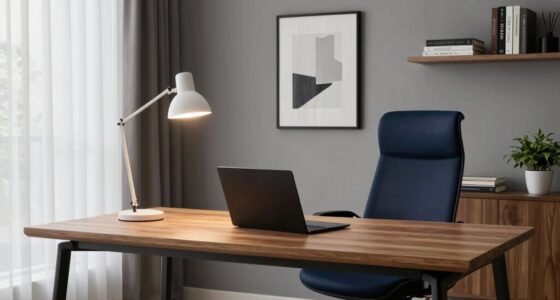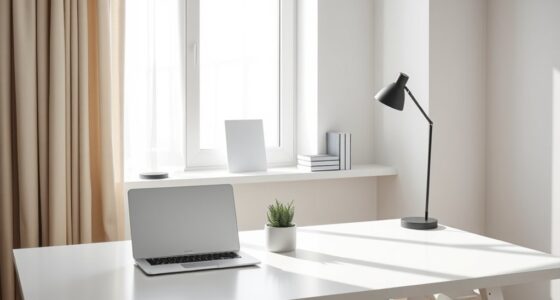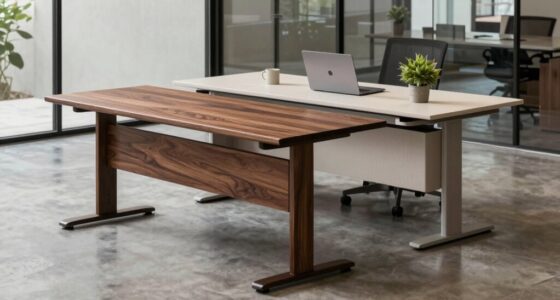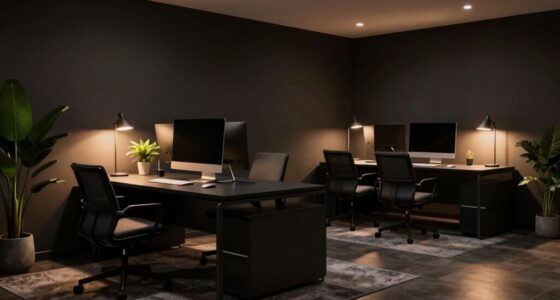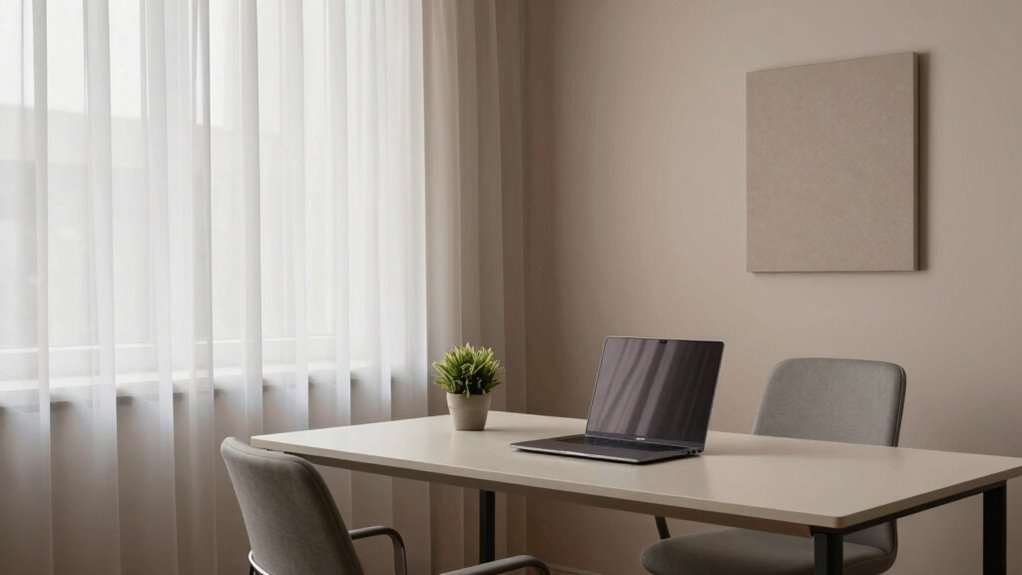

To create a low-stimulation office for better focus, start by choosing ergonomic furniture that supports good posture and reduces discomfort. Keep the space minimalist by removing clutter and unnecessary items, fostering a calm atmosphere. Incorporate natural elements like small plants and use natural or daylight-mimicking lighting to boost mood and alertness. Control lighting levels to avoid glare or flickering, making the environment soothing and conducive to concentration. If you want to know more, there’s plenty to explore.

Get your wardrobe favorites delivered free with Prime
- Fast, free delivery on millions of items
- Prime Video, Amazon Music and more included
- Member-only deals all year
Key Takeaways
- Use minimalist furniture and decor to eliminate visual clutter and promote calmness.
- Incorporate natural elements like plants and natural materials to foster a tranquil environment.
- Maximize natural lighting and utilize adjustable, soft artificial lighting to reduce eye strain.
- Choose ergonomic furniture to enhance comfort and reduce physical distractions.
- Control lighting levels and avoid flickering or overly bright lights to maintain focus.
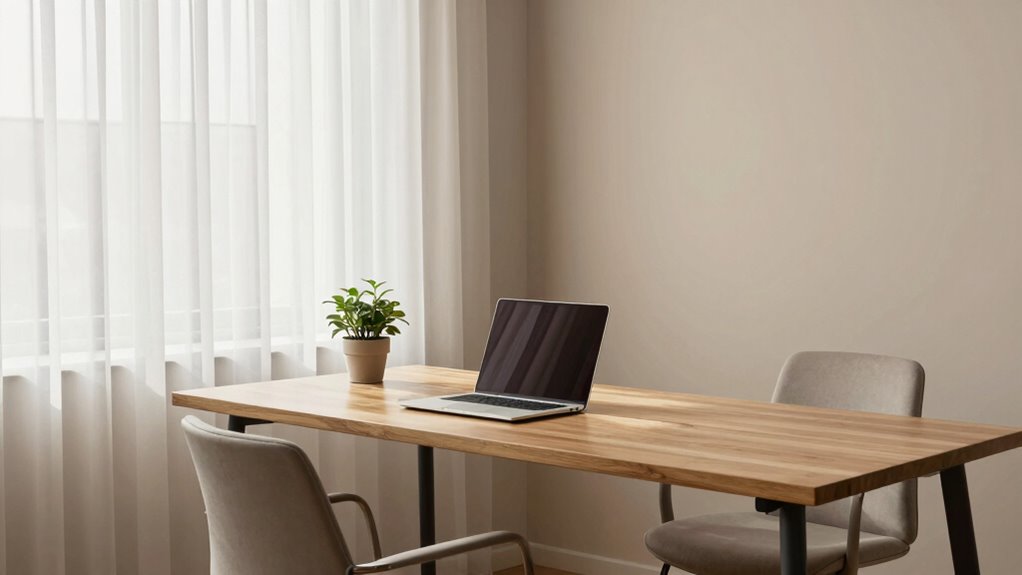
In today’s busy work environments, creating a low-stimulation office can considerably boost your focus and productivity. The key is to design a space that minimizes distractions while promoting comfort and clarity. One of the most effective ways to do this is by investing in ergonomic furniture. When you choose an ergonomic chair and desk, you support good posture, reducing physical discomfort that can divert your attention. An adjustable chair with lumbar support keeps your spine aligned, preventing fatigue during long work sessions. Your desk should be at the right height, allowing your arms to rest comfortably, which helps you maintain focus without the distraction of discomfort. Ensuring your workspace is ergonomically optimized not only improves your physical well-being but also creates a calm environment where you can concentrate on your tasks. Incorporating ergonomic furniture can significantly enhance your workspace’s comfort and focus. Additionally, incorporating minimalist design principles can help eliminate clutter, further reducing potential distractions and promoting a more serene work environment. Utilizing biophilic design elements, such as small plants or nature-inspired decor, can also improve the atmosphere and support a sense of tranquility. Introducing natural materials into your decor can enhance the calming effect and foster a more relaxing workspace. Natural lighting plays a crucial role in establishing a low-stimulation office. Instead of harsh fluorescent bulbs that can cause eye strain and headaches, opt for windows that bring in ample natural light. Position your desk near a window, if possible, to take advantage of daylight. Natural lighting boosts your mood, keeps you alert, and helps regulate your circadian rhythm, making it easier to stay focused throughout the day. Incorporating appropriate lighting options, such as full-spectrum or daylight-mimicking bulbs, can further improve the quality of your environment. If windows aren’t an option, consider using full-spectrum or daylight-mimicking bulbs to replicate the benefits of natural light. Avoid overly bright or flickering lights that can cause visual fatigue and distract you from your work. Dimming options give you control over lighting levels, allowing you to tailor your environment to your concentration needs.
ergonomic office chair with lumbar support
As an affiliate, we earn on qualifying purchases.
As an affiliate, we earn on qualifying purchases.
Frequently Asked Questions
What Are the Best Colors for a Low-Stimulation Workspace?
You should choose calming color palettes like soft blues, gentle greens, or muted neutrals for your workspace. According to color psychology, these colors promote relaxation and focus, reducing distractions. Opt for shades that aren’t overly bright or stimulating, helping you stay calm and centered. By selecting subdued hues, you create a low-stimulation environment that supports concentration and productivity throughout your workday.
How Can I Reduce Noise Distractions in My Office?
You can reduce noise distractions by implementing soundproofing techniques like adding acoustic panels or thick curtains to absorb sound. Using noise canceling tools, such as headphones or white noise machines, also helps block out background noise. Coincidentally, these methods work best when combined; sealing gaps around doors and windows enhances soundproofing. This way, you create a quieter environment that boosts your focus and productivity effortlessly.
Should I Incorporate Plants Into a Low-Stimulation Office?
Yes, incorporating plants into your low-stimulation office is a great idea. They improve air quality and add a calming, natural element without creating visual clutter. Choose ergonomic furniture that keeps your posture comfortable, and opt for simple, unobtrusive plants like succulents or pothos to maintain a minimalist environment. These additions help you stay focused, reduce stress, and create a more inviting workspace.
What Lighting Options Promote Focus Without Overwhelming?
Natural light and soft lighting are your best bets for promoting focus without overwhelming your senses. Natural light, like a gentle sunrise, energizes you without glare, while soft lighting creates a calming ambiance that minimizes distractions. Use dimmable lamps or warm-colored bulbs to adjust brightness as needed. Avoid harsh fluorescents, which can cause eye strain and headaches. Combining these options helps you maintain a peaceful, focused workspace that keeps you productive all day.
How Do I Personalize a Low-Stimulation Environment?
You personalize a low-stimulation environment by incorporating subtle personalization techniques that make the space feel comfortable without adding clutter. Use sensory adjustments like soft textures, calming colors, or gentle scents to create a cozy atmosphere. You can also add meaningful but unobtrusive decor, such as a small plant or a favorite photo, to boost your mood. Keep these elements minimal, so they enhance focus rather than distract you.
As an affiliate, we earn on qualifying purchases.
Conclusion
Creating a low-stimulation office is like crafting a calm oasis amid chaos. By reducing noise, clutter, and visual distractions, you set the stage for sharper focus and increased productivity. Remember, a simple, organized space acts like a quiet lake—reflecting clarity and calmness. Keep it minimal, keep it peaceful, and watch your concentration flourish. With these steps, you’ll find yourself working more efficiently, feeling less overwhelmed, and truly enjoying the workday.
full spectrum daylight mimicking light bulbs
As an affiliate, we earn on qualifying purchases.
As an affiliate, we earn on qualifying purchases.
As an affiliate, we earn on qualifying purchases.
Halloween Picks
halloween
As an affiliate, we earn on qualifying purchases.