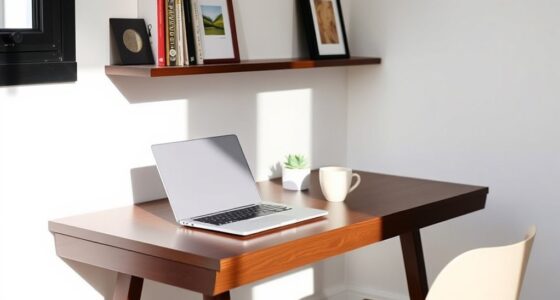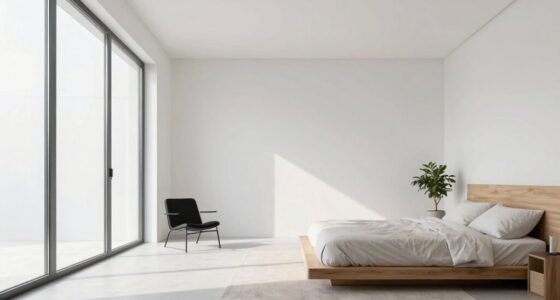
Understanding key terms like Japandi, Hygge, and Wabi-Sabi helps you create a minimalist space that feels calm, natural, and harmonious. Japandi blends Japanese simplicity with Scandinavian coziness, emphasizing clean lines and warm neutrals. Hygge focuses on comfort and coziness to foster well-being. Wabi-Sabi celebrates imperfection and transience, adding understated beauty. Grasping these concepts guides you in choosing natural materials and serene color palettes. Keep exploring to discover how these ideas come together in minimalist interiors.
Key Takeaways
- Japandi combines Japanese minimalism and Scandinavian coziness, emphasizing simplicity, natural materials, and subtle elegance.
- Hygge focuses on creating warm, cozy atmospheres through soft textures, subdued colors, and inviting spaces.
- Wabi-Sabi celebrates imperfection and transience, highlighting natural materials and understated beauty.
- Minimalism prioritizes decluttered, functional spaces with neutral palettes and sustainable, natural materials.
- These concepts promote harmony, calmness, and intentional design aligned with eco-friendly, timeless aesthetics.
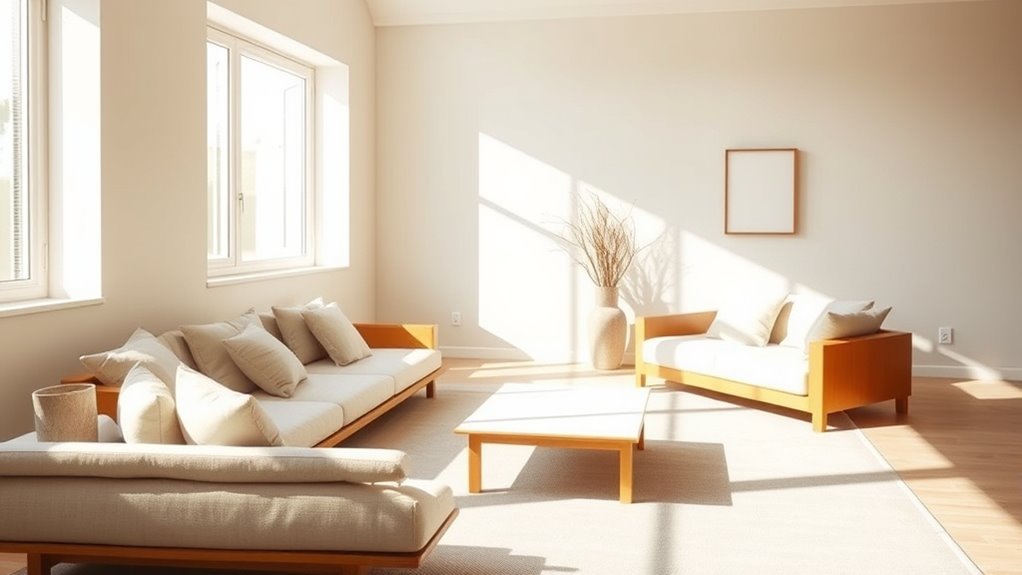
Are you new to minimalist interior design and wondering what the key terms mean? If so, you’re not alone. The world of minimalist decor is filled with concepts like Japandi, Hygge, and a host of design principles that can seem overwhelming at first. But understanding some basic terms can help you create a space that’s both stylish and functional. Let’s start with the essentials, like sustainable materials and color palette choices, which are foundational to many minimalist designs.
When it comes to sustainable materials, you’re focusing on eco-friendly options that reduce environmental impact. Think reclaimed wood, bamboo, and recycled metal—these aren’t just good for the planet; they also add natural warmth and texture to your space. Using sustainable materials aligns perfectly with minimalist principles because they emphasize quality over quantity and durability over disposability. You want your furnishings and decor to last, so choosing eco-conscious options helps you build a timeless, clutter-free environment. Plus, sustainable materials often have a natural, understated beauty that complements minimalist aesthetics, making your space feel calm and cohesive.
Color palette choices are equally critical in minimalist design. You typically want to stick to neutral, muted shades like whites, beiges, grays, and soft earth tones. These colors create a serene backdrop that makes your space feel open and uncluttered. Minimalist interiors often avoid bold or overly vibrant hues because they can disrupt the visual calm. Instead, you can introduce subtle pops of color through accessories or art pieces, but the overall palette remains subdued. This approach enhances the sense of tranquility and simplicity, making your home a peaceful retreat. When selecting your colors, consider how natural light interacts with your space—lighter shades can make a room look larger and more airy, while darker hues add depth without overwhelming the senses. Additionally, incorporating natural materials can reinforce the minimalist aesthetic and promote a sense of harmony.
Understanding these key terms empowers you to make intentional choices that reflect minimalist values. Sustainable materials ensure your home is environmentally responsible, and thoughtful color palette choices set the mood and tone of your space. Both elements work together to create a harmonious environment that feels effortless yet thoughtfully curated. As you explore other design concepts like Japandi, Hygge, or Wabi-Sabi, keep in mind that at their core, they all emphasize simplicity, natural beauty, and a sense of calm—principles that are easily achieved through mindful material selection and color planning. With these basics, you’ll be well on your way to crafting a minimalist space that’s both stylish and sustainable.

Japandi Style: When Japanese and Scandinavian Designs Blend
As an affiliate, we earn on qualifying purchases.
As an affiliate, we earn on qualifying purchases.
Frequently Asked Questions
How Do I Choose the Right Minimalist Style for My Space?
To choose the right minimalist style, start with a space assessment to identify its size, lighting, and existing features. Consider your personal preferences—do you prefer warm, cozy vibes or sleek, modern looks? Think about how you want to feel in your space, then explore styles like Japandi or Hygge that align with those feelings. This approach helps you pick a minimalist style that truly reflects your taste and lifestyle.
What Are Common Mistakes to Avoid in Minimalist Interior Design?
Avoid decorating pitfalls by over-accessorizing or cluttering your space, as it erodes the minimalist essence like a shadow over clarity. You might think more decor equals style, but it often results in chaos. Focus on intentional pieces that breathe space and simplicity. Manage clutter rigorously, keeping surfaces clear and storage hidden. Remember, minimalism isn’t about emptiness, but about creating calm—so choose quality over quantity to truly thrive in your design.
How Can I Incorporate Color Without Cluttering the Aesthetic?
You can incorporate color without cluttering your minimalist aesthetic by adding subtle color accents through vibrant textiles like cushions, throws, or rugs. Keep the overall palette neutral and let these accents stand out, creating visual interest without overwhelming the space. Use these pops of color sparingly and intentionally, ensuring they complement your clean lines and simple decor for a balanced, harmonious look.
Are There Eco-Friendly Materials Suitable for Minimalist Interiors?
Imagine you’re stepping into a space that’s as eco-friendly as a 21st-century treehouse. You can incorporate sustainable materials like bamboo, reclaimed wood, cork, and organic textiles into your minimalist decor. These eco-friendly decorating choices keep your space sleek, functional, and environmentally conscious. They blend seamlessly with minimalist aesthetics, giving you stylish, sustainable interiors without clutter or guilt. Your home becomes a sanctuary that’s good for you and the planet.
How Do I Maintain a Minimalist Look Over Time?
To maintain a minimalist look over time, prioritize simple storage solutions that keep clutter out of sight and preserve clean lines. Use strategic lighting techniques like soft, natural light or sleek fixtures to highlight your space’s simplicity. Regularly declutter and stick to a neutral color palette, ensuring your decor remains understated. This approach helps your minimalist interior stay fresh, organized, and effortlessly stylish for years to come.

American Cozy: Hygge-Inspired Ways to Create Comfort & Happiness
As an affiliate, we earn on qualifying purchases.
As an affiliate, we earn on qualifying purchases.
Conclusion
So, now that you’re armed with these fancy terms like Japandi and hygge, go ahead—turn your space into a minimalist paradise. Or, you know, just pretend you did. Remember, all those sleek lines and cozy vibes are just a few words away from chaos—so maybe don’t overthink it. After all, who needs clutter when you can have a polished, “intentional” mess that screams “I tried”? Happy decorating!

Wabi Sabi Footed Decorative Bowl, Multi-Purpose Small Ceramic Bowl, Vintage Rustic Boho Shelf Table Decor, Natural Black
Artisan Look- This ceramic bowl features a tripod design and is finished with a vintage glaze, giving it…
As an affiliate, we earn on qualifying purchases.
As an affiliate, we earn on qualifying purchases.

Home Detox: Make Your Home a Healthier Place for Everyone Who Lives There
As an affiliate, we earn on qualifying purchases.
As an affiliate, we earn on qualifying purchases.