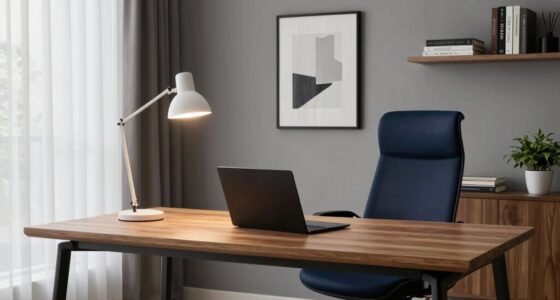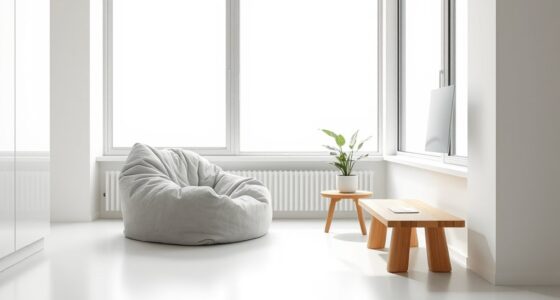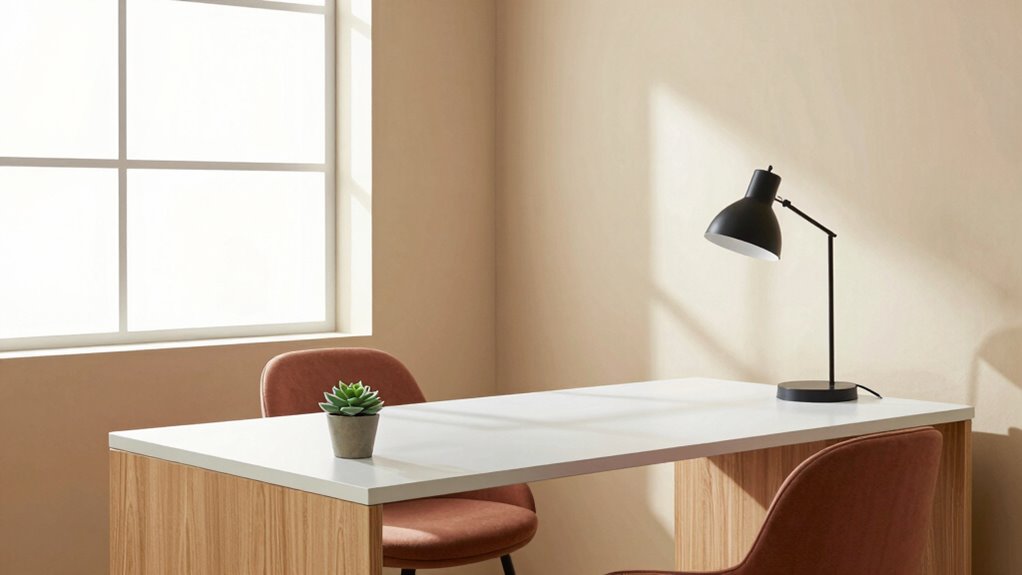

To create a warm, inviting minimalist office palette, choose soft neutrals like warm beige, taupe, or muted greys that evoke calm and stability. Incorporate natural textures such as plush rugs or textured cushions, and add subtle touches of color with plants or accent pieces like matte black or brushed metal. Avoid stark whites, as they may feel cold. Balancing these elements helps you craft a workspace that’s uncluttered yet cozy—if you continue exploring, you’ll find more ideas to make your space feel just right.

Get your wardrobe favorites delivered free with Prime
- Fast, free delivery on millions of items
- Prime Video, Amazon Music and more included
- Member-only deals all year
Key Takeaways
- Use warm neutrals like beige, taupe, or muted greys to create a cozy, calming environment.
- Incorporate natural materials and greenery to add warmth and a connection to nature.
- Add textures such as plush rugs or cushions to balance cool tones and enhance comfort.
- Select furniture in light wood or warm finishes to maintain simplicity with inviting warmth.
- Include subtle accent colors like matte black or brushed metal for visual interest without coldness.

A minimalist office color palette can transform your workspace into a calm, focused environment that boosts productivity. When you choose the right colors, you create a space that feels inviting rather than sterile, encouraging you to stay engaged without feeling overwhelmed. Color psychology plays a significant role here; soft neutrals like warm beige, gentle taupe, or muted greys can evoke feelings of tranquility and stability. These hues help reduce stress, making it easier to concentrate on your work. Instead of stark white, which can sometimes feel cold and clinical, opt for warmer shades that add a touch of coziness while maintaining simplicity. Incorporating biodiversity-friendly materials can further enhance your workspace by promoting sustainability and a connection to nature. Furniture coordination is equally important to achieve a balanced, cohesive look. When selecting pieces, aim for clean lines and simple designs that complement your color palette. Light wood desks and shelving, for example, pair beautifully with neutral walls, creating a seamless, harmonious environment. Incorporating natural elements like plants or sustainable decor can also enhance the sense of environmental consciousness in your office. Incorporate accent pieces—such as a cozy chair or a decorative plant—that introduce subtle pops of color without disrupting the minimalist aesthetic. The key is to maintain a sense of order, so your furniture and decor don’t feel cluttered or chaotic. This not only enhances the visual appeal but also supports your mental clarity. To keep your space from feeling cold, consider adding textures and soft finishes. A plush rug or textured cushions can introduce tactile warmth, balancing the coolness of certain neutral tones. These elements, combined with carefully selected furniture, help you create a space that’s both functional and welcoming. When you coordinate your furniture, choose pieces that align with your color scheme—this consistency reinforces a sense of calm and purpose. For example, pairing matte black or brushed metal accents with warm-toned woods and soft textiles creates visual interest without overwhelming the senses. Ultimately, your goal is to craft a workspace that promotes focus while feeling comfortable. By understanding the influence of color psychology, you can select hues that energize or relax you as needed. Coordinating your furniture ensures everything works together seamlessly, avoiding the chaos that often comes with mismatched or overly cluttered environments. With thoughtful choices, your minimalist office can be a sanctuary that’s both inspiring and soothing—an ideal setting for productivity that doesn’t feel cold or impersonal.
minimalist office desk with light wood finish
As an affiliate, we earn on qualifying purchases.
As an affiliate, we earn on qualifying purchases.
Frequently Asked Questions
How Can I Incorporate Color Without Overwhelming the Space?
You can incorporate color by adding subtle accents that create monochrome harmony, ensuring the space feels cohesive and calm. Use pops of color through accessories like cushions, artwork, or desk items in neutral tones, balancing them with your primary palette. This neutral tone balance prevents overwhelming the room while still introducing personality. Keep it simple and strategic, so your office remains minimalist yet inviting, without feeling cold or cluttered.
What Are the Best Accent Colors for a Warm Minimalist Office?
You’ll find warm accent colors like terracotta, soft gold, or deep coral work best for a cozy, minimalist office. These hues leverage color psychology to evoke comfort and energy. Pair them with a monochrome scheme—warm beige or taupe—to keep the space balanced and inviting. By intentionally adding these accents, you create a harmonious environment that feels lively without overwhelming, making your workspace both stylish and welcoming.
How Do Lighting Choices Affect Color Perception in Minimal Spaces?
Lighting choices profoundly influence how colors appear in your minimalist office. Natural light enhances warm tones, making spaces feel inviting and lively, while artificial illumination can sometimes wash out or alter colors, depending on the type of bulbs used. To create a balanced ambiance, combine natural light with soft, warm artificial lighting. This combination helps maintain true colors, making your minimalist space feel cozy without sacrificing the clean, simple aesthetic.
Can Color Palettes Improve Productivity in a Minimalist Office?
You’ll find that color palettes can notably boost your productivity, with studies showing that certain shades improve focus by up to 15%. Using color psychology, you can choose hues like blue for calmness and green for balance, creating an environment that enhances productivity. By thoughtfully selecting minimalist palettes, you not only keep your space sleek but also foster a mentally stimulating atmosphere that helps you stay engaged and efficient throughout the day.
What Materials Work Best With These Color Schemes?
You should choose materials that enhance your color scheme through texture and color psychology. Wood adds warmth and a natural feel, balancing cool tones. Soft fabrics like linen or felt create a cozy atmosphere. Matte finishes and smooth surfaces keep the space sleek without feeling cold. Incorporate these textures thoughtfully, and you’ll foster a welcoming environment that boosts productivity and aligns with your minimalist palette.
As an affiliate, we earn on qualifying purchases.
Conclusion
Now that you know how to create a minimalist office with warm, inviting color palettes, imagine the impact on your daily work life. Will you embrace the soothing neutrals or add subtle pops of color for energy? The choice is yours, and the possibilities are endless. One thing’s certain—your perfect balance between minimalism and comfort is within reach. Are you ready to transform your workspace into a haven that fuels creativity and productivity? The next step is yours to take.
natural textured cushions for workspace
As an affiliate, we earn on qualifying purchases.
As an affiliate, we earn on qualifying purchases.
As an affiliate, we earn on qualifying purchases.
Halloween Picks
halloween
As an affiliate, we earn on qualifying purchases.