
Balancing natural and artificial light in your minimalist office boosts productivity, mood, and comfort. Maximize natural light with smart window placement, simple treatments, and keeping windows clean, allowing daylight to fill your space. Use artificial lighting thoughtfully, like LED fixtures with adjustable brightness and diffusion, to reduce eye strain and create a warm, inviting atmosphere when natural light isn’t enough. Combining both options carefully helps maintain a sleek, healthy workspace—discover how to optimize every detail for a harmonious environment.
Key Takeaways
- Maximize natural light with strategic window placement, simple treatments, and clean windows to enhance mood and reduce energy use.
- Use diffused artificial lighting with adjustable brightness and color temperature to minimize eye strain and create a calming environment.
- Balance natural and artificial light to improve focus, well-being, and energy efficiency in a minimalist office setup.
- Incorporate eco-friendly, sleek fixtures with diffusion features to support sustainability and maintain a clutter-free aesthetic.
- Regularly clean and organize lighting elements to ensure optimal brightness and uphold the minimalist, streamlined design.

Adjustable LED Desk Lamp – Stepless Dimming & Color Temp Remote Control, Eye-Caring 4 Large Bright Light Souce for Home Office, Flexible Neck, Clamp Base, 5 Lighting Modes for Reading, Computer, DIY
【CRI>95, Super Bright & Eye-Caring】: Our eye care light is composed of 192 high-quality lamp beads, 24W table…
As an affiliate, we earn on qualifying purchases.
As an affiliate, we earn on qualifying purchases.
The Benefits of Natural Light in a Minimalist Workspace
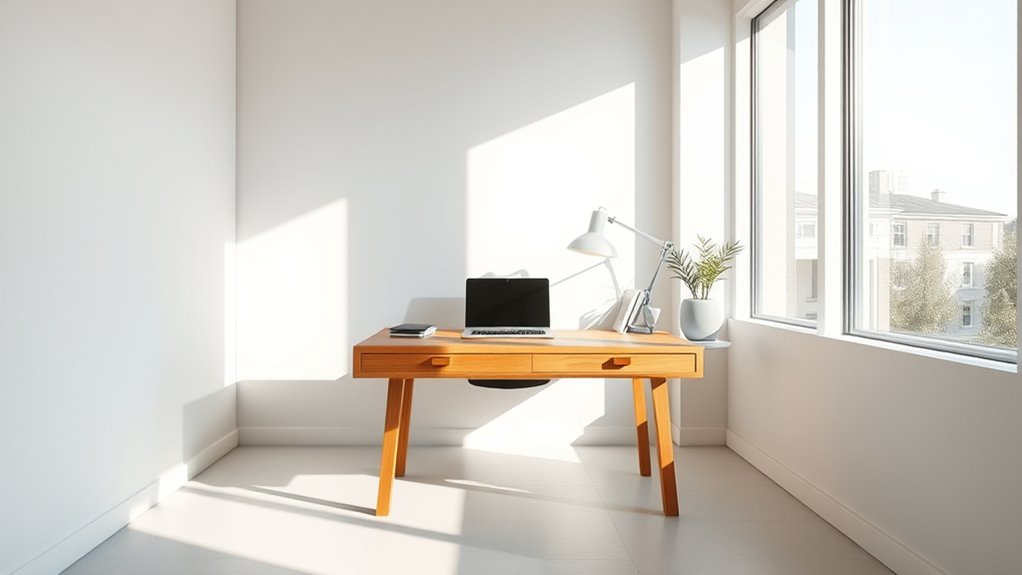
Natural light plays an essential role in enhancing the simplicity and functionality of a minimalist workspace. Proper window placement ensures you maximize daylight, reducing reliance on artificial lighting and creating a bright, inviting environment. When designing your space, position windows to allow light to flow evenly, promoting effective light diffusion. This light diffusion minimizes harsh shadows and glare, helping you stay focused and comfortable throughout the day. Large, unobstructed windows not only brighten your workspace but also connect you with the outside world, boosting your mood and productivity. Incorporating natural light benefits into your design can lead to improved well-being and energy efficiency. Additionally, choosing eco-friendly window materials can further enhance your energy efficiency and sustainability goals. Keep window treatments simple to maintain the clean aesthetic of your minimalist design. Thoughtful window placement and light diffusion create a serene, efficient environment that supports your work and enhances your overall experience. Moreover, leveraging natural light advantages can significantly reduce your reliance on electrical lighting, lowering energy costs and supporting sustainable practices.

Lighting Diffusion Sticker 3 PCS Sheet 7.8×11.8inches Soften Light Dimming Film Adhesive Diffuser, Thick
3 Pieces Diffusion Film – Spreads light softly and evenly, Dimming harsh glaring LED lights, relieve eye strain.
As an affiliate, we earn on qualifying purchases.
As an affiliate, we earn on qualifying purchases.
The Drawbacks of Relying Solely on Artificial Lighting

Relying only on artificial lighting can cause eye strain and discomfort over time. It may also negatively affect your mood and reduce your overall productivity. Without natural light, you might find it harder to stay focused and energized throughout the day. Additionally, the absence of natural light can limit opportunities to experience the benefits of Kia Tuning that enhance vehicle performance and aesthetics. Incorporating proper lighting techniques can help mitigate some of these issues and improve your environment, especially when considering the importance of sustainable lighting options for energy efficiency and environmental impact. Furthermore, integrating natural light not only supports circadian rhythms but also can enhance mood and overall well-being, fostering a more inviting workspace.
Eye Strain Risks
Although artificial lighting can create a well-lit workspace, depending solely on it can lead to eye strain. Constant exposure to harsh, direct light causes glare, making it harder to focus and increasing discomfort. Without proper glare reduction, your eyes work harder to process visual information, leading to fatigue. Light diffusion helps soften the illumination, reducing sharp contrasts and minimizing eye strain. However, many artificial lighting setups lack adequate diffusion, resulting in flickering and uneven light distribution. Prolonged exposure to poorly diffused light can cause headaches and blurred vision. To protect your eyes, incorporate diffusers or choose fixtures designed to disperse light evenly. Additionally, selecting top-rated lighting fixtures with proper diffusion features can significantly improve visual comfort. Ensuring your workspace has appropriate lighting levels tailored to your tasks can further prevent eye fatigue. Using diffusers or proper fixtures helps distribute light evenly, reducing the risk of glare. Incorporating diffusion techniques and understanding the importance of lighting quality can enhance comfort and reduce eye strain during long work hours. Balancing artificial lighting with natural sources and ensuring proper light diffusion are essential steps to prevent eye strain in your minimalist office.
Mood and Productivity Impact
Artificial lighting alone can negatively affect your mood and productivity by creating an environment that feels sterile or oppressive. Relying solely on lighting technology can lead to a lack of natural warmth and variation, which are essential for maintaining focus and emotional well-being. While energy efficiency is a benefit, it shouldn’t come at the expense of comfort. Overly harsh or constant artificial light can cause fatigue and diminish motivation, making it harder to concentrate. Incorporating natural light or adjustable lighting options can help balance your workspace’s atmosphere. Additionally, color temperature adjustments can optimize the lighting environment to support your circadian rhythms and overall well-being. Considering the impact of lighting quality on mood and productivity can help you create a more balanced and inviting workspace. Using light diffusion techniques can further reduce glare and harsh shadows, creating a more comfortable environment. When you combine good lighting design with energy-efficient solutions, you foster a more inviting environment that supports both your mood and productivity, keeping your minimalist office functional and inspiring. Incorporating attention to environment can further enhance your focus and emotional health in your workspace.
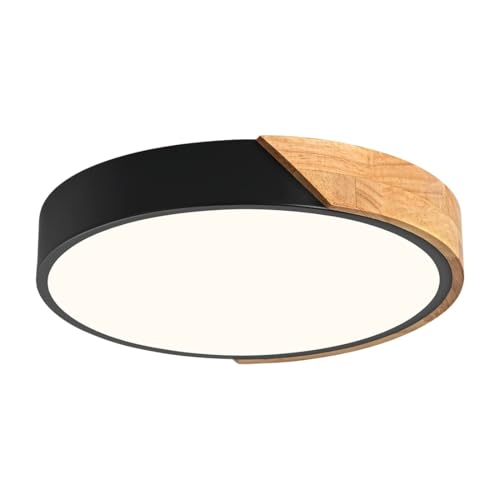
Vikaey Modern LED Ceiling Light, Minimalist Wood Flush Mount Ceiling Light Fixture, 4000K Not Dimmable, Circle Lighting Lamp with Acrylic Lampshade for Bedroom Laundry Room Hallway (Black,11.8")
Size and material: Measuring 11.8 inches (30cm) in diameter and 1.6 inches (4cm) in height, this fixture is…
As an affiliate, we earn on qualifying purchases.
As an affiliate, we earn on qualifying purchases.
Types of Artificial Lighting for a Modern Office Environment
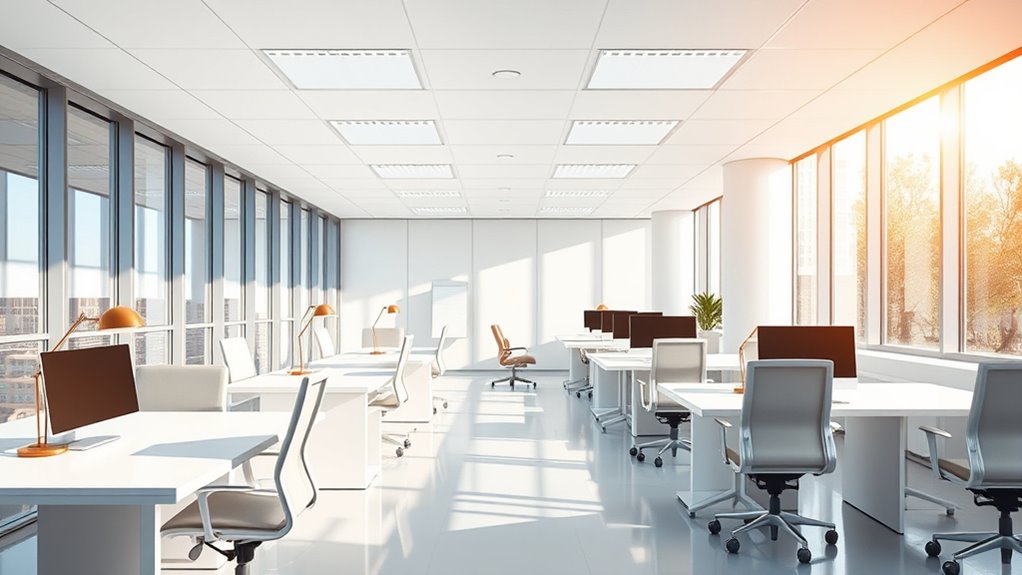
When choosing artificial lighting for your office, you should consider the differences between LED and fluorescent options to find the best fit. Adjustable brightness features let you customize your workspace for comfort and productivity, while color temperature choices can influence your mood and focus. Understanding these options helps you create a modern, efficient, and inviting environment. For a truly personalized setup, exploring lighting customization options can enhance both functionality and ambiance. Additionally, selecting lighting with appropriate performance metrics ensures consistent illumination tailored to your needs. Being aware of research‑backed insights can guide you toward making informed decisions that promote a calm and effective workspace.
LED Versus Fluorescent
Have you ever wondered which type of office lighting is more efficient and better suited for a modern workspace? LED lighting outshines fluorescent options when it comes to LED efficiency, consuming less energy while providing bright, consistent illumination. LEDs turn on instantly and maintain their brightness without flickering, creating a comfortable environment for work. Fluorescent lights, on the other hand, have a longer lifespan but tend to flicker and emit a harsher light, which can cause eye strain. While fluorescent bulbs typically last longer in terms of overall lifespan, they often need more frequent replacements due to their flickering and reduced efficiency over time. Choosing LED lighting can save you money in the long run and support a sleek, modern aesthetic. Additionally, easy maintenance makes LEDs a more practical choice for busy office environments. As a bonus, LED lights are often more cost-effective over their lifetime compared to fluorescent options. Furthermore, LED lighting aligns with energy-efficient solutions that are increasingly important in sustainable office design.
Adjustable Brightness Options
Adjustable brightness options give you greater control over your office lighting, allowing you to customize the environment to suit different tasks and moods. Dimming switches are a simple, effective way to adjust brightness levels quickly, giving you flexibility throughout the day. Smart bulbs take this a step further, enabling you to control lighting remotely via your smartphone or voice commands. With smart bulbs, you can set schedules, create scenes, or adjust brightness instantaneously, ensuring your workspace remains comfortable and functional. These options help maintain a minimalist aesthetic by reducing clutter and unnecessary fixtures. By choosing dimming switches or smart bulbs, you create a versatile lighting setup that adapts to your needs, enhancing productivity and ambiance without complicating your clean, modern office design.
Color Temperature Choices
Choosing the right color temperature for your office lighting can considerably influence your mood and productivity. Cooler temperatures (5000K-6500K) provide high color accuracy, ideal for tasks requiring precision, and mimic natural daylight. Warmer temperatures (2700K-3000K) create a cozy, relaxing environment but may reduce focus. Consider these options:
- Daylight (5000K-6500K): Enhances color accuracy, boosts alertness, and is energy efficient with LED options.
- Cool White (4000K-5000K): Offers a balanced brightness, good for task lighting and maintaining energy efficiency.
- Warm White (2700K-3000K): Creates a calming ambiance but may compromise color accuracy.
- Adjustable Temperature LEDs: Allow you to switch between warm and cool, optimizing both mood and energy efficiency based on your needs.

Voncerus LED Desk Lamp with Clamp, Eye-Caring Clip on Lights for Home Office, 3 Modes 10 Brightness, Long Flexible Goose-Neck, Metal, Swing Arm Architect Task Table Lamps with USB Adapter, Black
Long Flexible Goose-Neck & Extended Lifespan: This desk lamp features a 360° long flexible goose neck, allowing you…
As an affiliate, we earn on qualifying purchases.
As an affiliate, we earn on qualifying purchases.
How to Maximize Natural Light in Your Minimalist Office
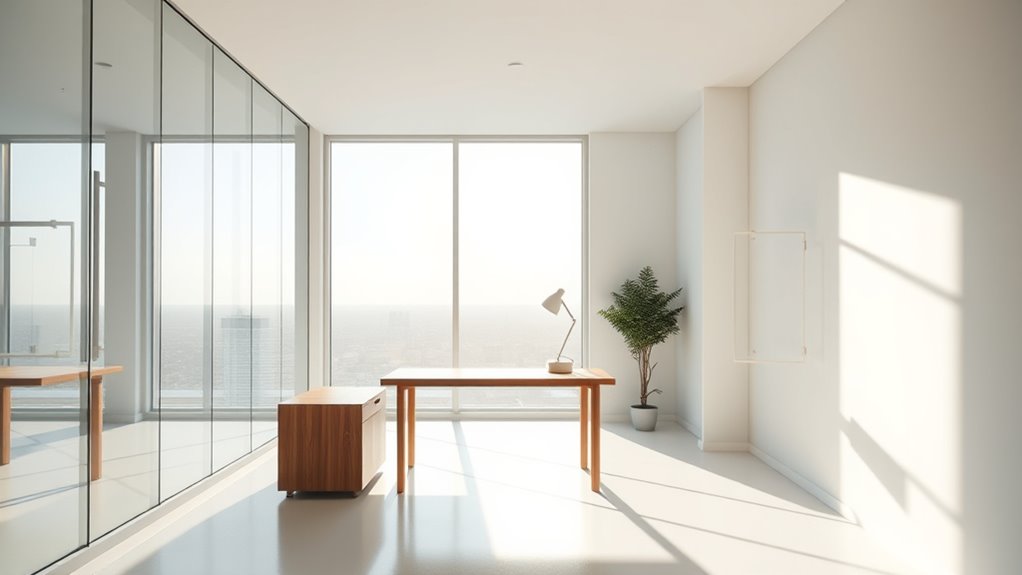
Ever wonder how to flood your minimalist office with natural light? Start with smart window placement. Position windows where they can catch the sun’s path, like east- or south-facing sides, to maximize daylight throughout the day. Keep window treatments simple; opt for sheer curtains or light blinds that let in sunlight while reducing glare. Avoid heavy drapes that block light and clutter. Use unobstructed window areas to create an open, airy feel. Keep furniture and decor minimal and away from windows to prevent shadowed areas. Regularly clean your windows to ensure maximum light penetration. By thoughtfully arranging your windows and choosing the right treatments, you’ll create a bright, inviting workspace that enhances your productivity and complements your minimalist aesthetic.
Choosing the Right Artificial Lighting for Mood and Productivity

The right artificial lighting can transform your minimalist office into a space that boosts both mood and productivity. To achieve this, consider these key points:
- Use LED bulbs with adjustable brightness to create a flexible environment and reduce eye strain.
- Incorporate task lighting, such as desk lamps, to focus light precisely where you need it.
- Opt for warm white LED bulbs to foster a cozy atmosphere and stimulate relaxation.
- Avoid harsh overhead lights; instead, layer your lighting with soft ambient options to prevent glare and shadows.
Combining Natural and Artificial Light for Optimal Illumination
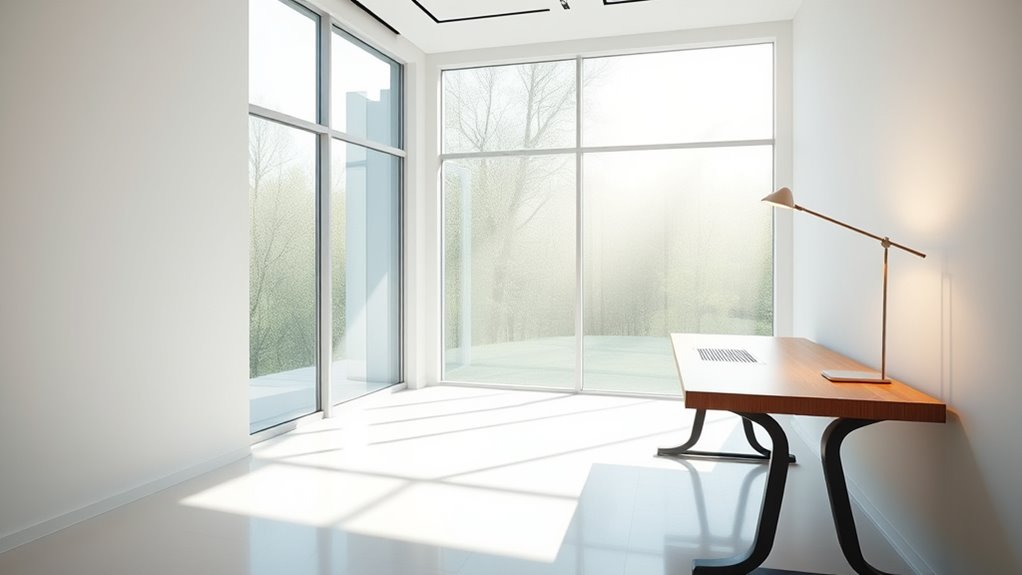
To achieve the best illumination in your minimalist office, integrating natural and artificial light is essential. Proper window placement is key; position your desk near windows to maximize sunlight and reduce reliance on artificial sources. Use light diffusion techniques, like sheer curtains or diffusers, to soften harsh sunlight and create even lighting. During cloudy days or late evenings, supplement natural light with well-placed artificial fixtures that mimic daylight. Combining both types of light helps prevent eye strain and maintains a consistent, comfortable ambiance. Adjust window treatments and artificial lighting intensity based on the time of day to optimize illumination without cluttering your space. The goal is a balanced, glare-free environment that enhances focus and productivity.
Tips for Maintaining a Clean and Clutter-Free Lighting Setup
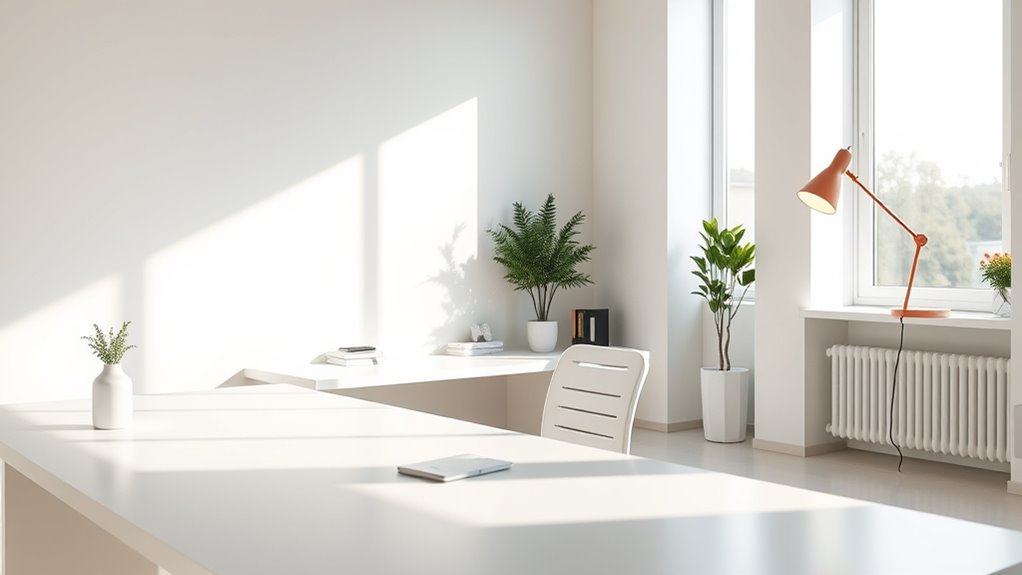
Maintaining a clean and clutter-free lighting setup requires regular organization and mindful placement of your fixtures. To keep things streamlined, focus on these tips:
- Arrange your light fixtures with intentional light fixture placement, avoiding overcrowding and ensuring each light has a purpose.
- Consistently check that cords are neatly tucked away or secured to prevent tangles and visual clutter.
- Coordinate light colors carefully to create a cohesive look, using light color coordination to match your minimalist aesthetic.
- Regularly clean fixtures to remove dust and dirt, maintaining brightness and clarity while preserving a tidy appearance.
Frequently Asked Questions
How Does Lighting Affect Productivity in a Minimalist Workspace?
Lighting substantially impacts your productivity in a minimalist workspace. Good lighting design helps you stay alert and focused, while the right color temperature boosts your mood and energy levels. Bright, natural light or warm artificial lighting creates a comfortable environment, reducing eye strain and fatigue. By choosing ideal lighting, you enhance concentration and efficiency, making your workspace more inspiring and functional.
Can Natural Light Reduce Energy Costs in an Office?
Think of natural light as a free river flowing through your office, cutting down energy costs and conserving resources. By maximizing daylight, you reduce reliance on artificial lighting, leading to significant energy conservation. This not only boosts your sustainability efforts but also results in cost savings. So, open those blinds and let the sun’s gentle glow work for you—your wallet and the environment will thank you.
What Are the Best Window Treatments for Maximizing Light?
You should opt for sheer curtains or window film to maximize light in your minimalist office. Sheer curtains allow natural light to flood the space while adding a touch of softness. Window film can reduce glare and UV rays without blocking sunlight. Both options keep your office bright and airy, helping you stay energized and focused without sacrificing privacy or style.
How Often Should Artificial Lighting Fixtures Be Replaced or Maintained?
You should replace or maintain your artificial lighting fixtures based on their bulb lifespan and a regular maintenance schedule. Typically, bulbs last between 1,000 to 2,000 hours, so check your manufacturer’s recommendations. You’ll want to replace bulbs before they burn out or dim considerably. Regularly clean fixtures and inspect wiring to prevent issues, ideally every 6 to 12 months, to keep your office well-lit and efficient.
Are There Eco-Friendly Artificial Lighting Options Suitable for Minimalism?
Yes, you can opt for eco-friendly artificial lighting options like eco friendly LEDs and solar powered lamps. These choices reduce energy consumption, are sustainable, and fit well in a minimalist office by avoiding clutter. Eco friendly LEDs last longer and use less power, while solar powered lamps harness renewable energy, providing a clean, efficient lighting solution. Incorporating these options helps you maintain a simple, environmentally conscious workspace.
Conclusion
Think of your office as a canvas—natural light paints it with warmth and clarity, while artificial light fills in the shadows when needed. By blending these sources thoughtfully, you create a balanced environment that fuels your creativity and focus. Keep your space tidy like a well-organized palette, letting light flow freely. When you harmonize natural and artificial illumination, you not only brighten your workspace but also illuminate your path to productivity.