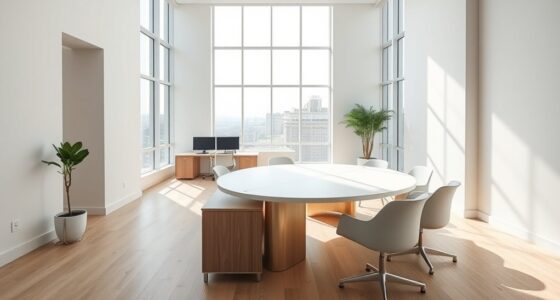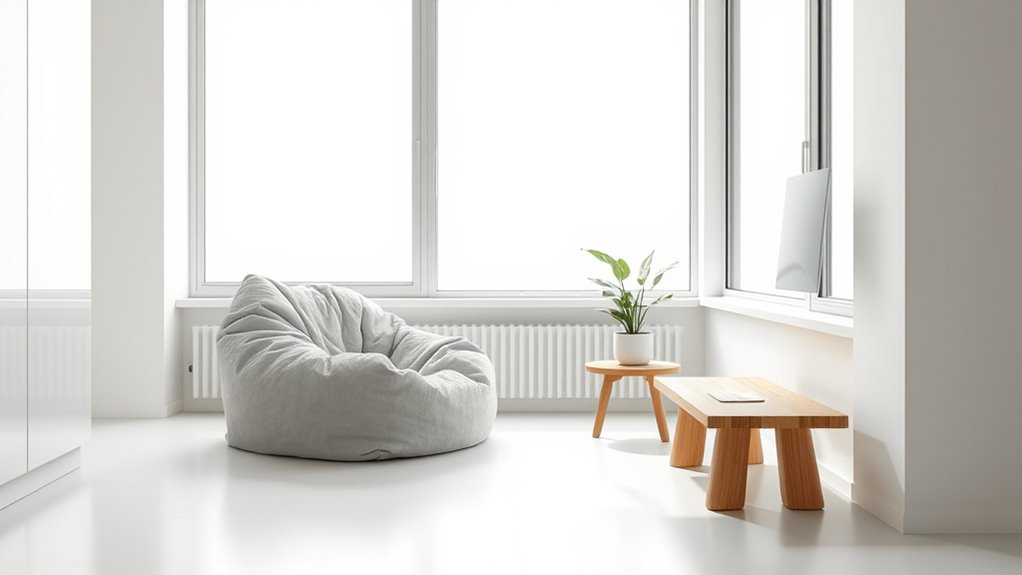

Creating a minimalist workspace that prioritizes wellness means designing spaces for rest and recharging. Use calming colors, soft lighting, and breathable textures to foster relaxation. Incorporate ergonomic furniture like supportive chairs and adjustable desks to encourage healthy breaks. Keep decor simple and purposeful, such as plants or soothing artwork, to reduce distractions. This mindful approach helps you stay focused, reduce stress, and boost overall well-being. Stay with us to discover how to transform your workspace into a true sanctuary.
Key Takeaways
- Designate dedicated rest zones with calming colors, soft lighting, and minimal decor to promote relaxation and mental clarity.
- Incorporate ergonomic furniture like supportive chairs and adjustable desks to support physical health during breaks.
- Use purposeful, clutter-free decor such as plants or artwork to create tranquil spaces that invite mindfulness.
- Ensure easy access to quick, comfortable resting furniture to encourage regular breaks and physical relief.
- Maintain a minimalist approach to workspace organization, reducing visual distraction and enhancing focus during work and rest periods.
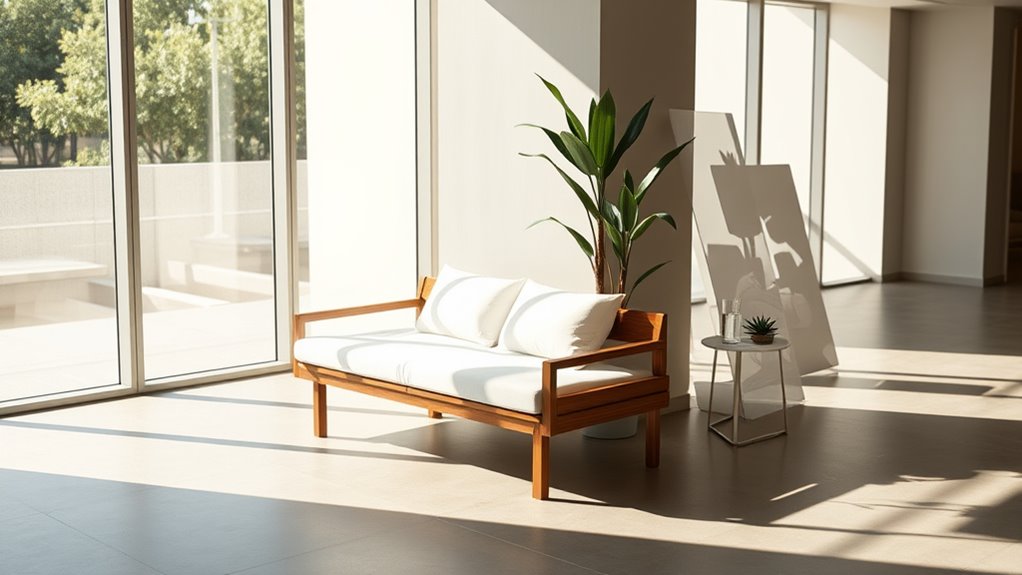
In today’s fast-paced work environment, embracing minimalism can considerably boost your overall wellness. When your workspace is clutter-free and thoughtfully designed, it becomes easier to focus, reduce stress, and foster a sense of calm. Mindful design plays a *key* role here; it encourages you to select only what’s necessary, creating a space that feels open and inviting rather than overwhelming. Incorporating ergonomic furniture is equally *essential*, as it supports your physical health by promoting proper posture and reducing discomfort during long hours at your desk. Together, these elements help you create a workspace that promotes both productivity and well-being.
Embrace minimalism and ergonomic design to boost focus, reduce stress, and enhance overall wellness at work.
As you streamline your workspace, think about the *significance* of designated areas for rest and recharging. Minimalist design emphasizes simplicity, so opt for a few comfortable, well-designed pieces of ergonomic furniture that invite you to pause. A supportive chair and a compact, adjustable desk can make a *notable* difference, making it easy to switch between work and rest modes. When you avoid clutter and unnecessary accessories, your mind feels less overwhelmed, which makes taking short breaks more effective. These intentional pauses help reset your focus, improve your mood, and boost your energy levels for the tasks ahead.
Creating space for rest isn’t just about physical comfort; it’s about cultivating a mental environment that encourages relaxation. Incorporate elements like soft lighting, calming colors, and breathable textures to enhance your rest areas. Use a minimalist approach to avoid visual distraction—keep decor simple and purposeful. For example, a small plant or a piece of artwork with soothing hues can serve as a visual cue to relax. When you design these spaces mindfully, they become sanctuaries where you can truly unwind, even during busy workdays.
Additionally, integrating ergonomic furniture into your rest zones ensures you’re not just comfortable but also supporting your body’s needs. Whether it’s a lounge chair, a footrest, or an adjustable stool, these pieces help you maintain good posture and prevent strain. This focus on ergonomic comfort encourages you to take meaningful breaks, which are essential for mental clarity and physical health. Minimalist spaces that prioritize purpose over excess make it easier to resist the temptation of clutter and distraction, guiding you toward healthier work habits.
Frequently Asked Questions
How Can Minimalism Improve Employee Mental Health?
Minimalism can improve your mental health by creating calm, clutter-free environments that promote mindfulness practices. When your workspace is simple and organized, you can focus better and reduce stress. This clarity helps build emotional resilience, making it easier to handle challenges. By removing distractions, minimalism encourages you to stay present and centered, leading to improved overall well-being and a more balanced mindset at work.
What Are Cost-Effective Ways to Create Wellness Spaces?
Imagine you’re channeling your inner Leonardo da Vinci to craft budget-friendly wellness spaces. Start with simple, ergonomic furniture to guarantee comfort. Incorporate biophilic design by adding plants or natural elements, which boost relaxation without breaking the bank. Use inexpensive decor and repurpose existing furniture for a minimalist aesthetic. These small, thoughtful changes create a calming environment that promotes employee well-being without costly renovations.
How to Design a Minimalist Rest Area for Diverse Needs?
You should prioritize aesthetic simplicity and functional design when creating a minimalist rest area for diverse needs. Use neutral colors, clean lines, and decluttered spaces to promote calm. Incorporate versatile furniture that can adapt to different activities and preferences. Guarantee good lighting and sound insulation for comfort. Keep decorations minimal, focusing on quality over quantity, so the space feels welcoming and inclusive for everyone.
What Are Common Challenges When Implementing Wellness Minimalism?
Getting your hands dirty with wellness minimalism can be tricky. You might find yourself battling decorative clutter that sneaks in, undermining your efforts. Balancing simplicity with effective color psychology is another challenge, as too much or too little can affect mood and productivity. It’s a delicate dance—striking the right tone requires careful planning and discipline, but the payoff is a tranquil, inviting space that truly rejuvenates.
How Does Minimalism Influence Workplace Productivity?
Minimalism boosts your workplace productivity by reducing office clutter and creating an environment of aesthetic simplicity. When your space is organized and free of distractions, you can focus more effectively on tasks. This clean, calm setting minimizes stress and promotes clarity, helping you work efficiently. By embracing minimalist design, you foster a mindset of intentionality that encourages better time management and increased overall output.
Conclusion
By embracing minimalist spaces for rest and recharging, you’re creating a sanctuary amid the chaos—a quiet harbor where stress can drift away. Remember, a clutter-free environment is like a clear sky, giving your mind room to breathe and flourish. When your workspace balances simplicity with wellness, you’ll find renewed energy and focus. Ultimately, these mindful spaces aren’t just about minimalism—they’re the foundation for a healthier, more vibrant you.