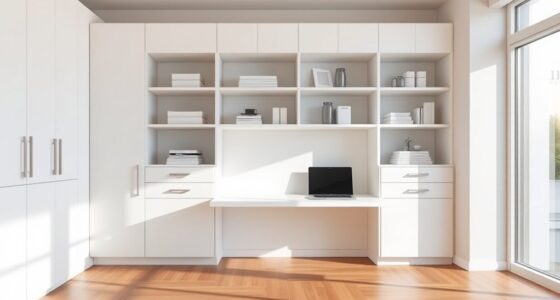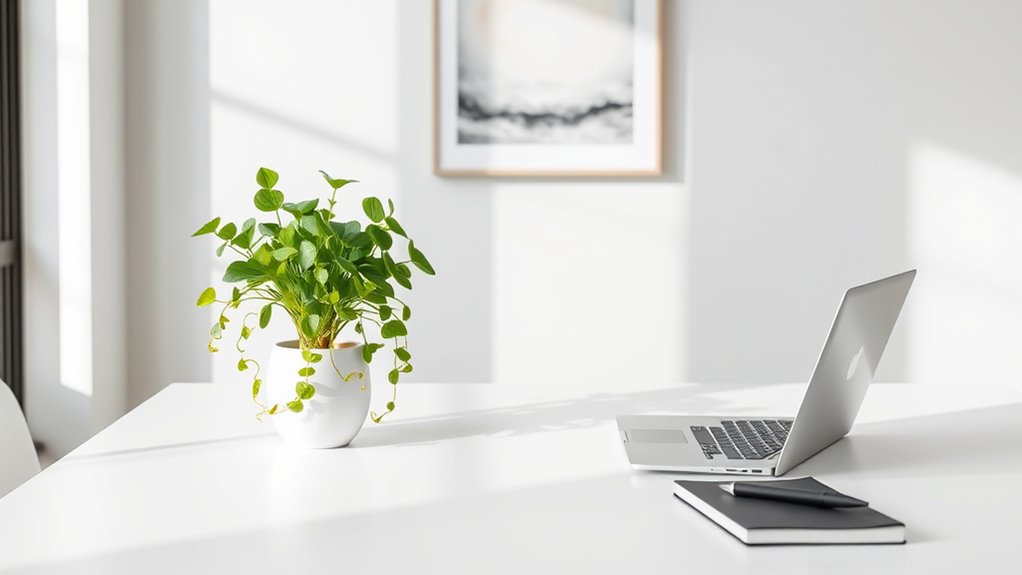

Adding greenery to your minimalist workspace instantly enhances its visual harmony and creates a calm, natural atmosphere. Plants soften clean lines, improve air quality, and boost your mood without cluttering the space. You can choose low-maintenance options like succulents or snake plants that fit seamlessly into the decor. By carefully selecting and placing your plants, you’ll create a balanced, relaxing environment that promotes productivity—discover how to perfect this balance with simple tips and creative ideas.
Key Takeaways
- Incorporate small or medium plants to add natural texture without cluttering the workspace.
- Use sleek, neutral containers to maintain minimalism while showcasing greenery.
- Strategically place plants to create visual balance and enhance calmness and focus.
- Select low-maintenance, sustainable plants like succulents or snake plants for effortless care.
- Utilize vertical or wall-mounted planters to maximize space and add greenery without crowding.

Logitech G413 SE Full-Size Mechanical Gaming Keyboard - Backlit Keyboard with Tactile Mechanical Switches, Anti-Ghosting, Compatible with Windows, macOS - Black Aluminum
Take your gaming skills to the next level: The Logitech G413 SE is a full-size keyboard with gaming-first...
As an affiliate, we earn on qualifying purchases.
The Benefits of Incorporating Plants Into Minimalist Design
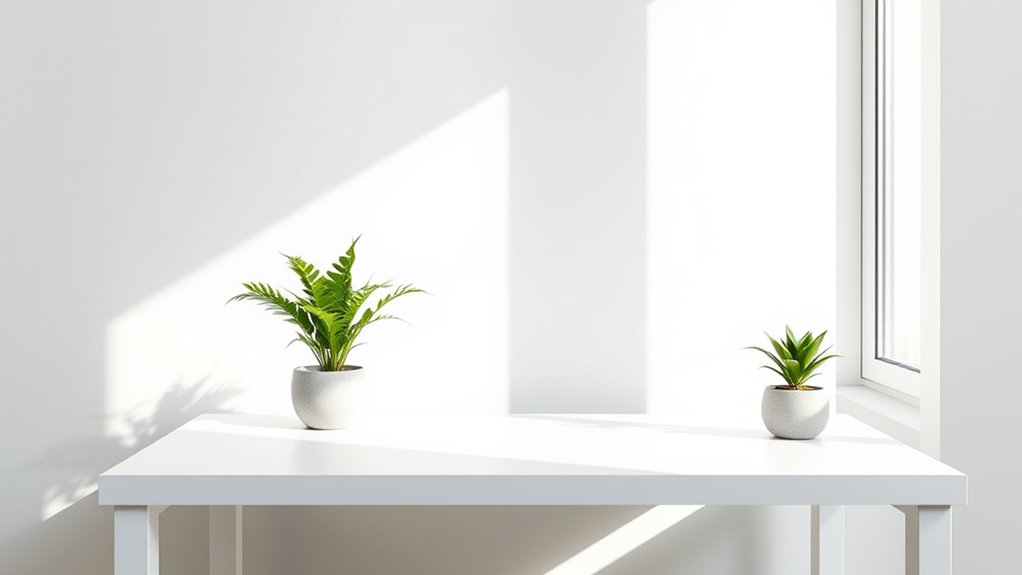
Incorporating plants into minimalist design isn’t just about adding a splash of color; it transforms the space into a calming, lively environment. Strategic plant placement enhances the overall aesthetic by creating balance and harmony. Position taller plants near empty corners or behind your workspace to add depth, while smaller plants work well on desks or shelves. Pay attention to color coordination; choose pots and plant varieties that complement your color scheme for a cohesive look. The greenery introduces natural textures that soften clean lines, making the space feel inviting rather than sterile. Plus, plants improve air quality and boost your mood, creating a healthier, more inspiring workspace. With thoughtful placement and coordinated hues, plants seamlessly blend into your minimalist design while providing numerous benefits. Additionally, selecting the right plant varieties can enhance the overall aesthetic and ensure easy maintenance. Incorporating plant care practices ensures your greenery remains vibrant and healthy over time, and understanding data analysis can help you choose the most suitable plants based on your environment and needs. Furthermore, awareness of personal development principles, such as mindfulness and goal-setting, can contribute to creating a more intentional and satisfying workspace environment, while understanding drivetrain components can inform your choices for maintaining a bike used in active commuting or recreation.

Logitech Z207 2.0 Stereo Computer Speakers with Bluetooth
Versatile setup with speakers that connect easily to computers and other devices via Bluetooth wireless or 3.5mm cable
As an affiliate, we earn on qualifying purchases.
Choosing the Right Plants for Small and Large Spaces
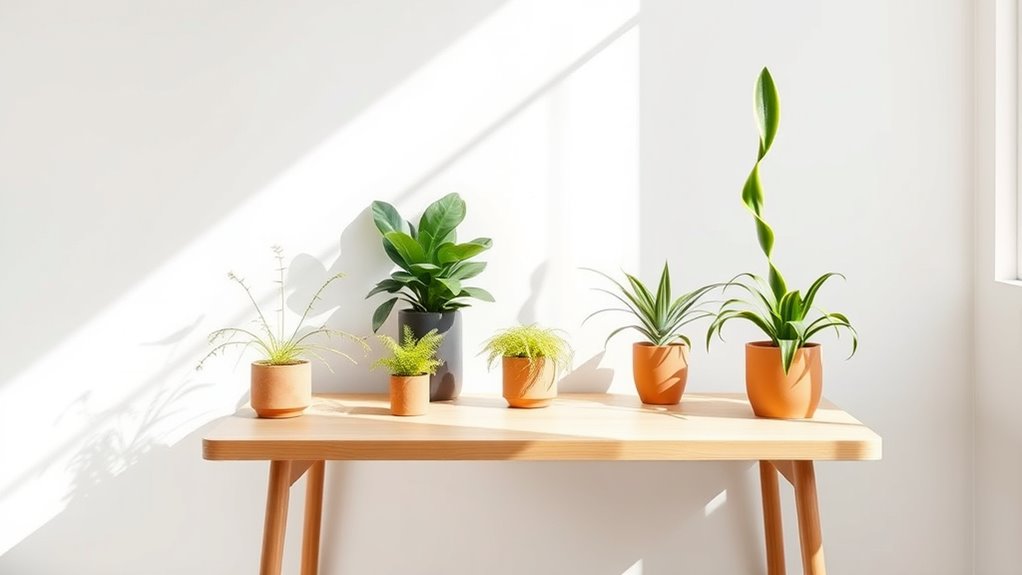
When selecting plants for your space, consider how much room you have and choose accordingly—compact plants work best for small areas, while larger ones make a statement in bigger rooms. Think about how much maintenance each plant needs so you can keep them thriving without hassle. Balance visual impact with your space’s size to create a harmonious, appealing environment. Additionally, understanding the cost and budgeting associated with different plant options can help you make sustainable choices that fit your overall design plan. Incorporating self watering plant pots can also reduce the time and effort needed for regular watering, making plant care more manageable in a busy workspace. Proper watering techniques ensure they remain healthy and vibrant with minimal effort. Moreover, paying attention to plant placement can enhance the overall aesthetic and health of your indoor garden. Proper tire pressure maintenance is also important, as it helps your plants stay healthy by reducing the need for frequent replacements or adjustments.
Space Size Considerations
Choosing the right plants depends heavily on the size of your space, as not all plants thrive in the same environment. In smaller areas, opt for compact or trailing plants that don’t overwhelm the space, and consider lighting considerations to guarantee they get enough light without overcrowding furniture. For larger rooms, you have more flexibility to include statement plants or tall greenery that fill empty corners without feeling cluttered. Furniture placement impacts plant choice too; avoid blocking pathways or windows to maximize natural light and airflow. In tight spaces, choose low-maintenance, space-efficient plants that add greenery without crowding your workspace. For larger areas, use taller or more substantial plants to create visual balance and enhance the minimalist aesthetic. Additionally, understanding cookie categories can help you select plants that require specific light and humidity conditions for optimal growth.
Plant Maintenance Needs
Selecting plants that match your space’s size involves more than just appearance; maintenance needs play a significant role. Smaller plants typically require less frequent watering routines and are easier to manage, while larger plants may need more attention. Consider how much time you can dedicate to pest prevention and watering. Here’s a quick comparison:
| Plant Size | Watering Routines | Pest Prevention Needs |
|---|---|---|
| Small | Weekly or biweekly | Low to moderate |
| Medium | Every 4-7 days | Moderate |
| Large | Every 5-7 days | Higher, check regularly |
| Extra Large | Weekly | Regular inspection |
| Hanging | Weekly | Low |
Matching maintenance needs with your schedule ensures your plants thrive without stress. Additionally, understanding plant size considerations can help you select the most suitable options for your environment. Recognizing growth habits is also important for long-term plant health and space planning. Being aware of sustainable planting materials can further enhance your garden’s ecological impact. Tailoring plant choices to environmental conditions can further optimize their health and vitality.
Visual Impact Balance
Have you ever considered how the size of your plants influences the overall visual harmony of your space? To achieve a balanced look, start by:
- Selecting smaller plants for tight spots, creating subtle color harmony without overwhelming.
- Using larger plants as focal points to draw attention and add visual weight.
- Balancing plant shapes and textures so they complement each other, enhancing cohesion.
- Placing contrasting sizes strategically to maintain rhythm, avoiding clutter or emptiness.
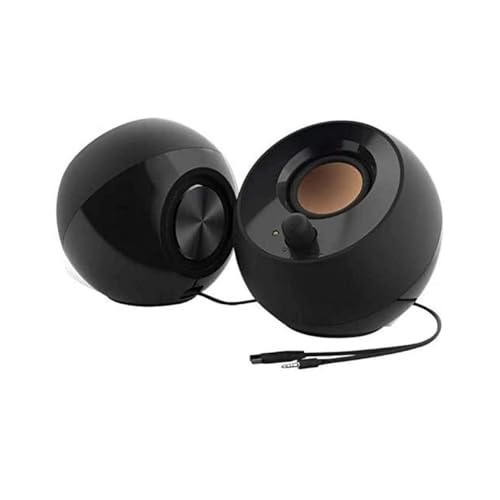
Creative Pebble 2.0 USB-Powered Desktop Speakers with Far-Field Drivers and Passive Radiators for Pcs and Laptops (Black)
Single USB cable for computers and laptops | enjoy a hassle-free Audio experience with a single USB cable...
As an affiliate, we earn on qualifying purchases.
Tips for Maintaining a Low-Impact, Clean Look
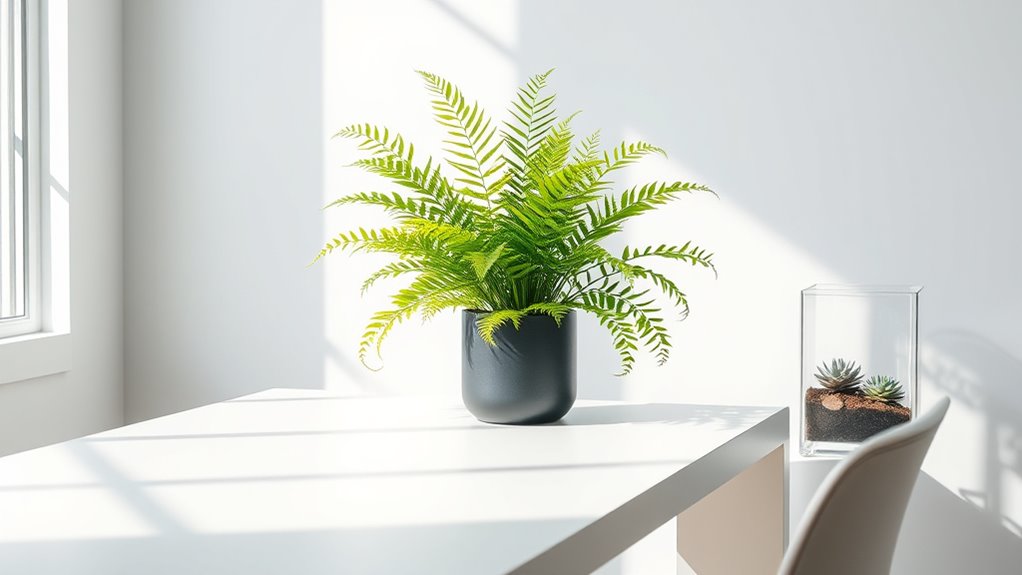
Ever wonder how to keep your green space looking sleek and understated? Focus on strategic plant placement to create a tidy, organized appearance. Group similar plants together to avoid clutter and maintain a cohesive look. Opt for containers with neutral colors or simple designs that blend seamlessly into your workspace, enhancing the minimalist vibe. Color coordination is key; choose plants with subtle foliage tones or minimal variegation to prevent visual overload. Keep your plants at varying heights to add depth without chaos. Regularly prune and remove any dead or overgrown leaves to preserve a clean, fresh look. Incorporating regional flavors and traditions can also infuse your workspace with unique character while maintaining minimalism. Additionally, selecting low-maintenance plants ensures your greenery stays healthy with minimal effort. Using appropriate plant lighting can further support healthy growth without complicating your setup. Implementing wall organization systems with plants can maximize vertical space and create a more dynamic environment. Incorporating modern safety features such as automatic shut-off or low power consumption in any electrical components used, like grow lights or heating mats, can help maintain a safe and energy-efficient environment. By thoughtfully arranging your greenery and sticking to a cohesive color palette, you’ll achieve a low-impact, sleek aesthetic that complements your minimalist workspace effortlessly.

Computer Speakers for Desktop PC Monitor, USB Plug-in, Wired, Computer Soundbar for PC, Laptop Speakers with Adaptive-Channel-Switching, Loud Sound, Deep Bass, USB C Adapter, Easy to Clip on Monitor
[COMPATIBLE WITH USB DEVICES] - Our USB Speakers are compatible with Windows, macOS, ChromeOS, and Linux, making them...
As an affiliate, we earn on qualifying purchases.
Creative Ways to Display Your Greenery
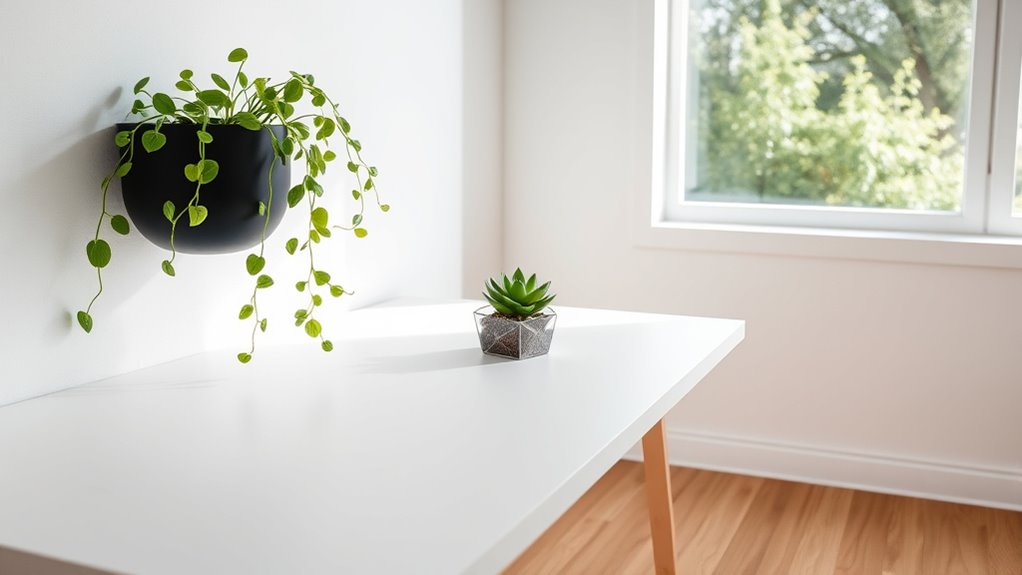
To showcase your greenery creatively, consider using unexpected display methods that add visual interest and personality. Creative containers can turn simple plants into focal points—try repurposing vintage tins or sleek geometric pots. Vertical gardens are a fantastic space-saver and eye-catching feature; you can mount modular panels or wall-mounted planters to transform blank walls into lush displays. Additionally, hanging planters add dimension and movement, perfect for small spaces. Using tiered stands or stacking containers creates visual layers that keep your workspace dynamic. Recognizing the ancient use of chia seeds for their versatility and aesthetic appeal can inspire unique plant displays that connect modern minimalism with historical traditions. Incorporating plant symbolism can also add a meaningful touch to your decor, emphasizing wellness and growth. Exploring plant care techniques ensures your greenery remains healthy and vibrant, enhancing your minimalist environment. Embracing the benefits of greenery in your workspace not only boosts aesthetic appeal but also contributes to improved air quality and overall well-being, making your environment more inviting and productive. These creative display options help your greenery stand out without cluttering your sleek, organized environment.
Balancing Minimalism and Nature for a Harmonious Workspace
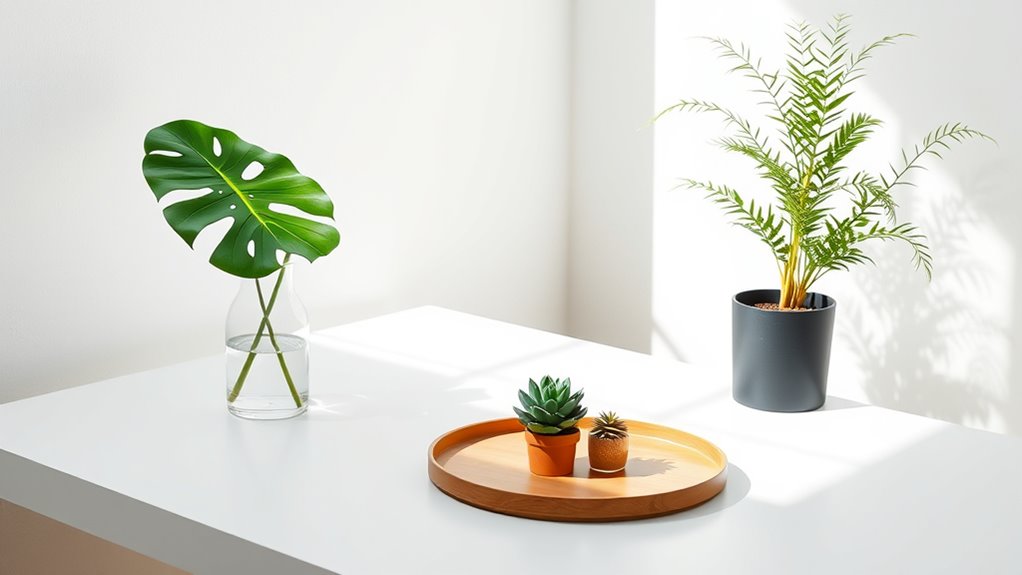
Balancing minimalism with natural elements can boost your workspace’s visual appeal without feeling cluttered. When you choose simple, strategic greenery, you create a calming environment that also supports your well-being. This approach helps you enjoy the benefits of nature while maintaining a clean, focused space.
Enhancing Visual Appeal
How can you create a workspace that feels both inviting and uncluttered? Start by choosing plant color schemes that complement your overall decor, such as muted greens or soft pastels, to maintain a calm atmosphere. Next, select decorative plant containers that add subtle style without overwhelming the space. Consider these tips:
- Use uniform or complementary colors for containers to create cohesion.
- Opt for sleek, minimalist designs that blend seamlessly with your workspace.
- Arrange plants thoughtfully, grouping a few for visual impact.
- Keep the plant setup simple, avoiding overcrowding or excessive variety.
Promoting Well-Being
Incorporating plants into your workspace can substantially boost your well-being by creating a calming environment. They improve air quality by filtering toxins and increasing oxygen levels, which helps you feel more alert and focused. Better air quality directly impacts your mental health, reducing stress and enhancing mood. Plants also introduce natural elements that promote a sense of tranquility, helping you stay centered amid busy workdays. By balancing minimalism with greenery, you foster a space that supports both productivity and relaxation. Keep your plant choices simple and well-maintained to prevent clutter, ensuring your workspace remains harmonious. Ultimately, integrating plants thoughtfully can strengthen your mental resilience and make your environment more inviting and conducive to overall well-being.
Sustainable and Care-Free Plant Options for Busy Professionals
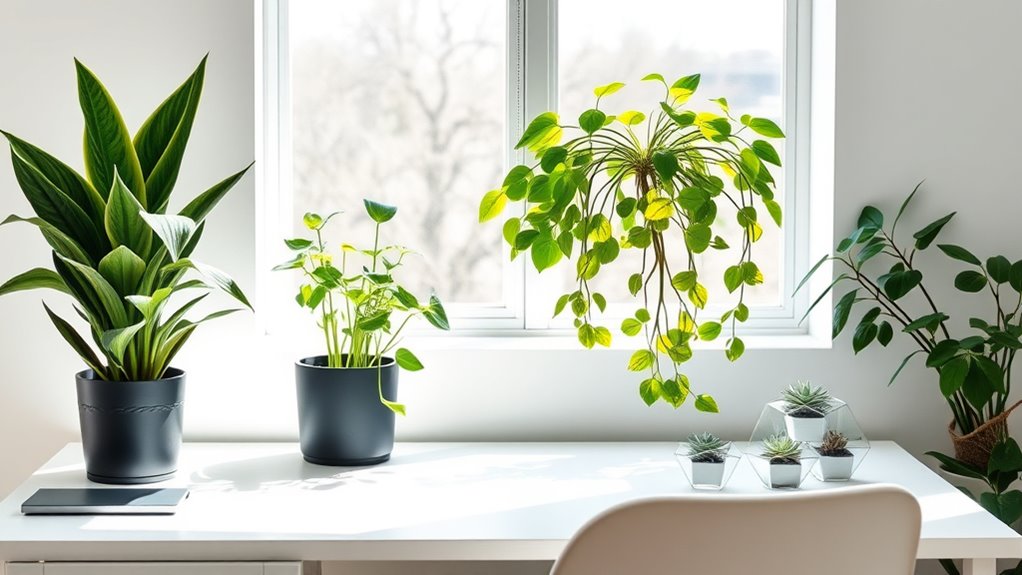
For busy professionals, finding plant options that are both sustainable and low-maintenance can markedly enhance their living or workspace without adding stress. Succulent varieties are perfect, as they require minimal watering and thrive in various lighting conditions. Additionally, many succulents offer air purifying benefits, improving indoor air quality effortlessly. To choose the best plants, consider these options:
Ideal low-maintenance plants for busy lifestyles that boost air quality and sustainability.
- Succulents like aloe vera and echeveria for easy care
- Snake plants for durability and air purification
- ZZ plants that tolerate low light and infrequent watering
- Pothos for rapid growth and air filtering abilities
These plants save time, promote sustainability, and contribute to a healthier environment, making them ideal for your busy lifestyle.
Frequently Asked Questions
How Do Plants Improve Air Quality in a Minimalist Workspace?
Plants improve air quality in your minimalist workspace through air purification, removing toxins and pollutants, making the air cleaner and healthier. They also provide natural humidification, balancing moisture levels and reducing dryness caused by indoor heating or cooling. By adding greenery, you create a fresher environment that boosts your mood and productivity, all while maintaining the clean, simple aesthetic of your minimalist workspace.
What Are the Best Low-Maintenance Plants for Busy Professionals?
Think of your workspace as a well-tuned instrument; low-maintenance plants are its steady, reliable notes. Succulent varieties like aloe vera or jade thrive on minimal care, making them perfect for busy schedules. Air-purifying herbs such as basil or mint add fresh scent without fuss. These plants require little watering or pruning, so you stay focused while enjoying the calming presence of greenery.
How Can I Incorporate Plants Without Cluttering My Minimalist Design?
You can incorporate plants into your minimalist workspace by carefully choosing plant placement and container selection. Opt for sleek, simple containers that complement your decor, and place plants on shelves, desks, or in corners where they add visual interest without clutter. Use vertical space or small potted plants to keep surfaces clean. This approach keeps your design streamlined while bringing in natural elements for a fresh, calming vibe.
Are There Eco-Friendly Ways to Care for Office Plants?
Think of your plants as tiny eco-heroes; they thrive with sustainable watering and organic fertilizers, reducing waste and chemical use. You can collect rainwater or reuse greywater for watering, and opt for compost or organic options for fertilizing. This approach keeps your workspace green and healthy, proving that caring for plants sustainably isn’t only good for the environment but also for your well-being.
How Do Plants Influence Productivity and Mental Well-Being at Work?
Plants boost your productivity and mental well-being by reducing stress and enhancing creativity. When you have greenery around, you’ll notice a calmer, more focused mind. The presence of plants can lower anxiety, making work feel less overwhelming. Plus, their vibrant greenery sparks inspiration, encouraging innovative thinking. Incorporate plants into your workspace to create a more balanced environment that supports your mental health and helps you perform at your best.
Conclusion
Imagine stepping into your workspace, where lush greenery subtly whispers tranquility amidst sleek surfaces. Every leaf, carefully chosen and thoughtfully placed, transforms your environment into a sanctuary of calm and inspiration. As you master the art of balancing minimalism with nature, you’ll discover a space that feels alive yet uncluttered—ready to reveal its true potential. Are you prepared to unleash the full harmony that plants can bring to your minimalist workspace? The transformation awaits.