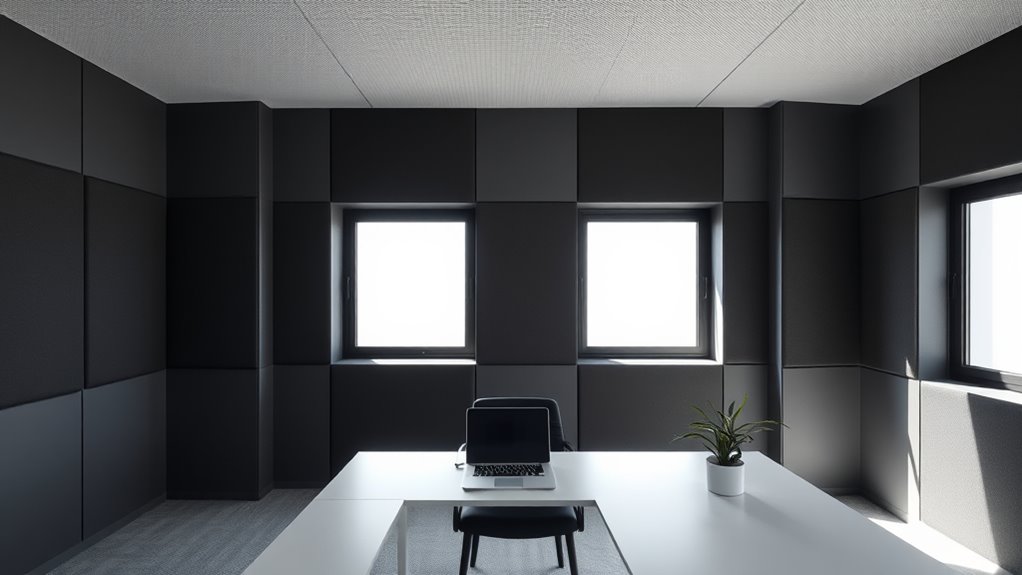

To achieve a minimalist, quiet office, focus on soundproofing with simple, natural materials. Use soft surfaces like acoustic panels, fabric furniture, and carpets to absorb sound, while sealing cracks around doors and windows to block outside noise. Strategically place furniture and partitions to minimize sound travel. Incorporating sound masking devices can also help maintain calm and focus. Want to discover more effective strategies? Keep exploring to create your ideal peaceful workspace.
Key Takeaways
- Incorporate soft materials like acoustic panels, fabric furniture, and carpets to absorb sound and reduce noise reflection.
- Use minimalist furniture arrangements and partitions to block sound travel without cluttering the space.
- Seal gaps around windows and doors with weatherstripping or door sweeps to prevent external noise intrusion.
- Select sleek, simple wall treatments such as acoustic wall panels that blend seamlessly into minimalist decor.
- Employ background sound masking devices like white noise machines to create a tranquil, distraction-free environment.
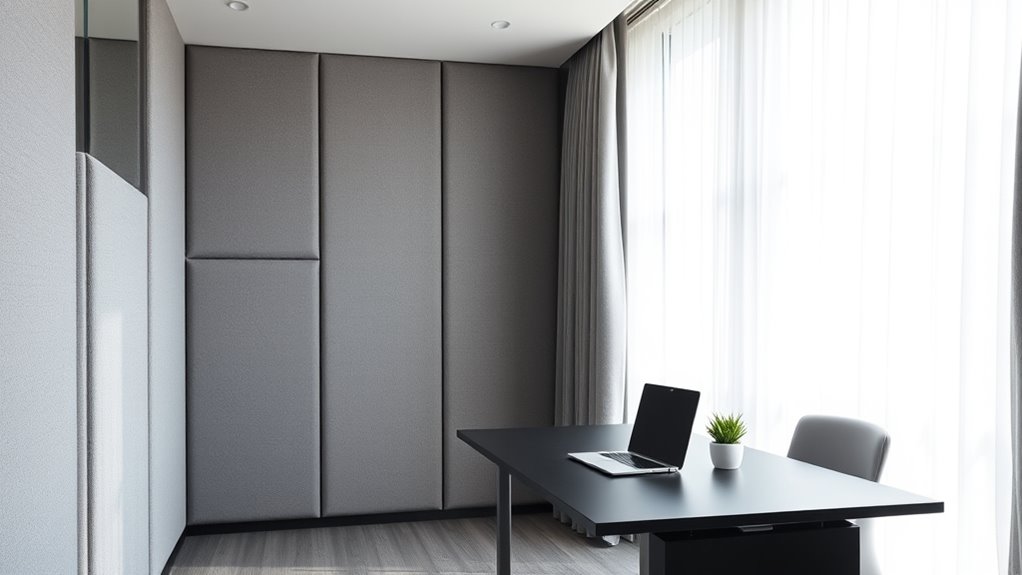
Creating a quiet office environment can substantially boost your productivity and focus, especially if external noise or nearby conversations frequently disrupt your work. The key to achieving this lies in understanding and optimizing office acoustics, which directly influence how sound behaves within your space. Good office acoustics aren’t just about muffling noise; they’re about creating a balanced sound environment that minimizes distractions and promotes concentration. To do this effectively, you need to employ noise reduction techniques that target both sound absorption and sound blocking.
A quiet office boosts productivity by minimizing distractions through strategic sound absorption and blocking techniques.
Start by considering how your office surfaces impact sound. Hard surfaces like glass, tile, or polished wood reflect sound waves, amplifying noise and making the environment more chaotic. Incorporate soft materials—such as acoustic panels, fabric-covered furniture, or carpets—to absorb excess sound. These noise reduction techniques help prevent sound from bouncing around, creating a calmer atmosphere. Acoustic wall panels are especially effective because they can be strategically placed to target specific noise sources, like nearby conversations or equipment noise.
Another important aspect is the placement of your furniture and equipment. Arrange desks and workstations to reduce direct lines of sound travel. For example, placing partitions or low walls between work areas can act as sound barriers, helping to contain noise and prevent it from spreading. Additionally, adding items like bookshelves filled with books or fabric-covered panels can serve dual purposes: functional decor that enhances office aesthetics while improving acoustics. Using these strategies, you can considerably diminish ambient noise and create a more focused workspace.
Sealing gaps and cracks around windows, doors, and vents is also vital. These small openings often let in outside noise, undermining your efforts to soundproof the office. Weatherstripping and door sweeps are simple, cost-effective solutions that help block sound leaks. If you’re working in a particularly noisy environment, consider investing in double-glazed windows, which provide an extra layer of sound insulation. These noise reduction techniques are essential for maintaining a quiet workspace, especially in urban settings or shared office environments.
Finally, don’t forget the importance of background sound masking. A white noise machine or ambient sound system can help drown out intrusive sounds, making it easier to concentrate. When combined with thoughtful office acoustics and noise reduction techniques, these tools can turn a noisy, distracting space into a tranquil, productive haven. Paying attention to office acoustics and implementing effective soundproofing strategies will help create an environment that promotes focus, reduces stress, and enhances overall productivity.
Frequently Asked Questions
How Does Soundproofing Affect Indoor Air Quality?
Soundproofing can improve indoor air quality by enhancing air circulation and humidity control. When you install proper soundproofing measures, like vents or acoustic panels with ventilation, you guarantee fresh air flows smoothly. This prevents stale air buildup and maintains ideal humidity levels. As a result, your office stays healthier, reducing mold growth and airborne pollutants, creating a more comfortable and productive environment.
Are There Eco-Friendly Soundproofing Options Available?
Yes, eco-friendly soundproofing options exist that are as effective as traditional methods. You can choose recyclable materials like recycled denim or cork, which offer sustainable solutions without harming the environment. These options are not only good for the planet but also keep your office quiet and calm. By opting for sustainable solutions, you make a huge difference—your workspace becomes a peaceful haven and a champion for eco-conscious living.
Can Soundproofing Materials Be Reused or Recycled?
Yes, soundproofing materials can be reused or recycled. Many recyclable options, like mineral wool or cellulose insulation, have reuse potential if properly maintained. You can also repurpose certain materials, such as foam panels or acoustic tiles, for other projects or donate them if they’re still in good condition. By choosing eco-friendly options, you help reduce waste and promote sustainability in your office soundproofing efforts.
What Is the Cost Difference Between DIY and Professional Soundproofing?
The cost comparison between DIY and professional soundproofing varies markedly. DIY options are generally more affordable, often costing a few hundred dollars for materials like foam panels and sealants. Professional soundproofing, however, can range from several hundred to thousands of dollars, depending on the size and complexity of the project. While DIY saves money upfront, professional installation ensures better results and long-term durability.
How Long Does Soundproofing Maintenance Typically Last?
Soundproofing lifespan varies depending on materials and maintenance. Typically, you’ll need to check and maintain your soundproofing every 1-3 years. Regular maintenance, like resealing gaps or replacing worn materials, helps extend its effectiveness. If you keep up with these tasks, your soundproofing can last 10-15 years or more. Staying proactive guarantees your quiet office stays peaceful, reducing the need for costly repairs or replacements down the line.
Conclusion
Just like Pandora’s box once held chaos, your office can become a sanctuary of calm with the right soundproofing. By sealing gaps, choosing the right materials, and adding soft furnishings, you create a space where focus flows as smoothly as a silent river. Remember, silence isn’t just the absence of sound—it’s the presence of peace. With these steps, you’ll transform your office into a haven, where productivity and tranquility coexist like a well-tuned symphony.