
To create effective “quiet hours,” identify your peak focus times, such as morning or late afternoon, and set clear goals for each session. Choose a comfortable, clutter-free environment and communicate your plans to others to set boundaries. Use visual signals or digital tools to reinforce your focus periods and block distractions like notifications. Developing a consistent schedule and addressing common challenges will help maintain discipline. Continue exploring these strategies to maximize your distraction-free work sessions.
Key Takeaways
- Clearly define specific time blocks dedicated to focused work, and communicate these periods to others.
- Use visual signals, signs, or digital calendar tools to mark and reinforce quiet hours.
- Schedule demanding tasks during energy peaks identified through productivity tracking.
- Minimize distractions by silencing notifications and using noise-canceling apps during quiet hours.
- Establish consistent routines and boundaries to maintain discipline and protect distraction-free work sessions.

Dr.meter Noise Reduction Ear Muffs, Noise Cancelling Headphones for Adults, Kids Autism Sensory Ear Protection Earmuffs, 31dB Hearing Protection for Shooting Gun Range, Mowing, Monster Jam, Focus
【Comfort and Snug】: Say goodbye to bulky earmuffs! Dr.meter noise cancelling headphones are made of premium memory foam…
As an affiliate, we earn on qualifying purchases.
As an affiliate, we earn on qualifying purchases.
Understanding the Benefits of Quiet Hours

Implementing quiet hours can considerably boost your productivity by minimizing interruptions and mental clutter. When you dedicate specific times for focused work, you create space for mindfulness meditation, which sharpens your concentration and reduces stress. During quiet hours, ambient noise levels naturally decrease, allowing your mind to settle and improve clarity. This environment supports better decision-making and enhances your ability to stay on task. By limiting distractions, you also cultivate a sense of calm that helps prevent burnout and mental fatigue. Over time, these quiet periods train your brain to associate certain times with deep focus, making it easier to enter a productive state. Additionally, establishing a consistent schedule can optimize your focus and reinforce the habit of sustained attention. Recognizing the importance of mental boundaries helps in maintaining a balanced work routine. Creating designated distraction-free zones can further enhance your ability to maintain focus during these periods. Cultivating consistent routines around quiet hours can help solidify this productive habit. Embracing quiet hours ultimately fosters a more mindful, efficient work routine, giving you control over your mental landscape. Incorporating distraction management techniques during these periods can further enhance your focus and overall productivity.

Dragon Touch 10.1 inch Digital Calendar Chore Chart – Interactive Touchscreen, Smart Family Planner, Hearth Display Desk Digital Calendar Best Gifts for Christmas, Wedding, Mom
【All-In-One Smart Family Calendar】: Dragon Touch digital frame effortlessly organizes and tracks every family schedule with the crystal-clear…
As an affiliate, we earn on qualifying purchases.
As an affiliate, we earn on qualifying purchases.
Identifying Your Peak Productivity Times
To optimize your work sessions, you need to identify when you’re naturally most alert and focused. Pay attention to your energy peaks throughout the day—are you most energized in the morning or late afternoon? These are your focus windows, the times when your concentration is at its best. Track your productivity for a few days to spot patterns, noting when tasks feel easier and your mind is sharper. Recognizing these periods allows you to schedule demanding tasks during your peak productivity times, making the most of your natural rhythms. Incorporating preppy dog names and other productivity insights can further refine your scheduling strategies to enhance your productivity. Additionally, understanding your work-life balance can help you create more sustainable work routines. Being aware of your mindset and maintaining a positive attitude can also influence your focus and effectiveness during these prime hours. By aligning your work sessions with your energy peaks, you minimize distractions and maximize focus, helping you create more effective, distraction-free quiet hours.

Busy Light Indicator – Wireless Office Desk Accessory, Compact Traffic Signal Indicator, Visual Status Light, Focus Aid for Workspaces, Modern Productivity Gadget | Busy Lamp with Multi Color Signals
Enhanced Home Office Decor: The Busy Light Indicator for Office elevates home office aesthetics while functioning as a…
As an affiliate, we earn on qualifying purchases.
As an affiliate, we earn on qualifying purchases.
Setting Clear Goals for Focused Sessions
To make the most of your quiet hours, you need to set clear goals for each session. Focus on defining specific objectives so you stay on track and prevent distractions. Prioritize your key tasks to make sure you accomplish what matters most during your focused work time. Additionally, creating a dedicated and comfortable home workspace can enhance your ability to concentrate and maintain productivity during these sessions. Incorporating interior design principles that emphasize comfort and organization can also boost motivation and keep your energy levels high.
Define Specific Objectives
Setting clear objectives is essential for making your distraction-free work sessions effective. When you define specific goals, you give yourself direction and focus. Begin by identifying what you want to accomplish during each session, whether it’s completing a report or brainstorming ideas. Incorporate mindful breathing techniques to stay centered and reduce stress, helping you stay attentive to your objectives. Make sure your ergonomic setup supports concentration by reducing physical discomfort, so you can maintain focus longer. Clear objectives help you prioritize tasks and avoid drifting into unrelated activities. By knowing exactly what you aim to achieve, you create a purposeful environment that minimizes distractions and enhances productivity. Proper workspace setup can significantly improve your ability to concentrate and maintain focus throughout your session. This clarity keeps you aligned and motivated throughout your focused work session.
Prioritize Key Tasks
Prioritizing key tasks guarantees your distraction-free work sessions stay focused and productive. To do this, identify the most important tasks that align with your goals. Break larger projects into manageable steps and delegate tasks when possible to reduce your load. Clear goals help you resist distractions, so set specific objectives for each session. Optimize your workspace ergonomics to maintain focus—adjust your chair, monitor height, and lighting to stay comfortable. Visualize a tidy desk with essential tools within reach, minimizing disruptions. Remember, task delegation frees up mental space for high-priority work, while an ergonomic setup keeps you alert. Additionally, practicing creating the perfect farmhouse bedroom ambiance during breaks can enhance your concentration and mental clarity. Incorporating ambient lighting and calming decor can further boost your focus. By clearly defining your key tasks, you create an environment and mindset primed for deep concentration.

ZenTag Phone Jail Compatible with iOS 17+ – NFC App Blocker for Deep Focus, Phone Blocker, Phone Locker with Timer for Study and Reflection, Cell Phone Locker for Family Time, Limits Screen Time
What is ZENTAG: ZENTAG is a pocket-sized tool that breaks your phone addiction by blocking distractions via a…
As an affiliate, we earn on qualifying purchases.
As an affiliate, we earn on qualifying purchases.
Choosing the Right Environment for Distraction-Free Work

Choosing the right environment is essential for creating effective distraction-free work sessions. You want a space that minimizes interruptions and supports focus. Consider ambient noise levels—some people work best with complete silence, while others prefer soft background sounds. Experiment to find what suits you. An ergonomic setup is equally important; ensure your chair and desk support good posture and reduce physical discomfort, which can distract you. Clear your workspace of clutter to keep your mind clear. If possible, select a quiet area with minimal foot traffic or noise disruptions. Natural light, fresh air, and a comfortable temperature also boost concentration. Additionally, paying attention to sound environment can significantly enhance your ability to focus during work sessions. Being aware of market volatility and how it impacts your environment can help you better manage stress levels and maintain concentration. Incorporating elements like ambient lighting can further optimize your workspace. Creating a calm atmosphere can help reduce mental clutter and improve focus during your dedicated work times. Utilizing sound therapy techniques, such as calming music or nature sounds, can also support sustained attention. By thoughtfully selecting your environment, you set the stage for undisturbed, productive work sessions.
Communicating Your Quiet Hours to Others
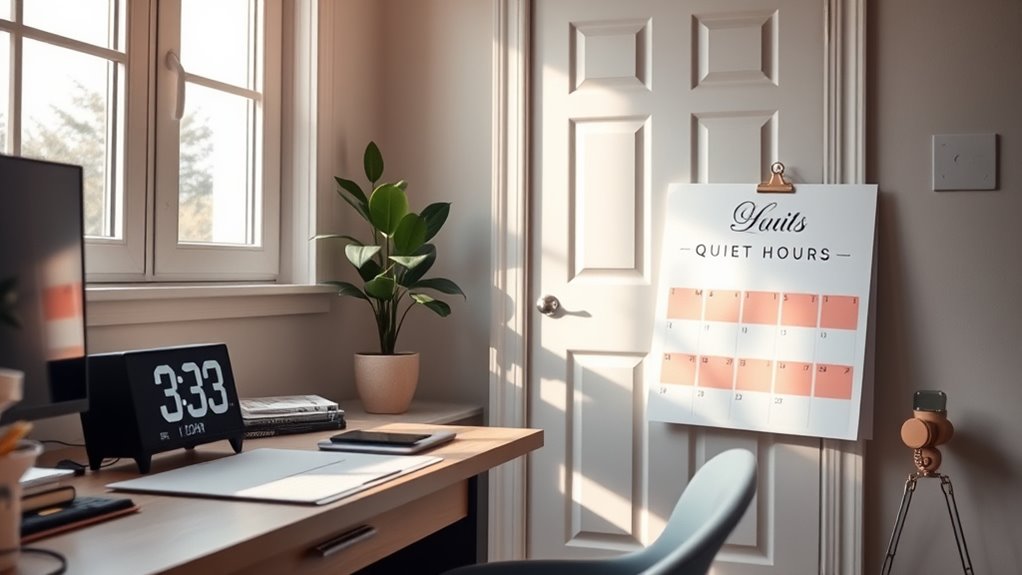
To guarantee your quiet hours are respected, clearly communicate your schedule to others early on. Set expectations by explaining why these times matter and how they benefit everyone. Using visual cues like signs or signals can reinforce your boundaries and help prevent interruptions. Mentioning the importance of effective communication can further ensure understanding and cooperation.
Clearly State Your Schedule
Once you’ve set your quiet hours, it’s essential to communicate them clearly to others. Being transparent helps manage expectations and preserves your focus. Use tools like calendar integration to block out your dedicated time, making it visible to colleagues, friends, or family. When sharing your schedule, picture these visuals:
- A digital calendar marked with “Quiet Hours” in bold, easy-to-see colors
- A shared calendar alert that notifies others of your unavailable times
- A simple email explaining your new work boundaries
- A visual reminder on your workspace or door signaling “Do Not Disturb”
These methods reinforce schedule flexibility while respecting your need for distraction-free sessions. Clear communication ensures everyone understands your priorities and helps you maintain consistent quiet hours.
Set Expectations Early
Have you communicated your quiet hours to those around you? Setting boundaries early is vital to managing expectations and ensuring your distraction-free sessions are respected. Talk with coworkers, family members, or roommates about your dedicated work times, explaining why they matter. Be clear about when you’re unavailable for interruptions and ask for their support. By setting expectations upfront, you reduce misunderstandings and build respect for your focus periods. It also helps others plan around your quiet hours, making it easier for everyone. Remember, proactive communication shows you’re serious about your boundaries, increasing the chances they’ll be honored. Establishing these expectations early creates a foundation of respect and minimizes potential conflicts, helping you maintain a distraction-free environment.
Use Visual Cues
Using visual cues is an effective way to communicate your quiet hours without interrupting conversations. Clear signals help others respect your focused time and maintain workspace organization. Consider placing a designated sign or card on your desk that indicates “Quiet Hours” or “Focus Time.” Use a simple lamp or a specific light color to signal when you’re in distraction-free mode. You might also arrange your workspace with visual markers like a mini flag or a colored cloth. These cues quickly convey your availability, reducing interruptions and fostering respect. By establishing consistent visual signals, you create a shared understanding that your quiet hours are intentional. This simple step helps maintain an organized workspace and ensures your dedicated focus time remains undisturbed.
Incorporating Technology to Minimize Interruptions
To effectively minimize interruptions during focused work sessions, integrating technology tools can make a significant difference. Noise canceling apps help block out distracting sounds, creating a more serene environment. Focus enhancing devices, like wearable noise meters or white noise generators, can further improve concentration by reducing auditory distractions. You can also use do-not-disturb modes on your devices to prevent notifications from breaking your flow. Setting specific app restrictions during your quiet hours ensures you aren’t tempted by social media or email alerts. These tools work together to create a more controlled workspace, helping you stay immersed in your tasks. By actively leveraging noise canceling apps and focus-enhancing devices, you take control of your environment and protect your productivity.
Developing a Consistent Schedule for Quiet Hours

Establishing a consistent schedule for your quiet hours is essential to making distraction-free work a habit. Decide on specific times when you can focus without interruptions, and stick to them daily. This routine helps train your brain to prepare for deep work sessions. Incorporate a short power nap to recharge and improve focus during breaks, and optimize your workspace ergonomics to reduce discomfort and fatigue. Visualize your quiet hours as a sanctuary:
- A serene corner with minimal clutter
- Comfortable seating that supports good posture
- Gentle lighting that promotes alertness
- A clutter-free desk to keep distractions at bay
Overcoming Common Challenges in Maintaining Quiet Hours

Even with a set schedule and a well-designed workspace, maintaining quiet hours can still face obstacles. Managing interruptions is a common challenge; unexpected calls or emails can break your focus. You might also struggle with balancing social commitments, making it tough to stick to your designated quiet times. To handle these issues, set clear boundaries and communicate your schedule to colleagues and friends. Use the table below to identify potential disruptions and plan solutions:
| Challenge | Solution | Example |
|---|---|---|
| Managing Interruptions | Turn off notifications, set boundaries | Silence phone during focus sessions |
| Balancing Social Commitments | Schedule social activities around quiet hours | Plan meetings before or after |
| Unexpected Emergencies | Have backup work plans or flexible hours | Adjust schedule when urgent needs arise |
Tracking and Adjusting Your Focus Sessions
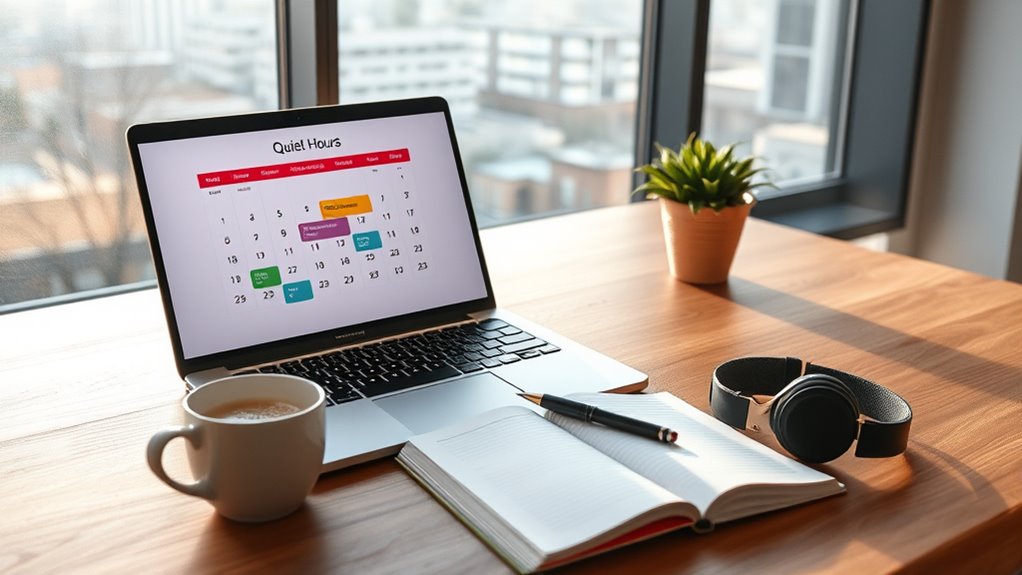
Tracking your focus sessions is essential for understanding how well your quiet hours are working and identifying areas for improvement. By reviewing your data, you can refine your focus granularity—deciding whether to block small tasks or larger projects—and adjust your distraction hierarchy to minimize interruptions. Visualize your progress as you:
- Notice when minor distractions, like notifications, disrupt your flow
- Identify times of day when focus peaks or dips
- Recognize tasks that require deeper concentration
- Fine-tune the duration of your sessions for ideal productivity
Keeping track helps you see patterns, enabling you to make precise adjustments. This ongoing process ensures your quiet hours become more effective, helping you maintain steady focus and achieve your goals with less frustration.
Enhancing Your Routine With Additional Focus Strategies

To boost your focus, try using time block techniques to structure your day and protect your work periods. Minimize digital distractions by turning off notifications and setting boundaries for device use. Establish routine triggers, like a specific coffee break or playlist, to cue your mind that it’s time to focus.
Time Block Techniques
Time block techniques are powerful tools for boosting your focus and productivity during work sessions. By using methods like the Pomodoro Technique and dedicated time blocking, you create structured periods for deep work. Imagine setting aside a specific hour for your most important tasks, free from interruptions. During these blocks, you might:
- Turn off notifications and close unrelated tabs
- Use a timer to mark focused intervals
- Schedule breaks to recharge without distraction
- Visualize your work session as a clean, organized space
These strategies help you stay on track, making each session count. Time blocking allows you to allocate dedicated periods for different tasks, while the Pomodoro Technique breaks work into manageable chunks. Together, they transform your routine into a highly efficient, distraction-free workflow.
Minimize Digital Distractions
While structuring your work sessions with time blocks boosts focus, digital distractions can still chip away at your productivity. To combat this, consider a digital detox before starting your session—turn off notifications, disconnect from social media, and silence non-essential alerts. This minimizes interruptions and helps maintain your focus biomarkers, which indicate your mental engagement levels. By reducing digital noise, you create a distraction-free environment that allows you to immerse fully in your tasks. Regularly checking devices or falling into online rabbit holes diminishes concentration and prolongs work time. Implementing these strategies not only sharpens your focus but also trains your brain to stay engaged longer, making your sessions more efficient and effective. Remember, less digital clutter means more mental clarity.
Establish Routine Triggers
Adding routine triggers to your work sessions can considerably boost your focus by signaling your brain that it’s time to concentrate. These cues create consistency and reinforce your distraction-free habits. For example, you might:
- Practice a brief meditation to clear your mind before starting
- Adjust your ergonomic setup to signal the beginning of work
- Play a specific playlist or sound that signifies focus time
- Dim the lights or close your blinds to mark the start of a session
Frequently Asked Questions
How Do I Handle Unexpected Urgent Calls During Quiet Hours?
When unexpected urgent calls come through during quiet hours, you should follow your emergency protocols and communication plans. Answer only if it’s truly an emergency, and if not, let the caller know you’re in a distraction-free period and will respond later. Make sure your communication plan includes clear guidelines for handling urgent situations, so you can maintain focus while still addressing critical matters promptly.
Can Quiet Hours Be Effective for Collaborative Team Projects?
Quiet hours can be effective for collaborative team projects if you set clear boundaries, foster focused team coordination, and align on project deadlines. During these periods, your team can concentrate on complex tasks without interruptions, increasing productivity. To maximize benefits, communicate expectations upfront, schedule key discussions outside quiet hours, and encourage accountability. With proper planning, quiet hours support deep work while still meeting collaborative goals.
What Are Some Signs I Need to Adjust My Quiet Hours Schedule?
You should adjust your quiet hours if you notice your productivity dips or if errors increase during your scheduled sessions. These signs indicate that your current timing isn’t aligning with your natural focus periods. Pay attention to how you feel and perform; if you’re less efficient or making more mistakes, it’s time to shift your quiet hours to when you’re most alert and engaged, ensuring you get the best out of your work sessions.
How Do I Stay Motivated to Stick to Quiet Hours Long-Term?
Think of sticking to quiet hours as tending a garden—you need rewards and accountability to keep it thriving. Remind yourself of the benefits, like increased focus and productivity, which act as your rewards. Reinforce your routine daily, maybe with a small celebration or milestone. When accountability partners check in, it fuels your motivation. Over time, these habits grow stronger, making your quiet hours an essential part of your success.
Are There Specific Tools to Help Enforce My Distraction-Free Sessions?
Yes, you can use productivity apps and focus timers to enforce your distraction-free sessions. Apps like Forest, Freedom, or StayFocusd help block distracting sites and set dedicated work periods. Focus timers such as Pomodoro timers keep you on track by encouraging focused work in short, manageable intervals. These tools make it easier to stick to your quiet hours, ensuring you stay productive and minimize interruptions throughout your sessions.
Conclusion
Remember, Rome wasn’t built in a day, and creating quiet hours takes time and consistency. By understanding your peak times, setting clear goals, and communicating your boundaries, you’ll boost your focus and productivity. Stay flexible, track your progress, and adjust as needed. With patience and persistence, you’ll turn distraction-free work into a habit. Ultimately, “The journey of a thousand miles begins with a single step”—so start today and watch your focus flourish.