
To learn from famous minimalist creatives, focus on how their workspaces promote clarity, organization, and natural elements. Agnes Martin’s serene art encourages restraint and meditative focus. Steve Jobs created simple, clutter-free environments that foster innovation. John Pawson’s designs emphasize space and subtlety, while Marie Kondo’s methods reduce chaos to boost creativity. Tadao Ando’s architecture highlights natural light and materials. Keep exploring these principles, and you’ll discover how simplicity fuels your own focus and inspiration.

Get your wardrobe favorites delivered free with Prime
- Fast, free delivery on millions of items
- Prime Video, Amazon Music and more included
- Member-only deals all year
Key Takeaways
- Embrace simplicity by removing clutter to enhance focus, creativity, and mental clarity in your workspace.
- Use natural elements and light to create calming environments that foster mindfulness and inspiration.
- Prioritize functional, purpose-driven design with minimal aesthetic details for efficient and intentional workspaces.
- Incorporate routines and disciplined habits to maintain clarity, consistency, and intentionality in creative processes.
- Recognize that restraint and deliberate choices cultivate deeper emotional connection and sustainable creative flow.
As an affiliate, we earn on qualifying purchases.
The Artistic Simplicity of Agnes Martin
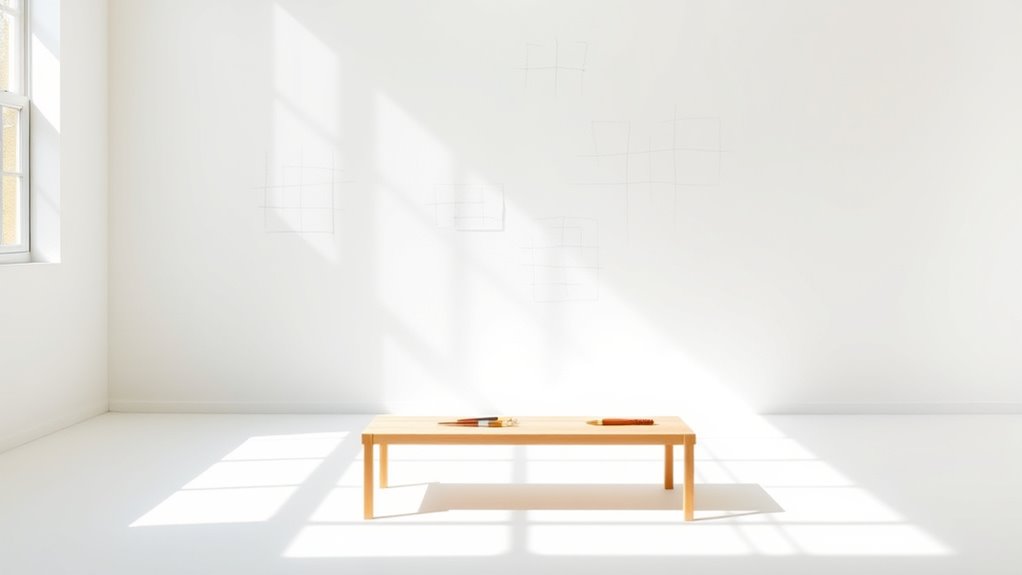
Agnes Martin’s work exemplifies how simplicity can convey profound emotion and meaning. Her art embodies spiritual minimalism, stripping away unnecessary details to reveal pure, contemplative forms. Unlike abstract expressionism, which often emphasizes chaos and intense emotion, Martin’s delicate grids and subtle color palettes evoke serenity and introspection. Her minimalist approach isn’t about lack; it’s about depth through restraint. Each line and hue invites you to connect with a sense of calm and spiritual harmony. Her work encourages you to find tranquility in simplicity, demonstrating that less truly can be more. Through her precise yet gentle compositions, Martin shows that minimalism can be a powerful language for expressing inner truth and universal spirituality. Additionally, her emphasis on conceptual clarity highlights how minimalism fosters a deeper understanding of complex emotional and spiritual states. Recognizing the role of visual harmony in her work underscores how balance and proportion are essential elements in minimalist art, contributing to a cohesive and impactful aesthetic. Furthermore, appreciating artistic restraint reveals how disciplined simplicity can evoke powerful emotional responses. Her work also reflects a profound influence of Western art movements, which she seamlessly integrated into her unique style, enriching the cultural dialogue.
As an affiliate, we earn on qualifying purchases.
Steve Jobs’ Focused Work Environment

Steve Jobs understood that a focused work environment could spark innovation and creativity. He believed that minimizing distractions allowed you to concentrate deeply on your goals. Incorporating mindful meditation into your routine helps clear mental clutter, sharpening your focus for problem-solving and idea generation. By setting clear goals, you create a roadmap that guides your daily efforts, reducing the temptation of unnecessary tasks. Jobs kept his workspace simple and clutter-free, fostering a sense of calm and purpose. This environment encouraged you to stay present and fully engaged with your work. His disciplined approach showed that cultivating a mindful workspace, combined with intentional goal setting, release your ability to innovate and produce meaningful, minimalist design.
clutter-free workspace accessories
As an affiliate, we earn on qualifying purchases.
As an affiliate, we earn on qualifying purchases.
The Minimalist Philosophy of John Pawson

John Pawson’s minimalist philosophy centers on simplicity and the essence of space, emphasizing that less truly is more. He believes that stripping away excess reveals what’s truly important, fostering clarity and calm. This approach extends beyond architecture into sustainable design, where minimizing materials and waste creates environmentally conscious spaces. Pawson’s work also influences minimalist fashion, encouraging clean lines and functional pieces that prioritize quality over quantity. His focus on essential elements helps you appreciate the beauty of restraint and intentionality. By adopting his philosophy, you learn that true elegance lies in simplicity, and that thoughtful design can be both beautiful and responsible. Embracing Pawson’s principles guides you toward a more mindful, sustainable lifestyle, where less becomes more meaningful. Additionally, understanding the benefits of easy cleanup with water-based paints can inspire you to incorporate more environmentally friendly choices into your minimalist space, especially since diluting paint for airless sprayers can make application more efficient and eco-friendly. Incorporating environmentally conscious materials aligns with the minimalist ethos of reducing waste and creating sustainable environments, which is increasingly important in the context of rising breakfast delivery trends and the demand for sustainable packaging solutions. Furthermore, integrating advanced AI-driven design tools can streamline the creative process, ensuring that every element serves a purpose and enhances overall harmony.
As an affiliate, we earn on qualifying purchases.
Marie Kondo’s Clutter-Free Living for Creativity
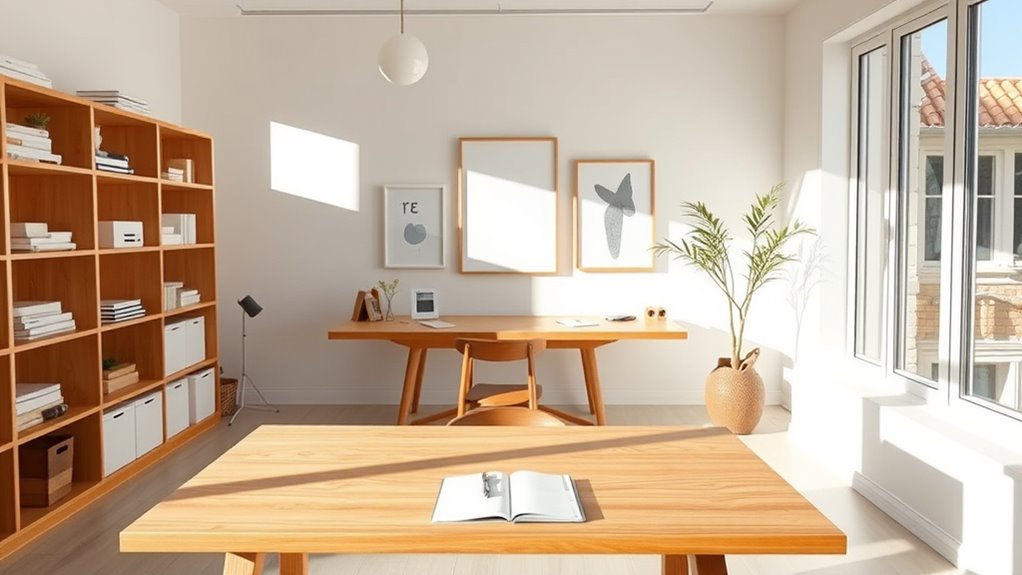
When you keep your space clutter-free, you create a calm environment that clears your mind. This simplicity helps you focus better and sparks fresh ideas. By organizing your surroundings, you set the stage for more focused and creative thinking. Incorporating minimalist principles into your workspace can further enhance productivity and mental clarity. For example, choosing a simple, reliable ebike conversion kit can reduce clutter and streamline your daily commute. Additionally, implementing practical, room-by-room solutions makes maintaining an organized space more manageable and sustainable over time. Recognizing the importance of organized spaces can inspire you to adopt habits that maintain clarity and efficiency. Paying attention to bike maintenance routines, such as regularly checking tire pressure and inspecting drivetrain components, can also help keep your environment tidy and your bike in optimal condition.
Simplifies Living Spaces
A clutter-free living space can ignite your creativity by providing a clear and focused environment. When you eliminate technology clutter, you reduce the constant interruptions from notifications, emails, and digital distractions. This allows you to concentrate on your creative projects without feeling overwhelmed. Social distractions, like unnecessary social media or cluttered common areas, can also drain your mental energy and break your flow. Simplifying your living space creates a calm atmosphere that encourages mindfulness and intentionality. By organizing your surroundings and removing excess belongings, you set the stage for inspiration to flow more freely. A minimalist environment helps you prioritize what’s truly important, making it easier to stay focused and inspired in your creative endeavors. Incorporating a dedicated workspace can further enhance your productivity and foster a consistent creative routine.
Boosts Mental Clarity
By decluttering your space, you clear mental space as well, allowing your thoughts to become more focused and organized. A tidy environment fosters meditative focus, helping you achieve mental clarity. When excess clutter is removed, distractions fade, making it easier to concentrate on what truly matters. This clarity supports problem-solving and creative thinking, enabling you to approach challenges with a calm mind. Keep in mind the deeper meaning behind minimalism: sustainable materials can be incorporated into your environment to promote eco-friendly living and further support mental wellbeing.
| Action | Benefit |
|---|---|
| Remove unnecessary items | Reduces mental noise |
| Organize belongings | Enhances focus |
| Limit distractions | Promotes meditative focus |
| Create open spaces | Encourages clarity |
| Maintain simplicity | Sustains mental clarity |
Simplifying your environment sharpens your mind, *release* creativity and insight. Additionally, cultivating a clutter-free space can also boost your mental wellbeing index, promoting overall mental health and resilience. Incorporating rustic decor elements can further enhance a serene and inspiring atmosphere, supporting your mental clarity.
Encourages Focused Creativity
Marie Kondo’s approach to decluttering doesn’t just create a tidy space—it sparks focused creativity by removing distractions and making room for new ideas. When your environment is clear, you can engage in mindful meditation, helping you center your thoughts and gain clarity. This calm mindset naturally leads to more effective focused brainstorming, as you’re less overwhelmed by clutter and chaos. A clutter-free workspace encourages your mind to explore innovative concepts without interruption. By simplifying your surroundings, you create an environment that nurtures concentration and inspires fresh perspectives. With fewer visual distractions, you can channel your energy into creative problem-solving and idea generation. Additionally, maintaining an organized space aligns with minimalist principles that support sustained creative flow. This intentional space organization can also improve your overall mood and motivation, further boosting your creative productivity. Creating a clean environment can also reduce stress levels, enabling you to think more clearly and creatively. Ultimately, decluttering with intention elevates your ability to think deeply and produce meaningful, original work. Minimalist mindset can further enhance your overall creative productivity by fostering intentional focus and clarity. Incorporating resources and tools from successful creatives can provide additional structure to your workspace, helping you stay committed to your creative goals.
Tadao Ando’s Zen-Inspired Architecture

Tadao Ando’s architecture embraces serene material choices that create a calming atmosphere. He skillfully integrates natural light to enhance simplicity and spiritual reflection within his spaces. These elements work together to evoke a Zen-inspired sense of peace and mindfulness. Additionally, his careful use of natural lighting techniques contributes to the overall tranquility and contemplative quality of his designs.
Serene Material Choices
Serene material choices define the tranquil essence of Tadao Ando’s Zen-inspired architecture. You’re drawn to natural, unadorned materials that evoke calm and balance. Concrete surfaces provide a subtle texture contrast, adding depth without distraction. Wood accents introduce warmth, complementing the coolness of stone and concrete, fostering color harmony that emphasizes simplicity. Every material is carefully selected to enhance serenity, avoiding unnecessary ornamentation. The tactile qualities of rough and smooth surfaces invite mindful engagement, encouraging a sense of quiet reflection. By prioritizing purity and harmony in texture and color, Ando’s work creates spaces that feel both grounded and tranquil, guiding your experience toward mindfulness. These serene material choices aren’t just aesthetic—they serve to deepen your emotional connection with the space.
Natural Light Integration
Light plays a pivotal role in shaping the peaceful atmosphere of Ando’s architecture, seamlessly blending with his choice of natural materials. You notice how natural illumination floods his spaces, creating a calm, meditative environment. Tadao Ando skillfully enhances daylight, using strategic openings and minimalistic design to maximize daylight enhancement. This approach minimizes artificial lighting needs and fosters a connection with the outdoors. As you observe his work, you see how daylight becomes an active element in the space, casting shifting shadows and emphasizing textures. By integrating natural light thoughtfully, Ando invites serenity and mindfulness into his architecture. This natural light integration isn’t just functional—it’s a core part of his minimalist philosophy, emphasizing simplicity and harmony with nature.
The Streamlined Studio of David Hockney

David Hockney’s studio reflects his minimalist approach, emphasizing simplicity and efficiency. You notice the space is uncluttered, with a focus on functional design. The workspace features an abstract color palette, inspiring creativity without distractions. Vintage furniture adds a touch of character, blending timeless appeal with practicality. The minimalist setup allows Hockney to work freely, minimizing unnecessary tools or decor. Everything in his studio serves a purpose, fostering clarity and focus. The clean, organized environment supports his artistic process, making it easier to experiment with bold colors and innovative techniques. This streamlined space exemplifies how simplicity can enhance creativity, enabling you to concentrate fully on your work without visual noise. Hockney’s studio proves that less truly is more when it comes to fostering artistic inspiration.
Minimalism in the Work Habits of Calvin Klein
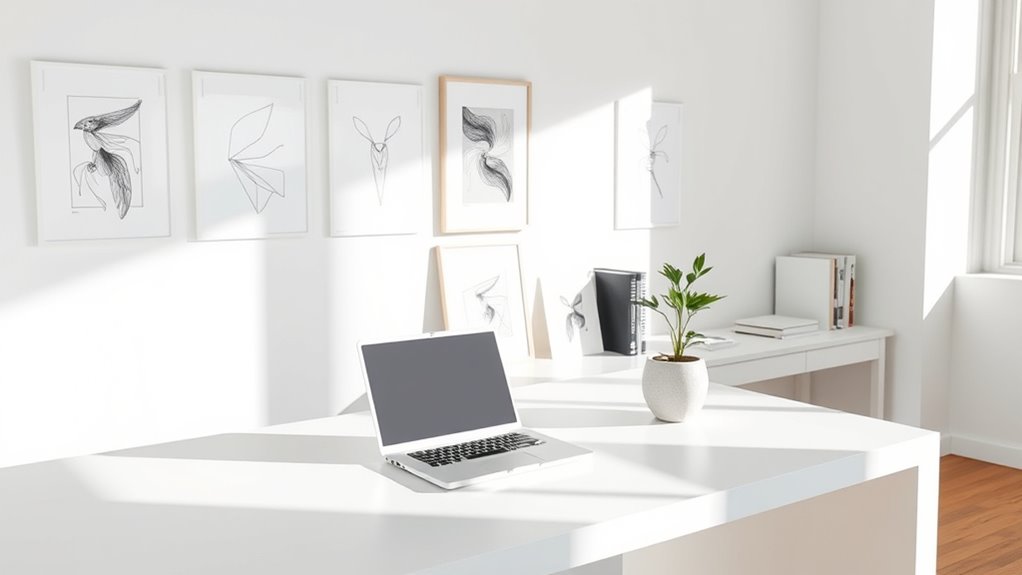
Calvin Klein’s work habits embody a minimalist philosophy that prioritizes focus and intentionality. You’ll notice this in how he approaches fashion branding, emphasizing simplicity and clarity over excess. His routines eliminate distractions, allowing him to hone in on core ideas and messages. Klein’s minimalist marketing strategies reflect his broader work ethic—less is more. Instead of cluttered campaigns, he opts for clean visuals and straightforward messaging that resonate deeply with audiences. This disciplined approach helps maintain a consistent brand identity and keeps the creative process streamlined. By removing unnecessary complexity, you can channel your energy into refining concepts, ensuring every detail serves a purpose. Klein’s habits show that minimalism isn’t just an aesthetic; it’s a powerful mindset for effective, focused work.
The Clean Aesthetic of Dieter Rams’ Designs

Dieter Rams’ designs exemplify a commitment to simplicity and functionality that define the clean aesthetic. His approach emphasizes minimalism, stripping away unnecessary elements to focus on core purpose. You’ll notice how he uses color psychology subtly—neutral tones evoke calm and clarity, making products more appealing and less overwhelming. Rams also prioritizes ergonomic design, ensuring each piece feels intuitive and comfortable to use. This focus on user experience aligns with his philosophy that good design should be honest and unobtrusive. His work demonstrates how clean lines, thoughtful use of color, and practical form create timeless, functional objects. By embracing these principles, you can cultivate a space or product that’s visually serene, user-friendly, and rooted in purposeful simplicity.
Cal Newport’s Distraction-Free Productivity Habits

In today’s fast-paced world, maintaining focus can be challenging, but adopting distraction-free habits can substantially boost your productivity. Cal Newport emphasizes the importance of digital detoxes—periods without online distractions—and structured time blocking to deepen focus. By scheduling dedicated blocks for deep work, you minimize interruptions and maximize efficiency. To implement these strategies, consider the following:
| Habit | Action | Benefit |
|---|---|---|
| Digital Detox | Turn off notifications during work sessions | Reduces interruptions |
| Time Blocking | Allocate specific hours for focused tasks | Enhances concentration |
| Email Management | Limit checking to set times | Prevents constant distraction |
| Deep Work Sessions | Use calendar to block uninterrupted work periods | Improves productivity |
| Breaks & Rest | Schedule short breaks to refresh attention | Maintains mental clarity |
Frequently Asked Questions
How Do Minimalist Creatives Stay Inspired in Sparse Environments?
You stay inspired in sparse environments by focusing on meaningful details like carefully chosen decorative elements that spark creativity. Ambient lighting plays a key role, setting the mood and enhancing your workspace’s atmosphere. Keep your space uncluttered but intentional, allowing these elements to stand out. This simplicity helps you maintain clarity, and the right lighting and decor keep your creative energy flowing without distractions.
What Tools Do Minimalist Artists Typically Use?
You typically use simple, versatile tools like pencils, brushes, and digital apps to create minimalist art. Techniques often focus on clean lines, negative space, and limited color palettes to emphasize clarity. You might choose a few core colors to maintain harmony, and experiment with subtle variations to add depth. These tools and techniques help you stay true to minimalist principles while producing impactful, straightforward work.
Can Minimalism Improve Creative Productivity and Focus?
Yes, minimalism can boost your creative productivity and focus. By reducing decorative clutter, you create a calmer environment that minimizes sensory overload, helping your mind stay clear and engaged. When your workspace is simple and organized, you spend less time searching for tools or inspiration, allowing you to direct energy toward your work. Embracing minimalism helps you stay present, enhances concentration, and ultimately sparks more creative ideas.
How Do Minimalist Workspaces Influence Team Collaboration?
Minimalist workspaces positively influence team collaboration by enhancing workspace aesthetics, making areas feel open and inviting. When clutter is minimized, collaboration dynamics improve because team members can easily communicate and share ideas without distractions. A clean, simple environment fosters focus and encourages interaction, helping your team work more effectively together. This streamlined approach creates a space where cooperation thrives, ultimately boosting overall productivity and morale.
What Challenges Do Creatives Face When Adopting Minimalism?
You might find that embracing minimalism challenges your comfort with clutter and chaos, making space organization feel restrictive. The emotional impact can be conflicting—you gain clarity but lose visual inspiration. Balancing simplicity with creativity requires discipline and intentional choices, pushing you to prioritize what truly matters. While minimalism fosters focus, it can also evoke feelings of emptiness, demanding resilience as you adapt your mindset to fully reap its benefits.
Conclusion
As you explore these minimalist creatives, you’ll notice how simplicity often sparks clarity and innovation. It’s no coincidence that their clean, focused spaces mirror their groundbreaking ideas—reminding you that stripping away clutter can reveal your best work. When you embrace minimalism in your environment and habits, you create space for inspiration to flow naturally. Sometimes, less truly is more, guiding you toward greater creativity and purpose in your own journey.
Halloween Picks
halloween
As an affiliate, we earn on qualifying purchases.