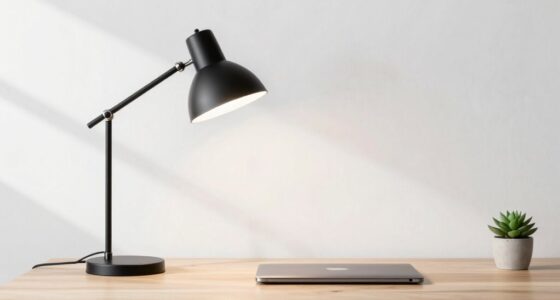

To keep a shared office minimalist despite colleagues’ clutter, set clear boundaries and establish designated spots for items. Encourage organizing routines, like end-of-day cleanups, and use storage solutions such as trays and filing cabinets. Promote mindful habits, like discarding unnecessary papers regularly, and leverage digital tools to reduce paper piles. By fostering a culture of tidiness and sharing simple organizational tips, you can create a cleaner, more productive workspace—more helpful strategies await if you continue exploring.

Get your wardrobe favorites delivered free with Prime
- Fast, free delivery on millions of items
- Prime Video, Amazon Music and more included
- Member-only deals all year
Key Takeaways
- Set clear shared workspace boundaries and storage protocols to prevent personal clutter from spreading.
- Encourage regular desk decluttering and digital file organization among colleagues.
- Use designated storage solutions like trays, shelves, and filing cabinets to maintain order.
- Promote a culture of mindfulness and collective responsibility for keeping the office tidy.
- Implement digital tools and minimalist practices to reduce paper clutter and streamline workflows.
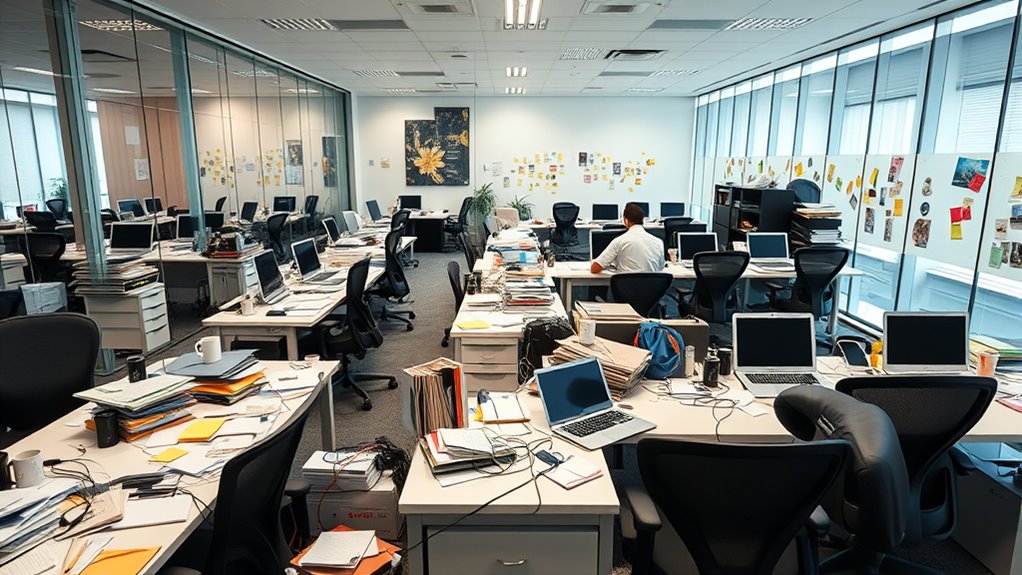
Have you ever noticed how shared office spaces quickly become cluttered without anyone intentionally causing it? It’s like chaos sneaks in, and suddenly, your desk is buried under stacks of papers, unused supplies, and random personal items. The key to preventing this mess is effective desk organization and clutter management. When everyone commits to keeping their workspace tidy, it becomes easier to focus, work efficiently, and maintain a professional environment.
Start by establishing clear boundaries for your personal space. Use organizers, trays, and file holders to keep documents and supplies in order. Instead of piling papers haphazardly, designate specific spots for different types of work items. For example, keep active projects front and center, while archived files go into labeled folders or drawers. This minimizes visual clutter and makes it easier to locate what you need quickly. Remember, clutter management isn’t just about tidiness—it’s about creating a workspace that promotes productivity and reduces stress.
Establish clear boundaries and use organizers to keep your workspace tidy and stress-free.
Encourage your colleagues to adopt similar habits. When everyone is mindful about their desk organization, shared areas stay cleaner longer. Simple routines, like clearing your desk at the end of each day or using a tray for incoming and outgoing correspondence, can make a big difference. Additionally, consider implementing shared storage solutions, such as communal filing cabinets or shelves, to prevent personal items from spilling over into common areas. This way, the office remains functional and inviting for everyone.
Another effective tip is to regularly declutter the workspace. Set aside a few minutes weekly to review what’s on your desk. Discard or recycle outdated papers and unnecessary supplies. Keep only what you genuinely need for daily tasks within arm’s reach. If you notice others doing the same, it creates a culture of clutter management that benefits everyone. It’s also helpful to establish rules about personal items—limiting decorations or personal effects prevents desks from becoming overcrowded and distracting.
Finally, consider using digital tools to reduce physical clutter. Scanning documents and storing them electronically cuts down on paper piles. Promote the use of shared digital drives or project management apps to keep everyone updated without printing multiple copies of the same document. This not only streamlines workflow but also aligns with minimalist principles, keeping shared office spaces clean and organized.
By implementing clutter management strategies like these, you can help ensure your shared workspace remains tidy and efficient. In the end, maintaining a clutter-free shared office requires collective effort. By focusing on desk organization, practicing clutter management, and encouraging mindful habits, you help create a workspace that’s tidy, efficient, and more enjoyable for everyone.
As an affiliate, we earn on qualifying purchases.
Frequently Asked Questions
How Can We Encourage Colleagues to Maintain Minimalism Consistently?
You can encourage colleagues to maintain minimalism by practicing mindful communication and setting clear expectations from the start. Regularly remind everyone of the benefits of a tidy workspace and create shared guidelines for organization. Lead by example, and gently address clutter issues when they arise. By fostering open conversations and establishing consistent standards, you help your team stay committed to a minimalist environment, making it easier for everyone to keep the shared office clutter-free.
What Are Effective Ways to Organize Shared Office Supplies?
Imagine a team that used color coding and labeling systems to organize shared supplies. You can do the same by assigning specific colors to categories—pens, paper, cables—and labeling containers clearly. This approach makes it easy for everyone to find what they need and return items to their proper place, reducing clutter. Regularly review and update labels to keep the system effective and guarantee the shared space stays tidy.
How Do We Handle Personal Belongings Without Creating Clutter?
You should establish clear personal item policies and designate specific storage areas for belongings. Encourage colleagues to limit personal items to essentials and use labeled bins or drawers to keep things organized. Regularly remind everyone to tidy up their designated areas and avoid bringing unnecessary items. This approach helps maintain a clutter-free environment, ensuring shared space stays clean and minimal while respecting everyone’s personal belongings.
What Strategies Work Best for Clutter-Free Meetings?
Imagine a sleek conference table, free of paper piles and gadgets, where clarity reigns. To keep meetings clutter-free, encourage a digital detox by turning off notifications and limiting devices. Use ergonomic design to create comfortable seating that minimizes distractions. Set a clear agenda, keep visuals simple, and designate a single note-taker. These strategies foster focused, productive meetings, helping everyone stay engaged and maintain a minimalist shared workspace.
How Can Management Support a Minimalist Shared Workspace?
Management can support a minimalist shared workspace by setting clear guidelines on office decor and digital clutter, encouraging employees to keep their areas tidy. Providing storage solutions and digital organization tools helps reduce clutter. Lead by example, maintaining a clean environment yourself. Regularly review and update policies, fostering a culture that values simplicity and order, making it easier for everyone to work efficiently and feel comfortable in a clutter-free space.
filing cabinet with multiple drawers
As an affiliate, we earn on qualifying purchases.
As an affiliate, we earn on qualifying purchases.
Conclusion
To keep your shared space simple and stylish, stay vigilant and voice your values. By fostering focus, fostering fairness, and fostering flow, you’ll prevent piling, panicking, and piling up. Remember, maintaining minimalism isn’t just about managing mess; it’s about mastering your mindset and motivating your mates. Together, you create a clutter-free, calm office where collaboration can flourish, free from fuss. Keep it clean, keep it cooperative, and enjoy the clarity that comes with conscientious clutter control.
shared workspace storage solutions
As an affiliate, we earn on qualifying purchases.
As an affiliate, we earn on qualifying purchases.
As an affiliate, we earn on qualifying purchases.
Halloween Picks
halloween
As an affiliate, we earn on qualifying purchases.