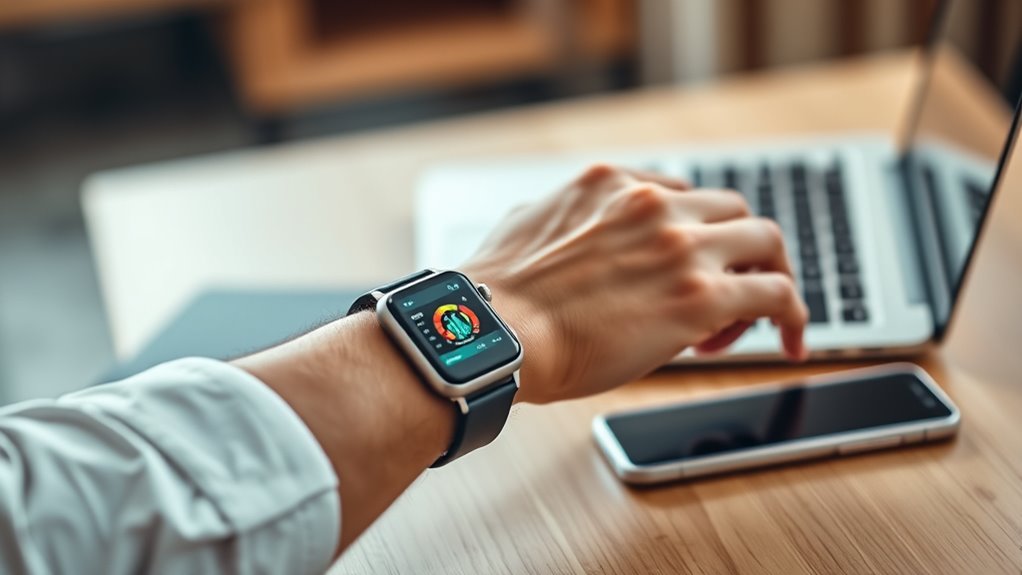

Wearables can boost your productivity by helping you stay organized, monitor habits, and set goals with real-time data. They encourage movement and healthier routines, making it easier to manage your day efficiently. However, they can also become distractions with constant notifications and reminders, risking overwhelm or stress. Privacy concerns and data accuracy are additional factors to contemplate. If you’re curious about balancing benefits and downsides, you’ll find useful insights ahead.
Key Takeaways
- Wearables can enhance productivity by tracking habits, setting goals, and providing real-time data insights.
- They may cause distractions through constant notifications, reducing focus and overall efficiency.
- Privacy concerns and data security risks can overshadow benefits, affecting user trust and usage.
- Over-reliance on device metrics might lead to stress or anxiety, impacting mental well-being.
- Accuracy of data varies, so decisions based solely on wearables could be unreliable without additional context.
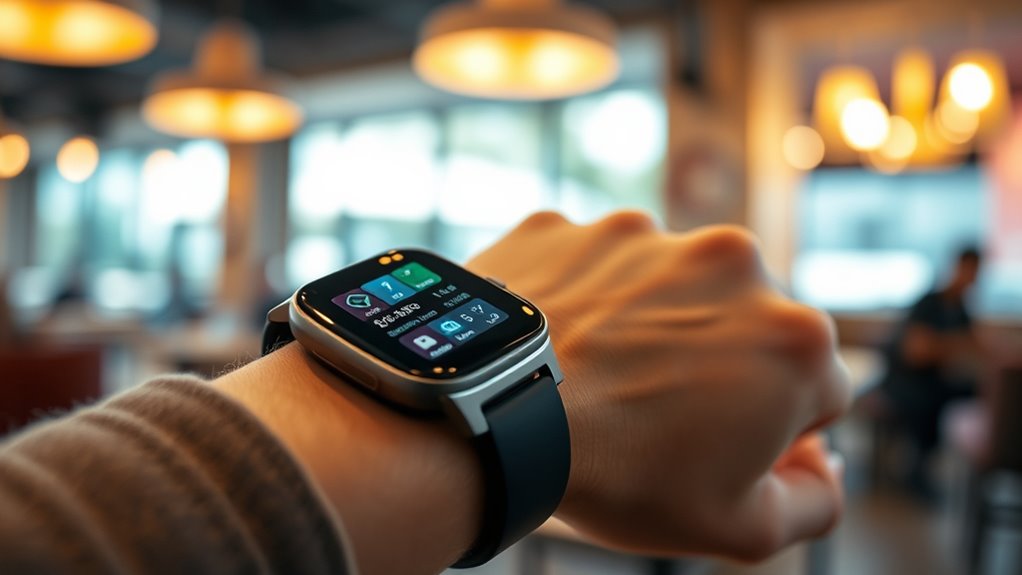
Wearables have become a popular tool for enhancing productivity, but their true impact remains debated. While many users praise these devices for helping them stay organized, monitor their habits, and boost efficiency, others worry about the potential downsides. One of the main concerns revolves around privacy; with wearables constantly collecting personal data, you might find yourself questioning who has access to your information and how it’s being used. Your health data—heart rate, sleep patterns, activity levels—can be highly sensitive. If this information falls into the wrong hands or is shared without your consent, it could lead to privacy breaches or misuse. This worry isn’t unfounded, especially as some companies’ data policies remain opaque. You should be cautious about the permissions you grant and stay informed about how your data is stored and shared.
Wearables collect sensitive health data; stay informed and cautious to protect your privacy.
Beyond privacy, there’s also the question of health impacts. Wearables often encourage you to move more or track your sleep, which can be beneficial. But over-reliance on these devices might lead to anxiety or stress if you obsess over daily metrics or feel guilty when you don’t meet your goals. Continuous monitoring can make you hyper-aware of your physical state, sometimes causing unnecessary concern. Additionally, some devices emit electromagnetic fields, and while research is still ongoing, there’s a lingering question about whether long-term exposure could have adverse health effects. For some, wearing these gadgets for extended periods might lead to discomfort or skin irritation, especially if you have sensitive skin or allergies. It’s also worth noting that as technology advances, the accuracy of health data provided by wearables can vary, which may influence your health decisions.
You also need to think about how these devices influence your mental health. Wearables that constantly ping you with notifications or reminders can become intrusive, distracting you from tasks or conversations. Instead of helping you focus, they might fragment your attention, leading to decreased productivity. It’s easy to fall into the trap of checking your device compulsively, which defeats the purpose of trying to streamline your day.

EnergyPort Fitness Tracker,Wearable Health Smart Bracelet Band with Blood Oxygen 170+ Sport Mode 60-Day Battery,Lifetime Membership,Activity Tracking Heart Rate Sleep Monitor for Android iOS,2 Bands
FITNESS TRACKER WITH 170+ WORKOUT MODES—Every outdoor activity (city running/hiking) automatically syncs GPS routes to your phone app….
As an affiliate, we earn on qualifying purchases.
As an affiliate, we earn on qualifying purchases.
Frequently Asked Questions
How Do Wearables Impact Long-Term Mental Health?
Wearables can positively impact your mental health benefits by encouraging mindfulness, stress management, and healthy habits. However, you should be cautious of wearable addiction, which may lead to anxiety or obsessive behaviors. Over-relying on devices might cause you to become overly focused on data, potentially harming your long-term mental health. Balance their use, and stay aware of how these devices influence your emotional well-being.
Are There Privacy Concerns With Wearable Data Collection?
Are you aware of the privacy concerns with wearable data collection? You should be, since your data security is at risk if companies don’t prioritize it. Wearables gather sensitive health and activity info, making user consent vital. Without clear policies, your personal data could be misused or hacked. Always check how your data is protected and make sure your consent is informed before sharing your information with wearable device providers.
Which Wearables Offer the Best Productivity Features?
You’ll find the Apple Watch and Fitbit Sense excel in productivity features, thanks to their advanced fitness tracking, calendar integration, and notifications. They combine style and design, making them both functional and fashionable. These wearables help you stay focused by providing timely updates and health insights. Their sleek, customizable designs suit various tastes, ensuring you can boost your productivity without sacrificing style.
Do Wearables Improve Work-Life Balance?
Yes, wearables can improve your work-life balance by helping you manage fitness tracking and stay socially connected. You can set fitness goals during breaks, encouraging healthy habits, while notifications keep you connected to friends and colleagues without constant phone use. This balance enables you to prioritize personal well-being and social connections, reducing stress and increasing overall satisfaction. Just make certain you use wearables mindfully to avoid becoming overwhelmed or distracted.
How Do Wearable Notifications Affect Focus and Concentration?
Approximately 80% of notifications are ignored, yet they still trigger distraction. Wearable notifications can disrupt your focus and concentration by constantly pulling your attention away. Each alert acts as a distraction trigger, leading to notification overload that hampers deep work. To stay productive, you should customize your notifications, limit alerts, and create focused work periods without interruptions. This way, your wearable enhances productivity rather than diminishes it.

New Smart Ring Health Tracker for Women & Men, Sleep Exercise Health Monitoring, Daily Tracking, iOS/Android Compatible, IP68 Waterproof, No Subscription Required, 5‑Day Battery Life (Rose Gold, 8)
【Check the Size Before Purchase】 Before buying the BIEMHA Smart Ring, we strongly suggest that you refer to…
As an affiliate, we earn on qualifying purchases.
As an affiliate, we earn on qualifying purchases.
Conclusion
Whether wearables become your trusty sidekick or just a shiny distraction, remember they’re tools—your choices shape their impact. Like a double-edged sword, they can sharpen your focus or cut into your time if misused. Stay mindful, set boundaries, and harness their power wisely. With intentional use, wearables can be the compass guiding you through a more productive day rather than a siren pulling you off course. The choice is yours—steer wisely.

Smart Watch with Alexa Built-in 1.83" HD 2026 Health Fitness Tracker Bluetooth Calls and Notifications 120+ Sport Modes Heart Rate Sleep Monitor Fitness Watch IP68 Waterproof iPhone Android (Black)
Alexa Voice Control-Your Wrist Command Center: Control music, set reminders, or check traffic with just your voice—no phone…
As an affiliate, we earn on qualifying purchases.
As an affiliate, we earn on qualifying purchases.

YOORX Privacy-First Fitness Tracker — No Activity Data Sharing, — Waterproof Activity & Sleep Monitor with Step Counter, Calorie Tracking, Smart Notifications for iPhone & Android (Black)
YOUR DATA STAYS YOURS — ZERO SHARING: YOORX never sends your activity data to a server, never shares…
As an affiliate, we earn on qualifying purchases.
As an affiliate, we earn on qualifying purchases.