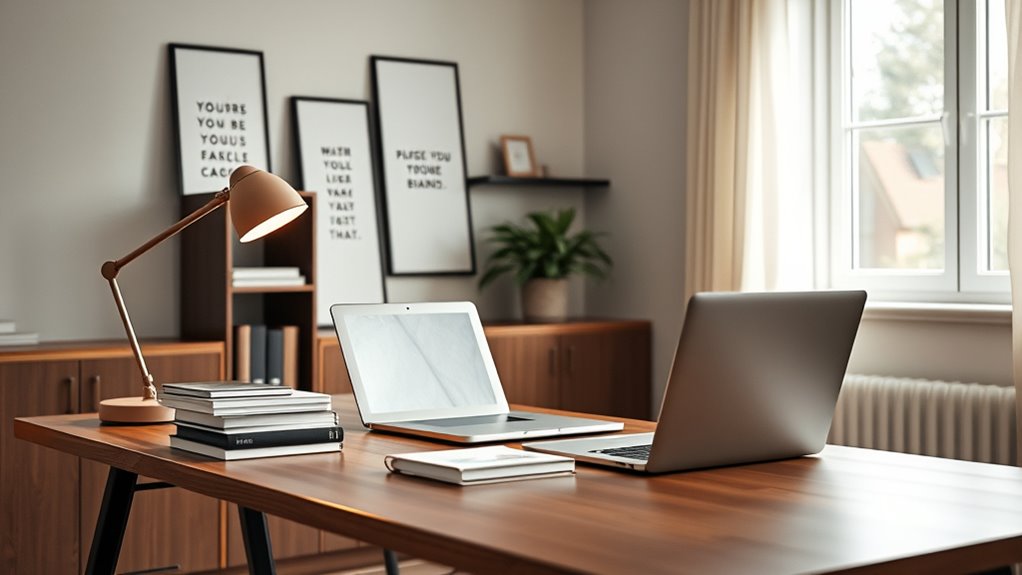

Creating a dedicated, organized workspace helps you stay disciplined and accountable by signaling to your brain when it’s time to focus. Set clear work hours and treat them as non-negotiable, so personal life doesn’t intrude. Guarantee your space is ergonomic and free of clutter, promoting longer concentration. This environment naturally encourages consistent habits and goal achievement. Keep exploring how your space can boost your focus—you’ll find practical tips that make a difference.
Listen free for 30 days with Audible
Thousands of audiobooks and originals — cancel anytime.
As an affiliate, we earn on qualifying purchases.
Key Takeaways
- Designate a specific, clutter-free workspace to signal focus and prevent personal distractions.
- Set consistent work hours to create routine and reinforce accountability.
- Arrange ergonomic furniture and equipment to boost comfort and maintain concentration.
- Keep your home office organized to reduce distractions and promote discipline.
- Use visual cues and environment cues to mentally switch into work mode and stay on track.
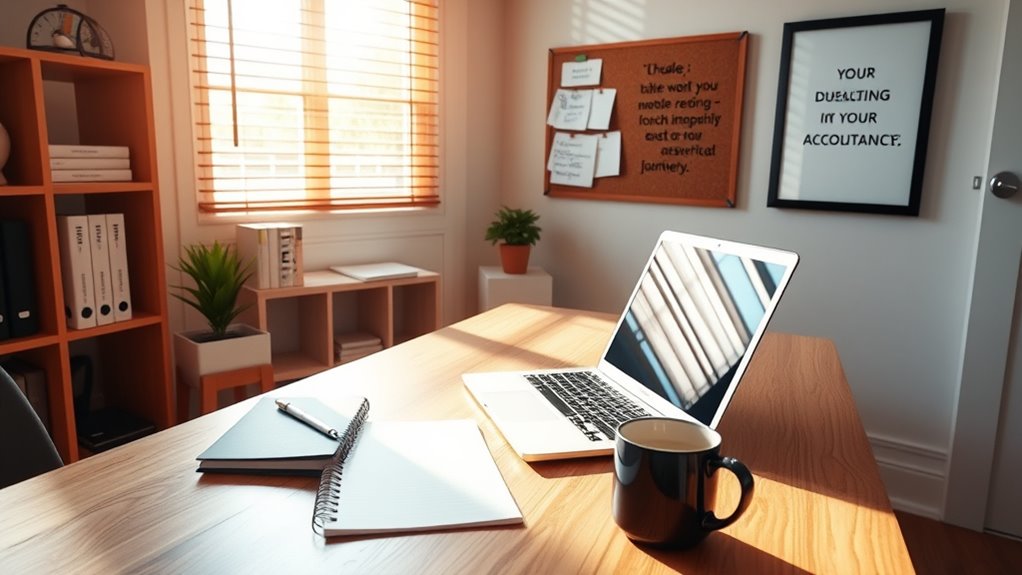
Working from home can blur the lines between your personal and professional life, making it easy to lose focus. Without the traditional office environment, it’s up to you to create a space that encourages discipline and productivity. Your workspace plays a pivotal role in helping you stay on track, especially when it comes to managing your time effectively. When your environment is organized and dedicated solely to work, you’ll find it easier to set boundaries and stick to a schedule. Establish specific work hours and treat them as non-negotiable, just like you would in a regular office. This helps prevent your personal life from creeping into your work hours and vice versa. Creating a designated workspace can also serve as a visual cue that it’s time to focus and support your mental health.
Time management becomes much simpler when your workspace is optimized for efficiency. Use a planner or digital tools to schedule your day, breaking tasks into manageable chunks. Prioritize your to-do list at the start of each day and set clear goals. When you know exactly what you need to accomplish, it’s easier to maintain focus and avoid distractions. Remember, discipline isn’t about working nonstop; it’s about working smart. Allocate specific blocks of time to deep work, and include breaks to recharge. Sticking to a routine reinforces your habits and keeps you accountable to yourself.
Workspace ergonomics is another essential aspect of staying disciplined. If your workspace is uncomfortable or poorly designed, it can lead to physical discomfort, which ultimately hampers your ability to concentrate. Invest in a good chair, ensure your monitor is at eye level, and position your keyboard and mouse to reduce strain. These small adjustments support your physical health and help you stay engaged in your tasks for longer periods. When your environment is comfortable and supportive, you’re less likely to get distracted or feel the urge to move to a different space.
Creating a dedicated home office space signals to your brain that it’s time to work, making it easier to switch into focus mode. Avoid working from your bed or couch, where relaxation habits may interfere with your productivity. Keep your workspace tidy and free from clutter, as a clean environment minimizes distractions. When your space is thoughtfully arranged, it reinforces your discipline and makes it easier to maintain consistent work habits.
Ultimately, your home workspace should serve as a tool to support your goals. By paying attention to time management and workspace ergonomics, you set yourself up for success. Discipline in a home office isn’t about constant effort; it’s about creating an environment that naturally encourages focus and accountability. When you take control of your space, you empower yourself to stay disciplined and accomplish your tasks efficiently.

Marsail Ergonomic Office Chair: Office Desk Chair with High Back Mesh and Adjustable Lumbar Support Rolling Work Swivel Task Chairs with Wheel 3D Armrests and Headrest
- Fully Adjustable Headrest: 2D adjustable for personalized comfort
- Reclining Backrest: Adjusts from 90° to 120°
- 3D Adjustable Armrests: Customizable for various postures
As an affiliate, we earn on qualifying purchases.
As an affiliate, we earn on qualifying purchases.
Frequently Asked Questions
How Can I Prevent My Home Office From Becoming a Distraction?
To prevent your home office from becoming a distraction, focus on noise control by using headphones or soundproofing. Keep your space organized and limit clutter to stay focused. Make certain your ergonomic setup supports good posture, so you stay comfortable and avoid breaks caused by discomfort. Set boundaries with family or housemates during work hours, and create a dedicated area that signals work time, helping you remain disciplined and productive.
What Are Effective Ways to Track My Productivity at Home?
You should use simple tools like time management apps and daily goal setting to track your productivity. Break tasks into smaller steps, set clear deadlines, and monitor your progress regularly. Use timers to stay focused and review your accomplishments at the end of each day. This approach helps you stay accountable, manage your time wisely, and guarantee you’re consistently working toward your goals in your home office.
How Should I Organize My Home Workspace for Maximum Focus?
You should organize your home workspace with ergonomic furniture and ambient lighting to maximize focus. Don’t think you need a fancy setup—simple, supportive furniture reduces fatigue and boosts productivity. Position your desk near natural light and add adjustable lamps to create a comfortable environment. Keep clutter minimal and designate specific zones for work and breaks. This setup helps you stay disciplined and motivated throughout your workday.
What Routines Help Maintain Discipline During Long Work Hours?
To stay disciplined during long work hours, prioritize effective time management by setting clear start and end times for your day. Incorporate routine habit formation, like regular breaks and designated work periods, to maintain focus. Use alarms or timers to structure your tasks, and stick to these routines daily. This consistency helps reinforce discipline, keeps you accountable, and guarantees you stay productive without burnout.
How Can I Set Boundaries Between Work and Personal Life at Home?
Imagine your home as a delicate tightrope walker balancing work and life. You set clear boundaries by defining specific work hours, creating a dedicated workspace, and sticking to a schedule. Use time management to keep your day structured, and establish emotional boundaries to protect your personal space. When work ends, truly disconnect—turn off notifications and resist the urge to check emails—so your personal life can flourish without overlap.
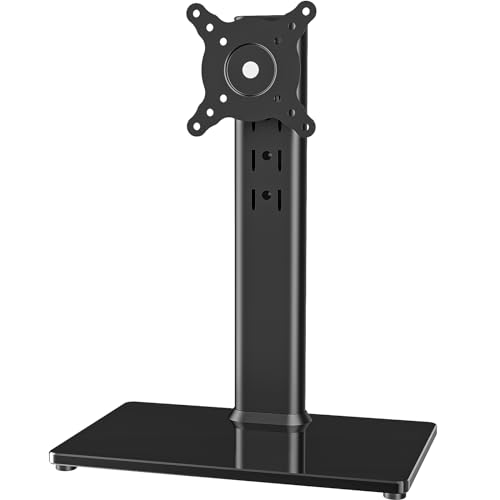
Single LCD Computer Monitor Free-Standing Desk Stand Mount Riser for 13 inch to 32 inch screen with Swivel, Height Adjustable, Rotation, Vesa Base Stand Holds One (1) Screen up to 77Lbs(HT05B-001))
- Compatibility: Fits 13 to 32 inch screens with VESA mounts
- Cable Management: Includes cord organization system
- Ergonomic Design: Elevates monitor for better posture
As an affiliate, we earn on qualifying purchases.
As an affiliate, we earn on qualifying purchases.
Conclusion
Your home office is more than just a space—it’s a mirror of your discipline. When you keep it organized and intentional, it becomes a lighthouse guiding you through distractions. Every item you place symbolizes your commitment to your goals, and every boundary you set is a sturdy anchor. Remember, a well-maintained space reflects a focused mind. By nurturing your environment, you cultivate accountability—and in doing so, you steer your success back on course every day.

SKYDUE 360 Rotating Plastic Desk Pen Organizer with 5 Slots, Dual-Purpose Art Supply Pencil Cup for Office, School, Home
- Space-Saving Design: 5 compartments for compact storage
- 360-Degree Rotation: Easy access to pens and tools
- Non-Slip Base: Stays securely on smooth surfaces
As an affiliate, we earn on qualifying purchases.
As an affiliate, we earn on qualifying purchases.

Wireless Keyboard and Mouse Combo, 2.4G Ergonomic Wave Keys(Black)
- Wave Ergonomic Design: Fits fingers and relieves wrist strain
- Adjustable Keyboard Stand: Set to most comfortable height
- Wrist Rest Included: Supports long-term use
As an affiliate, we earn on qualifying purchases.
As an affiliate, we earn on qualifying purchases.
Baby shower & registry season Picks
baby registry must-haves
As an affiliate, we earn on qualifying purchases.