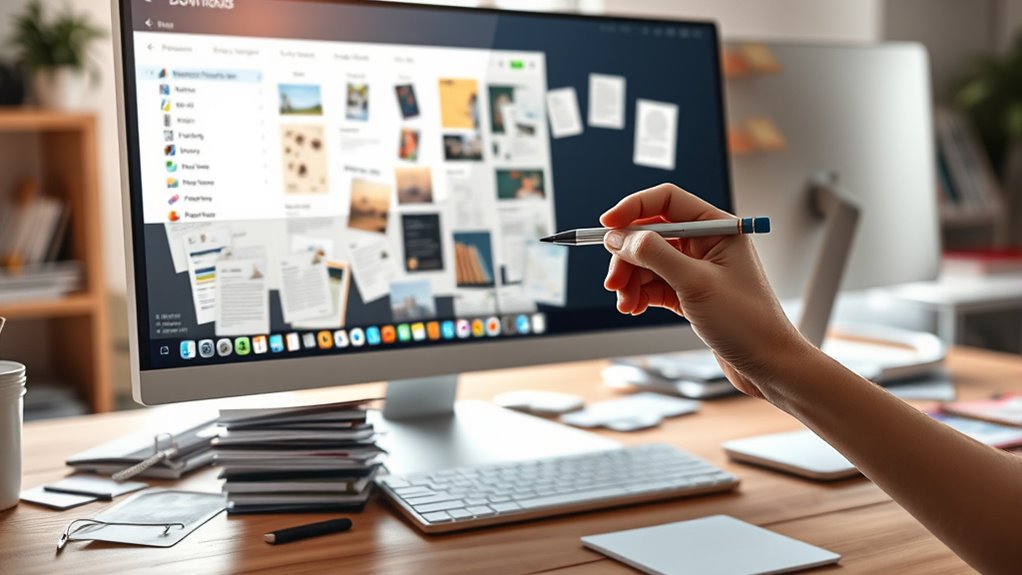

To declutter your downloads folder quickly, start by opening it and reviewing all files. Delete duplicates, outdated, or unnecessary items to clear space. Next, create a simple folder structure based on your needs, such as work, personal, or media, and move files into these categories. Finally, set a routine to review and tidy your downloads weekly or biweekly. Keep practicing these steps consistently, and you’ll discover even more tips to maintain a tidy digital space.

Get your wardrobe favorites delivered free with Prime
- Fast, free delivery on millions of items
- Prime Video, Amazon Music and more included
- Member-only deals all year
Key Takeaways
- Open your downloads folder and quickly identify files to keep or delete.
- Delete duplicates, outdated, or unnecessary files to reduce clutter.
- Organize remaining files into clear, specific folders by category or purpose.
- Set a regular schedule to review and maintain your downloads folder.
- Use automation tools to automatically sort new downloads and prevent future clutter.

Ever find yourself overwhelmed by a cluttered downloads folder? It’s a common problem that can quickly turn into a digital mess you don’t know where to start cleaning up. The good news is, by focusing on effective file organization, you can regain control and create a more streamlined digital space. When you start organizing your downloads, you’re not just tidying up—you’re embracing digital minimalism, which helps you focus on what truly matters and reduces the mental clutter that often accompanies digital chaos.
Overwhelmed by downloads? Organize effectively, embrace digital minimalism, and reduce mental clutter for a streamlined digital space.
The first step to decluttering is to assess what’s in your downloads folder. Open it up and take a quick look through the files. Ask yourself: which items do I still need, and which ones can be deleted? Be honest—many files might be duplicates, outdated, or simply no longer relevant. As you sift through, delete everything unnecessary. This initial purge is essential because it prevents you from wasting time on files you don’t need and sets the stage for better file organization later.
Next, create a logical folder structure that suits your workflow. Think about your most common activities—work projects, personal documents, media files—and set up folders accordingly. Use clear, specific names so you can easily locate files later. For example, instead of a generic “Docs” folder, go for “Work Reports” or “Tax Documents.” Moving files into these organized folders helps you develop a system that promotes digital minimalism—keeping only what’s essential and storing it where you can find it effortlessly.
To keep your downloads folder tidy in the long run, establish a routine. Every week or two, spend a few minutes reviewing new downloads. Delete duplicates and files you no longer need, then sort the remaining ones into your established folders. This habit prevents clutter from accumulating again and reinforces good file organization practices. You might also consider setting up rules for downloads, like saving email attachments directly to specific folders or using download prompts that ask where to save each file.
Finally, leverage tools and software to automate parts of the process. Many operating systems and third-party apps allow you to set rules for automatically moving certain types of files into designated folders. This automation reduces manual effort and helps maintain a minimal digital footprint. Implementing these strategies not only declutters your downloads folder but also cultivates a mindset of digital minimalism—focusing on quality over quantity and making your digital environment more manageable. Additionally, understanding the importance of contrast ratio in projectors can enhance your home cinema setup, creating a more immersive viewing experience that complements your organized digital space.
Top picks for "forgotten mess declutter"
As an affiliate, we earn on qualifying purchases.
Frequently Asked Questions
How Often Should I Declutter My Downloads Folder?
You should declutter your downloads folder at least once a month to keep it organized. Set up automatic cleanup to delete unnecessary files regularly, saving you time and effort. Regular folder organization prevents clutter from building up and makes it easier to find important documents. Staying on top of this task guarantees your computer runs smoothly and your files stay manageable, so you never have to deal with a chaotic downloads folder.
Can I Automate the Decluttering Process?
Yes, you can automate the decluttering process. With auto organization tools and scheduled cleanup features, you won’t need to worry about manually sorting your downloads. Many file management apps let you set rules for moving or deleting files automatically, saving you time and effort. Just make sure you review your settings periodically to prevent deleting important files. This way, your downloads stay tidy without constant effort.
What Tools Are Best for Managing Downloads?
You should try tools like Hazel for Mac or DropIt for Windows, as they excel at file organization. These apps automate sorting your downloads, helping you manage clutter and optimize storage effortlessly. They can automatically move, delete, or categorize files based on rules you set, ensuring your downloads folder stays tidy. Using these tools, you’ll keep your storage optimized without wasting time on manual cleanup.
How Do I Identify Important Files Quickly?
To identify important files quickly, look for files that follow consistent file naming conventions, which make them easier to spot. Prioritize files you’ve recently accessed or those labeled with recognizable names. Use backup strategies to guarantee your essential files are safe. Regularly review and organize your downloads, deleting duplicates and outdated items, so you can swiftly find what matters without wasting time searching through clutter.
Should I Keep Old Downloads for Reference?
Think of old downloads as relics in a museum—some are worth preserving, others just take up space. Keep only files you genuinely need for reference; otherwise, they clutter your file organization and eat into your storage space. Regularly review and delete outdated downloads, ensuring your digital space remains tidy and efficient. This way, your downloads folder becomes a well-curated archive, making it easier to find important files quickly.
Conclusion
Now, as your downloads folder transforms from a chaotic jumble to a tidy oasis, you’ll notice the space and clarity it brings. It’s like clearing a cluttered desk to reveal a clean workspace, or opening a window to let fresh air in. With just three simple steps, you’ve turned digital chaos into calm. Embrace this new order, and enjoy the peace that comes with a well-organized downloads folder—your digital sanctuary awaits.
Halloween Picks
halloween
As an affiliate, we earn on qualifying purchases.