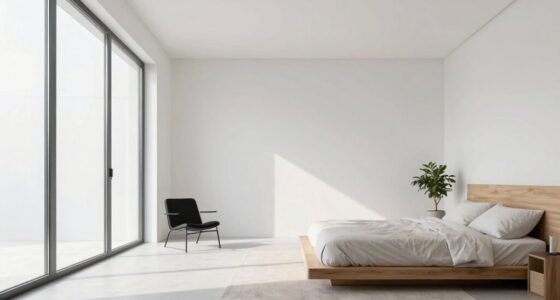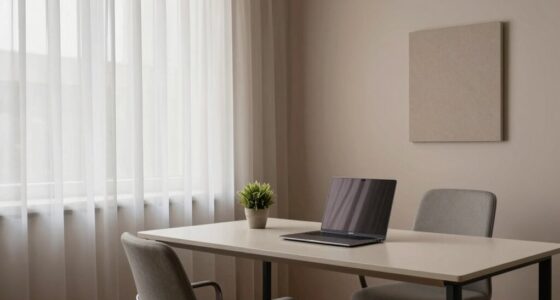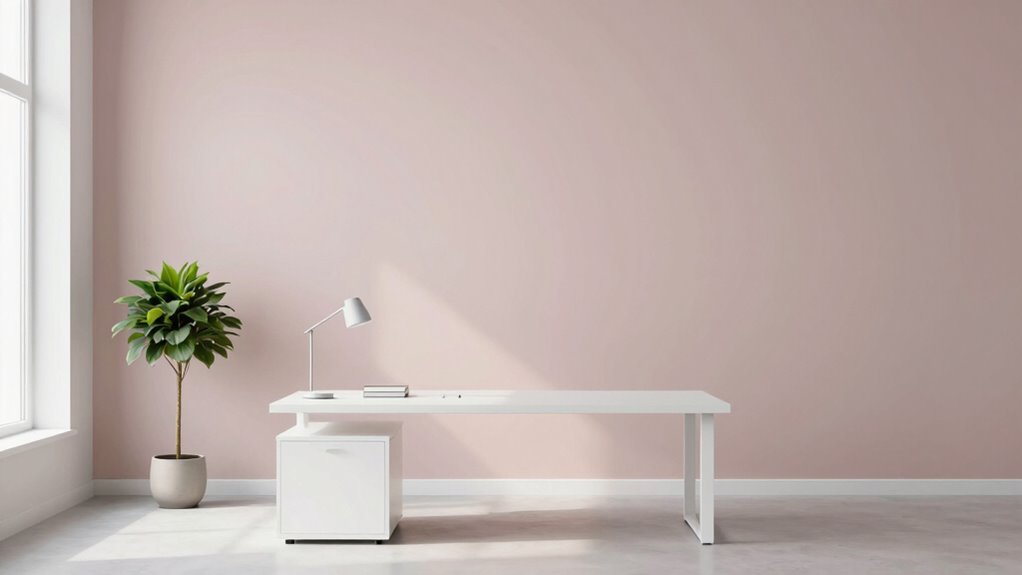

To use negative space in your office effectively without wasting space, focus on creating open areas around key features like desks, artwork, or plants to improve flow and reduce clutter. Balance neutral colors with bold accents to energize or calm the environment. Guarantee pathways are clear to promote movement, and leave space around furniture for ergonomic comfort. Thoughtful placement of objects and open zones makes your office more organized and inviting—continue exploring how to optimize your workspace even further.
Listen free for 30 days with Audible
Thousands of audiobooks and originals — cancel anytime.
As an affiliate, we earn on qualifying purchases.
Key Takeaways
- Use open areas to highlight focal points like artwork or plants, creating visual interest without cluttering space.
- Maintain clear pathways and avoid overcrowding furniture to optimize movement and prevent wasted space.
- Incorporate negative space around desks and monitors to reduce visual overload and promote focus.
- Select neutral or light colors in open areas to evoke calmness and balance visual weight effectively.
- Design with purpose by balancing positive and negative space to create an organized, functional, and inviting workspace.
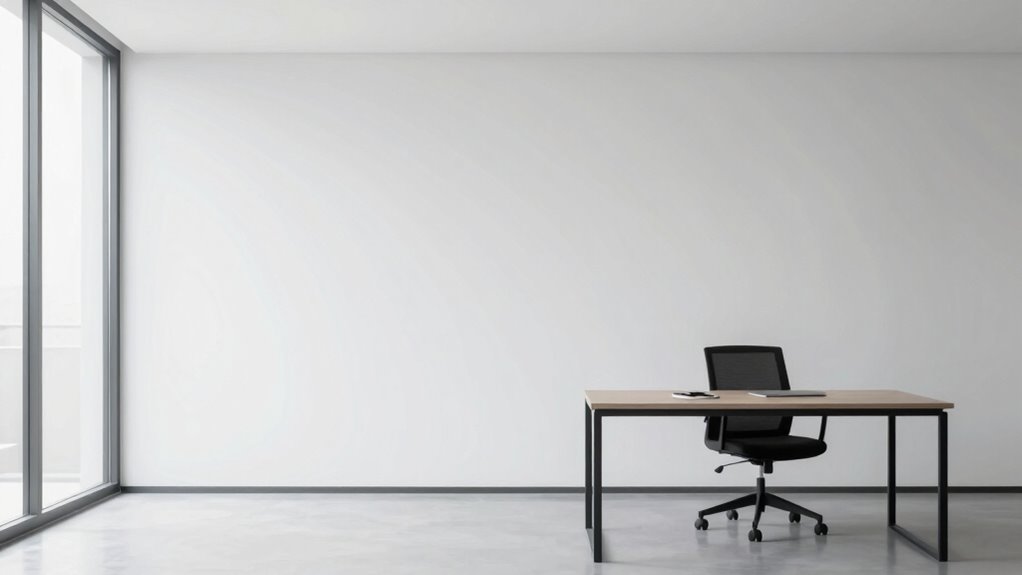
Have you ever considered how negative space can transform your office environment? It’s not just about leaving empty areas; it’s about intentionally designing space to improve focus, creativity, and comfort. When used thoughtfully, negative space can make your office feel larger, calmer, and more inviting. One way to do this is by understanding color psychology. Light, neutral shades in your negative spaces can evoke tranquility and clarity, helping you stay focused on your tasks. Conversely, adding pops of bold color in specific areas can energize your workspace without overwhelming it. The key is balancing these hues with plenty of open, uncluttered space to prevent visual overload. This approach allows your mind to rest, making it easier to concentrate and be productive. Incorporating ergonomic design principles is equally important when using negative space effectively. You want to ensure that your workspace isn’t just visually appealing but also supports your physical well-being. For example, leaving enough space around your desk and chair helps maintain good posture and reduces strain. Negative space around your computer monitor can prevent eye fatigue and make your setup feel less cramped. Think of negative space as a buffer zone that promotes better movement and comfort. It’s about creating an environment where you don’t feel boxed in, which can boost your overall mood and efficiency. To make the most of negative space without wasting valuable room, focus on strategic placement. Use open areas to highlight key features like artwork or plants, which can serve as calming focal points. Keep pathways clear, so you don’t feel cluttered or restricted, and allow enough room for flexible movement. Avoid overcrowding your workspace with unnecessary furniture or accessories—each piece should serve a purpose, and the surrounding empty space should enhance that purpose. This mindful approach not only preserves your office’s functionality but also ensures that every inch of space contributes to a balanced, harmonious environment. Additionally, understanding the importance of visual balance can help you create a more cohesive design that promotes well-being. Recognizing how positive and negative space interact can help you craft a workspace that feels both open and organized. Incorporating spatial awareness into your layout is crucial for achieving a truly functional and comfortable office. Being mindful of visual hierarchy can guide the placement of elements to create a more intuitive and pleasing environment. Ultimately, using negative space wisely is about intentionality. It’s about creating a workspace that feels open yet organized, energizing yet calming. By considering color psychology and ergonomic design, you can craft an office that promotes productivity and well-being without sacrificing space. It’s not about filling every corner; it’s about designing with purpose, so your office becomes a place where you work smarter, not harder.

Marsail Ergonomic Office Chair: Office Desk Chair with High Back Mesh and Adjustable Lumbar Support Rolling Work Swivel Task Chairs with Wheel 3D Armrests and Headrest
- Fully Adjustable Headrest: 2D adjustable for personalized comfort
- Reclining Backrest: Adjusts from 90° to 120°
- 3D Adjustable Armrests: Customizable for various postures
As an affiliate, we earn on qualifying purchases.
As an affiliate, we earn on qualifying purchases.
Frequently Asked Questions
Can Negative Space Improve Employee Productivity?
Yes, negative space can boost employee productivity by reducing visual clutter, making the workspace more organized and calming. When you incorporate negative space thoughtfully, it helps employees experience better mental clarity, allowing them to focus on tasks without feeling overwhelmed. Clear, uncluttered environments foster creativity and efficiency. So, strategically using negative space isn’t just about aesthetics — it directly supports a more productive, stress-free work atmosphere.
How Do I Measure Effective Negative Space?
To measure effective negative space, you want to monitor visual balance and spatial proportion. Start by observing how your workspace feels—if it looks cluttered or sparse, adjust accordingly. Use gridlines or layout tools to assess the balance between filled and empty spaces. Consistently evaluate whether the negative space guides focus, enhances flow, and maintains harmony, ensuring your office’s spatial proportions promote comfort without wasting valuable space.
What Furniture Best Complements Negative Space?
Choose sleek, minimalist furniture that complements your negative space, like slim desks and simple chairs. Incorporate wall art with bold color schemes to add interest without cluttering. Light-colored furniture can enhance the sense of openness, while multi-functional pieces save space. Keep your layout uncluttered, allowing negative space to breathe. This approach creates a balanced environment where furniture enhances, rather than overwhelms, your office’s visual harmony.
Does Negative Space Affect Office Acoustics?
Oh, negative space definitely impacts office acoustics—who knew? It’s not just about visual balance; it also helps with sound absorption. When you strategically incorporate empty areas, they act like sound buffers, reducing echoes and noise. So, by embracing negative space, you’re not wasting space—you’re improving sound quality, making your office calmer and more productive. It’s a clever way to balance aesthetics with functionality.
Can Negative Space Influence Office Branding?
Yes, negative space can influence your office branding by shaping visual identity and enhancing spatial perception. When you strategically use negative space, it highlights your logo, messaging, or branding elements, making them more memorable. This clean, uncluttered look fosters a professional atmosphere, helping clients and employees perceive your brand as sophisticated and focused. Properly managed negative space creates a strong, cohesive visual identity that communicates your brand’s values effectively.

Sage Green Boho Wall Art Set of 3, Minimalist Framed Wall Art Geometric Line Leaf Sun Moon Beige Green Canvas Artwork Paintings, Abstract Botanical Boho Room Decor, Office, 12"x16"
- Size: 12×16 inches each
- Color Scheme: Sage green and beige
- Material: Premium canvas with fade-resistant ink
As an affiliate, we earn on qualifying purchases.
As an affiliate, we earn on qualifying purchases.
Conclusion
By embracing negative space, you create a subtle breeze that guides the eye and relaxes the mind, turning an ordinary office into a sanctuary of calm and clarity. Think of it as the gentle pause between notes in a melody—giving your workspace room to breathe and flourish. When you master this balance, your office becomes a welcoming canvas where inspiration flows freely, inviting productivity without feeling crowded or overwhelmed.
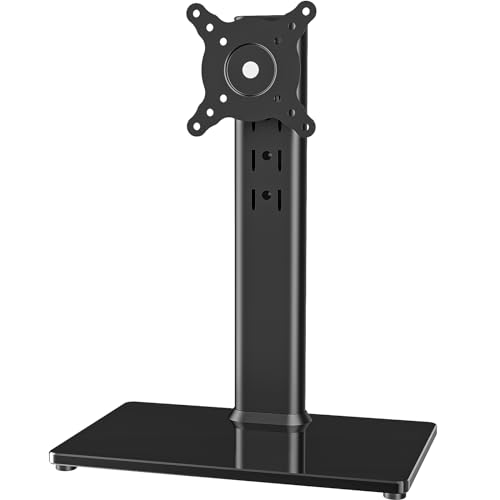
Single LCD Computer Monitor Free-Standing Desk Stand Mount Riser for 13 inch to 32 inch screen with Swivel, Height Adjustable, Rotation, Vesa Base Stand Holds One (1) Screen up to 77Lbs(HT05B-001))
- Compatibility: Fits 13 to 32 inch screens with VESA mounts
- Cable Management: Includes cord organization system
- Ergonomic Design: Elevates monitor for better posture
As an affiliate, we earn on qualifying purchases.
As an affiliate, we earn on qualifying purchases.

OLEEK Small Fake Plants Office Decor – Shelf sitters with Dangling Legs – Fake Succulents Plants Artificial for Desk Decor – Fake Plant Office Decorations for Work – Office Decor for Women
- Personality Fake Succulents: Designed as small cubicle decor
- Adds Amusing Energy: Liven up any room decor
- Conversation Starters: Perfect for office shelf decor
As an affiliate, we earn on qualifying purchases.
As an affiliate, we earn on qualifying purchases.
College move-in / dorm season Picks
dorm essentials
As an affiliate, we earn on qualifying purchases.