To maintain a tranquil workspace, focus on embracing minimalism by decluttering regularly and keeping only essential items accessible. Incorporate mindful organization routines, like daily resets and designated zones, to foster clarity. Add natural elements like plants, soft lighting, and calming colors to create harmony. Establish rituals that support ongoing balance, such as tidying at start and end of day. Continue exploring these techniques to cultivate enduring calm and order in your environment.
Key Takeaways
- Practice regular decluttering and organization to maintain a calm, minimalist workspace aligned with Zen principles.
- Incorporate natural elements, soft lighting, and calming colors to foster tranquility and mental clarity.
- Establish mindful routines, such as daily resets and ritualistic tidying, to promote consistency and focus.
- Use eco-friendly materials and sustainable practices to create an environmentally conscious, balanced environment.
- Implement environment controls and ergonomic adjustments to enhance comfort and support ongoing workspace harmony.
Embracing Minimalism for a Calm Environment

Creating a calm workspace begins with embracing minimalism. When you focus on clutter reduction, you clear away unnecessary items that distract or overwhelm you. Simplifying your environment enhances your focus and promotes tranquility. Keep only essential tools and supplies within reach, and store the rest out of sight. Use clean, simple surfaces to foster a sense of order and clarity. Decluttering regularly helps maintain this calm, preventing chaos from creeping back in. By embracing minimalism, you create a space that encourages productivity and peace. The goal isn’t perfection but intentionality—surround yourself with what truly matters. As you reduce clutter, you’ll find it easier to concentrate, think clearly, and enjoy a serene work atmosphere. Minimalism isn’t just style; it’s a mindset for lasting calm. Incorporating mindful practices into your routine can further enhance your mental clarity and overall well-being. Additionally, reducing clutter can improve your productivity by minimizing distractions and streamlining your workflow. Practicing intentional workspace organization can help sustain this sense of calm over the long term, especially when combined with consistent clutter management efforts. Implementing minimalist principles can also contribute to a more focused and peaceful environment.
Incorporating Mindful Organization Techniques

To cultivate a truly mindful workspace, you need to adopt organization techniques that encourage intentionality and awareness. Start by using journaling techniques to reflect on your habits, identify clutter triggers, and set clear goals for your space. Make ergonomic adjustments to ensure comfort and reduce physical strain, fostering sustained focus. Incorporate mindful routines like tidying at the start and end of each day, so your environment remains calm and intentional. Consider these practices:
- Prioritize essential items to minimize distractions
- Designate specific zones for different tasks
- Use mindful reminders to pause and reset
- Regularly review and update your organization system
- Create intentional spaces for relaxation and reflection
These techniques help you stay present, centered, and connected to your workspace, promoting sustained calm and clarity. Additionally, understanding the importance of upfitting fundamentals can guide you in customizing your workspace efficiently and safely. Being aware of diversification principles can also help you balance your investments within your workspace setup, ensuring long-term stability and growth. Incorporating professional voiceover techniques can also enhance your workspace environment, especially if you utilize audio elements to motivate or instruct yourself throughout the day. Implementing regular maintenance checks can further ensure your workspace remains functional and comfortable over time.
The Role of Natural Elements in Your Workspace
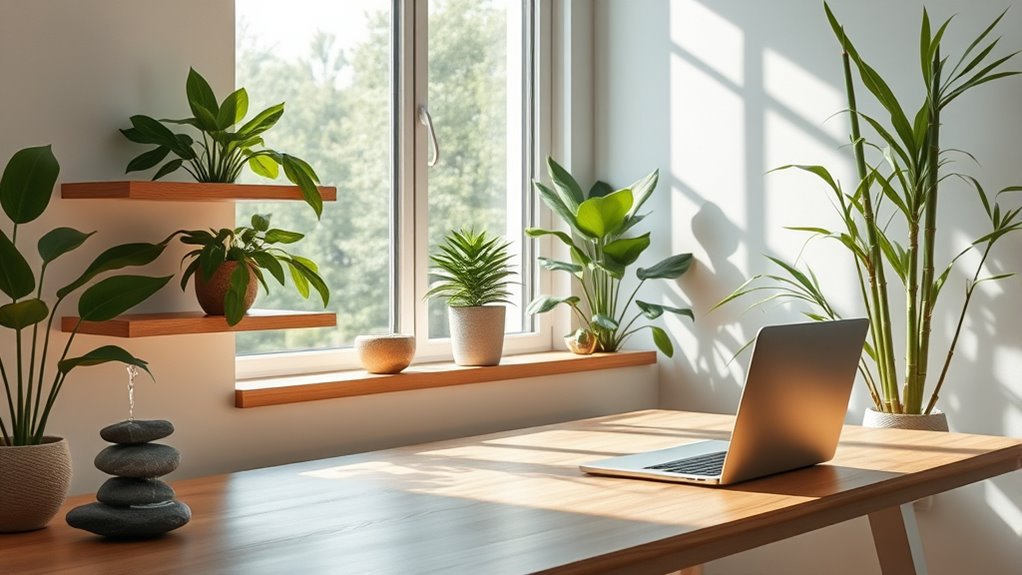
Incorporating natural elements into your workspace can considerably enhance your sense of calm and focus. Adding indoor plants introduces a touch of greenery that refreshes the environment and improves air quality. Choose low-maintenance options like succulents or pothos that thrive indoors. Natural textures, such as wooden desks or woven baskets, bring warmth and tactile comfort, grounding your space in nature. These elements help break the monotony of artificial surroundings and foster tranquility. When you incorporate natural textures and greenery, you create a harmonious atmosphere that promotes clarity and reduces stress. Using natural materials in your decor can further enhance the organic feel and support a balanced environment. Additionally, selecting appropriate lighting can complement these natural elements, enhancing the overall ambiance. Incorporating biophilic design principles can further strengthen the connection to nature and improve overall well-being. Integrating smart home devices that utilize AI for automation can optimize your workspace environment, making it more comfortable and efficient. Exploring innovative materials inspired by sneaker technology can also add a modern touch to your workspace decor, blending style and function seamlessly. By consciously surrounding yourself with these natural elements, you invite serenity into your work routine and cultivate a mindful, balanced environment.
Creating Rituals to Maintain Clarity and Focus

Establishing daily rituals can considerably enhance your ability to maintain clarity and focus throughout your workday. By integrating mindful decluttering and ritualistic tidying into your routine, you create a sense of calm and order. These rituals serve as anchors, grounding you amid distractions. You might find that:
- Starting each day with a quick workspace reset puts your mind at ease, setting a positive tone for focused work.
- Ending with ritualistic tidying helps preserve your environment’s serenity and signals the close of your work session.
- Taking deliberate breaks for mindful decluttering clears mental clutter and promotes mental refreshment.
- Using specific routines to organize your tools boosts efficiency and reduces time spent searching for items.
- Maintaining consistent habits reinforces focus and tranquility, creating a reliable rhythm to your day.
- Regular maintenance of your workspace can also prevent clutter buildup and ensure optimal productivity preventing clogs, helping you stay disciplined in your organizational practices.
- Incorporating sound healing science principles into your routine can enhance your concentration and emotional balance during work sessions.
- Exploring anime culture can provide inspiring break activities that refresh your mind and foster creativity during work intervals.
Using Colors and Lighting to Foster Tranquility
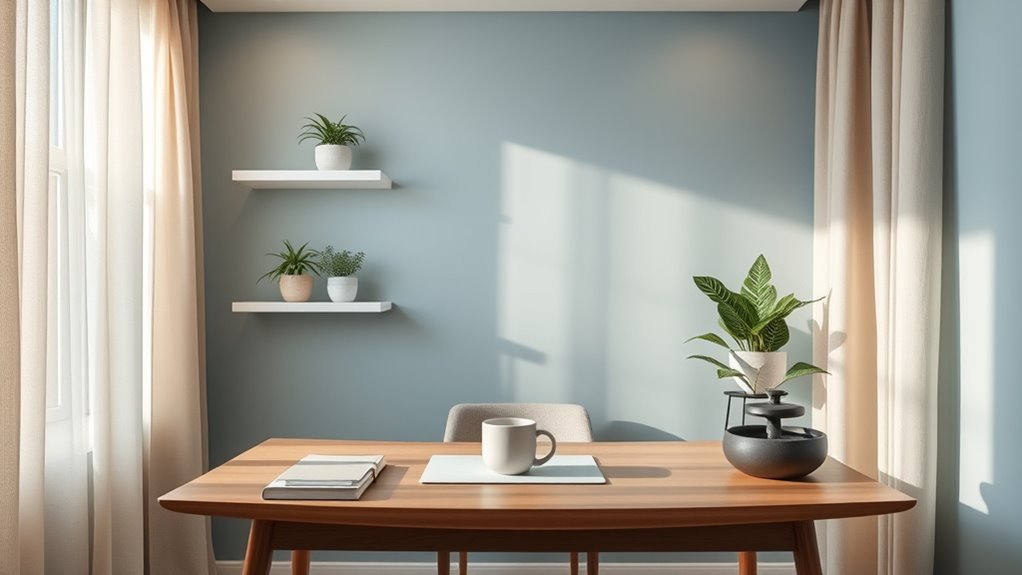
Choosing harmonious color schemes can cultivate a calming atmosphere in your workspace, making it easier to focus. Soft, ambient lighting helps diminish strain and promotes relaxation throughout your day. Balancing brightness levels guarantees your environment feels peaceful without becoming dull or overly stimulating. Incorporating natural elements, like plants or textures reminiscent of Self Watering Plant Pots, can further enhance tranquility and inspire creativity. Additionally, integrating natural elements can support overall well-being and reduce stress in your workspace. Implementing AI-driven automation in your workspace can optimize environment controls, ensuring consistent comfort and efficiency. Regularly managing Bike Tire Longevity in Storage by inspecting tires can also prevent unnecessary worry and maintain a clutter-free environment, contributing to a more peaceful workspace. Moreover, choosing sustainable materials for office furniture and decor can promote an eco-friendly atmosphere, aligning with increasing consumer demand for sustainable products.
Harmonious Color Schemes
When selecting colors and lighting for your workspace, aim for a palette that promotes calm and focus. Using thoughtful color psychology helps create an environment where tranquility and productivity flourish. Maintain aesthetic consistency by choosing hues that complement each other, avoiding visual chaos. Harmonious color schemes foster a sense of order and balance, reducing stress. Consider soft, natural tones like muted greens, gentle blues, and warm neutrals to soothe the mind. These choices support mental clarity and emotional stability. By carefully curating your color palette, you establish a space that feels unified and welcoming. This intentional approach nurtures focus and mindfulness, transforming your workspace into a sanctuary of serenity and efficiency.
Soft, Ambient Lighting
Soft, ambient lighting plays a vital role in creating a tranquil workspace by gently illuminating your environment without harsh glare or stark contrasts. By using soft lighting, you foster an ambient atmosphere that encourages calmness and focus. Opt for warm-toned bulbs or diffused light sources that spread illumination evenly across your space. Avoid overly bright or direct lights, which can disrupt your sense of serenity. Instead, aim for a layered lighting setup that combines gentle overhead lights with subtle task lamps. This approach helps reduce eye strain and promotes relaxation. When you prioritize soft, ambient lighting, you create a harmonious environment that supports mindfulness and productivity, aligning with your goal of maintaining a Zen-inspired workspace. Incorporating lighting techniques designed for tranquility can further enhance the calming effect of your workspace environment.
Balance Brightness Levels
Balancing brightness levels in your workspace involves more than just adjusting light intensity; it also requires mindful use of colors and lighting techniques to promote tranquility. Proper brightness adjustment helps create a calm environment, while glare reduction minimizes eye strain and distractions. Use warm, soft lighting to foster relaxation, and incorporate natural light where possible. Consider the following to enhance your space:
- Choose gentle, diffuse light sources to prevent harsh shadows
- Incorporate calming colors like blues and earth tones
- Use task lighting thoughtfully to avoid over-brightening areas
- Employ window treatments to control natural light flow
- Adjust brightness levels throughout the day to match your mood and tasks
This mindful approach cultivates serenity, helping you maintain focus and peace.
Developing a Daily Routine for Ongoing Harmony

Creating a daily routine helps maintain harmony in your workspace. Starting your day with morning rituals clears your mind, while evening reset practices help you unwind. These simple habits keep your environment peaceful and your focus sharp.
Morning Rituals for Clarity
Starting your day with intentional rituals can set a tone of clarity and focus that carries through your entire workday. Begin with mindful journaling to center your thoughts and set your intentions. Avoid screens for a few moments, embracing a digital detox to clear mental clutter. Take deep breaths to ground yourself before stepping into work. Incorporate gentle stretching or meditation to awaken your body and mind. These simple acts cultivate calm and purpose, ensuring your workspace feels harmonious from the start.
- Feel the weight of your pen as you journal your goals
- Breathe deeply, releasing tension with each exhale
- Disconnect from digital noise, creating space for clarity
- Move intentionally to awaken your senses
- Set a mindful tone to navigate your day with focus
Evening Reset Practices
Evening reset practices serve as a vital closure to your day, helping you release stress and prepare your mind for restorative rest. To cultivate ongoing harmony, spend a few minutes decluttering your workspace and resetting your desk feng shui. This simple act clears physical and mental clutter, promoting calmness and focus for tomorrow. Use this time to tidy your desk, put away supplies, and adjust items to create a balanced environment. Consider the following table for effective evening resets:
| Task | Benefit |
|---|---|
| Desk decluttering | Reduces visual stress |
| Rearranging items | Enhances energy flow (feng shui) |
| Wiping down surfaces | Promotes cleanliness |
| Organizing supplies | Saves time next day |
| Reflecting on the day | Clears your mind |
Incorporate these steps nightly to sustain workspace harmony and support your well-being.
Frequently Asked Questions
How Can I Declutter Without Feeling Overwhelmed?
To declutter without feeling overwhelmed, start with simple organizing techniques like sorting items into keep, donate, and discard piles. Break the task into small sections, focusing on one area at a time. Remember, decluttering myths often suggest you need to do it all at once, but slow, steady progress works best. Stay patient, celebrate small wins, and your workspace will become calmer and more organized without stress.
What Are Simple Mindfulness Exercises to Do at My Desk?
Think of your mind as a calm lake. To practice mindfulness at your desk, start with mindful breathing—inhale slowly, feel the air, then exhale fully. Try a quick desk meditation: close your eyes, focus on your breath, and notice your surroundings without judgment. These simple exercises help you stay present, reduce stress, and bring clarity, making your workspace feel more peaceful and manageable.
Which Plants Are Best for Improving Focus and Calmness?
You should consider plants like snake plants, pothos, or peace lilies to boost focus and calmness. These indoor air purifiers thrive with minimal plant care and help improve indoor air quality, making your workspace more invigorating. By keeping them healthy and well-maintained, you’ll create a serene environment that promotes concentration and reduces stress, allowing you to stay focused and relaxed throughout your workday.
How Do I Balance Minimalism With Personal Expression?
Did you know that 65% of people feel more relaxed in spaces that balance personal expression with minimalism? To achieve this, use color psychology—incorporate calming hues like blues and greens—and prioritize ergonomic design for comfort. You can add personal touches through meaningful artwork or objects that reflect your personality, while keeping clutter minimal. This approach helps you stay focused, calm, and true to yourself without sacrificing functionality or style.
What Daily Habits Support Long-Term Workspace Harmony?
To support long-term workspace harmony, you should practice mindful organization daily by tidying up and decluttering intentionally. Keep only what sparks joy and serves a purpose, ensuring your space remains functional and calming. Incorporate intentional design by arranging your essentials thoughtfully, creating a balanced environment. Make it a habit to review and adjust your workspace regularly, fostering a sense of peace and clarity that lasts over time.
Conclusion
By embracing these mindful practices, your workspace becomes a sanctuary rather than a stressor. Think of it as tending a garden—regular care keeps it thriving and tranquil. When you prioritize minimalism, natural elements, and intentional routines, you craft an environment that nurtures your focus and calm. Remember, maintaining harmony is an ongoing journey, not a destination. With each small step, you cultivate a peaceful space where your productivity and peace can flourish together.