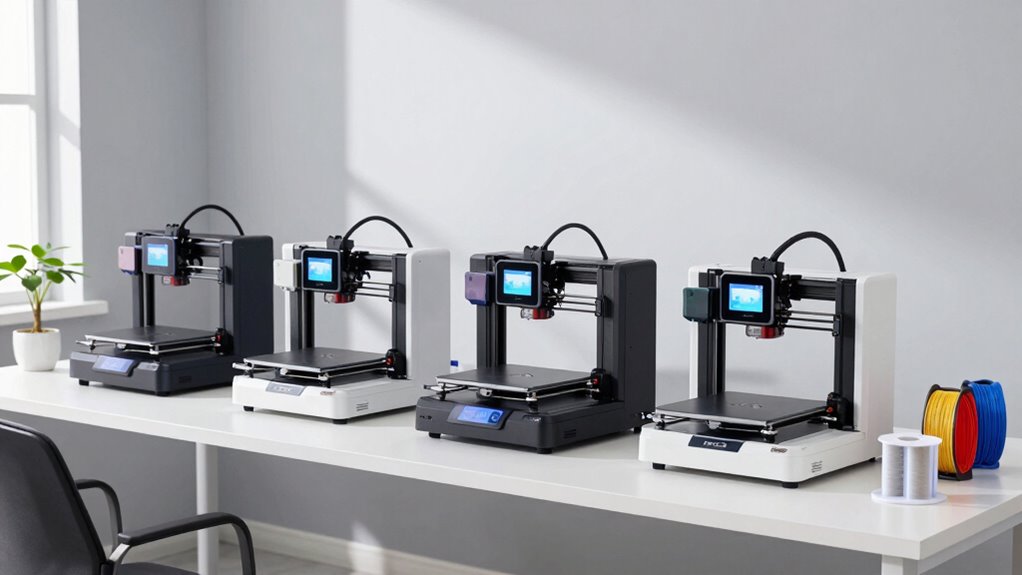
Using 3D printers in your creative office can streamline prototyping, making it easier to turn ideas into physical models quickly. By selecting the right materials and customizing designs, you’ll reduce delays and avoid chaos. Rapid iteration fosters innovation and keeps projects moving smoothly. 3D printing promotes a flexible workflow, allowing you to experiment without traditional manufacturing constraints. Keep exploring to discover how you can optimize your office environment even further.
Key Takeaways
- Implement dedicated, organized 3D printing stations to streamline workflows and prevent clutter.
- Use clear material selection to ensure prototypes are practical, reducing errors and rework.
- Establish standardized processes for quick setup, operation, and maintenance of printers.
- Promote digital design adjustments to minimize physical revisions and delays.
- Foster a culture of experimentation with flexible workflows and rapid prototyping, reducing chaos.
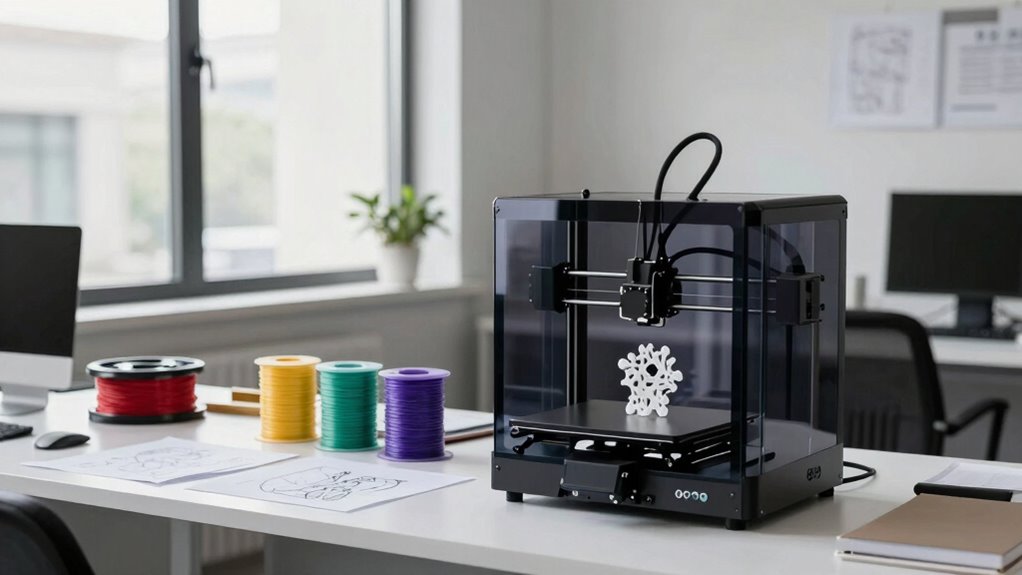
Have you ever wondered how creative offices are transforming their design and prototyping processes? 3D printers have become essential tools in these environments, allowing teams to rapidly turn ideas into tangible models. With the ability to produce customized prototypes quickly, you can experiment with different concepts without the delays of traditional manufacturing. This speed not only accelerates project timelines but also encourages more innovative thinking, knowing that your ideas can be tested on the fly.
One of the most vital aspects of integrating 3D printing into a creative workspace is material selection. You get to choose from a variety of options, each suited to different needs and project goals. For example, if you need durable, functional prototypes, materials like ABS or PETG offer strength and resilience. When aesthetics matter, resin or flexible filaments can deliver smooth, detailed finishes. Selecting the right material is essential because it influences the final appearance, functionality, and even the cost of your models. By understanding the properties of each material, you can tailor your approach to fit specific project requirements, ensuring your prototypes are both realistic and practical.
Design customization is another key benefit of using 3D printers in a creative office. Unlike traditional manufacturing, 3D printing lets you produce highly personalized models without the need for expensive molds or tooling. You can tweak designs on the computer, test different variations, and print each version quickly to see how they perform in real life. This flexibility means you’re not limited by mass production constraints; instead, you can create one-off prototypes or small batches that match your exact vision. Whether it’s customizing the size, shape, or intricate details, 3D printing empowers you to bring your unique concepts to life with precision. Additionally, understanding material properties helps in selecting the best options for specific project needs. Utilizing material knowledge can optimize your workflow and improve the overall quality of your prototypes.
As an affiliate, we earn on qualifying purchases.
Frequently Asked Questions
How Do 3D Printers Impact Office Safety Protocols?
3D printers impact your office safety protocols by introducing safety hazards like fumes and hot surfaces. You should guarantee proper ventilation requirements are met to prevent inhaling harmful particles. Always follow manufacturer guidelines, use protective equipment, and keep the workspace organized to minimize risks. Regular maintenance and safety checks help protect everyone, making your office a safe environment while benefiting from 3D printing technology.
What Are the Long-Term Maintenance Costs for 3D Printers?
Think of your 3D printer as a garden that needs ongoing care. Long-term costs mainly involve filament selection, which varies in price and quality, and a solid maintenance schedule to prevent breakdowns. Regularly replacing parts and cleaning keeps your machine humming smoothly. Over time, these expenses add up, but investing in proper upkeep minimizes costly repairs, ensuring your creative workspace stays productive and your printer continues to flourish without chaos.
Can 3D Printers Print With Eco-Friendly or Biodegradable Materials?
Yes, you can print with eco-friendly materials and biodegradable filaments. Many 3D printers support eco-friendly options like PLA, made from renewable resources, which decomposes naturally. Biodegradable filaments are available for those aiming to reduce environmental impact. By choosing these materials, you contribute to sustainability while producing high-quality prints. Just guarantee your printer is compatible with these eco-friendly options, and you’ll be able to create environmentally conscious designs easily.
How Do 3D Printers Influence Team Collaboration Dynamics?
You find that 3D printers boost team collaboration by fostering collaborative innovation and creative problem solving. As you work together on designs and prototypes, communication improves and ideas flow more freely. The hands-on process encourages everyone to contribute, break down silos, and brainstorm solutions collectively. This dynamic enhances teamwork, accelerates project timelines, and cultivates a culture where innovation thrives through shared creativity and practical experimentation.
What Training Is Required for Staff to Operate 3D Printers Effectively?
Think of it like mastering a new language—you need proper training modules to develop operator skills. You should start with safety protocols, printer calibration, and troubleshooting basics. Hands-on practice builds confidence, while understanding software and material handling guarantees seamless operation. By investing in extensive training, your team becomes proficient, minimizes errors, and maximizes productivity, turning your 3D printer from a mysterious device into a powerful creative tool.
professional 3D printer filament
As an affiliate, we earn on qualifying purchases.
As an affiliate, we earn on qualifying purchases.
Conclusion
Incorporating 3D printers into your creative office can boost innovation and streamline prototyping, all without chaos. Did you know that 85% of companies that adopted 3D printing reported faster project turnaround times? This technology simplifies complex processes, saving you time and space. So, embrace 3D printing in your workspace—you’ll access new possibilities while maintaining a tidy, efficient environment that fosters creativity.
As an affiliate, we earn on qualifying purchases.
resin 3D printer for detailed prototypes
As an affiliate, we earn on qualifying purchases.
As an affiliate, we earn on qualifying purchases.