To manage your physical archives effectively, choose a high-quality photo scanner that offers fast processing, automatic feeders, and excellent image quality. Look for features like color correction, dust removal, and high resolution to preserve details and vibrant hues. Organized digitization helps you easily categorize, search, and access your images later. A reliable scanner guarantees long-term security and professional-quality reproductions. If you want to discover more ways to optimize your archiving process, keep exploring.

Get your wardrobe favorites delivered free with Prime
- Fast, free delivery on millions of items
- Prime Video, Amazon Music and more included
- Member-only deals all year
Key Takeaways
- High-speed scanners with automatic feeders streamline large-scale digitization, saving time and reducing manual effort.
- Features like automatic cropping, color correction, and dust removal ensure high-quality, professional digital reproductions.
- Support for detailed metadata and clear naming conventions enhances organization and searchability within archives.
- Choosing scanners with consistent resolution and color depth preserves image authenticity for creative and archival use.
- Reliable scanners facilitate long-term digital storage, security, and easy access to physical archive collections.
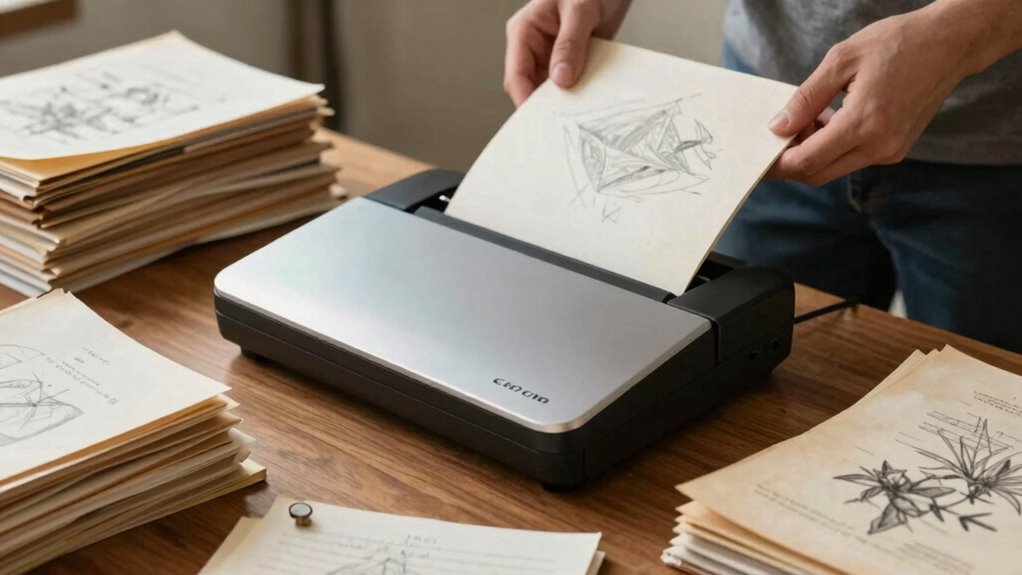
Managing a physical archive can be overwhelming, especially when you need to digitize a large collection of photos quickly and accurately. As a designer, preserving your visual history is essential, and digital preservation offers a reliable way to safeguard your work against deterioration. Photo scanners designed for professionals can streamline this process, making it easier to convert stacks of photos into high-quality digital files. When you choose the right scanner, you’re not only speeding up your workflow but also guaranteeing that every detail, color, and nuance is captured precisely, which is critical for maintaining the integrity of your archive.
Digitizing your photo collection preserves details and ensures your visual history remains intact and accessible for future creativity.
Archival organization becomes much simpler once your photos are digitized. Digital files are easier to categorize, search, and access than physical prints. With clear naming conventions and metadata added during scanning, you can create a well-structured archive that improves your efficiency and saves time in the long run. Many photo scanners come with features tailored for archival organization, such as automatic cropping, color correction, and resolution settings optimized for archiving purposes. These tools help you maintain consistency across your collection, which is indispensable for creating a coherent and manageable digital library. Additionally, selecting a scanner with high resolution capabilities ensures that your digital images retain the fine details necessary for professional use or high-quality reproductions.
Speed and accuracy are pivotal when dealing with large archives. High-speed scanners equipped with automatic feeders allow you to process dozens or even hundreds of photos without constant supervision. This means you can focus on other creative tasks while the scanner handles the labor-intensive work. Additionally, choosing a scanner with high resolution capabilities ensures that your digital images retain the fine details necessary for professional use or high-quality reproductions. The importance of digital preservation cannot be overstated, as it ensures long-term access and protection of your visual assets. Proper file management during the digitization process also plays a crucial role in maintaining an organized and accessible archive, reducing the risk of data loss or confusion over time.
Furthermore, investing in a scanner with enhanced color depth and dynamic range supports the digital preservation of original hues and tones. This is essential when working with vintage photographs or artwork where color accuracy impacts your final design. Many scanners also include features like dust removal and scratch correction, which help produce cleaner images, reducing the need for post-processing. This is especially useful when you want your archive to reflect the authenticity and richness of the physical originals.
In the end, choosing the right photo scanner for your needs directly impacts how effortlessly you can manage your physical archives. It’s about more than just digitizing; it’s about creating a digital environment where your collection is organized, preserved, and easily accessible. This allows you to focus your energy on your creative projects, knowing your visual history is safe, well-maintained, and ready to inspire new work.
high-speed photo scanner with automatic feeder
As an affiliate, we earn on qualifying purchases.
As an affiliate, we earn on qualifying purchases.
Frequently Asked Questions
How Do Photo Scanners Handle Fragile or Damaged Photographs?
Photo scanners handle fragile or damaged photographs carefully by using gentle scanning techniques, ensuring minimal contact and reducing the risk of further damage. They often feature specialized settings for photo preservation, like adaptive exposure and high-resolution options. Scanner calibration is essential to achieve accurate color and detail, especially with delicate images. By choosing the right settings and handling with care, you can scan even fragile photos while preserving their integrity for digital archiving.
What Is the Best Resolution for Archiving High-Quality Images?
You should set your scanner to at least 600 DPI for high-quality archiving, but don’t stop there. Imagine capturing every tiny detail and vibrant hue—this is where resolution settings and color accuracy matter most. For truly exceptional images, go higher, like 1200 DPI or more, to preserve every nuance. This way, your archive remains vivid, detailed, and true to the original, ready for any future use.
Are There Portable Photo Scanners Suitable for On-The-Go Digitization?
Yes, there are portable photo scanners perfect for on-the-go digitization. Look for battery-powered models that let you scan without needing an outlet, making them convenient for travel or remote work. These portable options are compact, lightweight, and easy to carry, so you can quickly digitize photos anytime and anywhere. They’re ideal for designers managing physical archives who want quick, efficient scanning without sacrificing quality.
How Long Does It Typically Take to Scan a Large Archive?
It can take anywhere from several hours to days to scan a large archive, depending on the scanner’s speed and the archive’s size. Think of it as turning a mountain into a molehill. As you digitize, you’re safeguarding your work through digital storage and ensuring archival preservation. Patience is key, but the reward is a well-preserved collection that lives on, ready for access and sharing whenever you need it.
What Software Options Are Recommended for Organizing Scanned Images?
You should consider software like Adobe Bridge or Adobe Lightroom, which excel in organizing scanned images. These programs allow you to add metadata, making it easier to search and categorize your archive. They also offer color correction tools to enhance image quality. By using these options, you streamline your workflow, keep your digital archive well-organized, and guarantee your images look their best for future projects.
professional photo scanner for archival preservation
As an affiliate, we earn on qualifying purchases.
As an affiliate, we earn on qualifying purchases.
Conclusion
Investing in a reliable photo scanner can transform how you manage your physical archives, making the process faster, clearer, and more organized. With the right scanner, you’ll effortlessly digitize your collection, freeing up space and enhancing your workflow. Aren’t you ready to streamline your archival process and open new creative possibilities? Embrace the technology that empowers you to preserve and access your visual history with ease and confidence.
high resolution photo scanner with dust removal
As an affiliate, we earn on qualifying purchases.
As an affiliate, we earn on qualifying purchases.
photo scanner with color correction and metadata support
As an affiliate, we earn on qualifying purchases.
As an affiliate, we earn on qualifying purchases.
Halloween Picks
halloween
As an affiliate, we earn on qualifying purchases.